March 13, 2015
Matthew Waldman | Vol. 08 "the cocktail."
Vol.08 「the cocktail.」
Some people might consider things that are commonplace in their own culture to be unique to that culture, while others might see them as universal, transcending cultural boundaries. Until one travels abroad, it's hard to definitively say which is which.
One such thing that exists so naturally in NYC is the cocktail! I started drinking delicious cocktails at 15 and thought I could enjoy great cocktails anywhere I went...
Words and photos by Matthew Waldman
Cocktails became a culture thanks to Prohibition!
When I went to Spain at 19, there were few bars serving cocktails, and when I ordered a tequila and orange juice, they made it with some chemical orange drink!? When I first visited Japan, cocktails that were common in America were also unusual. A lot of time has passed since then, but I still think "cocktail culture" is a distinctly American phenomenon.
As I started writing about this topic and did a little research, I was surprised to learn that the "cocktail" was invented in the 19th century in New York State! It seems to have begun as a drink similar to Japan's Yomeishu, but quickly evolved, with a rapid increase in variety and spread, becoming commonly consumed.
Incidentally, the term "Cocktail Party" was already in use as an American English word by 1917. Ah, perhaps this can be called the birth of civilization? And the reason cocktails became a culture was the Prohibition era, from 1920 to 1933. New York was a state that strongly opposed Prohibition, but the food and beverage industry was forced underground, and talented bartenders scattered to Europe and Cuba. This influenced the further spread and evolution of cocktail culture. Later, New York-born Franklin D. Roosevelt became president and immediately repealed Prohibition!!
Let me introduce some delicious cocktail bars I know
I'll say it outright: cocktail recipes are art. If you get the proportions or order wrong, even a wonderful cocktail can taste like medicine. Furthermore, whether you can infuse it with the feeling of a party or happiness is also a crucial point. Being good at conveying emotion, I can enjoy them at home, but when I go out, it's always an adventure. The way you drink is also important. If you drink too quickly, you can't fully appreciate the taste, but if you wait too long, it might become watery. Most importantly, cocktails in NYC are ridiculously expensive these days, so I won't pay unless they are exceptionally delicious.
Why do I focus so much on cocktails? I don't like beer. Wine gives me asthma. While sake and shochu suit my body and mind best, whether there are favorite brands in NYC is another question. So, NYC = Cocktails (When in Rome, do as the Romans do). However, even cheap cocktails in NYC cost over $10, so if I'm going to drink, I feel it's meaningless if I don't have a 100% guaranteed delicious cocktail and have a good experience.
Now, let me introduce three of the delicious cocktail bars I know. Below is an interview with the manager and bartender of one of them, "11 Madison Park."
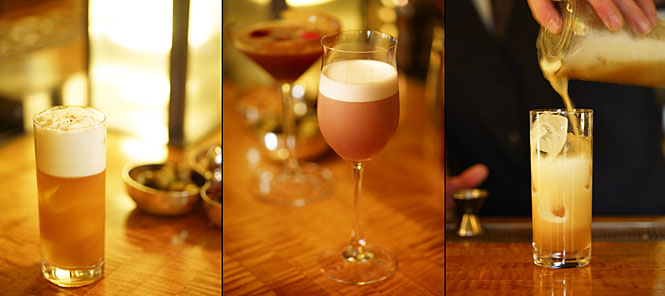
PHOTO BY Jim Franco of Williams Sonoma
—Could you introduce yourselves?
My name is Sam Lipp. I'm from Madison County, Wisconsin. I studied Hospitality Management at Cornell School and graduated in 2003. After graduation, I opened a restaurant in Larchmont, New York, and served as its general manager. After the restaurant successfully opened, I joined the Union Square Hospitality Group and, as manager of Cafe 2, opened the MoMA cafe. A few months later, I moved to Terrace 5, became director of beverage operations for both cafes, and now I'm the manager here at "11 Madison Park."
I'm Leo Robitschek. I grew up in Miami, Florida, and now live in New York. I started working as a bartender to earn money while attending university in Miami, which is how I got into this industry. However, when I moved to New York, I began to develop a true passion for cocktails and spirits. I've been working here at "11 Madison Park" for four years now, helping to revamp the bar menu, which focuses on meticulously crafted classic cocktails and unique house creations.
—Could you tell us more about "11 Madison Park's" approach to cocktails?
For example, regarding the cocktail menu, about using fresh, local ingredients in new ways without sacrificing traditional forms.
Our approach to the bar has not changed from the beginning and will likely continue that way. That is to say, while creating new things, we highlight classic cocktail techniques and classic cocktails themselves. All the traditional forms that inspire us were created before the advent of chemically created flavors and mass production. For example, all of our syrups are made with fresh ingredients, and without the means of global ingredient transport, they would undoubtedly be local and therefore seasonal.
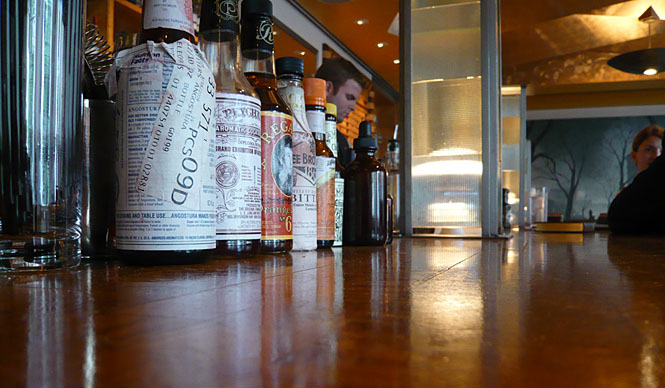
We strive for authenticity in everything we offer, and each small detail shapes the whole. We juice all our citrus daily, make homemade grenadine syrup with pomegranate and hibiscus, and even craft our own liqueurs and bitters.
—What makes NYC the capital of cocktails?
NYC will continue to be a global center for the culinary world, as it has been for a long time. Cocktails are no exception. So many people live in this small place, and the competition in terms of taste is fiercer than anywhere else. This competition fosters creativity, ultimately leading to a higher level than expected.
—Why is it important to have three different shapes of ice? Could you explain the difference?
A large part of a well-made cocktail is water, and therefore ice. We use different shapes of ice (block ice, cube ice, and crushed ice) because each brings about a different desired result.
For example, when making a Martini, the most important thing is how efficiently it is diluted. Therefore, we stir with a combination of ice broken from a block and a single cube. This allows for the maximum surface area of ice to come into contact with the spirit, resulting in the cocktail's temperature being lowered more rapidly.
Conversely, when enjoying bourbon on the rocks, we typically use two cubes of ice. This allows us to keep it at a low temperature while minimizing dilution. The goal is to preserve the spirit's original flavor as much as possible.
—For about two years now, it's been a trend to use spirits infused with herbs and spices in cocktails, and we're seeing it more and more in bars recently.
This year, I've started to see new attempts focusing on bourbon and whiskey in cocktails. What do you think the next trend will be?
Currently, we must have an increasingly discerning eye for the precision and quality of cocktails. We need to pay more attention to the ingredients in both food and cocktails. Our customers prefer to spend extra time and effort for a well-prepared cocktail rather than a momentary respite. For instance, not too long ago, sours were exceptionally popular in the bar scene. Now, fresh citrus juices are common. Furthermore, the influence of the kitchen on the bar menu is undeniable. For example, making original sodas or using calorie-reduced ingredients to alter the aroma and mouthfeel of spirits—by employing culinary techniques, the kitchen is becoming more integrated with the bar.
All your questions point to our core philosophy. We maintain a classic mindset and are inspired by classics as we look to the future. By doing our best, we aim to break down the walls between the dining room, the bar, and the kitchen, blending them together to offer a single experience to our guests.
to be continue Vol.09 「more the cocktail.」
