March 11, 2015
The Sixth Installment: Restaurant Ware - A Challenge in Professional Glassware
Part 6
Restaurant Ware: The Challenge of Commercial Glassware
By Aria Adorna KanazawaPhoto by JamandfixEditing by Yasuhiro Takeishi (City Lights)
A Clever Strategy That Conquered Restaurants Nationwide
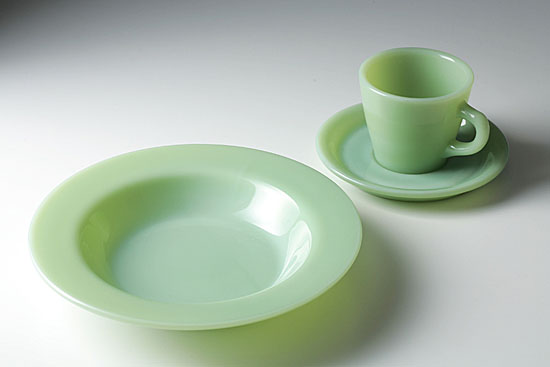
Following the success of "Jane Ray," which made Fire-King a household name, Anchor Hocking sought its next market. This led to the production of commercial glassware. The "Restaurant Ware" series, born from this endeavor, marked a significant transformation for Fire-King, shedding the delicate image of Jane Ray for a robust, simple style. It quickly became the face of restaurants and diners across America.
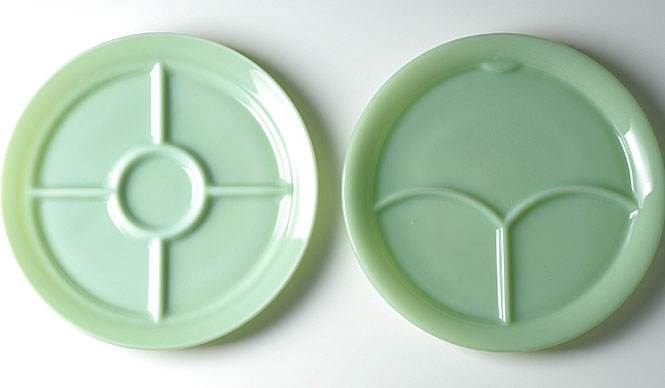
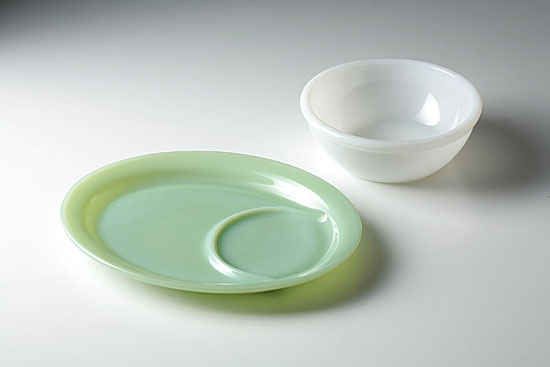
The driving force behind this was the range of plates designed with functionality in mind (pictured above). The 3-compartment plate, in particular, was perfectly suited for the one-plate service common in diners, which often featured a smorgasbord style, and its sales grew through continuous improvements. Furthermore, the 5-compartment plate, manufactured around the same time, was designed with a central indentation to hold a coffee cup, while the 2-compartment plate could accommodate a 10oz bowl (pictured below). This clever sales approach, which compelled establishments to replace all their tableware with Fire-King rather than just purchasing individual pieces, proved successful, with records showing sales of 25 million pieces in just five to six years.
Buoyed by this success, Anchor Hocking began producing white restaurant ware, known as "Anchor White," in the early 1960s. However, the enduring image of Jadeite was perhaps too strong, and the white ware showed dirt easily, leading to limited production and a lack of widespread adoption. Consequently, finding these pieces as deadstock today is extremely difficult, and their rarity has driven up prices.
Simple Designs Still Appreciated Today
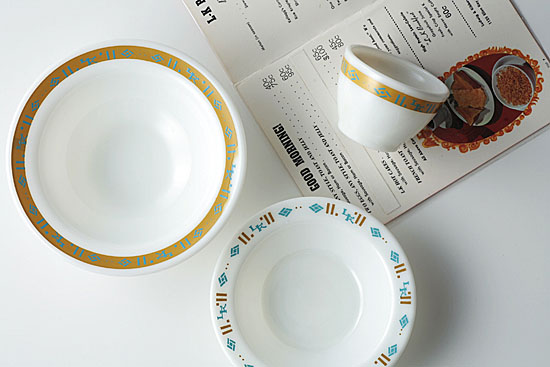
The "Dining Service" series, slightly thinner than Restaurant Ware, was also white but allowed for custom logos and designs, making it popular with large restaurant chains and hotels, which placed numerous orders. Famous examples include "LK" (pictured below), a restaurant in Anchor Hocking's home state of Ohio, and "WAFFLE HOUSE."
What might be the reason behind the enduring appeal of these Restaurant Ware dishes, etched into the memories of people and the streets of towns across America where these restaurants once stood? Perhaps it is the dedication of the nameless designers of that era, who strived for simple, everyday products while making gradual improvements.
I believe that stripping away the superfluous and striving for simplicity is a truly difficult endeavor.
