
April 3, 2015
Series: Hiroshi Yanagimoto | Part 34: Discussing Branding Design with Akihiro Nishizawa (Part 3)
Koichi Yanagimoto x Akihiro Nishizawa Talk
Considering the Act of Designers Managing Design
Part 34: Discussing Branding Design with Akihiro Nishizawa (Part 2 of 1)
This time, we welcome Akihiro Nishizawa (EIGHT BRANDING DESIGN) to discuss "Branding Design."Part 1andPart 2Following Parts 1 and 2, we discuss the current state and challenges of branding design.
Part 1 here
Part 2 here
Text by YANAGIMOTO Koichi
"The issue of business owners' design literacy is important" (Nishizawa)
YanagimotoAs you say, Mr. Nishizawa, there are so many projects that end with just the design itself. About 30 years ago, the previous generation partnered with local industries, but it all failed. The reason was likely that they only focused on superficial design. They commissioned designers with the idea that "sales are poor because the design is bad." That was the fundamental mistake. Designers who couldn't manage ended up just creating a platform to showcase their own designs.
NishizawaThat's right. It's an issue of literacy, specifically a lack of business literacy on the part of designers. There's also the issue on the client's side. The clients didn't understand the nature of designers at all. Both sides were ignorant, which might have been unavoidable, but we, as a generation, are aware that we must learn from those failures and reflections. Otherwise, when I give lectures in production areas, the locals might be wary, thinking, "Here come those shady foreigners with their jargon" (laughs).
YanagimotoThat's because everyone has had painful experiences in the past (laughs).
NishizawaThe issue of business owners' design literacy is important, and I believe they really need to learn. What I'm focusing on now is raising the design literacy of business owners. My lectures are mostly for business owners, not designers. I want all companies in the world to utilize designers more effectively.
How to use designers is about where to deploy them. For example, regarding the stages of branding, I discussed the three layers of management, content, and communication. I don't expect designers to be able to handle all three layers. However, I want them to understand that if they effectively use design in strategic business planning, their design-oriented thinking and visualization skills can lead to much better communication than current conventional management. I believe the contribution of design becomes even greater in content development. Designers' creativity and hypothesis-building skills are sure to be useful in planning and developing content.
And when it comes to communication, I believe designers should be involved in and control all contact points with customers. This is a significant area where design can contribute.
In essence, it is crucial for business owners to identify what their collaborating designers are good at and not good at, and to actively utilize these strengths as business resources. This is what design management looks like from the business owner's perspective.
We want business owners to meet us halfway under the logic of branding, and we designers must also meet them halfway. If business and design are properly integrated, the probability of achieving results will significantly increase.
Some business owners who understand design well can create good designs for their brands even with in-house designers, without needing highly skilled external professionals. The key is not the designer's skill, but the skill to "leverage designers."
I believe that good design will never emerge as long as the idea of "leveraging design" is not more widely adopted in society. Of course, the skill level of designers is certainly a factor. However, the perspective of "leveraging designers" is even more important.
YanagimotoExactly.


"Branding is business itself" (Nishizawa)
NishizawaThis is especially crucial for design management. It's important to consider how to leverage design in business, and surprisingly few people seriously think about this, nor are many studying it. Therefore, you cannot merely skim the surface of branding. While it's a trendy term that can lead to misunderstandings, branding is business itself. We must seriously consider what it means to design a business.
The reverse is also true: many designers are ignorant of business, but I believe we have entered an era where ignorance is no longer an excuse. It's a simple exercise: seriously consider what you would do if you were the president. If you genuinely care about the brand, it's not that difficult. I quite enjoy that simulation.
For instance, when I have my first meeting with a company, I conduct thorough interviews, asking about things ordinary designers wouldn't. Their history, sales figures, organizational structure, mid-term business plans, and so on. Once I have this information, I can come up with ideas from a designer's perspective, thinking, "If I were the president here, I would do this." I believe this is precisely what it means for a designer to engage in design management. Of course, I understand this is a biased viewpoint. So, I then discuss it with the business owner, who might say, "No, that's not right, it should be this way." This verification process is important. If we can establish a mutually agreeable rationale with the business owner, the company's branding will likely succeed. I value this aspect in my client relationships.
Koichi Yanagimoto x Akihiro Nishizawa Talk
Considering the Act of Designers Managing Design
Part 34: Discussing Branding Design with Akihiro Nishizawa (Part 2 of 2)
"The participatory process of creating together is branding itself" (Nishizawa)
NishizawaThis time, I'd like to ask you, Mr. Yanagimoto. Keywords like design management and branding are frequently used now. I don't have many opportunities to interact with younger designers, so I'm curious how they perceive these terms. When I started, there were hardly any "branding designers" in Japan. I believe I was probably the first to explicitly use that title. There were some in America and overseas, but recently, a few have started to emerge. I'd like to talk with them sometime. How do they define branding design? I suspect there might be some discrepancies. What are young designers doing these days?
Yanagimoto(Laughs). I haven't met many "branding designers" either.
NishizawaThey usually call themselves "Art Directors," right?
YanagimotoYes. Similar to the advertising industry, they tend to pull branding towards themselves to create a sense of necessity for their own work, to justify what they do. I don't think that's true branding.
NishizawaIndeed. I have strong concerns about this. Frankly, I wish they would just say, "I want to do advertising." Otherwise, clients get confused. Similar to the production area example, many people mistakenly believe that "branding equals advertising." So, before starting a project, I explain these misunderstandings one by one and try to correct them (laughs). I want to re-establish and disseminate the standards and core principles of branding.
YanagimotoThe first job our company took on after its establishment was for a manufacturer. A very small, micro-enterprise, but we started publishing and manufacturing. Through that, we learned about distribution and the mechanisms of products. Since we were investing our own money, I felt that desperately thinking about how to sell them was the best way to learn. From there, we began to understand the workings of the world. We realized that while this might be the approach for a minimal scale, the structure would likely remain the same even on a larger scale. From that point, we started doing consulting for larger companies than our own.
NishizawaExcellent. There's no other way. Looking back, it was incredibly beneficial for us to have worked thoroughly on COEDO and nana’s green tea from the beginning. They were very small companies back then. Assisting them and witnessing their growth firsthand made me realize that the same principles apply to medium-sized companies. Now, many of our new clients have annual sales ranging from 5 to 50 billion yen. Working with companies of this scale makes me think that the structure probably doesn't change much for larger ones either. Companies with over 100 billion yen in sales might not have a significantly different structure.
YanagimotoIndeed.
NishizawaThe complexity arises from the increased number of stakeholders. Handling that can be challenging.
YanagimotoOn the contrary, I find that aspect interesting. It's like being a warlord, figuring out how to attack, how to move the pieces so that opposing individuals become part of the strategy, and how to get the larger gears turning. Calculating those moves is the most fascinating part.


"There's a problem, but we don't know what it is" (Yanagimoto)
NishizawaIt's about how to create the story. We also spend about the first three months developing the concept before starting branding. We don't jump straight into design. For the past few years, we haven't done formal presentations; we've been conducting meetings in a workshop format.
The brand concept isn't just a catchy slogan. It's about considering the company's business, so it's best to create it together. Everyone collaborates and reaches an agreement. I believe this participatory process of "creating together" is branding itself. We are also members of that process. With that in mind, design's role is to ultimately give tangible form to everyone's collective aspirations.
The speed of decision-making communication also increases when designers participate in the process. By visualizing ideas like, "So, if we put this into an image, it would look like this," everyone can agree, saying, "Ah, this is it."
We are not selling art, nor are we selling our own works. It's more like we are creating custom-tailored clothing for clients. Therefore, being involved as stakeholders and working together is crucial.
YanagimotoWe also conduct workshops. A common request is that they don't even understand the problem itself. They know there's an issue, but they can't pinpoint what it is. So, we use workshops to help them discover it. Once the problem is identified, everyone can share a common understanding. Since the initial stage is often vague, actual work might begin six months or a year later.
NishizawaThat's right. As a designer, my career path, moving from architecture to products and then to graphics, leads me to believe that those in product design are closest to design management. Due to the nature of their work, they focus on the object and consolidate problem-solving to create it. I feel they have a higher degree of control compared to those who focus on creating an environment.
YanagimotoHowever, in my experience, people in product design are focused on accumulating details, down to fractions of a millimeter. They are like people who constantly look at a single tree. They can't see the forest as a whole. Conversely, those who create architecture, interiors, or spaces see the forest but can't see or delve into the details of the trees. It's rare to find someone who possesses a balance of both.
NishizawaIn graphics, we often look at things on the scale of a leaf, focusing intensely on the color and luster of that leaf. My career, which coincidentally started in architecture and moved through products and graphics, is something I consider a valuable asset. When managing design from a designer's perspective, branding requires direction skills.
Some people immediately want to do direction, don't they? I believe it's impossible to do that without hands-on experience. For example, I've drawn blueprints for architecture, interiors, and products, and I also do graphics and understand web development. Because I've done all of these, I can understand the points that specialized creators want to emphasize and delve into. When expressing something, it's not true direction unless you can draw out what an interior designer, for instance, would want to emphasize, while maintaining the concept. I believe this is impossible for business owners. While excellent business owners who like design might engage in creative direction, their details are often lacking, or not fully fleshed out. We are a company that specializes in directing on behalf of business owners, and I believe this is a unique skill we possess.
"For creators, it's about how many drawers they have for looking at things" (Nishizawa)
YanagimotoThat's right. On the other hand, we don't physically create things. However, by collecting and curating objects, we can provide extremely rigorous and detailed feedback due to the depth of our understanding. I believe this is possible because we have seen so many things. Without absolute trust between the director and the team, the director's words won't be reflected, will they?
NishizawaIndeed. For creators, it's about how many drawers they have for looking at things.
YanagimotoIn that sense, while I may not be knowledgeable about design itself, I view design through objects and observe manufacturing processes. That allows me to converse with the factory workers, the older gentlemen on the floor.
NishizawaThat's also important. I believe this is a unique ability of designers, and it's only after considering this that one can truly direct. Some people who are fresh graduates immediately want to be directors or handle branding; they clearly don't understand what direction entails (laughs).
Of course, it's important to have the core desire to do branding or become a director from the start. But without building upon that foundation, it's pointless. I believe they need to study at least the minimum knowledge required. This can only be achieved by gaining experience through observing the field, looking at many objects, and actually working with them. I, too, started with baby steps. So, I'm grateful to the first two companies that entrusted me with branding projects. A young, inexperienced, and overconfident individual proclaiming, "I can do branding." Looking back, I'm amazed they believed in me (laughs).
Koichi Yanagimoto x Akihiro Nishizawa Talk
Considering the Act of Designers Managing Design
Part 34: Discussing Branding Design with Akihiro Nishizawa (Part 2 of 3)
Examples of True Design Management
NishizawaFinally, I'd like to discuss "Stage 3," the management phase. This might be a slight digression, but there are a few design seniors I truly respect. Among them is Mr. Satoshi Miyata of DRAFT.
Many young people admire DRAFT, but I believe few understand the brilliance of Mr. Miyata's management. While the quality of their output is undoubtedly high, the true strength of DRAFT lies in Mr. Miyata's handling of projects, that is, his high level of design management capability.
I had the opportunity to speak with Mr. Miyata directly about a year ago, and he often said, "We need to spread true design throughout the world." Initially, I thought D-BROS was just a label, but then they opened a store and began handling all phases themselves: product planning, design, manufacturing, distribution, and sales. As a design company, they took on significant risks. I'm impressed by how they managed it all. This means Mr. Miyata undoubtedly believes in design and its value. By taking on management responsibilities, essentially business ownership, rather than just being a commissioned service, they are truly practicing design management in its entirety.
As EIGHT BRANDING DESIGN has progressed to handle up to "Stage 2," I've begun to consider what "Stage 3" should be. I'm unsure whether it's appropriate for EIGHT BRANDING DESIGN to undertake this, or if I should establish another company. I'm contemplating this.
Fundamentally, EIGHT BRANDING DESIGN's mission is to operate as a professional service company for Stages 1 and 2, and this is something we must absolutely uphold. Therefore, suddenly opening a store myself might be considered going against the rules. So, once we reach a certain point, I might establish a separate company. I'm not sure what it will be yet, but I'd like to manage some kind of business as a designer. It could be a takoyaki stand, or perhaps a shop selling design goods would be interesting. This is something I want to challenge in the near future, perhaps in 5 to 10 years. I believe this is what it means to seriously engage in Stage 3 management.
Seriously Engaging in Stage 3 Management
YanagimotoIs that about creating brands, or becoming a manufacturer, or running a store?
NishizawaI would be creating something, but essentially, it's about business management. It's about managing a business while also handling its design, taking responsibility for all three stages I mentioned earlier. In my current client work, I don't bear any responsibility for the highest management stage, nor am I asked to. If I create an unsuccessful design, the consequence is simply not receiving future work. I want to delve deeper into that. I'm not sure what that will entail yet.
YanagimotoWe only do manufacturing and don't run stores, but we occasionally interact with customers at events. When we do, we learn about the on-site realities that you can't grasp without being in a store, how customers perceive things, and how they interpret them. I believe that sense is crucial for merchandising, so it's something I want to value highly. Previously, our approach was more about establishing headquarters policies and merchandising strategies, then applying them like a copy-paste to create franchise stores. However, the reality on the ground is different. For example, the headquarters might dictate that a certain product be placed on a specific shelf, but on-site, placing it on a different shelf might lead to a tenfold increase in sales. People working on the sales floor have that kind of intuition. Therefore, I believe it's more important to provide them with that flexibility and allow for customization.
NishizawaI see. Standing on the sales floor, or in the actual environment, might be interesting.
YanagimotoYes. It becomes very clear where customers are looking when they make purchasing decisions. They say, "The human brain is 97% subconscious." That means we only consciously think about about 3%. But decisions aren't made solely on that 3%; the subconscious plays a much stronger role. If there are 10 checklist items, perhaps one is a conscious decision, and the other nine are made subconsciously. Within that, there are things that are important to the individual. It could be the texture, or using all five senses to explore the object. Pushing it, smelling it... Some people open all the lids on a teapot, don't they? There's meaning in actions that seem wasteful at first glance. The sound, the weight. Something to be felt intuitively. Even when older women are chatting, their hands might be moving. I think the brain is working then.
NishizawaFor us, packaging design strongly embodies that element. How it looks on the shelf, and what kind of design makes people pick it up.
For example, with "Kyushu Kitchen," we used a transparent bottle to showcase the dressing's color, layering the logo and illustration in a simple composition. Structurally, there were many possibilities for expression. We could have used more realistic photos, or increased the opacity of the container. But we felt that "somehow" around this point, it wouldn't be picked up, or wouldn't resonate. It's hard to explain in words. It's just "somehow" (laughs).
But designers understand each other. They'll say, "Yes, this is it." Trying to explain this to ordinary people is difficult. We can only say, "Please feel it." This is something you can only do if you've observed the actual environment, and at the same time, you must never forget the consumer's perspective. Therefore, I try to remain as much of an amateur as possible. When I go to stores, I basically do my shopping. I buy new products too. If I find something interesting, regardless of whether I need it, I buy it first. I enjoy that, and I also love eating and playing. I want to cherish those aspects.
Koichi Yanagimoto x Akihiro Nishizawa Talk
Considering the Act of Designers Managing Design
Part 34: Discussing Branding Design with Akihiro Nishizawa (Part 2 of 4)
Why People Dislike Ring Notebooks But Use Them Extensively
YanagimotoA few years ago, our company conducted a children's workshop. It involved observing and researching the behavior of shoppers in a supermarket.
For example, when persimmons are priced at 500 yen for three, everyone desperately searches for the best ones. So, they spend five or ten minutes in that spot. This attracts more people. Then, we considered if island fixtures that allow people to surround the display would be better. Or perhaps widening the aisles. For eggs, since they come in packs with fixed sizes and prices, people put them in their baskets without much thought. So, perhaps fixtures that are slightly tilted, allowing them to be picked up even while walking, would be better. The aisles could be narrower. We determined the design based on these movements. In essence, it was a fixed-point observation. Children were scattered throughout the supermarket (laughs), observing and categorizing actions, such as A = picking up, B = just looking. After collecting about 1,000 cases, they returned to the classroom, created a large floor plan of the supermarket, and placed red stickers for A, black stickers for B, and so on. This clearly showed which areas had people spending a long time thinking, and which areas had people quickly grabbing items and moving on.
From this infographic, we explored how to solve the problems. Although this workshop ended at the exploration stage and didn't involve actual sales floor design, it aimed to make participants think about why people behave in certain ways.
NishizawaThat's interesting. "Changing the sales floor" is design, isn't it?
YanagimotoYes. It's based on research. For example, consider deli items: if fried items are sold in packs of five for 300 yen, and next to them, the same fried items are available individually for 100 yen, chosen with tongs. Upon observation, even though they were fried at the same time, the individual 100-yen items sell overwhelmingly better. Even though the pack of five for 300 yen is cheaper and the same fried item. This suggests consumers perceive the individual ones as fresher. Perhaps it's a consumer's sense that "fried items are for when freshness has declined." They want to choose for themselves, even if it's more expensive. We can learn such things. Also, currently, at Tsutaya, we're holding morning meetings, which involve engaging the general public who visit Tsutaya in the morning to develop products. We're developing notebooks there, and everyone says they dislike ring notebooks. Yet, in reality, about 90% of people use ring notebooks.
Nishizawa(Laughs). Oh, why do they dislike them?
YanagimotoThey dislike the rings hitting their hands while writing. But humans always have "gains" and "losses." They choose things based on that balance. So, even if everyone says they dislike it, they choose it because there are other benefits. For example, they are easy to open, can be folded back, which isn't possible with ordinary saddle-stitched notebooks. So, they opt for that convenience. Therefore, what people think and what they do are different. If you misjudge this, you might conclude that ring notebooks shouldn't be made, leading to the creation of unpopular products. Also, most people scribble when taking notes. But not a single person uses a notebook without lines. Everyone uses lined paper. If you're just scribbling, a blank notebook would suffice, wouldn't it? But they seek order in the form of lines. It provides a sense of security.
NishizawaThat's design, isn't it? When we're involved in product development, if we're given overly intellectual logic, the results are usually uninteresting. I can often tell it will fail even before designing it. Everyone has an intuitive sense of "around here," and logic that isn't harmonized with sensibility, no matter how rational it seems, isn't true logic.
Perhaps the way Japanese companies have operated until now, especially larger organizations, is that they are poor at incorporating "sensory elements." Logic alone prevails. Therefore, I believe a designer's mission when working with companies is to integrate these sensory aspects while leaving room for them to function within the organization.
For example, should decisions be made by top management, or through workshops? How to make them understand these design-related aspects and judge them appropriately is, I believe, one of the important tasks for design moving forward. Without a framework to properly evaluate and adopt design, good design will never emerge. I believe we need to proactively propose creating an environment conducive to design together. We have to start from the ground up.
"What is missing is actually outside the brand's image" (Yanagimoto)
YanagimotoAlso, when manufacturing products, I think we could iterate on prototypes more. Perhaps it's okay to repeatedly refine prototypes before a major failure.
NishizawaThat's right. We're currently working on a major project, and what I'm thinking is that they should have started by selling it on a smaller scale. They conduct extensive research with market research firms, but the concept itself is simple, so they should just create it and try selling it without overthinking. And if it fails, so be it.
YanagimotoI don't think there's anything less reliable than market research firms.
NishizawaThe scores change depending on how you ask the questions.
YanagimotoExactly. For example, isn't a questionnaire inherently leading? Asking "Do you prefer red? Yellow?" is already leading. Perhaps color isn't the issue at all. As I mentioned earlier, what people think and what they choose based on instinct are completely different. That's why requests like "I want this on my smartphone" usually fail.
NishizawaThe ability to synthesize these non-verbal aspects is a designer's strength, so getting them to understand that is the first step. I want them to understand that designers are capturing the 97% of the subconscious and utilize them.
YanagimotoYes. Entrepreneurs, even if not fully engaged in branding, must have a clear understanding of their brand's true nature. For example, if you asked Nissan to create a macho design, it wouldn't sell. If you asked Jeep to embody a gentle image or a sense of security, it wouldn't sell. Everyone seeks what they lack, but what is missing is often outside the brand's image. We need to be aware of that. For instance, let's survey Jeep owners. If they say, "We're tired of the macho image, we want something softer, a stylish, fashionable car," and such a car is produced. But the users who wrote the survey themselves would say, "This isn't a Jeep," and wouldn't buy it.
NishizawaYou're absolutely right. When we conduct design research, the first thing we tell clients is, "We will conduct the research, but it is absolutely forbidden to make unreasonable demands based on the results." In other words, catching up is not differentiation at that point. It's being a follower. Therefore, when we identify what we lack, simply imitating successful examples won't work. Instead, you should consider it as a game of territory; if someone else has already claimed it, you can't win. Positioning is about how to leverage your strengths in areas no one else has claimed.
So, while we conduct research diligently, we absolutely avoid imitation. The research is precisely to prevent imitation. We often advise clients to be mindful of this. Unthinkingly using research information can lead to misapplication.
YanagimotoThat's right. If that happens, the industry as a whole becomes homogenous, and it boils down to who stands out more.
"Branding is like a game of telephone" (Nishizawa)
NishizawaIf that homogeneity is based on sound principles, it's fine. For example, when designing packaging for miso, we first deconstruct things and question the conventional packaging structures of commonly distributed miso. However, if we deviate too much and adopt a completely novel packaging structure, it will fail. There's a framework for the sales floor, and it needs to be designed to sell well in the miso section; otherwise, it will falter at the distribution stage, before even reaching the consumer.
We accept that premise and then consider other differentiation factors. If we proceed with planning and design solely based on the word "differentiation," we will misunderstand the objective.
Essentially, it's just a game of "We've made good miso, and we want to tell more people about it."
I often say that branding is like a "game of telephone." Design is required to create the catalyst for "This is good" to spread sequentially and lead to sales. The key is how to intentionally create this communication spread, and I believe there are several checkpoints for success. Considering these, if I have a wish, it's to solve problems simply with a single design.
I believe the most beautiful design is like a through pass (laughs). That is, a single pass that solves all problems smoothly. It resolves issues in sales, planning, and manufacturing. I want to make that kind of satisfying pass (laughs).
Design has the power to provide a horizontal connection across vertically structured management. I am conscious of this and aim to contribute to clients' branding through design.
YanagimotoThank you very much for sharing your valuable insights today.
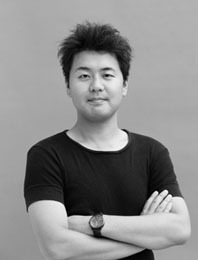
Akihiro Nishizawa | NISHIZAWA Akihiro
Branding Designer. Born in Shiga Prefecture in 1976. Representative Director of EIGHT BRANDING DESIGN Inc.
Under the perspective of "Branding Design," he engages in a wide range of design activities, including corporate brand development, product development, and store development. His consistent design development method, "Focus RPCD®," which encompasses research, planning, and concept development, has received high acclaim from various quarters.
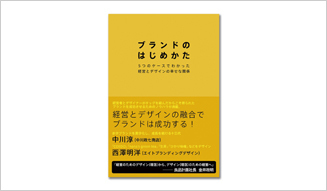
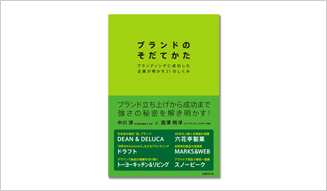
His major works include premium craft beer "COEDO," matcha cafe "nana’s green tea," Shinshu miso "Hikari Miso," Kintetsu Railway "Uehommachi YUFURA," and Kirin Beverage "Nama-cha." He has received numerous domestic and international awards, including the Good Design Award, PENTAWARDS, and THE ONE SHOW. His books include "Brand o Design Suru!" (Pie International) and "Brand no Hajimekata," "Brand no Sodatekata" (both Nikkei BP, co-authored with Jun Nakagawa).
http://www.8brandingdesign.com/