April 3, 2015
Series: Hiroshi Yanagimoto | Part 33: Discussing Branding Design with Akihiro Nishizawa (Part 2)
Koichi Yanagimoto x Akihiro Nishizawa: A Conversation
Understanding the 'Stages' of Branding Design
Part 33: Discussing Branding Design with Akihiro Nishizawa (Part 2 of 2)
This time, we welcome Akihiro Nishizawa of EIGHT BRANDING DESIGN to discuss 'branding design'.Following the first part,we will explore 'what is branding design' using Nishizawa's actual work as examples.
Part 1 here
Text by YANAGIMOTO Koichi
Theme: Mastering Design Management Over a Lifetime
YanagimotoHow many years has it been since you became independent, Nishizawa-san?
NishizawaEIGHT BRANDING DESIGN is now in its eighth year. Before that, we had two years as a limited company, so it's exactly our tenth year since going independent. I spent two years at Toshiba, making my total career as a designer since graduating from graduate school twelve years. While I did various things in the first two years after going independent, I now specialize in branding design.
EIGHT BRANDING DESIGN specializes in corporate branding, and my personal goal as a designer is to 'master design management' over a lifetime, so I'm currently setting various things in motion. First, let me talk about EIGHT BRANDING DESIGN.
Our work focuses on branding design, so while we receive various offers for 'just a logo,' 'just packaging,' or 'just a website,' we basically turn down such requests. In other words, we only take on projects where we can take responsibility for the entire 'brand,' whether it's a corporate brand, business brand, product brand, or shop brand. I believe we are quite an unusual type of design company.
The first project we handled was for ' COEDO', a craft beer maker in Saitama Prefecture. Another was 'nana’s green tea,' a matcha cafe brand that has expanded to multiple locations. These two were our first projects, both starting around the same time.
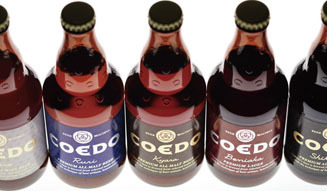
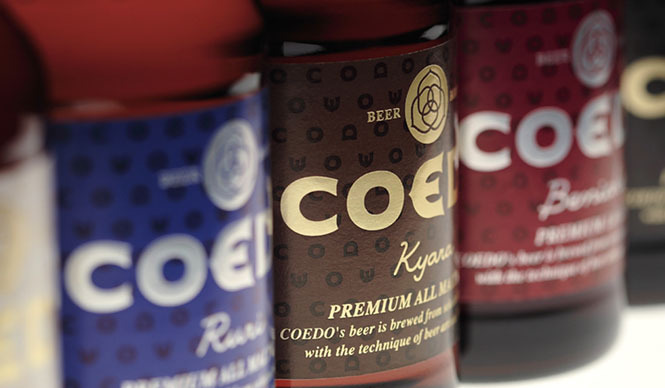
With COEDO, we focused on product-type branding, specifically for their products. The company was originally a local beer producer and approached us with the request to 'renew their products to improve sales.' At the time, their design and marketing were typical of a local beer manufacturer. As we discussed with the management, we realized the reason for poor sales might not be the 'local beer' aspect itself, and that this project was likely more than just a packaging change.
Then, the crucial question became what to do instead of local beer. At the time, premium beer was gaining popularity in the market, and we wanted to leverage that trend. However, simply creating a premium beer like the major brands wouldn't be effective. We decided to emphasize the 'craftsmanship' unique to a small-to-medium-sized brewery, rather than 'premium.' We thought of it as 'craft' rather than 'premium.' While 'craft beer' is a common term now, I believe COEDO was the first manufacturer to actively promote the concept of craft beer. We worked with the intention of creating a market for 'craft beer,' which goes beyond premium.
YanagimotoSo, you first establish the direction, right?
Koichi Yanagimoto x Akihiro Nishizawa: A Conversation
Understanding the 'Stages' of Branding Design
Part 33: Discussing Branding Design with Akihiro Nishizawa (Part 2 of 2)
Designing All Customer Touchpoint Items Holistically
NishizawaOur work follows a design development process called 'Focus RPCD®'. First, we collaborate with management to form a hypothesis about the brand's direction, and then we conduct thorough design research. This is especially important for consumer products where competition for positioning is fierce.
Products that designers create spontaneously, thinking 'this might be interesting,' can appear novel at first glance but may have precarious aspects from a business perspective. For example, in the design industry, 'new' often means something never seen before, but it's questionable whether such 'never-before-seen' designs effectively communicate with beer packaging. Sometimes it works, sometimes it doesn't.
As a professional in branding design, I believe it's unacceptable to leave this to chance. First, we thoroughly analyze the market to understand what constitutes new design and what factors contribute to brand differentiation. After this research, we translate these findings into words, establishing them as the brand concept. Only then do we proceed to logo design or packaging design.
In projects like these, people often feel relieved after renewing the packaging. However, from the perspective of a beer sales company, while packaging is important, promotional tools, websites, and events are also crucial. Therefore, our branding approach involves holistically designing all customer touchpoint items for the company.
Many young designers attempting branding tend to think it's solely about creating a unified design. While not entirely wrong, the fundamental idea isn't just about surface-level consistency. It involves restructuring the business framework, rethinking sales strategies, and then designing the appropriate execution. Branding design is about organizing the 'brand's philosophy' and 'what the brand needs,' and then implementing that coherence through design. The design management aspect is extremely important. However, many people today are not studying design management, or rather, they are unaware of it.
YanagimotoIndeed. What is lacking?
NishizawaFirstly, they don't understand business. They don't grasp the concept of 'making and selling things.' Because they haven't experienced it. For me, the value of having worked for a manufacturer lies there; creating products is far more than just making advertisements or writing witty copy; it's a much more hands-on process. There are market demands, consumer needs, and societal expectations. Design management is about maximizing one's ideals within these constraints. I want to achieve this through the framework of a brand.
And why 'brand'? 'Design management' can still be difficult for some companies to grasp and may lead to misunderstandings. It has a broad definition of utilizing design in management, so it can be interpreted in many ways. Instead, I believe it's important to focus on 'branding' to leverage design management. To 'create a brand.' We call the process of creating a brand concept and then designing it 'Focus RPCD®,' and it involves building and nurturing the brand according to this flow. While 'design management' could have been used, it's prone to misinterpretation, and simply saying 'branding' is more easily understood. In my interpretation, 'brand equals management.'
YanagimotoI see. 'Brand equals management,' you say.
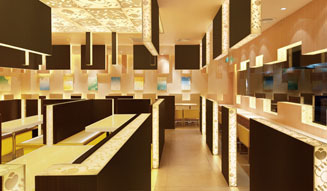
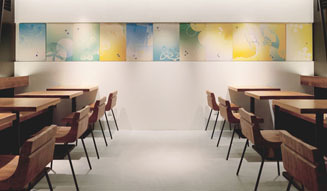
NishizawaIn other words, branding is not just about clothing. It's the bones, the blood, and the flesh. Ultimately, the true theme is how design can improve management. For COEDO, it's about brewing beer; for nana’s green tea, it's about expanding a matcha cafe chain. nana’s green tea now has 71 stores and has expanded internationally to Shanghai and Singapore. My experiences with these two companies were incredibly educational. And through this work, I realized that this was just the beginning of branding.
YanagimotoYou learned from those first two projects, then.
The Trinity of Management, Content, and Communication
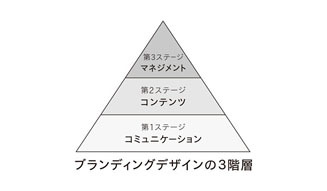
NishizawaCurrently, I believe branding has three layers. The top layer is the management stage, the middle is content, and the bottom is communication. What we assisted COEDO and nana’s green tea with was primarily communication design. Both companies had solid management and good original content. Their communication, however, was not very effective – in terms of how they conveyed their message, their naming, or their visual presentation. We supported them in these areas.
YanagimotoYes, that's a very clear explanation.
NishizawaWhether it's a product or a store, 'clearly conveying the brand' is extremely important, and we established a solid brand concept and created appropriate designs for it.
However, the communication stage is merely the entrance to branding design, and I realized during my work with those first two companies that it's essentially the beginner's level. In reality, what truly empowers a brand are the higher stages: management and content. Both COEDO and nana’s green tea had exceptionally capable management. I had the opportunity to witness their brand growth firsthand, right alongside their management teams, and experienced the true meaning of management, content, and communication working in unison.
Strong branding means excelling at the management and content stages. If you excel here, even if other aspects are somewhat lacking, you can achieve strong management. This is the most crucial area for branding.
For instance, there's the strategy of securing a highly niche position in the market and achieving overwhelming superiority. This is particularly common in the IT market; where the market is undeveloped, positioning often determines success. In such cases, design is not yet very important, and victory can be achieved through technology or management strategies alone. However, it's important to note that even in undeveloped fields like IT, as the market matures, the importance of design will inevitably increase.
The communication stage, in other words, design, is a more nuanced and mature battleground. It's a stage that becomes essential when the market matures and branding requires greater differentiation. Both COEDO and nana’s green tea operate in highly mature markets within Japan's food and beverage industry – the beer market and the cafe market, respectively – allowing us to deeply feel the necessity of design.
We understood this communication stage, or 'Stage 1,' within the first five years, and EIGHT BRANDING DESIGN is now beginning to enter 'Stage 2,' the content stage.
Branding from the content perspective, which we've been actively pursuing for the past two years, involves product development. For example, chair design isn't solely about functionality; design is inherently integrated into the content itself. We then align this with management and proceed to the communication stage, such as websites and promotional materials.
Koichi Yanagimoto x Akihiro Nishizawa: A Conversation
Understanding the 'Stages' of Branding Design
Part 33: Discussing Branding Design with Akihiro Nishizawa (Part 3 of 3)
Branding from 'Stage 2' Content
NishizawaWe had always wanted to handle the design of individual content creation, and that's when we received an offer for branding design, including product development, from a towel trading company in Osaka called 'Nissen Kōgyō.' As a trading company, they could have done it internally, but they wanted to see how far they could go by leveraging external expertise. EIGHT BRANDING DESIGN is involved in everything from product planning to the detailed design of weaving, dyeing, and graphics. The brand is called ' ℓ ℓ ℓ works'.
Another project that falls under Stage 2 is from 'Fundodai,' a soy sauce and miso manufacturer in Kumamoto with over 140 years of history. They originally produced soy sauce and miso, along with products like dressings. The request was about how to develop these further. While we could have re-branded their soy sauce and miso lines, considering the 'content' issue, we couldn't envision a definitive differentiation scenario with just soy sauce and miso.
YanagimotoWhy was that?
NishizawaBecause the soy sauce and miso from Kumamoto have a sweet taste. Such flavors are not at the center of the current Japanese market. In other words, selling such sweet soy sauce and miso in Tokyo or Osaka wouldn't be successful. While some might buy it out of curiosity, it wouldn't lead to significant profits for them. For traditional staple seasonings, unlike niche food items, consumers are very conservative. The motivation to drastically change the taste of their usual miso soup is very low. From a management perspective, constructing a winning game in this area is quite challenging.

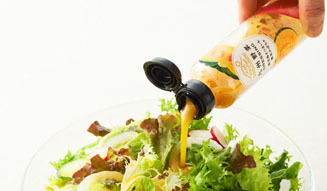
Therefore, we conceived the brand 'Kyushu Kitchen.' Typically, manufacturers like this separate soy sauce and miso. Companies that handle both soy sauce and miso are rare in Japan, limited to specific regions, including Kyushu. In essence, I believe they don't see themselves as 'soy sauce manufacturers' or 'miso manufacturers,' but rather as 'seasoning manufacturers.' This is why having products like dressings is natural for them.
Thus, we created the new brand 'Kyushu Kitchen,' centering the business on the concept of being a 'manufacturer of Japanese seasonings and foods for the future.' With the current emphasis on food safety and the abundance of nature in Kyushu, we aim to develop products using local ingredients and create a brand that delivers them not just locally but nationwide and globally. With the concept 'Delicious Kyushu to Japanese Dining Tables,' we aim to become a brand that supports the entire Kyushu region.
YanagimotoDoes this ultimately mean transcending individual manufacturers?
NishizawaRather than transcending, I believe it's about honestly pursuing what the company should do and wants to do. Instead of rigid silos or excessive specialization, it's about thoroughly executing what is most important to the brand as a whole.
The most important aspect of Kyushu Kitchen is highlighting the primary producers. We aim to bring farmers to the forefront. In the typical mindset of manufacturers, information about raw material suppliers is often kept private, to avoid revealing trade secrets. However, we believe that primary producers, manufacturers, distributors, and consumers all fundamentally want to support sound food philosophies. We built the brand around this shared sentiment.
Incidentally, Kyushu Kitchen has a significant business strategy. Once it grows, 'Kyushu Kitchen' will be positioned at the top of the holding company, ultimately bringing 'Fundodai' and other distinctive product brands under its umbrella.
Fundodai is a long-established company in Kumamoto, and its original brand power is immense. However, making it the centerpiece of the national market is challenging. Yet, it possesses unique points and is a product brand that must be carefully preserved for the future.
Therefore, we aim to reverse the hierarchy. In our initial meeting, the president and I enthusiastically agreed on this idea. I find this management logic incredibly interesting. I believe it requires great courage for a long-established company. However, creating such a company from scratch would be too risky, so the plan is to first launch it as a product brand, and once it gains traction, the hierarchy can be reversed. The president envisioned this realistic scenario. All decisions here are made by the president. It's an idea born from a highly forward-thinking management stage regarding change. I think it's wonderful.
We were also significantly involved in the content aspect, and they entrusted us with product planning. I can't create dressings myself (laughs), but since it seemed interesting, I agreed to do it.
Koichi Yanagimoto x Akihiro Nishizawa: A Conversation
Understanding the 'Stages' of Branding Design
Part 33: Discussing Branding Design with Akihiro Nishizawa (Part 4 of 4)
Lessons Learned from the Dressing Market
YanagimotoWhat was it like to get involved in the planning?
NishizawaFirst, I realized that the specialists who develop recipes for food products tend to believe too strongly in the 'norm' of their market. Of course, their skills in making things delicious are remarkable – research on ingredients, blending ratios, and so on. While we can't create flavors ourselves, we can establish the concept for a product brand. We then entered the process to see if we could add design ideas.
Looking at the current dressing market, it can be broadly divided into two categories. This is something I discovered through this project. One category includes delicious blends of various ingredients. The other category consists of dressings using a single ingredient, such as onion dressing or sesame dressing. However, there's a gap between them. Blending multiple ingredients for deliciousness is certainly appealing. But then, it becomes unclear what makes it delicious. Conversely, single-ingredient products can be monotonous in taste.
So, what happens if we blend about two or three ingredients? This is the core of this project. It's an approach to product development that seems plausible yet hasn't been explored. For example, pumpkin and sweet potato. Carrot and paprika. You get the sweetness of carrot, followed by the lingering flavor of paprika. With plenty of vegetables, you also taste their natural sweetness. What's important in such flavors is complexity. Humans perceive depth and richness in taste when it's complex rather than monotonous.
So, we settled on the idea of blending about two ingredients, ensuring each character remains distinct. What was remarkable after that was the skill of the development team; the initial prototype was quite delicious. 'This could work,' we thought. By pursuing an unexplored product angle, we could more easily create dressings that looked unlike anything seen before.
While the quality of taste is often judged by whether it's delicious, we considered whether the story of the designed brand could be conveyed by explaining that the taste comes from the combination of two vegetables, rather than simply being a single-flavor or complex-flavor taste. We believe this is what true brand planning should be.
After meticulously developing this, we entrusted them with refining the taste, and then we moved on to our area of expertise: creating the logo, packaging, and other design work.
Design is Meaningless Unless It's Ultimately Usable
Furthermore, in the communication phase that follows, what we particularly emphasize is PR, or public relations. We actively utilize branding design to strengthen public relations capabilities.
I believe design is meaningless unless it's ultimately usable. To achieve this, we help clients establish internal PR systems and also bring in professional PR experts. We then ensure effective communication using the tools we've designed.
I think this PR stage is a crucial step for all companies, but very few companies truly excel at PR.
After going through this stage, advertising finally comes into play. However, for a company of Fundodai's scale, advertising is hardly necessary. In our view, advertising is only cost-effective when the brand's sales exceed around one billion yen; otherwise, we see little point in it. This doesn't apply to branding for limited sales channels like direct-to-consumer e-commerce.
If you want to sell through regular distribution channels, creating a well-crafted product and usable tools is more effective in gaining support from retailers than advertising. It also garners support from conscientious media outlets.
Lately, we've been handling many such projects, working on a total design approach from content creation to communication. I've decided that EIGHT BRANDING DESIGN will focus on Stage 1: Communication for the first 1-5 years, and from year 5 to 10, expand to Stage 2, encompassing broader branding design including content.
Beyond that, 'Stage 3' involves challenges at the management level, and we've just begun some trials in this area.
Ultimately, overseeing management involves taking responsibility, so we make investments at the contract stage. Instead of a contract for design services, we participate as a stakeholder, meaning as a shareholder.
As a practical application of this, we have established a new food and beverage company with a client, funded by both parties. We handle planning and design, while they manage and operate the business. If surplus profits are generated, we plan to distribute them as dividends according to our respective shareholdings. Therefore, I believe we are getting a taste of management, albeit in a small way. I anticipate being able to conduct more in-depth trials in this area over the next two to three years.
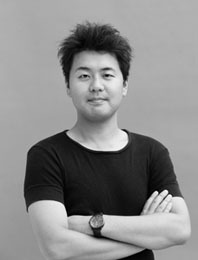
Akihiro Nishizawa
Branding designer. Born in Shiga Prefecture in 1976. Representative of Eight Branding Design Inc.
From the perspective of 'branding design,' he engages in a wide range of design activities, including corporate brand development, product development, and store development. His consistent design development methodology, 'Focus RPCD®,' which encompasses research, planning, and concept development, has received high acclaim from various quarters.
His major works include the premium craft beer 'COEDO,' the matcha cafe 'nana’s green tea,' the Shinshu miso 'Hikari Miso,' Kintetsu Railway's 'Uehonmachi YUFURA,' and Kirin Beverage's 'Nama-cha.' He has received numerous domestic and international awards, including the Good Design Award, PENTAWARDS, and THE ONE SHOW. His books include 'Brand o Dezain Suru!' (Pie International), 'Burando no Hajimekata,' and 'Burando no Sodatekata' (both Nikkei BP, co-authored with Jun Nakagawa).
http://www.8brandingdesign.com/