April 3, 2015
Series: Hiroshi Yanagimoto | Part 32: Discussing Branding Design with Akihiro Nishizawa (Part 1)
Koichi Yanagimoto x Akihiro Nishizawa: A Conversation
Why I Came to Work in Branding Design
Part 32: Discussing Branding Design with Akihiro Nishizawa (Part 1)
Following up on Tago-san's Design Management last time,this time we feature Akihiro Nishizawa, who works in a field perhaps unfamiliar to some: branding design. When discussing design, comprehensive planning that considers intangible aspects like branding has become indispensable. In this conversation, we delve into branding design with Nishizawa-san, seeking insights for designers and organizations on how to approach it.
Text by KOICHI YANAGIMOTO
“This is truly a field for the future,” says Nishizawa.
YanagimotoNishizawa-san, you studied architecture as a student. Could you tell us how you came to pursue branding design?
NishizawaCertainly. Today, I'd like to talk about why I came to work in branding design and the future of this field. I don't usually discuss these topics, so I might be a bit unaccustomed, but… I look forward to our conversation.
I originally studied architecture at the Kyoto Institute of Technology. While Kyoto University now occupies that space, at the time, Professor Waro Kishi was there, and I spent four years in that environment, believing I would become an architect. The school's ethos was very much about “independence and establishing your own atelier,” so I naturally assumed I would become an architect.
However, I was in Professor Rikuhira Yamauchi's laboratory. He was the one who established the Department of Design Management Engineering at Kyoto Institute of Technology, the first of its kind. Studying under Professor Yamauchi, I began to study design management alongside architecture.
YanagimotoDesign management, you say?
NishizawaYes. Design management is truly a field for the future. In Japan, it began to emerge with the CI boom in the 1980s, and companies started adopting it around then. Academic research in Japan only began when I was a student, just over a decade ago. My alma mater, Kyoto Institute of Technology, was the very first in Japan to establish a department for studying this. Before that, no such department existed anywhere. While design management might have been covered in a single class within a design department, systematic research as a dedicated “department” only started during my time as a student.
Witnessing this momentum, I found it fascinating. I then assisted Professor Yamauchi and his successor, Professor Mikio Fujito, in establishing that department.
As a teaching assistant, I supported the professor in instructing undergraduate students. Through writing papers and other activities, I became more determined to research design management. Although I was officially enrolled in the “Architecture” program, I was deeply immersed in design management during my graduate studies. I found the research in design management far more engaging than architecture.
YanagimotoI see (laughs). What initially drew you to architecture?
NishizawaFor example, people who don't understand design often imagine something like art when asked what design is. They might picture someone drawing amazing sketches or curves. But architecture is more about “order.” It’s about “creating the beauty of order.” Urban planning, for instance, is similar. In architecture, design is inherently tied to structure. The appeal of architecture for me lay in this pursuit of beauty through order, combined with practicality.
And I found design management even more compelling. The world architecture can control is limited to the physical realm. When you conduct alumni interviews, for example, and speak with graduates from large architectural firms or those who have established their own practices, you find their work often ends with “completing the building.” In contrast, design management allows you to engage with the intangible aspects. It’s about “designing the very essence of corporate activity.” This, I felt, was the true domain of design management, and it deeply attracted me.

“How to Design Corporate Management” (Nishizawa)
YanagimotoAfter shifting from architecture to design management, what did you do after graduation?
NishizawaI didn't apply for any architecture-related positions during my job search. It was a complete change of direction (laughs). During graduate school, I was solely focused on design management.
YanagimotoWhat about your graduation project?
NishizawaMy graduation project was in architecture, as my undergraduate studies were focused on it. However, in graduate school, my thesis was on ecological design. I was researching a broader definition of ecological design.
YanagimotoSo, regarding your job search, which wasn't in architecture...
NishizawaFirst, I researched companies that were genuinely involved in design management. Advertising agencies immediately came to mind, but I decided to avoid them at all costs. Their business model is centered around “advertising” as the primary communication method. Since advertising is their main revenue source, they cannot function without it. Consequently, their business structure leads everything back to advertising, regardless of the approach.
The design management I was researching focuses on “branding” as its core, and the essence of a company is not advertising. Advertising is merely a branch of corporate communication; it's used when beneficial, but not essential. Design management, on the other hand, is about how to design corporate management itself. This is the true essence of design management.
YanagimotoI see.
NishizawaI also considered consulting firms as potential options. However, they primarily consult; they don't design. While I was interested in that field and had studied it, I wanted to be a “designer.” From the perspective of “not designing = not creating form,” consulting firms also didn't align with my goals. Ultimately, I believe design involves creating form.
While we now talk about “formless design” or “broad design,” and I certainly acknowledge those concepts and value those stages of design, I still believe that design culminates in the creation of form. The output is what matters. I felt I couldn't be satisfied without being involved in that final stage. Considering all this, I realized I needed to work within a company to be involved in the entire manufacturing process, rather than pursuing a specialized role. That's why I decided to join a manufacturing company. Japan is a country of manufacturing.


“The Grand Goal of Mastering Design Management”
YanagimotoThat was a very specific career path you envisioned.
NishizawaI was looking for a company in the manufacturing sector that possessed international competitiveness, its own technology, and the ability to handle everything from planning to design and sales—a company with an integrated workflow. This led me to consider electronics or automotive manufacturers. Looking back now, there are many interesting smaller companies, but as a student, I wasn't aware of them.
I heard that in the automotive industry, one would primarily be involved in styling, which didn't align with the essence of design management. So, I focused on electronics manufacturers. Among them, I considered companies like Toshiba, Hitachi, Mitsubishi, and Fujitsu, which were involved in a broader range of products, including public infrastructure, rather than just consumer electronics like Sony or Panasonic. I decided to aim for a company with a wide perspective, and through a fortunate turn of events, I joined Toshiba. I was there for two years.
YanagimotoWhat kind of work did you do at Toshiba?
NishizawaAt Toshiba, I worked as a designer in a team focused on social infrastructure and business development. It wasn't a typical department for new graduates; people usually joined after seven or eight years of experience. The work involved responsibilities like proposing new business developments.
My background in architecture led them to believe I could handle presentation and spatial design, so they brought me onto the team. I was involved in various projects, which I found incredibly engaging. However, what I found lacking was the opportunity to engage with the company's overall branding… Toshiba's corporate branding itself.
YanagimotoThat’s quite a large-scale form of “branding.”
NishizawaI wanted to be involved in designing at least the business brands. But as a mere two-year employee, I couldn't be entrusted with such responsibility. Naturally (laughs). However, I felt confident in my abilities and believed I could contribute significantly. To immediately engage in corporate branding, I left Toshiba. This was the catalyst for starting my own venture. I decided to establish a design company specializing in “branding,” and thus EIGHT BRANDING DESIGN was founded.
This is a personal goal of mine: when I graduated from university and entered the workforce, I set a grand, lifelong objective to “master design management.” I am still on that journey. At EIGHT BRANDING DESIGN, our company mission is to delve deeply into the field of “branding,” which is a subset of design management. Therefore, we generally do not accept work outside of branding. We help various companies improve their communication through design, assist with planning, and even offer management advice when necessary. In this way, our work is to contribute to our clients and society through branding design.
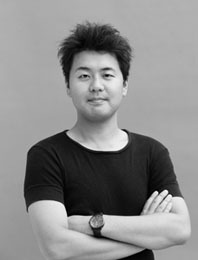
Akihiro Nishizawa | NISHIZAWA Akihiro
Branding designer. Born in Shiga Prefecture in 1976. Representative of EIGHT BRANDING DESIGN Inc.
From the perspective of “branding design,” he engages in a wide range of design activities, including corporate brand development, product development, and store development. His integrated design development methodology, “Focus RPCD®,” which encompasses research, planning, and concept development, has received high acclaim from various sectors.
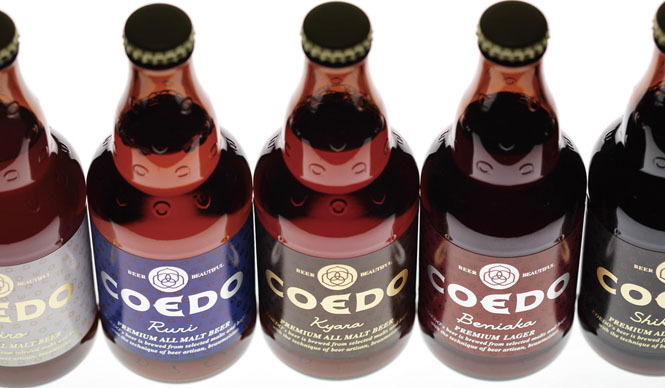
His notable works include the premium craft beer “COEDO,” the matcha cafe “nana’s green tea,” the miso brand “Hikari Miso,” the Kintetsu Department Store “Uehonmachi YUFURA,” and Kirin Beverage’s “Nama-cha.” He has received numerous domestic and international awards, including the Good Design Award, PENTAWARDS, and THE ONE SHOW. His books include “Brand o Dezain Suru!” (PiE BOOKS), and “Brand no Hajimekata” and “Brand no Sodatekata” (both Nikkei BP, co-authored with Jun Nakagawa).
http://www.8brandingdesign.com/