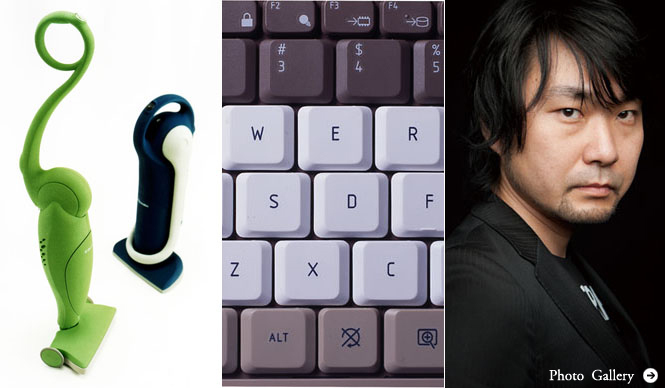
January 9, 2015
Series: Hiroshi Yanagimoto | Part 30: Discussing Design Management with Manabu Tago
Vol. 30: Discussing Design Management with Manabu Tago (Part 1-1)
This installment features Manabu Tago, known for his work on rebranding established manufacturers. From a "design management" perspective, he approaches product development, public relations, and management strategy, connecting them with regional characteristics and historical context. As I personally feel this is a crucial field for manufacturing today, I'm eager to hear about it through concrete examples.
(Part 2 will be published on Thursday, October 25th)
Text by YANAGIMOTO Koichi
I was doing what I liked within the company (Tago)
YanagimotoCould you start by telling us about your career path?
TagoAfter majoring in design management—which involves building complex relationships including design, organization, management, and strategy—at university, I joined Toshiba Design Center in 1994, working in product design. In that environment, I began to think about what was lacking and how things could be improved, and I came to believe that designers themselves needed to engage from a design management viewpoint.
The philosophy of design management is that a company or organization understands "Why are we making this product? What is our brand?" and then acts upon that understanding to contribute to society. I struggled with what I could do as an in-house designer, and various opportunities arose... that's the background leading to my current activities.
YanagimotoSo, at that time, there wasn't a specific design management department, was there?
TagoThere wasn't (though I'm not sure about now). A "brand" department was only established about two or three years before I left.
YanagimotoSo you worked as a product designer for a while then.
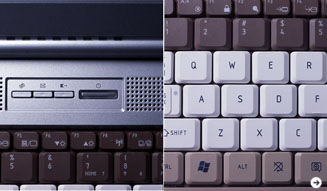
I started to feel that things were becoming strange in the home appliance industry around 1997. There were many small, independent electronics stores across the country, but around this time, sales began to shift predominantly to large retailers. Previously, products were sold in close connection with local communities and consumers, but that distance gradually increased. As a result, the sales strategy devolved into "price competition." This led to a focus on strategies for dominating the global market, rather than on "What is a brand?" or "What is a manufacturer's identity?" Amidst this pressure, Toshiba's home appliance division was spun off.
Fortunately, the Design Center remained under the direct control of the head office, allowing designers to continue their work without being constrained by the policies of individual business units. I believe this is one of Toshiba's strengths. Around this time, Toshiba entered into a partnership with Electrolux, a company headquartered in Stockholm, Sweden. This was an opportunity to target a larger global market. Electrolux's intention was to expand their market share by combining Toshiba's technology, recognized globally for its information equipment, with their own home appliance technology.
Incidentally, the robot vacuum cleaners that are popular now actually originated with Electrolux. The next era was seen as being about robots, and with component supply from Toshiba, there was the potential for a brilliant collaboration if it could be rolled out globally. Thus, the "Electrolux by TOSHIBA" brand was born (and ended in 2006).
Vol. 30: Discussing Design Management with Manabu Tago (Part 1-2)
The Relationship Between Brand and Cultural Background, and Its Importance
YanagimotoWhat did you learn from Electrolux?
TagoI was assigned to the test period before the partnership and first went to Sweden to participate in a project targeting the Chinese market. At that time, marketing in China was not as advanced as it is now, and it was unclear what kind of taste would be well-received. However, there was a tendency for people to prefer unique designs they had never seen before that enriched their lives, so we decided to strongly emphasize the "European image."
What impressed me about Electrolux's work was how thoroughly the employees understood the company's philosophy and how they sublimated it into their designs. Even if a form appeared unique at first glance, this process was always followed. In other words, management was meticulous down to the smallest detail. As a corporate entity, they had also become a multinational company. Therefore, while cherishing their Swedish lifestyle and pride, they approached product development with a global standard corporate philosophy.
Even the shape of the vacuum cleaner hose is very unique. That distinctive form created the brand's identity. In fact, the Nordic environment influenced this. Nordic people are tall. Also, since the daylight hours are short, women, especially as they age, are at risk of osteoporosis. Because of this, there are even social regulations to prevent back pain. Therefore, features to prevent back pain are naturally incorporated into the products. The forms derived from this interpretation are truly beautiful. I learned a great deal from how they positively incorporated these seemingly negative design constraints and how they added their own unique touch. It also prompted me to question how important the relationship between brand and cultural background is.
YanagimotoAnd after returning to Japan?
TagoI wanted to work on projects that evoked cultural background, so I launched the "Nihon-aji" (Japanese Flavor) project within the company. At Electrolux, my team included British and Swedish members who were very interested in Japanese culture and had acquired a considerable amount of detailed information. As we talked, I realized that their understanding seemed to blend Japanese techno-music/club culture with traditional culture. I believe this was before the "Wamono boom" (Japanese goods craze) had really taken off.
When I visited their homes, they had cast iron kettles and would say, "This is wonderful, isn't it!" They also said things like, "Tea ceremony utensils are made so beautifully, the materials are efficient, electronics are amazing, and there's techno music. Japan is incredible." This made me want to clear my own overly familiar values and perspectives and delve deeper. Previously, I had approached manufacturing based on mass-market logic or manufacturer rationale, but upon reflection, I realized there was room to leverage Japan's unique characteristics and culture in the market, which also connected to what overseas expectations were.
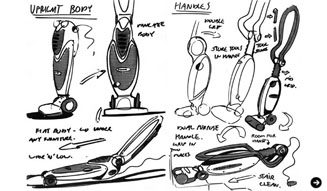
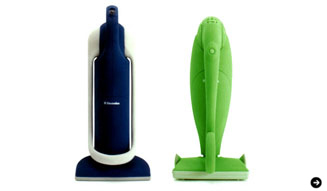
So, I started the "Nihon-aji" project to discover what is uniquely Japanese, and it caused quite a stir within the company. Even my boss and the president understood and said, "We absolutely must do this." The idea was to explore new markets and sales channels from a fresh perspective, finding a path different from mass retailers. However, just as we were about to get started, the organization underwent a major change, and the project was cut short. Although there were supporters within the company who regretted this, there was nothing that could be done. My own department also shifted from home appliances to personal computers, so I took it as a sign that "it might be time for a change..."
The exhibition I mentioned earlier took place around this time. By channeling my thoughts into a book, I brought a sense of closure to that period. However, the strong support I received from people outside the company made my stance clearer. Then, about a year and a half after the project ended, I heard that "someone within the company was planning a product with a story similar to 'Nihon-aji'." Upon investigation, I found it was Hiroshi Kumamoto (currently Representative Director of Real Fleet Inc.). He was also a maverick within the company and, having seen 'Nihon-aji,' had been secretly working on reviving such an idea. This led to the creation of "atehaka" (a pioneering brand of design appliances).
I wanted to meet Mr. Kumamoto immediately, but in a large corporation, even a difference of one floor can mean not knowing who is doing what. Amidst this, I finally found him. He then said, "I've been looking for you too, Tago-kun" (laughs). In-house designers have anonymity; you don't know whose design is whose. Also, you can't specifically request a designer for a project. In such circumstances, we finally met. We talked about how we would support each other from behind the scenes if we had any plans, and encouraged each other to do our best.
YanagimotoI see.
TagoThen, for "atehaka," which Mr. Kumamoto founded, it was decided that involving an external character in product development would make it more easily understood from a media strategy perspective, so Mr. Shuwa Tei (architect/designer, representative of Intentionaries) participated. It was actually released and caused a sensation in the industry, but due to various circumstances, the continuation of "atehaka" became difficult. This led Mr. Kumamoto to establish "Real Fleet" afterward.
Vol. 30: Discussing Design Management with Manabu Tago (Part 1-3)
How to Ensure Brand Recognition Among End Users
YanagimotoWhat kind of projects were you involved in at Toshiba after that?
TagoI became involved in the "Dynabook Revival Project." This was a major turning point when personal computers transitioned from "B to B" (business-to-business) to "B to C" (business-to-consumer). While we had achieved success in "B to B," we were lagging in "B to C." With foreign manufacturers dominating the Japanese market, there was a desire to regain Toshiba's position as the originator of laptops. Therefore, the key challenge was how to achieve brand recognition among end users.
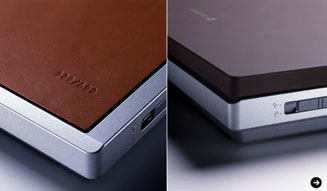
I believed that for future PCs, a person's individual style would be more important than form or specifications, and that this would be the key to the next market. However, in the first year, progress was difficult due to the business unit's lead. In the second year, I strongly advocated for designers to be involved from the planning stage and proposed collaborating with Real Fleet to achieve our mission. Around that time, Real Fleet was establishing itself as a novel and unique brand, including its sales channels. It seemed like it could be a win-win situation for both sides and lead to something interesting. Thus, we decided to release the "dynabook CX1" and the Real Fleet model "dynabook CX1R" simultaneously. The crucial point was to use the same mold and differentiate the two models, and to achieve the most elegant design possible.
At that time, achieving a satisfactory design for Windows machines was extremely difficult due to their manufacturing process. This is because designers must consider not only the exterior but also the internal layout, and component procurement is highly fluid according to the market, meaning there is no fixed layout. It was like assembling puzzle pieces each time, making it difficult to achieve consistency with the exterior. However, consumers buying the "CX1R" and the stores handling it wanted the cleanest possible product, regardless of the manufacturer's internal issues. Therefore, we checked all specifications that were previously taken for granted to reduce design noise as much as possible, and improved anything that needed revision. We strived for designers to meticulously manage every detail for elegance. As a result, we were able to achieve a wide range of challenges, including the adoption of a latchless mechanism and changes to icons and fonts.
The "CX1" was priced at 160,000 yen for mass-market retail, while the "CX1R" was priced at 250,000 yen for lifestyle-oriented shops. Despite the approximately 100,000 yen difference, the "CX1R" sold out instantly. This happened in 2004. After that, I left Toshiba, where I had worked for about 13 years, and moved my activities to Real Fleet to pursue design management.
Koichi Yanagimoto x Manabu Tago Dialogue: "What is Design Management?" (Part 2) →
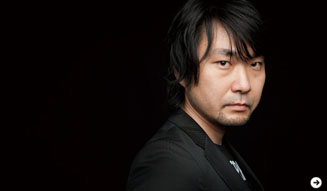
Manabu Tago
Representative Director of MTDO, Art Director/Designer. Graduated from Tokyo Zokei University, Faculty II, with a degree in Design Management. At Toshiba Design Center, he was involved in the design and development of numerous home appliances and information equipment. After leaving Toshiba, he worked as the head of design management at Real Fleet. He then established MTDO in 2008 to explore new frontiers, where he continues his work today.
Currently, he is involved in total support from concept creation to product launch across a wide range of industrial fields, covering design, direction, and management.
Representative Director of MTDO, Art Director/Designer. Graduated from Tokyo Zokei University, Faculty II, with a degree in Design Management. At Toshiba Design Center, he was involved in the design and development of numerous home appliances and information equipment. After leaving Toshiba, he worked as the head of design management at Real Fleet. He then established MTDO in 2008 to explore new frontiers, where he continues his work today.
Currently, he is involved in total support from concept creation to product launch across a wide range of industrial fields, covering design, direction, and management.
Recipient of numerous awards, including the GOOD DESIGN AWARD, red dot design award, JDCA Design Management Award, and ILS AWARD Design Business Award. Since 2010, he has served as a judge for the "Good Design Award" organized by the Japan Institute of Design Promotion (JDP).
http://mtdo-ch.com
(Part 2 will be published on Thursday, October 25th)