March 12, 2015
Series: Yoko Ueno Lewis | Living Notes - Part 12: A Magical Mystery Tour for Storage
The Way We Live with “STYLE”
Living Notes: Part 12
A Magical Mystery Tour for Storage (1)
When I hear the word “storage,” I always recall a magical mystery, dubbed the “table theory,” that architects Kazuyo Sejima and Ryue Nishizawa aptly described.
Text & Photographs by Yoko Ueno Lewis(Aug. 2012)

The Mystery of Storage <Lessons Learned: Questions and Reflections>
Simply put, the table becomes cluttered with work documents and samples, making it cramped, difficult to use, and utterly unorganized. One day, I resolve to add another table, doubling the available space. Normally, one would imagine that with twice the table surface, it would become much easier to use, and work would progress significantly. However… after a while, the table becomes even more cluttered than before, resulting not in more space, but merely in a doubling of the area of chaos.
Herein lies the mystery of storage. When you visit a specialty store for storage solutions, you see many people struggling with storage, pushing large carts and circling the store, earnestly examining storage items. They believe that storage requires storage boxes, cases, racks, containers, and bags for the purpose of storing things. What I always question here is, where do those boxes, cases, racks, containers, and bags get stored? Fortunately, American houses have a garage, the largest storage space. Originally, this space is for parking cars, but the cars are invariably parked resolutely on the street. This is because the garage has long been full, serving as a place for storage or as a temporary holding area for junk.
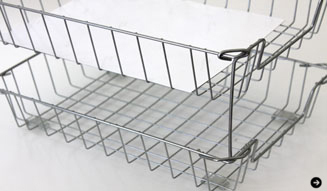
Furthermore, the boxes, cases, racks, containers, and bags for storage seem to have an overly assertive presence, hardly appearing to be mere tools for the humble and simple purpose of storage. Even if something is successfully stored within them, their very appearance disrupts the scenery and atmosphere. I feel that this promises an unresolved and unpleasant outcome, far removed from the peace, relief, sense of accomplishment, and freshness that one should gain from storage. The prevalence of plastic and resin products is also concerning. Certainly, one spends a considerable amount of money on storage items, stores the appropriate things within them, and the problem should be solved…
The Way We Live with “STYLE”
Living Notes: Part 12
A Magical Mystery Tour for Storage (2)
So, let’s change our approach <Lessons Learned: Solutions>
Instead of hiding or putting things away through storage, let’s consider ways to display storage. The key points here are:
①Maximize your own sensibility (e.g., choose your favorite materials and colors)
②Create your own rules (e.g., repeat the same storage in even numbers)
③Adhere to the created rules for several years (once things are put away, time flies)
④Do not be swayed by so-called storage items (will acquiring them truly lead to order?)
⑤Connect threads of memory to the scenery (forgetting where something is stored is more tragic than leaving it out)
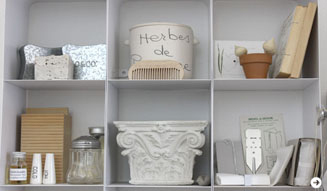
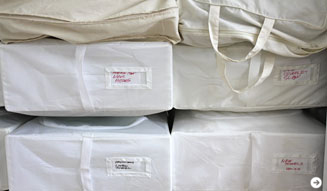
Specific example for ①
Acquire boxes, cases, or containers you find aesthetically pleasing simply because you like them, and place the items you wish to store inside. The storage is not primary; the beauty of the box or case takes precedence.
Specific example for ②
If purchasing cases or boxes, imagine the visual when they are lined up and spend money on quantity rather than variety. Acquire two or more, preferably an even number, of the same item. One might be a seed of chaos, but two create a sense of unity. Even numbers bring a certain order.
Specific example for ③
Since most storage involves organizing the past, aim for a world that is timeless, unobtrusive, and not inconvenient later on.
Specific example for ④
Unless it is certain that items will fit in a closet or storage room, avoid plastic or resin products. In such cases, be prepared for the necessity of a project as significant as storage itself: first, organize the closet, storage room, or garage to secure the space.
Specific example for ⑤
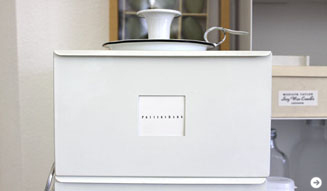
For instance, imprint the visual of a white box containing fabric scraps onto your memory, associating it with the surrounding scenery. When storing something, make an effort to connect the memory circuits by using your eyes like a camera shutter.
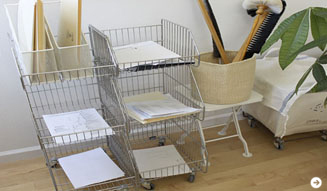
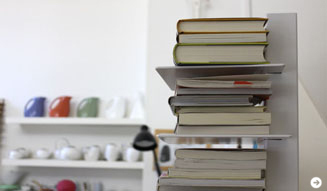
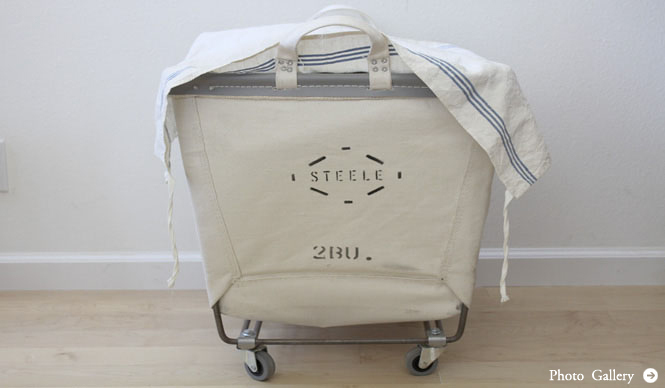
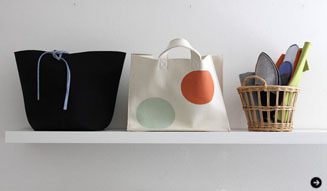
The photographs introduced here are a result of having implemented points ① through ⑤ to a reasonable extent. I must preface this by admitting that I am not inherently good at storage; rather, it stems from a stubborn resolve not to keep anything that doesn't align with my feelings, even if it's a simple pencil case. And there is the constant anxiety of forgetting where something is stored, the fear that once it disappears from view, it will never resurface.
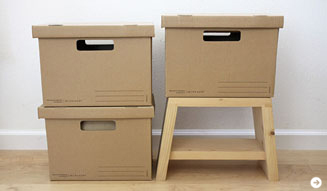
Finally, some advice regarding “boxes.” This can also be helpful for moving. First, make sure the cardboard boxes are of a size you can handle yourself. Choose boxes with a lid and base that can be disassembled, and opt for those where the contents are immediately visible upon opening the lid, rather than those sealed with packing tape. Prepare many boxes of the same size so they can be stacked neatly. Whenever possible, avoid colorful or patterned boxes and choose plain craft or white ones.
So, good luck, everyone!!
