May 14, 2015
An Eco-Friendly "Smart Town" is Born in the Suburbs of Sendai | Sekisui House
Sekisui House
Towards Energy Self-Sufficiency
An Eco-Friendly 'Smart Town' is Born in the Suburbs of Sendai
Last year'sGreat East Japan EarthquakeThe Tohoku region suffered extensive damage from the Great East Japan Earthquake. Sendai, the largest city in Tohoku, was no exception, and recovery efforts continue more than a year after the disaster. Now, a bright piece of news has emerged from the city's outskirts: the birth of Japan's first smart town, offering a trifecta of comfort, safety, and clean energy.
Text by TANAKA Junko (OPENERS)
Aiming for Comfortable and Safe Town Development
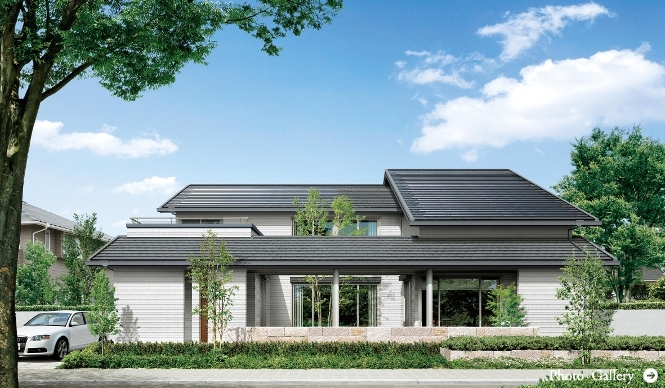
Since announcing its "Environmental Future Plan" in 1999, Sekisui House has been dedicated to developing new energy-saving and energy-generating technologies to realize a prosperous life powered by clean energy. In 2009, as the culmination of these efforts, they unveiled "Green First," a housing concept equipped with a solar power generation system. Further advancing this, in August 2011, they introduced "Green First Hybrid" (hereafter, "Hybrid"), a next-generation home capable of operating solely on clean energy. This innovation garnered significant attention, earning the "Minister of Economy, Trade and Industry Award" at the "New Energy Awards" hosted by the New Energy Foundation.
The Hybrid is the world's first "smart house" to integrate three types of batteries. By combining a "solar battery" that generates electricity from sunlight, a "fuel cell" that produces electricity and hot water from gas, and a "storage battery" capable of storing electricity, along with a Home Energy Management System (HEMS), it can consistently supply stable power.
Electricity consumption fluctuates throughout the day. The Hybrid utilizes the fuel cell to meet demand during the day when consumption is low, while simultaneously generating electricity from the solar panels for sale back to the power company. The storage battery is charged with commercial power during the night, when electricity rates are lower, to reduce utility costs. From the evening peak hours through the night, the stored electricity from the battery is used, aiming to minimize reliance on commercial power.
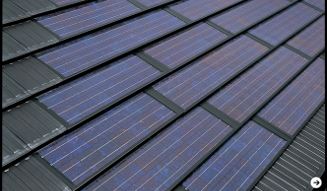
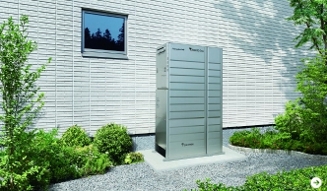
Its most distinctive feature is the "self-sufficient" system that switches to operate solely on the three batteries during a power outage. Furthermore, it can continue to supply electricity for an extended period (17 hours at 450 watts) even in emergencies when gas and water services are unavailable. It is anticipated as a "disaster-resilient home."
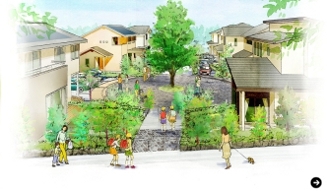
"Smart Common City Akishidai," located in Akishidai, Tomiya Town, Kurokawa District, on the outskirts of Sendai, is the first large-scale housing development since the earthquake. It comprises 431 units, centered around the Hybrid homes. We will be watching the future of this eco-friendly smart town, which could serve as a significant catalyst for Tohoku's reconstruction.
Smart Common City Akishidai
7-72-1 Akishidai, Tomiya Town, Kurokawa District, Miyagi Prefecture
Total Lots | 431 Units
*Approximately 20% are "Green First Hybrid" units
Inquiries
Sekisui House
Tel. 0120-015-156
http://www.sekisuihouse.co.jp/bunjou/miyagi/akaishidai/