Series: Hiroshi Yanagimoto | Part 28: Asking Yusuke Nakamura about the Management of "HIROKO TAKAHASHI" (Part 2)
Yanagimoto Series | Interview with Yusuke Nakamura on the Management of HIROKO TAKAHASHI (Part 2)
Our guest today is Yusuke Nakamura of HIROCOLEDGE Inc. He continues to be remarkably active, participating in "Cool Japan" events in India since the beginning of the year.Part 1Following on from Part 1, in this second installment, I was deeply impressed by the resolute "determination" of both Nakamura-san and HIROKO TAKAHASHI.
Text by KOICHI YANAGIMOTO
My role is nothing more and nothing less than this (Yusuke Nakamura)
YanagimotoIn the first part of our conversation, we discussed the first two years since you established HIROCOLEDGE Inc. You mentioned that initially, "even the fundamental purpose of the business was unclear." Since then, have you been able to find a "reason for being" for HIROCOLEDGE Inc.?
NakamuraSimply put, my role is to explore all possibilities in line with the "purpose" that HIROKO TAKAHASHI champions, and to guide them toward achievement. It's nothing more and nothing less than that.—I don't possess any particularly special talents myself, so I can only bet on Takahashi's potential. When we confront the issues Japan currently faces—industry, economy, an aging society, nuclear power—it's undeniable that we are in a cornered situation on many fronts. My desire to have even a small impact on society and to create a better Japan, and a better world, is automatically fulfilled through my work with her. I believe that by partnering with Takahashi, we can create a catalyst for change. To keep acting, even if it's a small catalyst. I constantly ask myself what we can achieve through "HIROCOLEDGE Inc."
YanagimotoAs you pursue that goal, why are you involved in producing products?
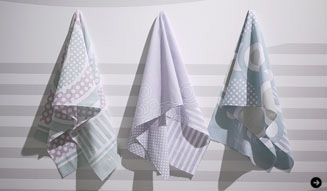
NakamuraOne of the products handled by "HIROCOLEDGE" is the tenugui (traditional Japanese hand towel), but we don't handle it simply because we "like tenugui." HIROCOLEDGE is a project that repeatedly experiments and verifies in order to overturn prejudices and fixed notions through familiar craftsmanship, creating opportunities to reconsider how we approach daily life. A tenugui, despite being a single piece of cloth, has diverse uses. It's not so much that it has many functions, but rather that in the past, Japanese people saw the potential of this single cloth as a tool. That fact alone serves as an opportunity for us, as Japanese people, to reflect on our own daily lives. How do we engage with "things" and "matters" on a daily basis? By focusing our attention even on something as familiar as a tenugui, and by examining and delving into it from various angles, there are infinite things we can discover.
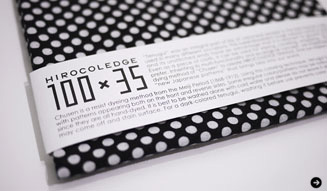
Incidentally, while we've been discussing it as a tenugui, our company has given the product the name "100x35." This simply indicates the size, but the intention is to present the degree of freedom that the item itself possesses. While a name can make its use clear, it also limits its function. In modern Japan, it's true that many people think of tenugui as "only for wiping hands." Engaging with an object through one's own unique approach—is something we want to encourage. To have one's own standards of value, to make judgments, and to enjoy living thoughtfully. I believe that the repetition of these daily actions leads to the world moving in a better direction.
YanagimotoWith that background in mind, do you also carefully consider your sales methods and the stores where you handle these products?
NakamuraYes, that's right. For example, in department stores, tenugui are often handled in the "Kimono and Traditional Japanese Goods" section, but from a functional perspective, they could just as well be sold in the handkerchief or towel section. However, perhaps due to the preconception that "tenugui = Japanese traditional items," or for some customary reason, they end up in the Japanese goods section. I often discuss this with the buyers in charge, but it seems difficult to handle products across different floors and categories. Yet, recently, we've seen an increase in situations where they are handled in various areas, such as kitchenware and men's accessories, and the results of our efforts to prevent tenugui from being confined to the Japanese goods category are beginning to show.
The reason we don't use the name tenugui is not only to enhance user freedom but also to escape the seller's fixed notions. We also develop products for stores that emphasize the potential for expansion, regardless of category or size, and have experimented with selling them in places like public baths and liquor stores. We aim to cultivate a large market outside the existing one (for those who already know the appeal of tenugui) and to stimulate the market.
YanagimotoIn this day and age, perhaps giving too much room for "thinking" through products can also lead to situations where people find it difficult to think because "there's everything" or "there are too many uses, it's bothersome."
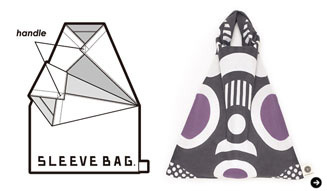
NakamuraIndeed, the balance is crucial. We have a product called "SLEEVE BAG" that was developed using "100x35" from HIROCOLEDGE, and it's a proposal for one way of approaching the tool (tenugui).
Its form is that of a bag, so it can be used without much thought, but it's made by sewing a single tenugui without any cutting, and it has no accessories like buttons. When it becomes worn out, it can be used as a rag just like a tenugui and disposed of as combustible waste. While creating situations where users naturally engage with it is ideal, this is Takahashi's attempt to convey the spirit of using things to the end and the potential of a single piece of cloth through a product that can be used casually, rather than leaving everything entirely to the user.
We have registered the design and trademark to convey this minimalist structure and philosophy without wavering, but we plan to release the manufacturing method in the future. And Takahashi and I have talked about how, someday, it could be included in elementary school home economics textbooks, allowing for sewing classes while teaching about Japanese culture and craftsmanship. After all, it can be made with just a single tenugui, a needle, and thread.
YanagimotoUltimately, this leads to changing education, doesn't it?
NakamuraIt truly does. Both of us hold teaching licenses, and we are always thinking about what we should do if we were to be involved in education in the future, which I believe naturally reflects in our activities and products. After all, we have questions and frustrations about existing systems and ways of doing things, and we want to influence various aspects to bring about positive change.
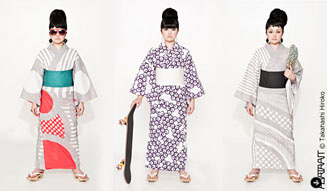
For example, Takahashi's designation as an "artist" is also an approach using her own social presence to create opportunities to think about the meanings, professions, and titles associated with the words "design" and "art." Her ultimate goal is not to create things called products or kimonos, but rather she is an expresser who considers what and how to convey through what she creates. Therefore, Takahashi chose a title that is difficult to define rigidly, allowing her the freedom to engage in activities without being limited by specific means of expression. While a title can narrow a person's scope of activity, I hope to create a situation where children, when talking about their future dreams, can freely set their own unique goals without being swayed by titles or their fixed images.

We want to create a situation where Japanese people can live with pride in being Japanese.
YanagimotoSpeaking of which, you've also been involved in corporate branding and other work in recent years, haven't you?
NakamuraYes. Primarily collaborations with companies involved in manufacturing in regional areas. This includes projects to launch new brands. When such work began to increase, to understand the client's feelings and commitment firsthand, I commissioned Kazunari Kitagawa (GRAPH) to create our company's CI. By entrusting creative work that we could have done ourselves to someone with extensive experience, we essentially became the client. It required great resolve in many ways, but it was an invaluable experience that we can feed back into our own work.
Building trust with the artisans and manufacturers we collaborate with, and sharing our vision—how much can we achieve that? We believe it's important to build equal relationships as members of the same creative endeavor, transcending positions and titles. To do that, we must first demonstrate our own commitment. We approach every project with the mindset of being willing to go down with the ship alongside our clients. I believe this will lead to a form of craftsmanship that can continue into Japan's future.
YanagimotoFinally, could you tell us about your future outlook?
NakamuraEssentially, Takahashi's current activities and craftsmanship are directed towards Japan. Her belief is to create a situation where Japanese people can live with pride in being Japanese, so our focus is always on the domestic market. Abroad, she is naturally accepted as a Japanese artist, which is a realization of Takahashi's work in Japanese craftsmanship for the domestic market. While she dislikes the idea of easily taking her work overseas, opportunities to present her work abroad have been increasing recently. The decision to engage in international activities is based on the judgment that it should be done if it can create favorable conditions for the artisans and manufacturers with whom we collaborate.
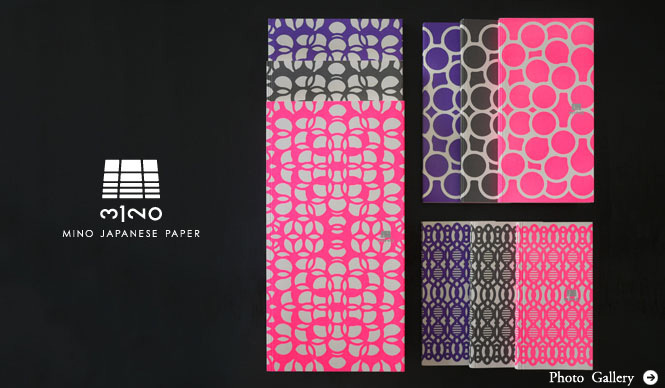
Projects currently underway, such as the Mino Washi paper project "3120," are precisely examples of this. We aim for craftsmanship that can meet international needs by exchanging opinions with distributors, not just domestically. We want to create activities that not only highlight the products themselves but also draw attention to the artisans, their work, and by extension, the region, attracting people from all over the world and revitalizing the town. And not just in Mino, but by connecting vibrant production areas through Takahashi's presence, we hope to foster a situation where better craftsmanship can be achieved throughout Japan.
YanagimotoThank you very much.
Yusuke Nakamura | NAKAMURA Yusuke
Born in Sumida Ward, Tokyo, in 1977. Graduated from the Faculty of Education, Chiba University. After working at Toppan Printing Co., Ltd., he established HIROCOLEDGE Inc. He serves as Representative Director alongside HIROKO TAKAHASHI.
HIROCOLEDGE Inc.
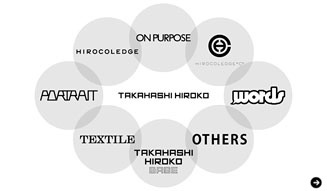
Established on December 8, 2006. An organization that gives form to "things" and "matters" across genres such as crafts, art, design, and fashion, through the perspective of HIROKO TAKAHASHI. In addition to managing various projects undertaken by HIROKO TAKAHASHI, such as the original craftsmanship of "HIROCOLEDGE" and collaborative craftsmanship with clients under "HIROCOLEDGE&Co.," the company also handles the entire process of producing new brands for companies throughout Japan, from their establishment to design and sales.
TAKAHASHI HIROKO
http://www.takahashihiroko.com/