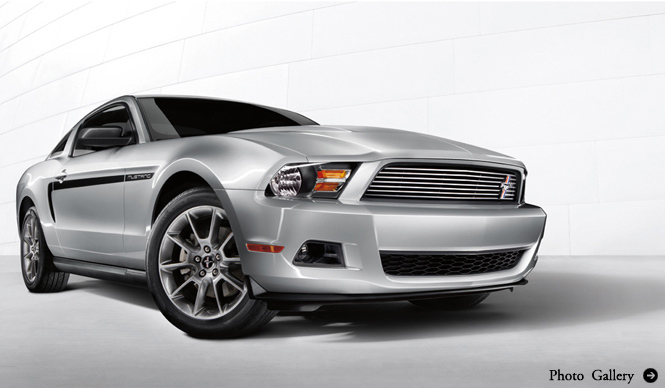
Ford Mustang: Significantly Improved Environmental Performance with a New Engine
Ford Mustang
Environmental Performance Greatly Improved with New Engine
Ford Motor Company has announced the 2011 model of its flagship coupe, the Mustang.
Text by Giraffe
A Completely Renewed Powertrain
The highlight of this update is a completely redesigned engine. The existing 4.0-liter V6 engine has been replaced with a newly developed 3.7-liter V6, and the cylinder heads have been changed from OHC 12-valve to DOHC 24-valve. Furthermore, by adopting the "Ti-VCT" variable valve timing system, it produces a maximum output of 305 ps and a maximum torque of 38.7 kgm.
For reference, the previous 4.0-liter engine's specifications were a maximum output of 213 ps and a maximum torque of 33.1 kgm. From this, you can see that while the displacement has been reduced by 300cc, the maximum output has increased by 92 ps and the maximum torque by 5.6 kgm.
Additionally, the adoption of a newly developed 6-speed manual and 6-speed automatic transmission, along with a new electric power steering system, has resulted in fuel economy improvements of up to 25%. While American cars are often criticized for poor fuel efficiency, this Mustang achieves an EPA estimated highway fuel economy of 12.75 km/ℓ for the 6-speed automatic model, a figure that ranks at the top of its class.
Official Debut at the Los Angeles Auto Show Opening December 2nd
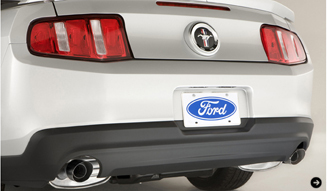
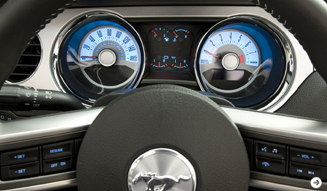
The suspension has been retuned with revised damper settings and spring rates to improve handling, and a reinforced stabilizer and lower control arms have been added to the rear. The exterior and interior largely follow the 2010 model, with only minor changes.
This 2011 model was officially unveiled at the Los Angeles Auto Show, which opened on December 2nd.