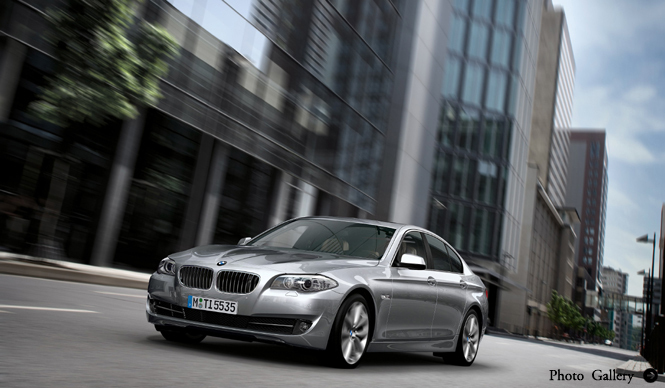
BMW 5 Series: The Sixth Generation of BMW's Enduring Backbone
BMW 5 Series | The BMW 5 Series
The Backbone of BMW, Now in Its Sixth Generation
BMWhas unveiled the all-new 5 Series Sedan, marking the sixth generation of its flagship model.
By Giraffe
A Larger Body
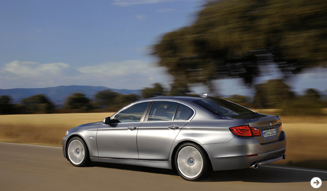
The new 5 Series measures 4899mm in length, 1860mm in width, and 1464mm in height. Compared to the current model, it is 44mm longer and 15mm wider, while the height has been reduced by 6mm. The wheelbase has been extended by 78mm to 2968mm, boasting one of the longest in its class.
The engine lineup includes four gasoline and three diesel variants. All models are equipped with an 8-speed automatic transmission, with some models featuring a sport automatic transmission with paddle shifters on the steering wheel.
The top-tier unit is the 550i, powered by a direct-injection 4.4-liter V8 twin-turbo engine (407ps, 61.2kgm), capable of accelerating from 0-100km/h in 5 seconds and reaching a top speed of 250km/h (electronically limited). The 535i features a direct-injection 3.0-liter inline-6 twin-turbo engine with high-precision direct injection and Valvetronic (306ps, 40.8kgm), with a claimed 0-100km/h acceleration of 6 seconds and a top speed of 250km/h (electronically limited).
The 528i and 523i are equipped with direct-injection 3.0-liter inline-6 lean-burn engines (528i: 258ps, 31.6kgm; 523i: 204ps, 27.5kgm), achieving European combined fuel economy figures of 12.8km/ℓ and 13.1km/ℓ, respectively.
European Deliveries Begin Spring 2010
Among the diesel engines, the 520d features a significantly revised direct-injection 2.0-liter inline-4 turbo engine (184ps, 38.7kgm) incorporating the latest common rail system and an idling stop function. This engine can also be paired with the 8-speed automatic transmission (a world first for a four-cylinder engine and an 8-speed AT combination), achieving class-leading performance with a European combined fuel economy of 20km/ℓ and CO2 emissions of 132g/km.
The remaining two diesel variants are the 3.0-liter direct-injection inline-6 turbo engines for the 530d (245ps, 55.1kgm) and 525d (204ps, 45.9kgm). Their European combined fuel economy and CO2 emissions are 15.87km/ℓ and 162g/km for the 530d, and 16.13km/ℓ and 161g/km for the 525d. Additionally, the 8-speed AT version of the 530d is available with BMW BluePerformance, featuring an NOx storage catalytic converter, meeting Euro 6 emission standards.
The distinctive front grille and engine hood are as iconic as ever, retaining the sporty style that is unmistakably BMW. Furthermore, body rigidity has been increased by approximately 55% on average, with improvements in fundamental performance achieved through a chassis layout and suspension system that prioritize front-rear weight distribution.
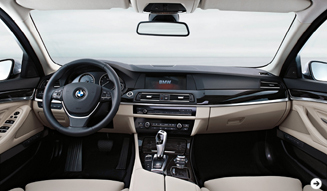
A key highlight in terms of equipment is the 'BMW ConnectedDrive' system. This system integrates telematics functions such as navigation and internet connectivity with driver assistance features like an emergency call system, lane departure warning, night vision, and active cruise control, enhancing safety.
The new 5 Series Sedan is produced at BMW's Dingolfing plant in southern Germany, the same facility that manufactures the 7 Series and 5 Series GT. European deliveries are scheduled to commence in the spring of 2010.
BRAND HISTORY
BMW is instantly recognizable by its "kidney grille" and quad round headlights, a signature front-end design. While consistently popular in the Japanese import car market, surprisingly few people might know the meaning behind its name.
Bayerische Motoren Werke, which translates to "Bavarian Motor Works." Its predecessor, Rapp Motorenwerke, was founded in Bavaria, Germany, in 1913 by Karl Friedrich Rapp as an aircraft engine manufacturer. Partnering with fellow Bavarian aircraft maker Otto-Flugzeugwerke, the business thrived. In 1916, it was renamed Bayerische Motoren Werke GmbH. Two years later, it was reorganized as a stock corporation, and the propeller logo, inspired by the blue skies and white clouds of Bavaria, was registered.
BMW continued to enhance its presence through innovative technology, but the defeat in World War I forced the cessation of aircraft engine production. BMW then channeled its expertise into motorcycles, unveiling the shaft-driven "BMW R32" in 1923, which garnered significant attention. Not content with this, the company acquired Dixi, a licensee of the Austin Seven. This acquisition provided a foothold in the automotive business, and in 1929, BMW launched the "BMW 3/15 PS," marking the start of its history as an automobile manufacturer.
Incidentally, Otto-Flugzeugwerke, which had a close relationship with BMW, was founded by Gustav Otto, the son of Nikolaus August Otto, who established the theory of the internal combustion engine. This historical connection likely explains BMW's continued focus on internal combustion engines.