Mercedes-Benz E-Class | Mercedes-Benz E-Class
Mercedes-Benz E Class
Two BlueEFFICIENCY Variants Added
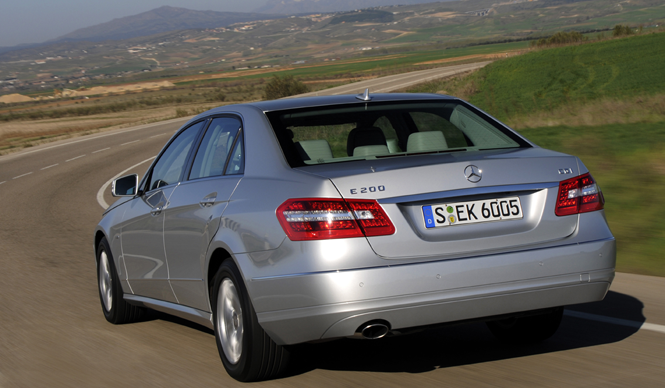
Daimler isMercedes-Benzannouncing the adoption of two new engines for the European specification of the "E Class." One gasoline and one diesel engine, each featuring the latest direct-injection units with superior environmental performance, will be added to the lineup.
Text by Giraffe
Balancing Driving Performance and Environmental Friendliness
First, the gasoline engine lineup will be joined by the "E200CGI BlueEFFICIENCY." This 1796cc inline-4 turbo engine employs a direct-injection system with variable intake and exhaust camshafts, delivering a maximum output of 184 ps and a peak torque of 27.5 kgm. In terms of performance, it achieves 0-100 km/h in 8.5 seconds and a top speed of 232 km/h.
Despite this high performance, fuel economy is rated at 13.89 km/l in the European combined cycle, with CO2 emissions of 169 g/km, thanks to features such as the adoption of an idling stop function. The result is an engine that balances excellent driving dynamics with superior environmental performance.
European Debut in September
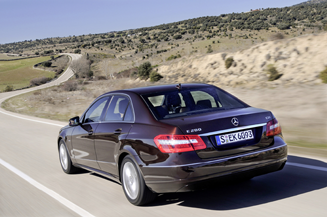
For the diesel engine, the "E200CDI BlueEFFICIENCY" will be introduced. This 2143cc inline-4 turbo direct-injection unit utilizes the latest common-rail direct injection technology, producing a maximum output of 136 ps and a peak torque of 36.7 kgm. Its performance figures include 0-100 km/h acceleration in 10.2 seconds and a top speed of 210 km/h. Regarding environmental performance, it achieves a high standard for a diesel engine, with European combined cycle fuel economy of 18.18 - 19.13 km/l and CO2 emissions of 137 - 145 g/km.
Both models will feature a 6-speed manual transmission and are scheduled for release in Europe in September. Pricing in Germany is announced as starting from 39,508 euros (approximately 5.27 million yen) for the E200CGI BlueEFFICIENCY and 38,734 euros (approximately 5.16 million yen) for the E200CDI BlueEFFICIENCY.
BRAND HISTORY
When tracing the history of automobiles, we arrive at two Germans, Gottlieb Daimler and Karl Benz, as pioneers. It goes without saying that these two men independently created gasoline-powered automobiles between 1885 and 1886, laying the foundation for the automotive society. The automobile companies they founded were sometimes seen as rivals, but to overcome the recession after World War I, they joined forces, and the Daimler-Benz company was established through their merger in 1926.
The name "Mercedes" given to the products originated when Emil Jellinek, a customer of Daimler's, had his eldest daughter's name used as a condition for taking over sales outside of Germany. It was registered as a trademark by Daimler in 1902.
Thus born, "Mercedes" and subsequently "Mercedes-Benz" have continued to lead the times as drivers of automotive development, actively introducing cutting-edge technologies such as the safety passenger cell, airbags, ESP (Electronic Stability Program), and Night View.