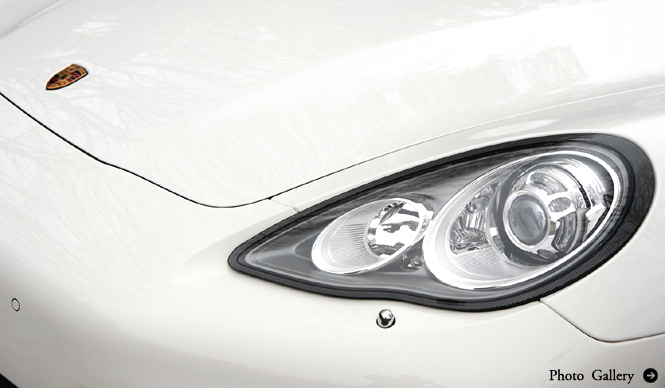
PORSCHE PANAMERA SpecV | Porsche Panamera Turbo 2 | NISSAN GT-R Spec V LONG TERM TEST Extra Chapter (2)
NISSAN GT-R Spec V | Special Edition
Nissan GT-R Spec V vs. Porsche Panamera Turbo (2)
This installment is a special edition of the Nissan GT-R Spec V's "LONG TERM TEST." Welcoming the "Panamera Turbo," developed by Porsche as its fourth model after the 911, Boxster/Cayman, and Cayenne, as a supplementary report car, we present two vehicles that represent the pinnacle of FR-based four-wheel-drive turbo models from Japan and Germany, despite their different body styles. The OPENERS automotive correspondent shares his insights from the perspective of an owner who actually drives it daily.
Text by OPENERSPhoto by ARAKAWA Masayuki
The GT-R, pursuing speed, or the Panamera, achieving driving quality?
— Specifically, where did you notice the differences in the car's setup?
Correspondent AFirst, the approach to tire usage is completely different. For example, with the Panamera, the tire pressure is constantly displayed, and the optimal values are 2.8 front and 2.4 rear. If the pressure drops below 2.8, the engine is controlled, and it won't go above 130 km/h. Even when driving on the Shuto Expressway, it only goes up to about 3.1. For the GT-R, the optimal value is low at 2.0, but after one lap around the Shuto Expressway's central loop, it rises to about 2.4-2.5. Since it increases from a low air pressure, the expansion rate of the air and the tire temperature must be quite high. In other words, the GT-R is like a semi-slick tire, perhaps running by abrading the tire compound.
Correspondent BIndeed, the GT-R places a significant role on its tires to achieve that high performance. Also, the Panamera's steering feel is very refined. Its exquisite weight conveys a high level of driving quality.
Correspondent AThe Panamera gives you a vivid sensation, as if you're touching the road with your own hands. In contrast, the GT-R's steering is a bit too light and lacks feel.
Correspondent BIt seems the GT-R prioritizes running fast over the emotional aspect or quality of a sports car.
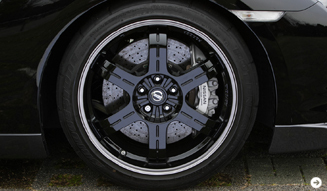
GT-R Spec V
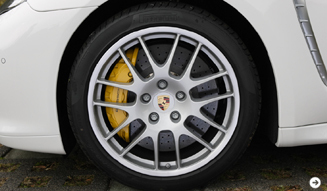
Porsche Panamera
— Both transmissions are the popular twin-clutch type, aren't they?
Correspondent AThe philosophies behind them are completely different. With the GT-R, you can feel the clutch slip and then engage with a jolt during a hill start, for example. The Panamera doesn't give you that uncomfortable feeling of a slipping clutch.
Correspondent BDoesn't that mean the Panamera is more highly refined?
Correspondent AExactly. It's closer to an automatic. In other words, the GT-R might be sacrificing comfort and smoothness to pursue the speed and directness of gear shifts. However, it's remarkable that the GT-R didn't fall short at all in terms of engine feel, power, and handling when compared directly with the Porsche.
Correspondent BGenerally, when switching from a German car to a Japanese car, you notice a 'looser body' or 'lack of power,' don't you?
Correspondent AI didn't feel any such hardware-related shortcomings with the GT-R. However, if the intention is for it to be driven by the same demographic as Porsche owners, then I believe there are challenges.
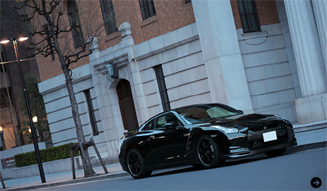
GT-R Spec V
Correspondent BThere's room for improvement in its refinement and comfort as a car, isn't there?
Correspondent AIn terms of product completeness, Porsche excels with consistently high scores across all factors, from comfort to driving performance. The GT-R, on the other hand, has outstanding power output and cornering limits. This is likely intentional by the developers, but if the goal is to build a car that satisfies owners accustomed to luxury GT sports cars like Ferrari or Porsche, then the GT-R cannot afford to ignore comfort.
 NISSAN GT-R Spec V Special Edition| Why the Porsche Panamera?
 NISSAN GT-R Spec V Special Edition| The GT-R, pursuing speed, or the Panamera, achieving driving quality?
 NISSAN GT-R Spec V Special Edition| Conclusion: They were entirely different cars