Ford Focus Sport Long-Term Report: Part 2 | Ford
Ford Focus Sport Long-Term Report|Ford
Part 2: Driving the Focus on Winding Roads
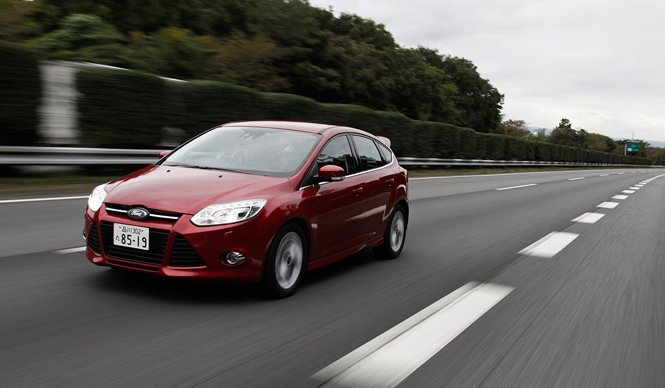
OPENERS Editorial Department Long-Term ReportThe Ford Focus, introduced as our fifth long-term test caris a bestseller that holds the record for the No. 1 selling single model in 2012. In the past, the Focus was known for its excellent driving performance, as evidenced by its success in WRC. But how does the current model measure up? Taking advantage of a rare free slot in my schedule, I decided to take it for a spin on some winding roads.
Text by Kenichi SakuraiPhotographs by Hirohiko Mochizuki
Car No. 5
Ford Focus Sport
Ford Focus Sport
Introduction Date: August 2013
Purchase Price: ¥2.93 million
Total Mileage: 11,062 km
Fuel Economy This Period: 12.5 km/ℓ
Overall Average Fuel Economy: 11.8 km/ℓ
Heading Towards the Foothills of Mt. Fuji
I've already confirmed the ease of driving and comfort provided by its compact body during my usual assignments in Tokyo and its surrounding areas. The car's size allows it to slip into parking spaces effortlessly, eliminating stress. As long as I anticipate Tokyo's traffic jams, driving offers practical convenience and ease. It's been years since I've found daily driving this enjoyable. The Focus is in almost constant use, albeit for short distances.
Checking today's schedule, I only had an evening meeting followed by a night event. I decided to take advantage of the rare free time from early morning until evening to test it on a longer drive. Departing from Tokyo in the early morning, I headed towards the foothills of Mt. Fuji, an area recently in the spotlight for its World Heritage status.
The Seats Are Exceptionally Well-Made
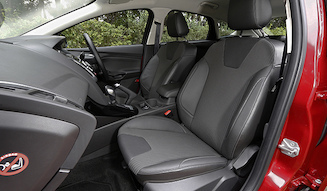
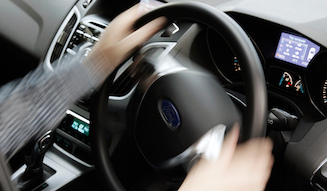
As usual, I settled into the seats within the spacious cabin. The driving position felt just right, as always. These seats, developed specifically for the Focus and not borrowed from another model, offer superb support, cushioning, and comfort.
The combination of fabric for the parts that directly touch the skin and leather for the side bolsters and edges of the seat base and backrest is particularly noteworthy. This design not only prevents slipping but also provides a perfect sense of being cradled by the seat. It's a functional design that effectively supports the driver, not just for aesthetics.
So far, every editorial staff member who has driven the Focus has been satisfied with the seating position. A few amusing incidents occurred where staff, perhaps due to the preconception of the Focus being an import, mistook the left stalk for the turn signal and activated the wipers when starting off.
The shift lever display, the turn signal lever on the right, and the parking brake position are all designed for right-hand drive, so there's no sense of unfamiliarity for those switching from Japanese cars. It's an ideal model for anyone considering their first imported car.
Ford Focus Sport Long-Term Report
Part 2: Driving the Focus on Winding Roads (2)
NVH Performance Unmatched for a Compact Car
Cruising on the highway, keeping pace with traffic, was exceptionally comfortable. What struck me during high-speed cruising was the minimal wind noise and road noise transmitted through the floor. The floor noise, in particular, felt less intrusive than in a premium hatchback of the same class I test-drove last week. The new Focus boasts a drag coefficient (Cd) of 0.298, a significant 15% reduction from the previous generation's 0.341.
According to the documentation, a wide range of technologies have been meticulously employed to prevent noise from entering the cabin. These include improvements to the carpet, the filling of body cavities with foam, the use of sound-absorbing headliners, and enhanced sealing of trim parts. To reduce wind noise, the door glass features a triple-layer seal, and the shape of the door mirrors and weatherstripping has been optimized. This not only significantly reduces wind noise compared to the previous model but also ensures a more uniform sound pressure distribution within the cabin.
These detailed approaches have apparently brought the overall NVH (Noise, Vibration, Harshness) of the new Focus to a refined level comparable to that of a luxury sedan.
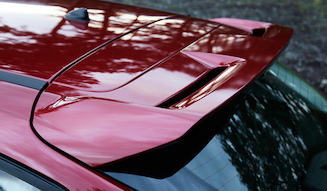
Indeed, the noise entering the cabin during high-speed driving is minimal. This is a significant advantage of the Focus, allowing passengers to converse without being bothered by road noise, even at highway speeds.
However, there are times when a passenger might wish to pretend they didn't hear something. Unfortunately, with the Focus, feigning ignorance like 'Huh? I didn't catch that' won't work. Even while driving, you'll need to respond appropriately, regardless of the content, to maintain a pleasant atmosphere – a word to the wise from personal experience.
Focusing on the driver's experience, the excellent straight-line stability at high speeds reduces fatigue on long journeys, which is a definite plus. With just a light touch on the steering wheel, the car tracks straight ahead. You might think, 'Of course, it goes straight if you keep the steering straight,' but that's not always the case. Many cars require constant, minute steering adjustments to counteract road imperfections.
While it sounds simple, keeping a car driving straight is surprisingly difficult and is closely related not only to the fundamental design but also to the precision of the mechanical engineering and assembly. As a side note, when test-driving a new car at a dealership, paying attention to this aspect can help you appreciate the car's fundamental capabilities. Give it a try.
Acceleration Meets Expectations
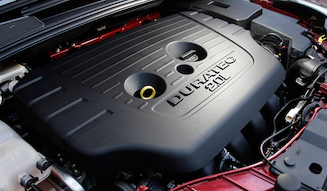
The 2.0-liter inline 4-cylinder direct-injection engine, producing 170ps and 20.6kgm of torque, delivers performance that perfectly suits the Focus. If you want to lead the pack on the highway, it's an easy task. Shift the gear lever to 'S' mode, select a gear with the 6-speed DCT (Dual Clutch Transmission) called PowerShift, and gently press the accelerator. You'll experience the expected acceleration, quickly reaching a comfortable cruising speed.
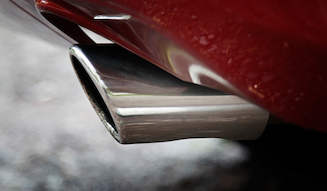
Even if you leave it in 'D' mode, there's no issue. Pressing the accelerator firmly provides the needed acceleration instantly, accompanied by a satisfying exhaust note. Even as a C-segment compact car, you'll rarely feel stressed by the Focus's acceleration.
Ford Focus Sport Long-Term Report
Part 2: Driving the Focus on Winding Roads (3)
Like a Fish in Water
Leaving the highway, where trucks often dominate, I descended onto local roads. After passing through the city of Gotemba, the winding road leading up to the fifth station of Mt. Fuji, with its light traffic, is one of my favorites. This is where the Focus truly comes into its own.
Even on the gentle uphill curves and successive sharp bends spanning several kilometers, the Focus's acceleration doesn't falter. No one could describe this performance as anything less than 'sporty.' The solid feel from the robust chassis and the sharp steering response are hallmarks that have remained unchanged since the first-generation Focus.
However, while the first-generation model darted nimbly through corners, the current third-generation model excels in its stability. By braking firmly on straights before entering corners, hitting the apex, and then gently applying the accelerator, you can navigate the winding roads at surprisingly high speeds. Utilizing second and third gears, it makes you feel as if your driving skills have improved... creating the illusion of enjoying high-speed cornering.
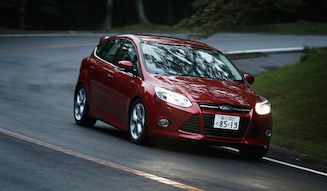
However, even with 170ps, the drive remains stable and composed, without feeling precarious. It's often said metaphorically that 'the chassis is faster than the engine,' and the Focus is a prime example. The chassis potential surpasses the engine power, so you rarely encounter truly thrilling moments. Nevertheless, the ability to enjoy high-speed cornering smoothly is largely thanks to the Focus's ESP with Torque Vectoring Control system.
Torque Vectoring Control is an electronic system that detects slip on the inner wheel during cornering and applies the brakes to the inner wheel at a level imperceptible to the driver, thereby stabilizing the vehicle. It prevents wheel spin and distributes engine torque to the outer wheel with greater grip, maintaining traction and steering control. The sensors monitor the vehicle's movement 100 times per second, instantly activating the system when the inner wheel slips.
So, the enjoyment of high-speed cornering, which made me feel as if my driving skills had improved... was indeed an illusion. More accurately, the Focus was providing discreet support for sporty and smooth cornering at a level completely unnoticed by the driver. That's the real reason.
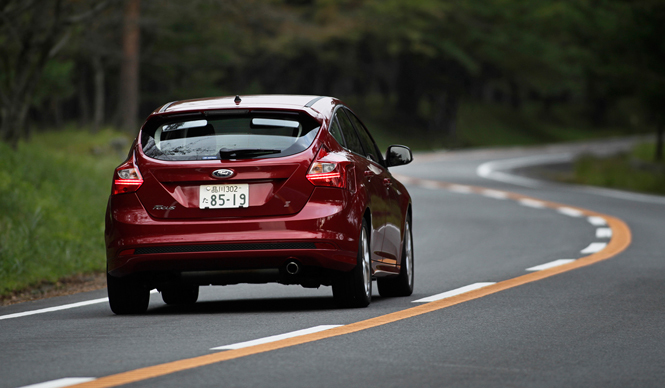
Ford Focus Sport Long-Term Report
Part 2: Driving the Focus on Winding Roads (4)
Enjoyable Driving, Anytime, Anywhere
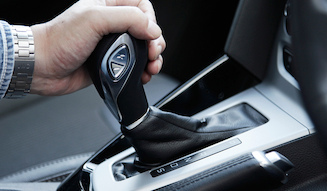
While my driving skills didn't miraculously improve, the fact remains that I thoroughly enjoyed the drive. If I were to offer a suggestion, the SelectShift mode switch on the shift lever could be slightly larger for easier use, and a more distinct click feel would enhance its usability, especially on downhill winding roads.
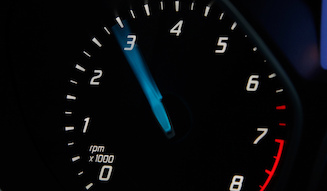
The snug cockpit and the tactile feel of the controls further enhance the sense of unity with the car on winding roads, awakening the joy of driving. The faster you go, the more you experience that unique feeling of the car fitting perfectly to your body.
However, this isn't limited to winding roads. The Focus provides a sense of driving pleasure even when navigating city streets, turning at intersections, or changing lanes. This is an advantage unique to the Focus, unlike other C-segment models that prioritize space efficiency and practicality.
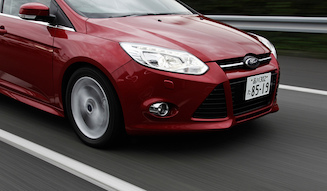
With its distinctive silhouette recognizable from afar and a slightly sporty interior design, the Focus might be perceived as a style-conscious car that prioritizes looks.
But it's important to remember that the Focus's DNA is built on a serious commitment to driving quality. This dedication, passed down since the first generation, is the Focus's enduring principle and its conscience.
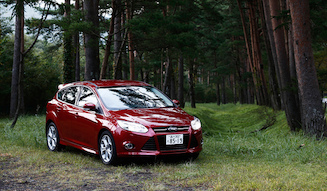
On the way back, it seems the Tomei Expressway is congested from Atsugi onwards. I decided to take the Fuji-Goko Toll Road and then the Chuo Expressway back to Tokyo. This route is also more convenient for reaching the evening's event. Although it's a slight detour, my current companion makes even that detour enjoyable.

Ford Focus Sport
Body Dimensions: Length 4,370 x Width 1,810 x Height 1,480 mm
Wheelbase: 2,650 mm
Tread Front/Rear: 1,555 / 1,545 mm
Minimum Ground Clearance: 130 mm
Weight: 1,380 kg
Engine: 1,998cc Inline 4-Cylinder Direct Injection DOHC
Bore x Stroke: 87.5 x 83.1 mm
Max. Output: 125kW (170ps) / 6,600 rpm
Max. Torque: 202Nm (20.6kgm) / 4,450 rpm
Transmission: 6-Speed Automatic (Dual Clutch)
Gear Ratios: 1st 3.917
2nd 2.429
3rd 1.436
4th 1.021
5th 0.867
6th 0.702
Final Drive Ratio: 3.850 (1st, 2nd, 5th, 6th gears) / 4.278 (3rd, 4th gears, Reverse)
Drivetrain: FF
Front Suspension: MacPherson Strut
Rear Suspension: Multi-link
Tires: 215/50R17
Brakes Front/Rear: Ventilated Disc / Disc
Fuel Tank Capacity: 55 ℓ
Minimum Turning Radius: 6 m
Price: ¥2.93 million
Ford Customer Service Center0120-125-175
http://www.ford.co.jp