July 20, 2022
Test drive of the fully redesigned Nissan X-Trail — How does the new model, which pursues superior quality, drive? | NISSAN
NISSAN X-TRAIL | NISSAN X-TRAIL
Test Drive: Nissan's X-Trail SUV
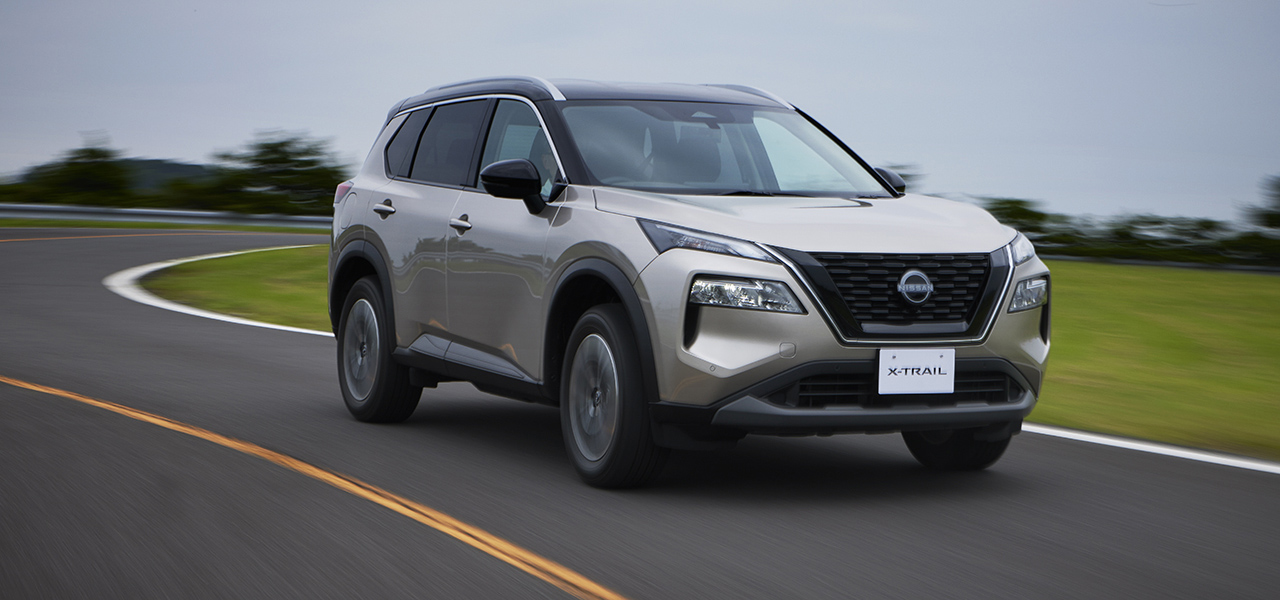
The new Nissan X-TRAIL, fully redesigned and launched on July 20th. This fourth-generation model pursues refinement with a development theme of "Tough x Refined." Motor journalist Naoki Imao reports on its drive.
Text by Naoki Imao | Photographs by Hirohiko Mochizuki
A "Refinement" Like That of a Well-Crafted Inline-6 Passenger Car
On July 20th, the new Nissan X-TRAIL was released in Japan. This is a masterpiece from "Technology Nissan," poised to be one of the biggest automotive stories of the year. The development keywords were "Tough x Refined." The first and second generations were "Tough Gear," and the third generation added "Advanced Technology," represented by the ProPILOT driver-assist system, to become a flagship model for Nissan. This fourth generation, the first new model in nine years, adds "Refinement."
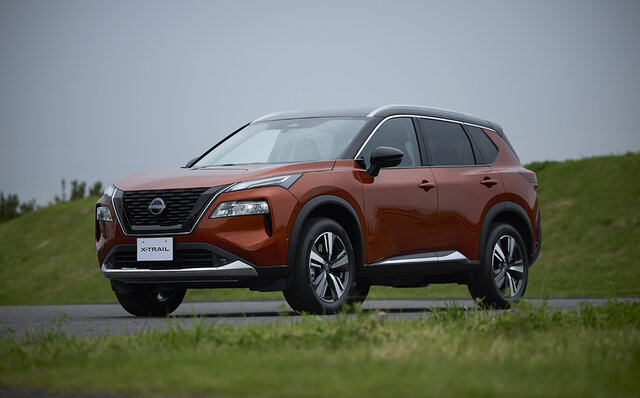
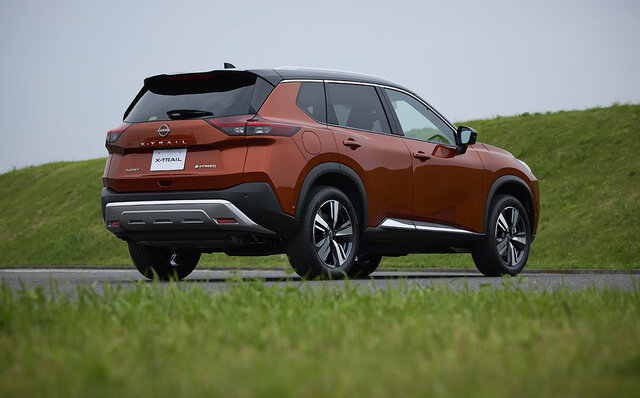
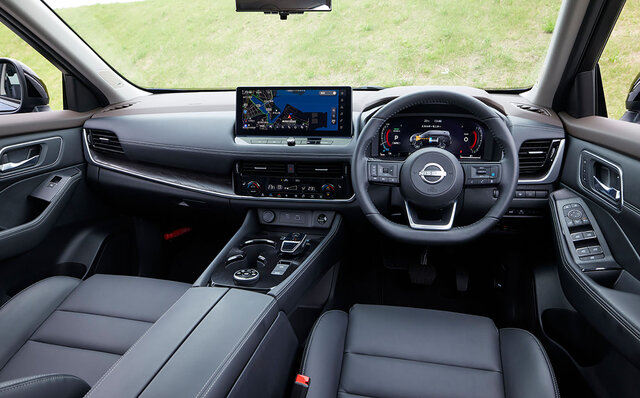
At the preview test drive held at Nissan's Oppama Proving Ground test course, we confirmed that the new X-TRAIL's high-quality interior and exterior, and the "e-4ORCE" all-wheel-drive system – which generates power with a newly developed 1.5-liter 3-cylinder VC-Turbo engine and drives front and rear motors – create a "refinement" akin to that of a well-crafted inline-6 passenger car, even under the limited conditions of two laps around the 4km course.
This refinement is based on a new platform. Body rigidity has increased by 40% and suspension rigidity by 55%. The body dimensions are largely unchanged. Despite the new platform, the wheelbase remains the same at 2,705mm, a popular feature that provides class-leading interior and cargo space. The vehicle height has been lowered by 20mm and the width increased by 20mm to achieve a more stylish, low-and-wide proportion.
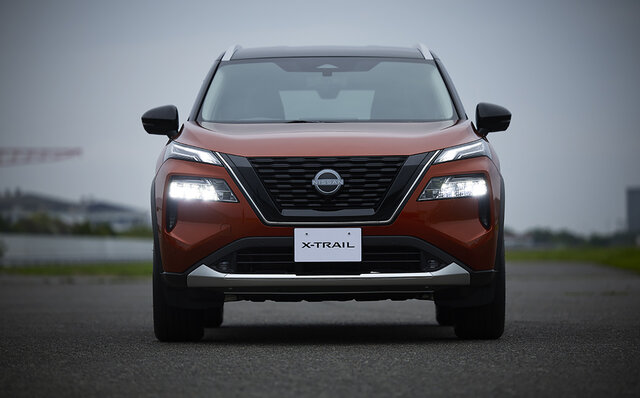
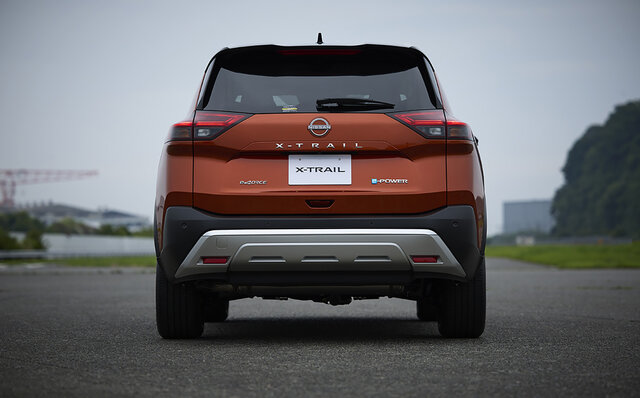
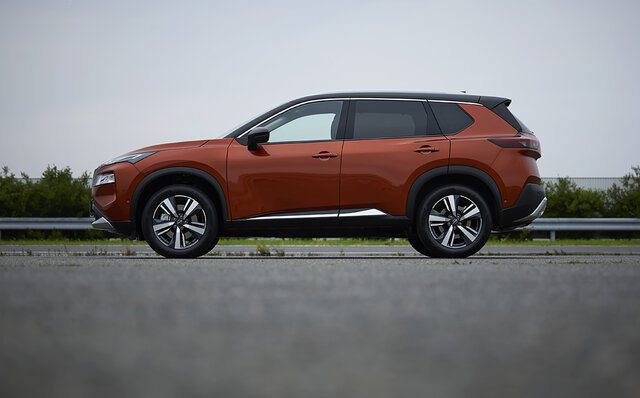
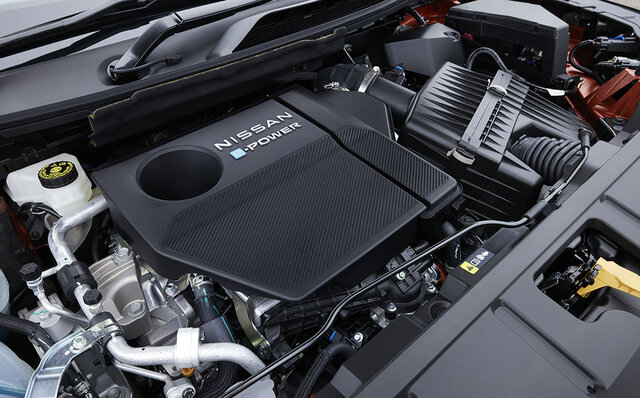
A notable mechanical feature is the adoption of Nissan's world-first mass-produced variable compression ratio (VC) Turbo engine as the generator for its unique "e-POWER" hybrid system.
The VC Turbo features a multi-link mechanism composed of nearly parallelograms at the crankshaft and a motor that changes the angle of these parallelograms. Changing the parallelogram's angle shifts the piston's top dead center position by several millimeters, allowing the compression ratio to vary automatically and freely from 8:1 to 14:1. This achieves both high output and high efficiency by adjusting to low compression for power needs and high compression when power is not required. The range of variation is equivalent to increasing displacement from 1.5 liters to 2.8 liters.
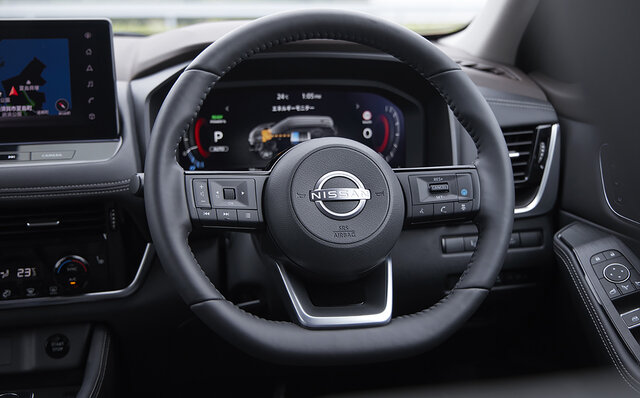
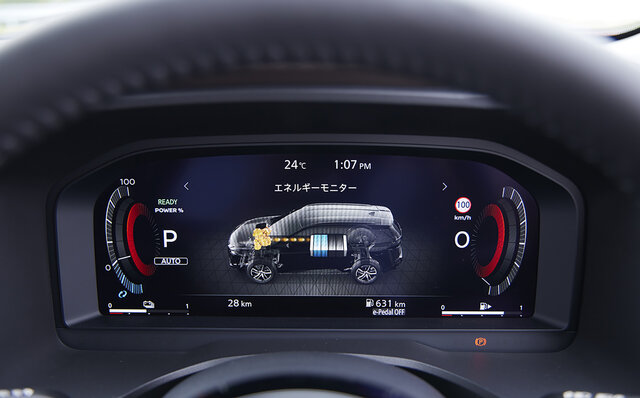
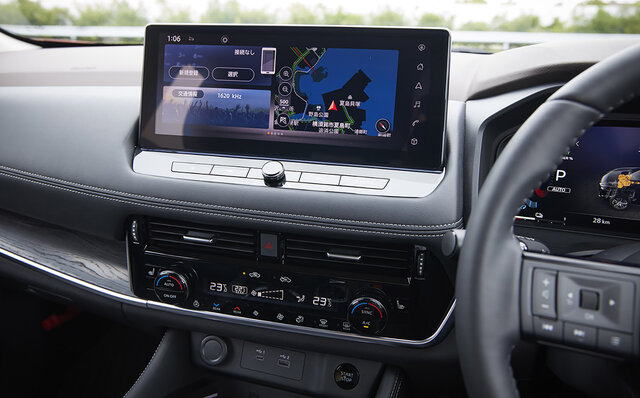
The VC Turbo in the new X-TRAIL is a 1.5-liter 3-cylinder engine producing a maximum output of 106 kW (144 PS) at 4400-5000 rpm and a maximum torque of 250 Nm at 2400-4000 rpm. The front motor responsible for driving the front wheels produces 150 kW (204 PS) and 330 Nm. In the e-4ORCE configuration, a powerful rear motor for driving the rear wheels produces an additional 100 kW (136 PS) and 195 Nm.
While both motors primarily run on electricity stored in the lithium-ion battery, the battery capacity is relatively small. Consequently, the engine plays a significant role in generating electricity. The VC Turbo can produce high torque at low RPMs. Naturally, lower engine speeds and less frequent operation contribute to maintaining quietness. The VC Turbo is thus well-suited as a generator for e-POWER.