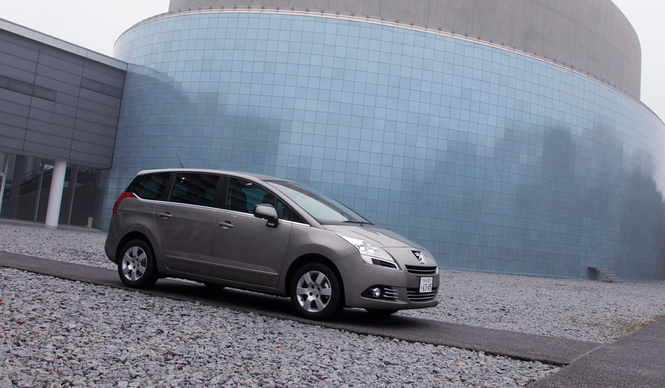
A Test Drive of the Peugeot 5008
Peugeot 5008 | Driving the Peugeot 5008
Test Drive: Peugeot's 7-Seater Minivan
Minivans remain popular in Japan, yet very few are imported from overseas. Into this niche, Peugeot has introduced and begun selling a 7-seater minivan. What is this French-made minivan like? Fumio Ogawa checks it out!
Text by Fumio Ogawa
Photographs by Hirohiko Mochizuki
Domestic Cars Can't Afford to Be Complacent
France enters the Japanese minivan market! Peugeot has launched the "5008," a premium minivan with seating for seven, on February 25th. A test drive reveals it's good enough to make domestic manufacturers take notice!
Peugeot, a French automaker, boasts a long history. While well-known in Japan for its hatchbacks, in its home country, Peugeot also supplies official vehicles for the President and offers a wide lineup ranging from sports cars to large vehicles, having been an early developer of minivans in the 1990s.
The tradition of Peugeot's model names using three digits with a "0" in the middle dates back to the "201" released in 1929. The history is long. It's a famous story that when Porsche was planning to release the911"901," they hesitated out of deference to Peugeot and instead released the "911."
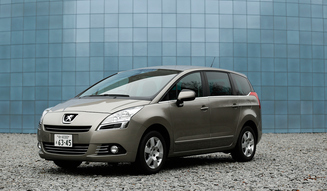
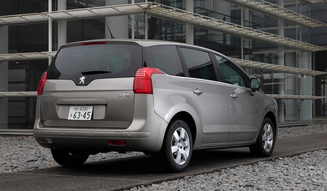
The 5008, now launched in Japan, is a minivan that breaks Peugeot's tradition by adopting a four-digit model name. For Peugeot, four digits signify lifestyle products in the automotive world, such as SUVs.
"While minivans are popular in Japan, the segment for slightly premium and slightly smaller vehicles is surprisingly open. We aim for success with a model targeting this niche," states the local subsidiary, Peugeot Citroën Japon, with great enthusiasm. While its selling point is its premium quality, its attractive price starts from 3 million yen, making it relatively affordable.
Upon driving, the supple suspension and surprisingly sporty handling leave a strong impression. It can seat seven people and offers ample luggage space, making it an ideal choice for those who enjoy winter or marine sports. It truly embodies the spirit of France, a nation of holidays. Of course, it's also excellent for city driving.
The interior feels spacious and comfortable. In the imported car market, only Volkswagen is making waves with itsSharanandTouranmodels, and the 5008 holds the potential to become a surprising hit in this market.
Peugeot 5008 | Driving the Peugeot 5008
Test Drive: Peugeot's 7-Seater Minivan (Part 2)
A Surprisingly Enjoyable People Mover
The Peugeot 5008 shares its platform with the previously released 308 and others. Its body, measuring 4,530mm in length, 1,840mm in width, and 1,645mm in height, is mounted on a generous wheelbase of 2,725mm, featuring a four-door design with a hatch gate. The engine is Peugeot's familiar 1.6-liter 4-cylinder turbo, producing a maximum output of 156ps at 6,000rpm and a maximum torque of 240Nm between 1,400-3,500rpm. It is equipped with a 6-speed automatic transmission and is front-wheel drive.
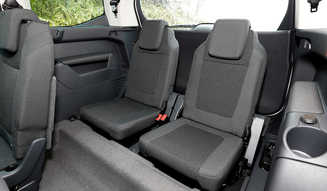
While the "308SW" (station wagon) has also been released in Japan as a people-mover type model, the 5008 stands out with its increased overall height and improved usability of the third-row seats. The two individual seats are fully retractable under the floor, creating a flat floor when not in use. When needed, they can be easily pulled out with a single touch of a handle. Furthermore, the footwell space is cleverly designed, setting it apart from the "emergency" 7-seaters like the 308SW. Although it may not fit in many rotary parking garages, for those who can overcome that issue, it offers more advantages than the 308SW.
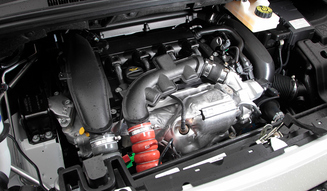
The power performance is far more lively than expected. The engine, tuned to deliver ample torque from around 1,500rpm, propels the 5008 with agility despite its relatively large body. The torque delivery is smooth, and acceleration is excellent. Engine noise is also well-suppressed, contributing to a premium feel. The "sweet spot" is between 1,500 and 3,000rpm.
By consciously utilizing this range, the car responds sensitively to subtle pedal inputs, allowing for precise acceleration and deceleration as intended. This responsiveness is particularly welcome in Japan, where this range is most frequently used.
It's surprisingly fun even when driven spiritedly. When turning the steering wheel from its center position, the car reacts sharply, maintaining a stable posture with minimal body roll, offering a sporty cornering feel.
The driving position is relatively upright, and if the steering wheel isn't tilted to a horizontal position for optimal visibility of the speedometer and tachometer, the driving posture can become somewhat "commercial vehicle-like." However, the sheer enjoyment of the drive made me tell myself, "Perhaps some compromises are unavoidable."
Peugeot 5008 | Driving the Peugeot 5008
Test Drive: Peugeot's 7-Seater Minivan (Part 3)
A Human-Centric Development Philosophy is Evident
One of the strengths of the Peugeot 5008, in my opinion, is its strong emphasis on human-centric development, meaning it's designed with the occupants in mind. This has always been a value that Peugeot provides. Those who choose a Peugeot over a German car likely understand this well.
The premium feel of the 5008 gives me a sense of touching the core of Peugeot's philosophy. It's designed to carry seven people or a substantial amount of luggage, anticipating significant load on the suspension. Consequently, the springs are somewhat firm, but the damping is expertly tuned. It effectively absorbs road inputs, providing a flat ride.
I was particularly impressed by this. When I asked the person in charge at Peugeot Citroën Japon if this tuning was specific to the Japanese market, the answer was, "It should be the same as in the home country." I recall being disappointed by the awkward damping after a minor change to the 308SW, which also received a 6-speed AT, but I believe the 5008 is superb.
The seats are also well-made, with all seats being bucket-type. I believe this is a significant advantage over domestic cars.
Why don't many Japanese people notice this? As a result, they offer excellent support and are comfortable even on long journeys.
Domestic car seats often feel too loose, like floor cushions for a kotatsu, but this car, from a country with a strong seating culture, is truly impressive.
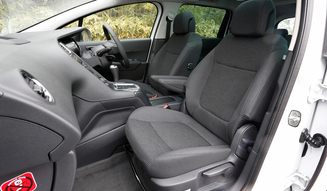
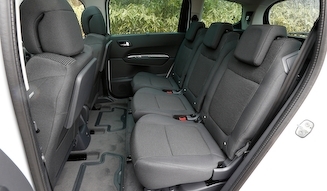
Furthermore, the advantage of all seats being independent is that each can be reclined and slid fore and aft. This allows for adjustments to prevent shoulders from bumping when three adults sit side-by-side or when child seats are installed. This is a very useful feature once you experience it.
The noise levels are acceptable, earning a passing grade for this class. On the highway, road noise from the wheel wells enters the cabin, but it doesn't impede conversation among passengers or cause fatigue.
Sitting in the second row, I noticed some wind noise from above, behind the head, possibly due to air separation at the rear of the roof. However, it's not significant enough to be a major issue.
Peugeot 5008 | Driving the Peugeot 5008
Test Drive: Peugeot's 7-Seater Minivan (Part 4)
Rivals: Volkswagen's Minivans
I would particularly like to emphasize that anyone looking for a user-friendly minivan should consider visiting a Peugeot dealership on their next holiday outing.
In terms of Volkswagen, the "Golf Touran," also a 7-seater with front-hinged doors for the rear seats, starts at 2.94 million yen with a 1.4-liter turbo engine. The "Sharan," with the same 1.4-liter engine but a slightly larger body and sliding rear doors, is a 7-seater priced at 3.82 million yen, making them direct rivals.
Price-wise, the Golf Touran is closer, but comparing sizes, the 5008 is 125mm longer, 45mm wider, and 25mm lower. Its wheelbase is 50mm longer.
"We've lowered the overall height to give it a more car-like feel," emphasizes the importer. On the other hand, some people prefer sliding doors for convenience, and Peugeot Citroën Japon seems to be aware of this.
However, for a more car-like agility, the 5008's front-hinged doors are likely the better choice.
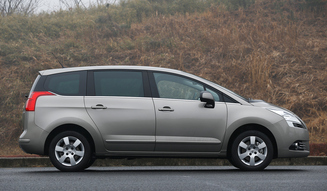
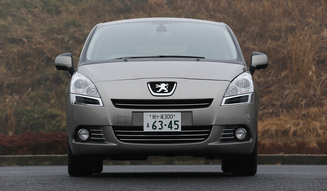
One aspect I dislike is the design of the 5008's front mask, which reminds me of the Citroën "C6." It lacks aesthetic beauty, and the flatness resulting from graphic treatment is concerning.
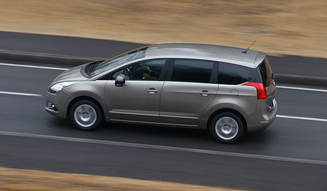
Conversely, I like the profile, which uses the beltline treatment effectively to create a sense of dynamism. Adding emotional elements to functionality is undoubtedly a strength compared to VW.
Life with the Peugeot 5008
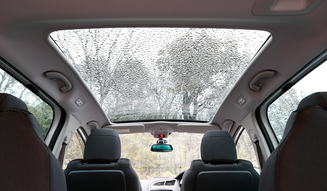
There are two grades, both sharing the same powertrain. The base model is the "Premium" (3 million yen), while the "Cielo" (3.3 million yen) features a large, fixed glass roof. The tire size also differs: 16 inches for the "Premium" and 17 inches for the "Cielo." Since this car isn't about high-speed performance, I personally prefer the smaller diameter tires for a more comfortable ride.
The interior, including the fabric upholstery on the seats, is largely the same. Leather seats are available as an option for 355,000 yen, exclusively for the Cielo. While I praise the Premium, for those who frequently transport children in the back seat, the Cielo with the glass roof is likely the better choice.
The second and third-row seats can be stowed, allowing for the transport of quite large items. A large family, or large cargo, or both—A life where you can fully utilize the capabilities of this car is truly enviable. That is what one might call a "rich" life.

Peugeot 5008
Body Dimensions | Length 4,530 x Width 1,840 x Height 1,645mm
Wheelbase | 2,725 mm
Tread Front/Rear | 1,530 / 1,565 mm
Minimum Ground Clearance | 135 mm
Minimum Turning Radius | 5.6 meters
Weight |
(Premium) | 1,570 kg
(Cielo) | 1,600 kg
(Cielo Leather Package) | 1,620kg
Engine | 1,598cc Inline 4-cylinder DOHC Turbocharger
Compression Ratio | 10.5 : 1
Bore x Stroke | 77 x 85.8 mm
Maximum Output | 115kW (156ps) / 6,000 rpm
Maximum Torque | 240Nm (24.5kgm) / 1,400-3,500 rpm
Transmission | 6-speed Automatic
Drivetrain | FF
Front Suspension | MacPherson Strut
Rear Suspension | Torsion Beam
Tires |
(Premium) | 215/55 R16
(Cielo) | 215/50 R17
Brakes | Disc
Fuel Economy (JC08 mode) | 11.7 km/ℓ
Fuel Tank Capacity | 60 ℓ
Price | (Premium) 3,000,000 yen / (Cielo) 3,300,000 yen