Test Drive the Latest Porsche 911 GT3 | Porsche
Porsche 911 GT3 | The Porsche 911 GT3
Test Drive the Latest Porsche 911 GT3
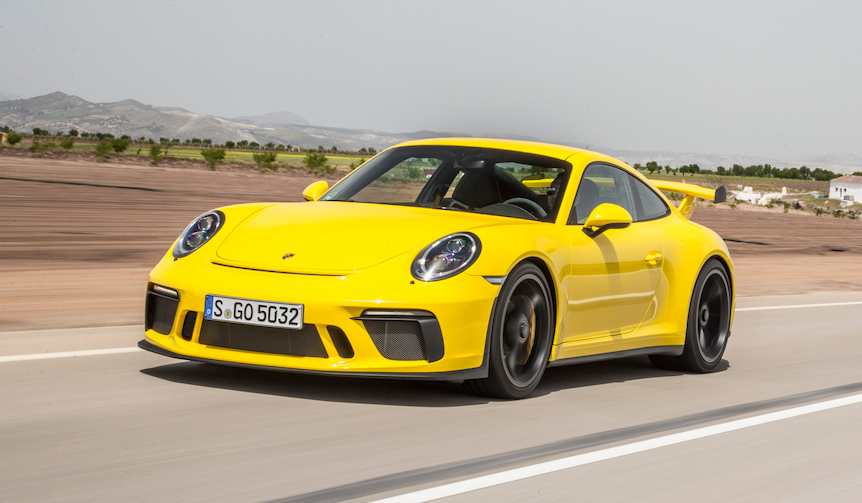
Yasuhiko Kawamura test drives the latest Porsche 911 GT3, which debuted at the Geneva Motor Show in March. Like other 911 family members, it received minor changes as a late model of the 991 generation. However, it eschews turbocharging, retaining the latest naturally aspirated engine as its heart. How has this premier Porsche sports model evolved?
Text by KAWAMURA Yasuhiko
The GT3 Designation
For dedicated Porsche 911 enthusiasts, especially those who find supreme joy in circuit driving, the "GT3" designation has become nothing short of deified.
The primary reason this grade is treated as special within the 911 lineup undoubtedly lies in its heart, located low at the rear of its distinctive "hunched" body. This engine possesses a unique character, clearly setting it apart from other 911 series.
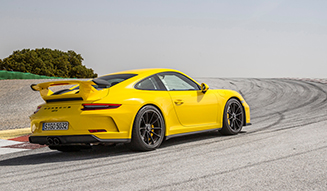
It goes without saying that the flat-six boxer engine, a design almost unique today, is indispensable to the 911. In any specification, it serves as a supremely powerful heart for a top-tier sports car, offering a deeply resonant and satisfying feeling that permeates the driver.
Even within this esteemed lineup, the engines for GT3 models have consistently featured exceptionally sporty specifications.
From the debut of the first limited model in 1999 to the latest sixth-generation GT3, the engines have all been imbued with know-how derived from the brand's "life's work" in competition, essentially featuring racing engine specifications.
Porsche 911 GT3 | The Porsche 911 GT3
Test Drive the Latest Porsche 911 GT3 (2)
Its Heart: A True Racing Engine
It is also noteworthy that the engines of all previous GT3 models have been naturally aspirated.
While increasing displacement or adding forced induction are the quickest ways to boost power and torque, the GT3's commitment to pursuing high revs and high output solely through natural aspiration, rather than taking these "easy" routes, has been a crucial factor in establishing the GT3 grade as a distinct brand.
Although the GT3 engine has been refined with each model change, the latest version, the 991 late model announced at the Geneva Motor Show this spring, also features a new heart.
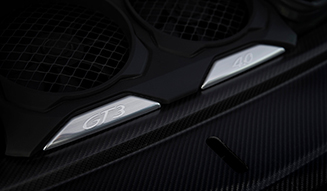
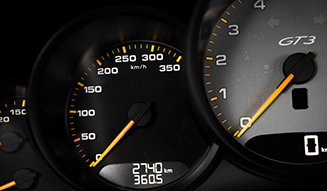
With its 4-liter displacement and 500 ps maximum output, one might initially assume it's a unit inherited from the previous GT3 RS or the 911 R.
However, the new GT3 actually features a refined unit, with modifications such as the removal of hydraulic tappets from the valve train and reinforcement of the connecting rod and crankshaft bearings. It is described as being "virtually identical to the units used in pure racing models like the latest 911 GT3 Cup car and 911 RSR."
In essence, the heart of the latest GT3 can be described as a "true racing engine." Simultaneously, the "resurrection" of the manual transmission, which had disappeared from the previous model, is also significant news.
Porsche 911 GT3 | The Porsche 911 GT3
Test Drive the Latest Porsche 911 GT3 (3)
The Manual Transmission Returns
A key characteristic of the 911 models bearing the GT3 designation is the installation of a "special heart" that clearly distinguishes them from other 911 series. Concurrently, to achieve superior driving dynamics, it is customary to implement weight reduction measures at a level far beyond that of other series.
The omission of rear seats is a prime example. When the 997 series transitioned to its late model and the 911 Carrera series introduced the DCT, the GT3 deliberately opted for a manual transmission, citing that "an approximately 30kg weight increase would not align with the concept." This decision is still fresh in memory.
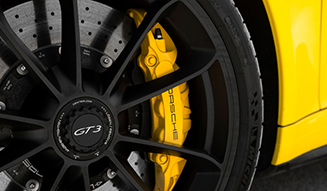
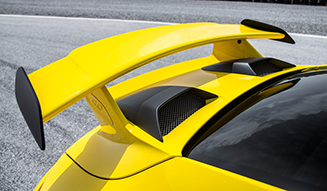
Conversely, for the early 991 GT3, the manual transmission was dropped in favor of a DCT-only setup, with the rationale being "a significant improvement in acceleration times." Another major development for the previous GT3 was the adoption of the rear-axle steering system, a first in the long history of the 911.
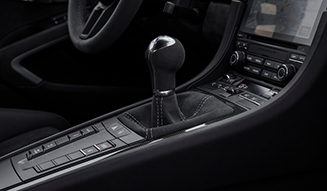
The latest GT3, while retaining the DCT and rear-axle steering system, has reintroduced the manual transmission in response to user demand: "Why no manual transmission!?"
Incidentally, the official acceleration data for the latest GT3 from 0-100 km/h shows the DCT version achieving it in 3.2 seconds, while the manual version takes 3.8 seconds, a clear "overwhelming victory" for the DCT due to the absence of time loss during gear changes.
While acknowledging that absolute speed performance may not be the primary focus, the reintroduction of the manual transmission, catering to user feedback, suggests a slightly different stance compared to the development trajectory of past GT3 models.
Porsche 911 GT3 | The Porsche 911 GT3
Test Drive the Latest Porsche 911 GT3 (4)
The GT3 Shines on the Circuit
Unleashing the full potential of the latest GT3 on a circuit was an utterly blissful experience.
With its 4-liter displacement, it delivers substantial torque even at low RPMs. Starting off in the manual transmission version, with a clutch that's easy to operate even in city driving, is effortless.
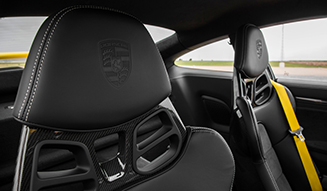
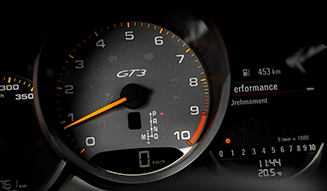
However, when the accelerator pedal is pressed deeply, the engine's increasing vitality with rising RPMs is something that would make anyone exclaim, "This is the GT3!" The exhilarating acceleration G-force, accompanied by the powerful flat-six sound from behind, offers an experience worlds apart from that of a "normal 911."
It goes without saying that the RR layout's significant advantage is its ability to transmit such abundant power to the road without waste, despite being a two-wheel-drive vehicle.
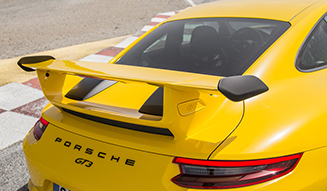
Simultaneously, while maintaining agile handling, the car ensures exceptional stability. The sensation of the car "firmly gripping the road the faster it goes" is a synergistic effect of refined aerodynamic parts designed to generate greater downforce without increased drag, along with electronic control systems such as the rear-axle steering, adaptive dampers, and dynamic engine mounts.
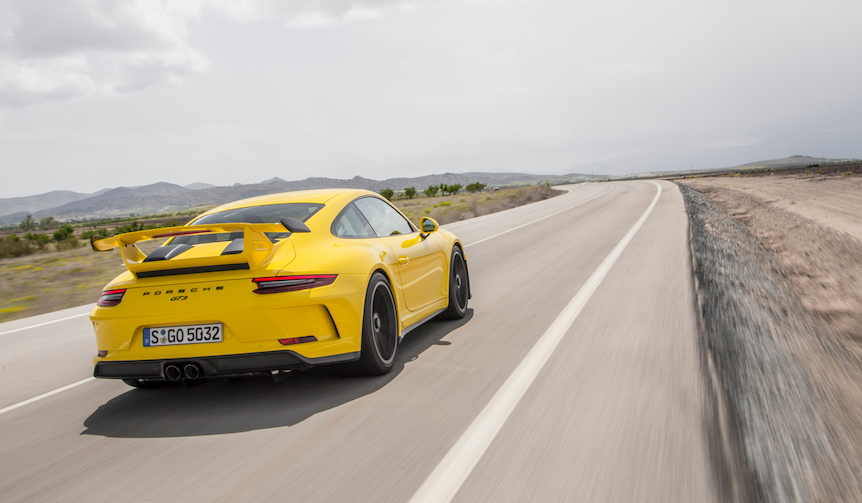
It is also worth noting that despite being a model that truly excels on the circuit, the ride comfort in city driving is the most refined among all previous GT3 generations.
Due to sound and heat insulation being reduced for weight savings, road noise intrudes significantly into the cabin even at slow speeds. Consequently, enjoying the flat-six sound in city driving is somewhat disappointing. However, the suspension strokes smoothly with even small inputs, and the car does not exhibit a jumpy behavior over minor road imperfections, offering unexpected comfort.
In today's era, where fuel efficiency improvements and electrification loom large, it is difficult not to feel a sense of foreboding regarding the future of the GT3.
However, this makes it all the more exciting to anticipate how Porsche, a company of brilliant minds, will navigate the future of such models.

Porsche 911 GT3 | The Porsche 911 GT3
Body Dimensions | Length 4,562 × Width 1,852 × Height 1,271 mm
Wheelbase | 2,457 mm
Tread Front/Rear | 1,551 / 1,555 mm
Vehicle Weight (DIN) | (AT) 1,430 kg (MT) 1,413 kg
Engine | 3,996cc Flat-six
Bore × Stroke | 102.0 × 81.5 mm
Maximum Output | 368 kW (500 ps) / 8,250 rpm
Maximum Torque | 460 Nm / 6,000 rpm
Compression Ratio | 13.3
Transmission | 7-speed AT (PDK) / 6-speed MT
Drivetrain | RR
Front Brakes | φ380×34mm 6-piston aluminum monobloc calipers, ventilated discs
Rear Brakes | φ380×30mm 4-piston aluminum monobloc calipers, ventilated discs
Front Suspension | MacPherson strut
Rear Suspension | 5-link
Tires Front/Rear | 245/35R20 / 305/30R20
Top Speed | (AT) 318 km/h (MT) 320 km/h
0-100km/h Acceleration | (AT) 3.4 seconds (MT) 3.9 seconds
0-200km/h Acceleration | (AT) 11.0 seconds (MT) 11.4 seconds
Fuel Consumption (EU) | (AT) 12.7 ℓ/100km (7.87 km/ℓ) (MT) 12.9 ℓ/100km (7.75 km/ℓ)
Trunk Capacity | Front 125 liters / Rear 260 liters
Minimum Turning Radius | 5.55 meters
Price | (AT) ¥21,150,000 (MT) ¥21,150,000