Test drive of the evolved 3rd generation Smart Fortwo | smart
smart fortwo
Test Drive: The Evolved Third-Generation smart fortwo
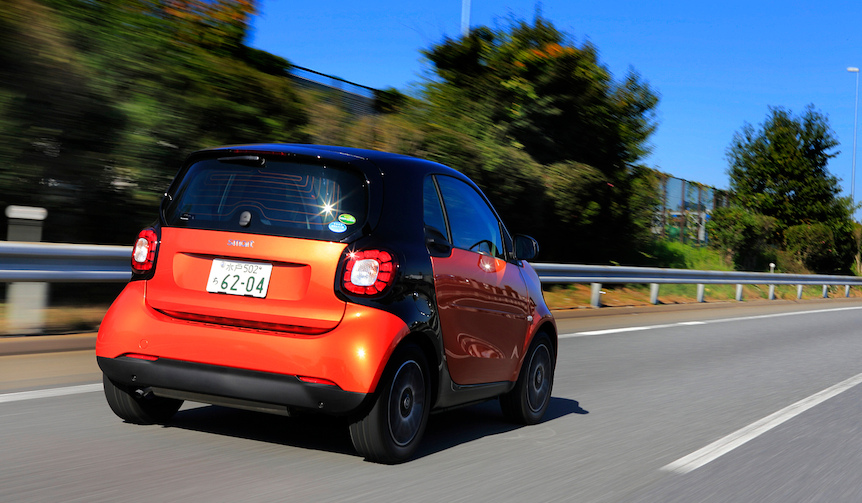
Developed as a solution for urban traffic, the "smart" enters its third generation. While retaining its minimal exterior dimensions and the Tridion safety cell body structure of previous models, the new generation notably expands its width by 100mm and features a significantly revised exterior design. Motor journalist Fumio Ogawa test drives the "fortwo," which has been introduced to Japan ahead of the four-seater "forfour."
Text by OGAWA FumioPhotographs by ARAKAWA Masayuki
50mm Shorter Length, 100mm Wider Body
The smallest imported car,smart Undergoes Full Model Changehas been released.Launch in Japan: From October 28, 2015However, the changes are significant. The lineup consists of the two-seater "fortwo" and the four-seater "forfour." The former is already on the roads, while the latter is scheduled for introduction to the Japanese market from January 2016. While the platform is new, the concept of minimal exterior dimensions and the rear-engine, rear-wheel-drive layout remain.
The forfour shares its chassis with Renault and is sold in Europe as the new Twingo (which was exhibited at the 2015 Tokyo Motor Show). This marks a reversal of the previous partnership with Mitsubishi Motors, where the smart was built based on the Mitsubishi Colt chassis. After a period of absence from the Japanese market, Mercedes-Benz Japan, the importer, anticipates increased sales, stating, "It's for 'just in case,' and we expect higher sales volume for this model."
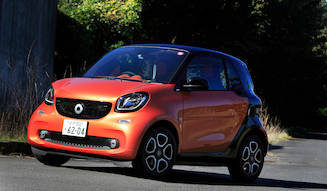
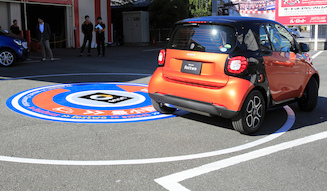
The fortwo driven this time features a significantly updated exterior. As Mercedes-Benz, smart's parent company, calls it a "1.5-box" design, the hood's presence is more pronounced compared to the previous model. This is likely a result of regulations concerning pedestrian safety. With dimensions of 2,755mm in length, 1,665mm in width, and 1,545mm in height (fitting in tower parking garages), the length has been reduced by 50mm while the width has increased by 100mm. The overall impression is one of massiveness.
The Tridion safety cell structure, similar to the previous model, is employed. Unlike conventional cars, the structural members are not entirely covered by exterior panels. The design, where a part of the structure extends outwards as a rear quarter pillar, has been carried over. The color scheme, differentiating the "cell" portion from non-structural areas, is also adopted in the new fortwo.
Regardless of the specific designation, the Tridion safety cell has been refined through revised components to enhance strength, reduce weight, and improve crash safety. Benefits cited include improved handling and better fuel economy due to the reduced weight.
Driving it, however, revealed an unexpected surprise.
smart fortwo
Test Drive: The Evolved Third-Generation smart fortwo (2)
A Sense of Unity with the Driver is the Fortwo's Forte
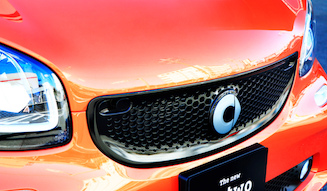
The previous smart was a concept far ahead of its time, offering a solution for congested urban traffic. It was intellectual and cool. In contrast, the new model, starting with its exterior, is hot. If the previous model was herbivorous, the new fortwo has a carnivorous image. Despite its small size, this is likely due to the body panel design and the "slanted-eye" type, modified headlights embedded within them.
The engine is a newly developed 993cc inline-3 cylinder, producing a maximum output of 52kW (72ps) at 5500rpm and a maximum torque of 91Nm at 2850rpm. While the numbers might seem modest, it actually drives well. Acceleration from a standstill is good, and there's no shortage of power when accelerating further. It's not an economy-focused, docile model, nor is it tuned for hardcore sportiness. Overall, the impression is of a car that moves nimbly and feels good in the city. The steering contributes significantly to this impression. While the steering feel is light, the body responds quite quickly. This is partly due to the short wheelbase of 1,873mm. Turn the wheel, and the car changes direction instantly. The sense of unity with the driver is the fortwo's forte, with its body smaller than a kei car.
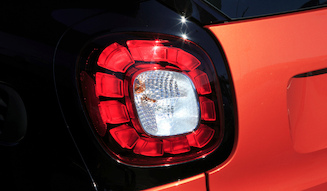
The key mechanical innovation in the new fortwo is the transmission. Previously, it used a single-clutch, two-pedal automated manual transmission (often described as robotized). I personally never quite got used to the jerky shifts with that system. The new model, however, is equipped with a 6-speed dual-clutch transmission. The tuning with the engine is excellent, significantly improving comfort in city driving where frequent gear changes occur.
The gear engagement is smooth, and shifts occur without noticeable shock. In normal mode, it prioritizes shifting to higher gears to conserve fuel (achieving 21.9km/l in JC08 mode). Despite this, acceleration doesn't feel sluggish. However, when accelerating strongly, the downshift can be slightly delayed, which might cause a momentary pause.
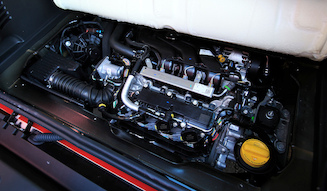
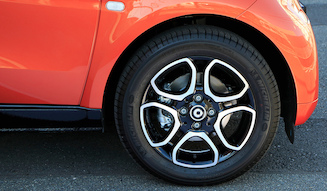
Stability has also increased on the highway. Despite the heavy engine being mounted behind the rear axle, the steering feel is never lost, even at higher speeds. While I can't be certain if I benefited from it during the test drive, the "Crosswind Assist" is standard equipment. When a crosswind threatens to disrupt the car's path, the computer intervenes with braking, maintaining straight-line stability. Combined with the supple suspension, this car has transcended its role as a mere city commuter.
The only aspect that feels unchanged from the previous model is the light action of the doors. Specifically, the doors still require a firm push to lock properly, which brought a wry smile to my face. The driving position, where you look slightly down perhaps due to the slightly reclined steering wheel, is also familiar. However, the sense of agility has greatly improved.
The premium feel is something Japanese users likely expect, and in that regard, it does not disappoint. Firstly, the cabin noise is low. Engine and gearbox noise are considerably suppressed. While the rear placement of these sound sources helps, the sound insulation is meticulous. Wind noise and the noise of tires on the road are also not distractingly noticeable.
Beyond its driving performance, there's something else about the new fortwo that impressed me.
smart fortwo
Test Drive: The Evolved Third-Generation smart fortwo (3)
New smart fortwo Sold as Limited Editions
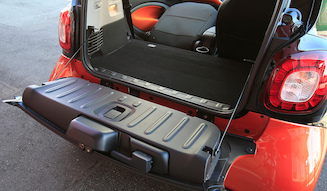
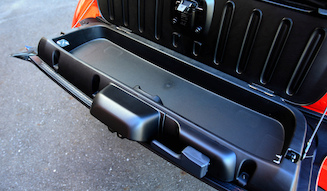
The new smart fortwo offers a slightly wider interior and a practical luggage capacity of 260 liters, making it suitable for daily use. The small storage space behind the seats is a welcome touch. The small turning radius is also a key selling point for the smart. It leverages the advantage of a rear-engine car, allowing for large steering angles without the need for expensive joints in the driveshafts. Combined with its 2,755mm length, it can easily perform U-turns and navigate narrow streets. I found myself appreciating this feature multiple times during the test drive.
The design likely prioritized maximizing interior space. There is no built-in monitor. Therefore, an external car navigation system needs to be installed where the audio controller is located. Another aspect is the utilization of smartphones.
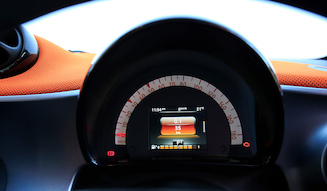
smart offers an app called "smart cross connect." This allows users to utilize their mobile devices as navigation systems. I tried it on the test car, which came with a "beta version" disclaimer, and it worked reliably. Regarding smartphone integration, there are various third-party products available, so choosing one can be part of the fun. It's worth noting that using smart cross connect hides the audio controls.
What impressed me was the marketing approach. The new smart fortwo and the four-door, four-seater forfour were launched almost simultaneously. While the fortwo is popular as a city commuter in Europe, the latter is reportedly in higher demand in Japan. In response, Mercedes-Benz Japan has introduced an interesting marketing strategy.
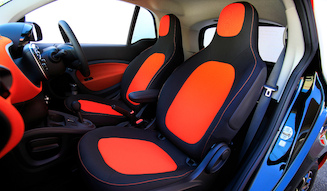
The new smart fortwo is being sold as a limited edition. This initial offering is the "Edition 1," a popular model from its parent company, Mercedes-Benz. The lineup consists of two models with distinct interior and exterior finishes. The "Lava Orange" (¥1.99 million) features a two-tone exterior of orange and black, with an interior predominantly in vibrant orange. The other is the "Midnight Blue" (¥2.04 million), which combines a unique, vivid blue reminiscent of the Mediterranean Sea with a silver Tridion safety cell. The interior is primarily white.
Sales for the Edition 1 Lava Orange and Midnight Blue are limited to 220 units each. Following this, "we plan to continuously introduce special editions" (according to Mercedes-Benz Japan, the importer). This is a strategy to stimulate demand from a younger target demographic than the forfour. It will be interesting to see if this marketing approach succeeds. Furthermore, I am also looking forward to seeing what specifications will be introduced in the future. Personally, I believe the matte black finish (including black wheels) available in Europe would suit a mature man over 40.
smart fortwo edition 1
Body Dimensions: Length 2,755 x Width 1,665 x Height 1,545 mm
Wheelbase: 1,875 mm
Tread (Front/Rear): 1,470 / 1,430 mm
Weight: 940 kg
Engine: 999 cc Inline 3-cylinder
Bore x Stroke: 72.2 x 81.3 mm
Compression Ratio: 10.5 : 1
Max Output: 52 kW (71 ps) / 6,000 rpm
Max Torque: 91 Nm / 2,850 rpm
Transmission: Electronically Controlled 6-Speed Dual Clutch
Drivetrain: RR
Front Suspension: MacPherson Strut
Rear Suspension: De Dion
Front Brakes: Disc
Rear Brakes: Drum
Tires (Front/Rear): 165/65R15 / 185/60R15
Fuel Economy (JC08 Mode): 21.9km / ℓ
Trunk Capacity: 260-350 ℓ
Price: ¥2.04 million (Midnight Blue), ¥1.99 million (Lava Orange)
Sales Volume: Limited to 220 units nationwide for each model
smart
http://www.smart-j.com/