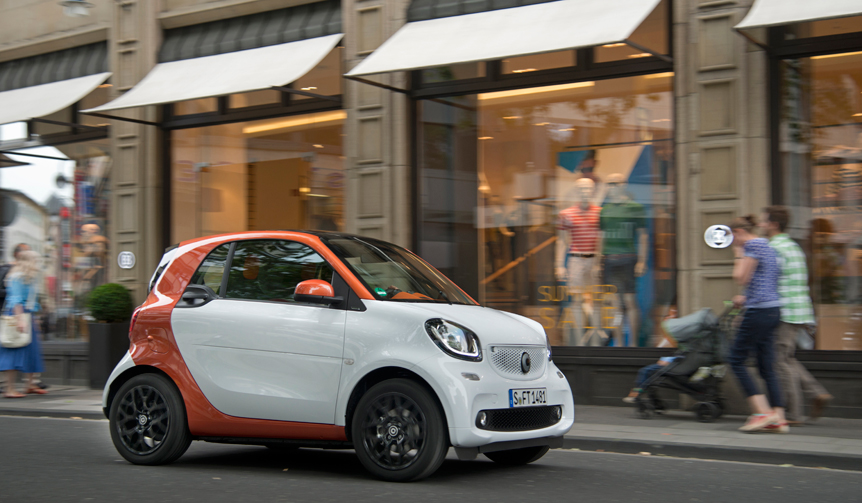
Test drive of the completely redesigned new Smart | smart
smart fortwo
smart forfour
Test Drive: The All-New Smart
Smart has carved out a unique niche with its compact size, comparable to Japanese Kei cars, and its stylish, distinctive body variations. Now, the brand has been reborn into its third generation with a full model change. Yasuhiko Kawamura reports on the much-anticipated new model from Germany.
Text by KAWAMURA Yasuhiko
A Design Philosophy Whose Time Has Come
Within the space occupied by the largest "Mercedes lineup vehicle, theS-Class" two cars can be parked.—This was the original concept behind the Smart project: achieving an "overwhelmingly small size."
Indeed, the "City Coupe," released in 1997, was only about 2.5 meters long. The S-Class of that era, the W140, exceeded 5.1 meters even in its standard body configuration. Thus, the first-generation model was a truly impactful and ambitious creation, embodying its original intention.
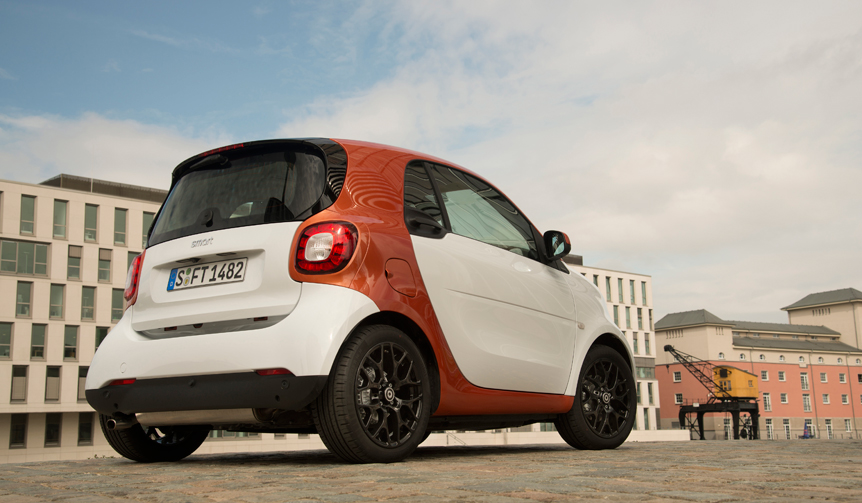
smart fortwo
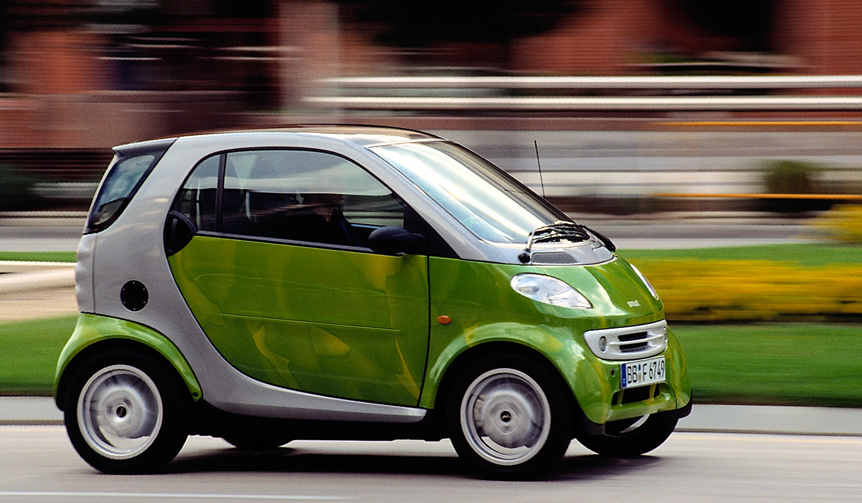
smart city-coupe 1st generation
This model, aiming for "the ultimate small size for a two-seater passenger car" with urban traffic improvement in mind, such as alleviating congestion and parking difficulties, did not have a smooth launch. This can be easily inferred from the fact that no other models with a similar concept have appeared since.
In some European urban markets, like Rome and Paris, where street parking is legal but finding an "empty" space is practically impossible, it was enthusiastically welcomed as a unique solution that reliably reduced daily parking stress.
However, the reality is that its extreme concept, almost as if it were "designed to be parked rather than driven," was difficult for many people to accept.
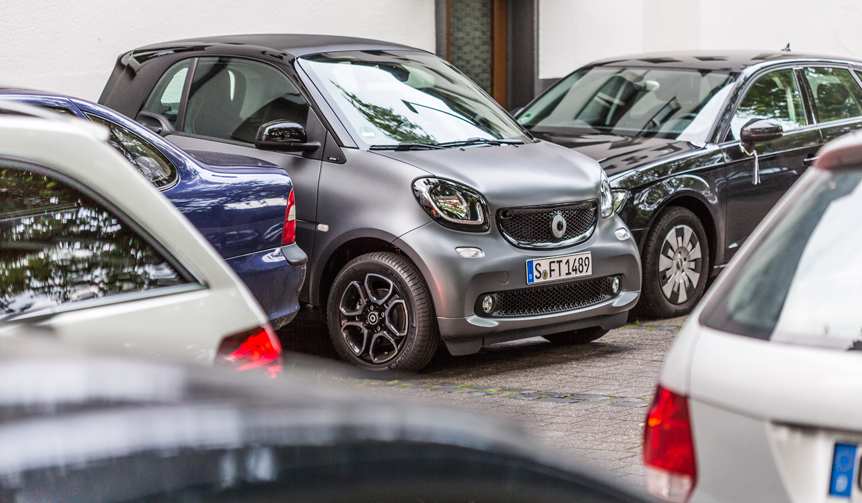
smart fortwo
smart fortwo
Swatch, the fashion watch brand that initially partnered with Smart for the project, soon withdrew from the venture due to the low profit potential of such a niche automotive endeavor. Speculation even arose that DaimlerChrysler, the remaining partner at the time, might also abandon the production of such an extremely specialized model with a limited market.
What ultimately saved Smart from this crisis was, in fact, the "changing times."
As energy and resource conservation became global priorities, manufacturers that had focused on large, fuel-inefficient models found it essential to also produce and sell smaller, more fuel-efficient cars.
Thus, the revitalized brand, also planning new sales in the American market,second-generation modeland has now undergone another full model change. This, of course, brings us to the third-generation model introduced here.
smart fortwo
smart forfour
Test Drive: The All-New Smart (2)
Wider Body, Changed Visual Impression
The second-generation model, which was renamed "Fortwo" mid-lifecycle and underwent a full model change in 2007, was a clear continuation of the original concept. In contrast, the new model, born from its second full redesign, feels distinctly different from its predecessors to many observers.
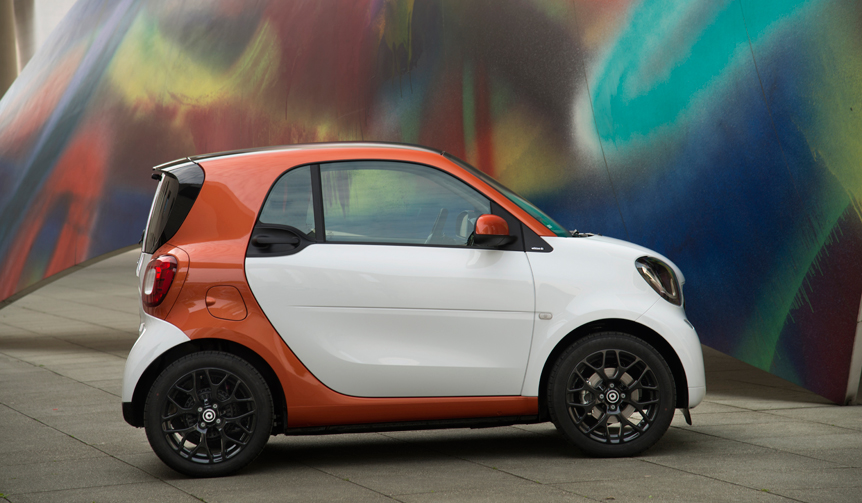
While the overall length remains the same as the previous model, preserving its "overwhelmingly small" visual impression, the characteristic "Tridion safety cell" inherited from the first generation is still present, making it instantly recognizable as a Smart.
smart fortwo
smart fortwo
However, the significant departure from previous models is not solely due to the bold redesign of its face. While the length and height are nearly identical to the previous model, the width has been increased by over 100mm. This change in the vehicle's "width-to-length ratio" has brought about the shift in its overall atmosphere.
The international press event was held in Cologne, Germany, introduced as the city with the "highest Smart market share," even within Germany, the home country of its "parent company," Daimler. Intuitively, German cities, unlike many other European locations, tend to offer relatively ample parking spaces. Yet, the fact that "Smart sells well" here must also be a testament to the challenging parking conditions.
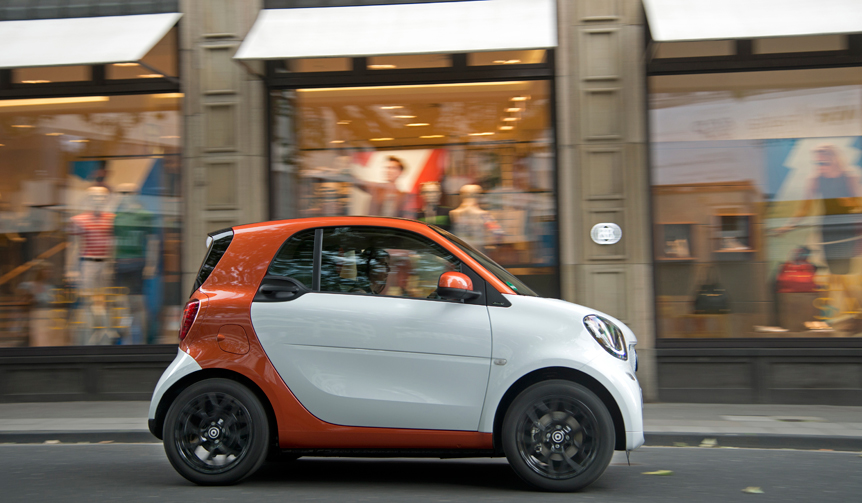
This event specifically showcased the newly developed 6-speed DCT transmission, which is an "additional option" for the European market. We selected a turbo-equipped model with a striking orange body and settled into the driver's seat, which still demands an upright posture.
smart fortwo
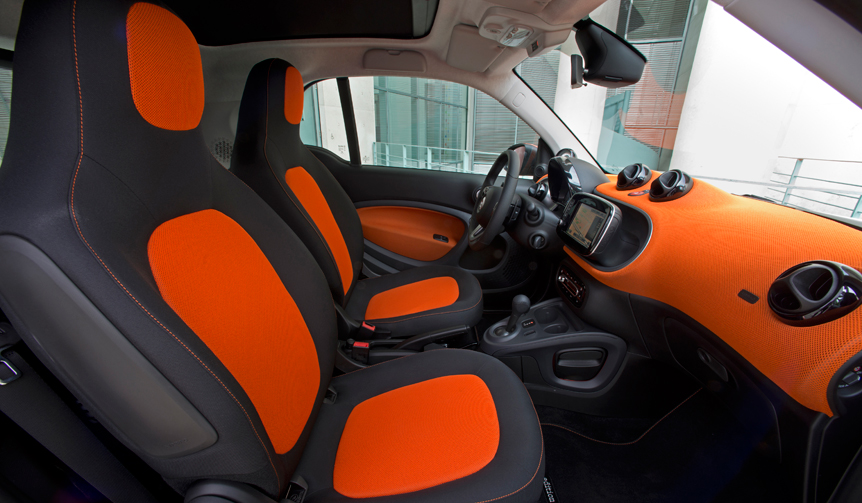
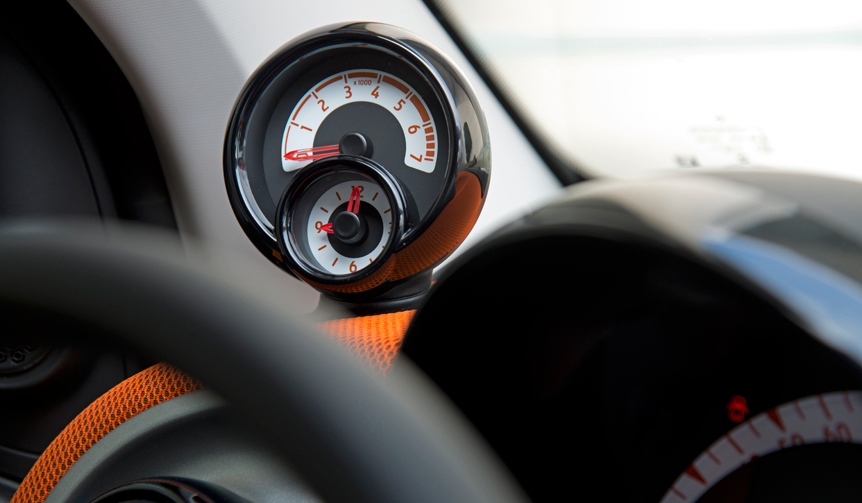
The interior is filled with a pop design, unmistakably "Smart-esque." The need to offset the left and right seats front-to-back, as in the previous two generations, has been eliminated, thanks to the "increased width."
If one considers this seating arrangement to be "essentially a 1+1 seater," then its utility is surprisingly high, a characteristic shared with the previous two generations of the Fortwo.
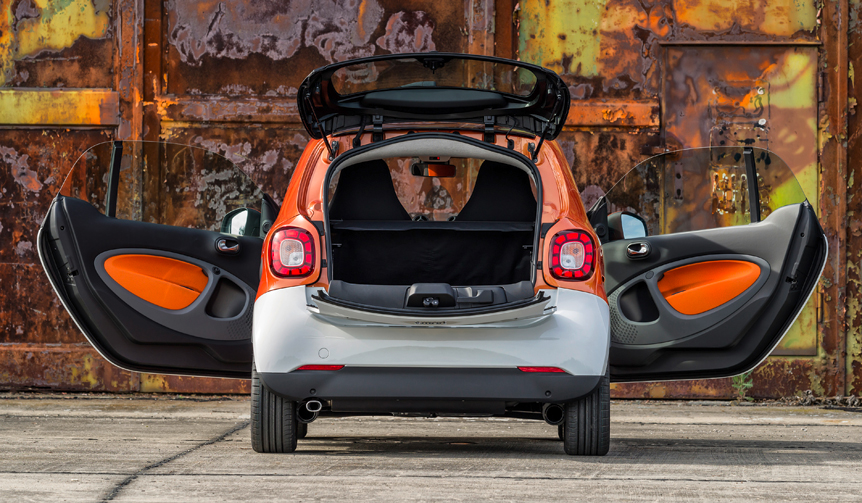
The luggage space behind the seats, directly above the "engine compartment," is more voluminous than its exterior suggests. Furthermore, by folding the passenger seatback flat, ample space is available for luggage.
The split tailgate, now an "icon" since the first generation, is highly convenient for loading and unloading items when parked close to a wall. The thick lower tailgate also conceals a "hidden storage space," just like in the previous model.
smart fortwo
smart forfour
Test Drive: The All-New Smart (3)
The Difference Between Turbo and Naturally Aspirated
Perhaps due to the pursuit of crash safety comparable to Mercedes-Benz vehicles, the curb weight exceeds 900kg, a substantial figure for its appearance.
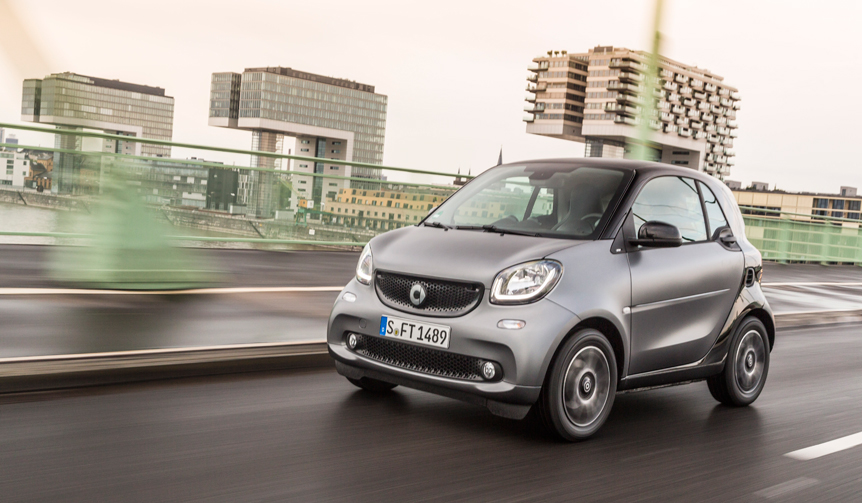
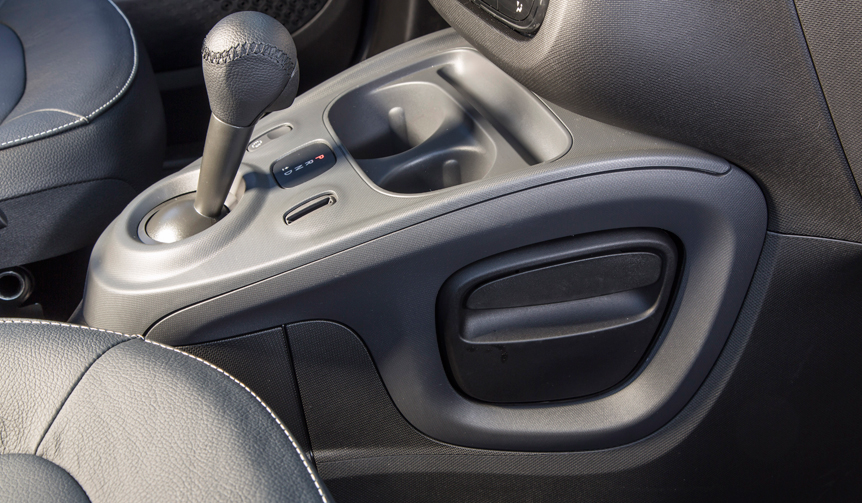
However, the powertrain, consisting of an 898cc three-cylinder turbo engine producing a maximum of 90ps and 130Nm, combined with the newly developed 6-speed DCT, offers more than sufficient performance. It's easy to lead the flow of traffic from a standstill at a traffic light on main roads.
What is most welcome about the new model's performance is the complete elimination of the frustrating power interruption during gear changes that plagued the previous two generations. While this is expected with a DCT, the new model maintains a consistent acceleration as long as the accelerator pedal is depressed.
smart fortwo
smart fortwo
Switching from the turbo model to the naturally aspirated version, which is expected to be the first to arrive in the Japanese market, reveals a noticeable decrease in acceleration power. The difference in maximum output and torque—19ps and 44Nm—is significant. In situations requiring a bit of urgency, the tachometer needle frequently climbed to around 5,000rpm.
However, from the initial launch up to around 1,500rpm, this model actually feels more powerful. This is likely due to the larger displacement, 101cc more than the turbo model. Therefore, for users who "primarily drive in the city and rarely use highways," choosing this version could be worthwhile.
A new "crosswind assist" system intervenes with braking to correct the vehicle's path when disturbed by external forces. The very existence of such a device indicates that the impression of being "vulnerable to crosswinds" remains.
smart fortwo
Nevertheless, it is undeniable that the handling feels "much more supple" and "cornering stability is significantly improved" compared to the previous model.
However, this ride quality is characteristic of the turbo-equipped model. The naturally aspirated version felt distinctly stiffer, likely because our test car was equipped with the optional "Sports Package," which included 1-inch larger wheels and a 10mm lower suspension.
smart fortwo
smart forfour
Test Drive: The All-New Smart (4)
Return of the 4-Door Plus Hatch Model
What truly astonished us about the new Fortwo's driving dynamics was its exceptional maneuverability, which can only be described as "overwhelming." The data, which an engineer proudly stated was "aimed at surpassing the Toyota iQ," shows a "minimum turning radius" of 6.95 meters. Converted to a radius, this is 3.475 meters, significantly less than the iQ's 3.9 meters, previously considered the world's smallest.
In fact, when attempting a U-turn with the steering at full lock, the Fortwo's body rotates as if "self-spinning," much like a four-wheel-steering vehicle with its rear wheels steered in the opposite phase. This incredible turning radius has been achieved by increasing the front wheel's steering angle, made possible by the added space within the wheel wells due to the widened body.
smart forfour
smart forfour
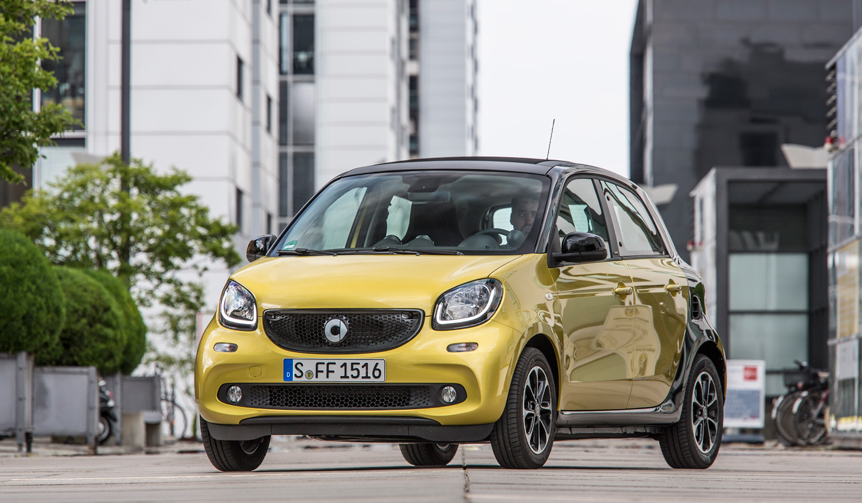
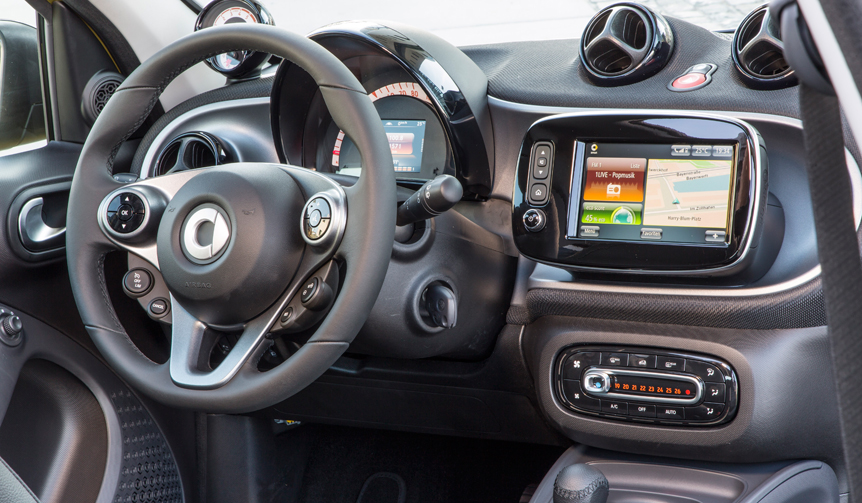
Meanwhile, a significant piece of news for the new Smart lineup is the simultaneous launch of a 4-door model. Yes, the "Forfour," which debuted in 2004 but had a short lifespan of only about two years, has made a comeback.
The first-generation model was jointly developed with Mitsubishi Motors, but the new model is a collaboration with Renault. The new Renault "Twingo" shares many components, including the basic body structure and running gear, with the Forfour.
smart forfour
smart forfour
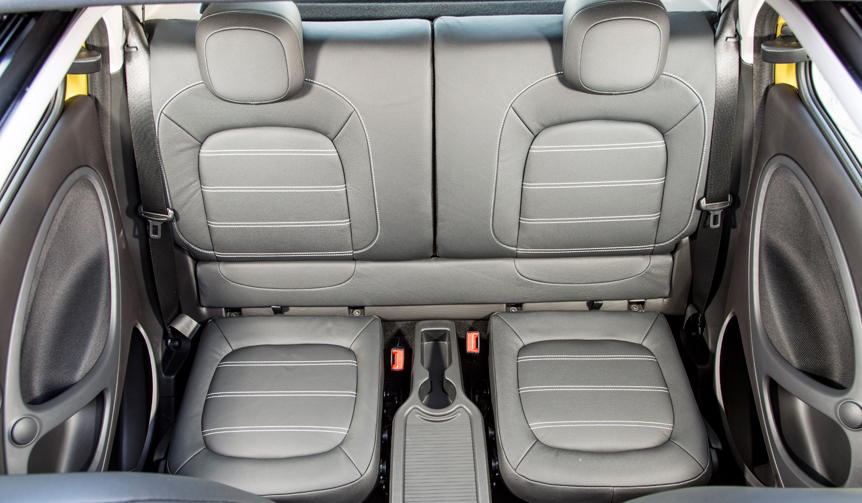
While the first-generation Forfour featured a front-wheel-drive layout with no mechanical commonality with the Fortwo of that era, the new model adopts a rear-wheel-drive layout based on the new Fortwo. Simply put, the new Forfour is a "stretched Smart" with its length extended by approximately 800mm and wheelbase by 620mm, adding rear seats and rear doors.
It seems the significant widening was a necessity to make this model viable—The Forfour, with this interpretation in mind, skillfully embodies "Smart-ness" in both its exterior and interior. While the front door trim design differs slightly from the Fortwo, the overall pop and youthful atmosphere is consistent with the Fortwo.
smart fortwo
smart forfour
Test Drive: The All-New Smart (5)
A Significantly Different Character
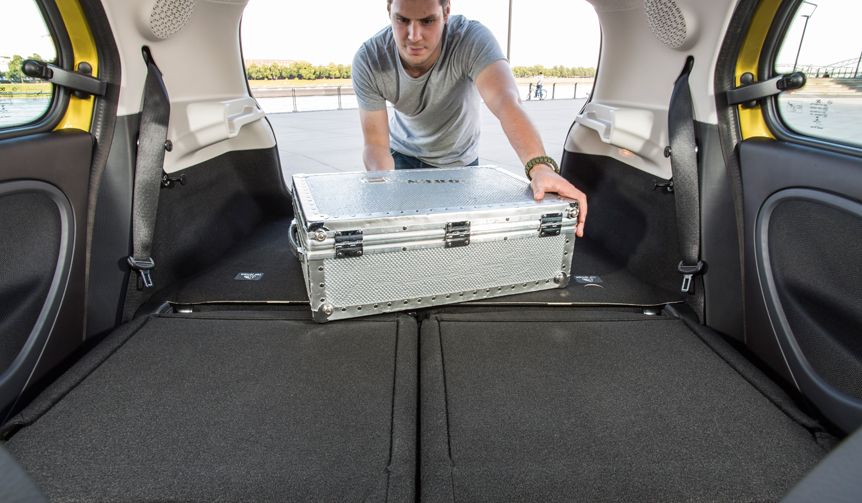
Although the new Forfour is now offered in a 4-door, 4-seater configuration, its rear-wheel-drive layout results in limited knee room and a noticeable step for heel clearance in the rear seats. The seats themselves appear small, and the rear side windows are hinged at the front, opening outwards, suggesting a "2+2" seating concept. While the rear seats can be folded to create more space, the luggage capacity when the rear seats are occupied is only 185 liters, far short of the Fortwo's 260 liters.
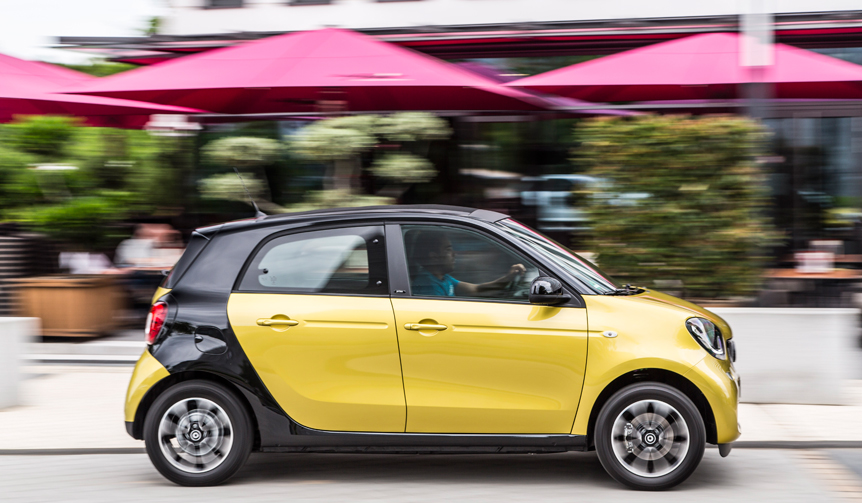
The Forfour driven for this test was equipped with the three-cylinder turbo engine and DCT combination. Although it weighs approximately 80kg more than the Fortwo, it doesn't feel particularly underpowered in city driving.
smart forfour
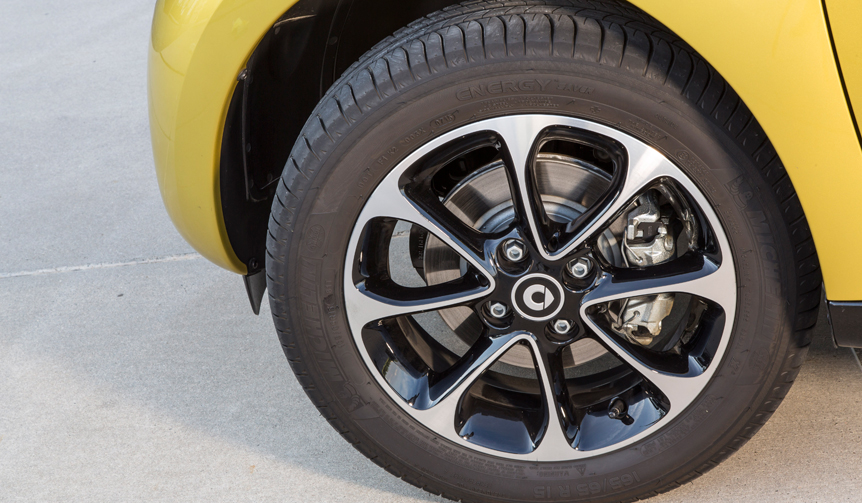
smart forfour
However, imagining the naturally aspirated model, which we couldn't test, carrying four people suggests a potential lack of power. The 0-100km/h acceleration time also reflects this, with the turbo-less version taking 16.9 seconds compared to the turbo model's 11.9 seconds.
Interestingly, the driving character of the Forfour proved to be remarkably different from that of the Fortwo.
One of the first surprises was the unexpected quietness in the front seats, possibly due to the engine, the source of noise, being located far behind. Furthermore, the ride quality, with its ample suspension travel and smooth damping, was also surprisingly refined.
On the other hand, the occasional abrupt start from the DCT and the spongy brake pedal feel were drawbacks. Along with the somewhat unique cabin packaging mentioned earlier, the car's strong character, for better or worse, is a defining feature.
smart forfour

smart fortwo 66 kW twinamic
Body Dimensions | Length 2,695 x Width 1,663 x Height 1,555 mm
Wheelbase | 1,873 mm
Tread Front/Rear | 1,469 / 1,430 mm
Weight | 940 kg
Engine | 898 cc Inline 3-cylinder Turbo
Bore x Stroke | 72.2 x 73.1 mm
Compression Ratio | 9.5:1
Max. Output | 66 kW (90 ps) / 5,500 rpm
Max. Torque | 135 Nm / 2,500 rpm
Transmission | twinamic 6-speed DCT
Drivetrain | RR
Front Suspension | MacPherson Strut
Rear Suspension | De Dion
Front Brakes | Ventilated Disc
Rear Brakes | Drum
Tires Front/Rear | 165/65 R15 / 185/60 R15
0-100 km/h Acceleration | 11.3 seconds
Max. Speed | 155 km/h
Fuel Consumption (NEDC) | 4.1 L/100km (approx. 24.4 km/L)
CO2 Emissions | 96 g/km
Trunk Capacity | 260-350 L
smart fortwo 45 kW
Body Dimensions | Length 2,695 x Width 1,663 x Height 1,555 mm
Wheelbase | 1,873 mm
Tread Front/Rear | 1,469 / 1,430 mm
Weight | 885 kg
Engine | 999 cc Inline 3-cylinder
Bore x Stroke | 72.2 x 73.1 mm
Compression Ratio | 10.5:1
Max. Output | 45 kW (61 ps) / 6,000 rpm
Max. Torque | 91 Nm / 2,850 rpm
Transmission | 5-speed Manual
Drivetrain | RR
Front Suspension | MacPherson Strut
Rear Suspension | De Dion
Front Brakes | Disc
Rear Brakes | Drum
Tires Front/Rear | 165/65R15 / 185/60R15
0-100 km/h Acceleration | 15.6 seconds
Max. Speed | 151 km/h
Fuel Consumption (NEDC) | 4.5 L/100km (approx. 22.2 km/L)
CO2 Emissions | 104 g/km
Trunk Capacity | 260-350 L
smart forfour 66 kW twinamic
Body Dimensions | Length 3,495 x Width 1,665 x Height 1,554 mm
Wheelbase | 2,494 mm
Tread Front/Rear | 1,467 / 1,429 mm
Weight | 975 kg
Engine | 898 cc Inline 3-cylinder Turbo
Bore x Stroke | 72.2 x 73.1 mm
Compression Ratio | 9.5:1
Max. Output | 66 kW (90 ps) / 5,500 rpm
Max. Torque | 135 Nm / 2,500 rpm
Transmission | twinamic 6-speed DCT
Drivetrain | RR
Front Suspension | MacPherson Strut
Rear Suspension | De Dion
Front Brakes | Ventilated Disc
Rear Brakes | Drum
Tires Front/Rear | 165/65R15 / 185/60R15
0-100 km/h Acceleration | 11.9 seconds
Max. Speed | 165 km/h
Fuel Consumption (NEDC) | 4.2 L/100km (approx. 23.8 km/L)
CO2 Emissions | 98 g/km
Trunk Capacity | 185-975 L