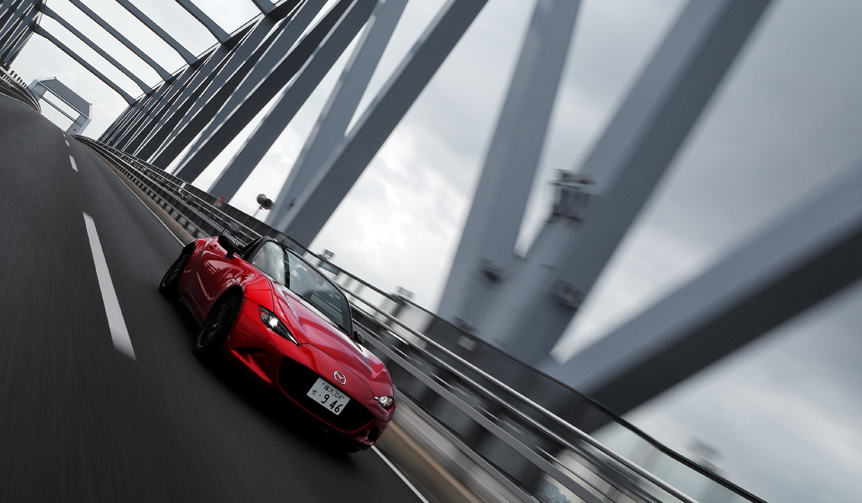
Test Drive of the New Mazda Roadster (ND Model) by Mazda
Mazda Roadster
MT or AT: Which Should You Choose?
Test Drive the New Mazda Roadster (ND)
Mazda's new "Roadster (ND)" is a hit. In just one month since its release, orders have exceeded ten times the monthly sales target of 500 units. The production line is reportedly running at full capacity. This new model, the fourth generation, is an ambitious creation developed with a return to the original concept in mind for the first time since Mazda introduced the first model in 1989. Satoshi Shiomi tests two of the latest Roadsters, one with MT and one with AT.
Text by SHIOMI SatoshiPhotographs by HANAMURA Hidenori
Roadsters Are Seen in Every Developed Nation
The Goodwood Festival of Speed (FOS) is held every summer in the UK. It's a famous event where new and classic racing and sports cars, any one of which could headline a museum exhibition, are driven at high speed on a closed course.
Each year, a featured brand is chosen. Being selected for this role is an honor that comes with significant cost, signifying that the brand's contributions to motorsport and sports cars have been recognized.
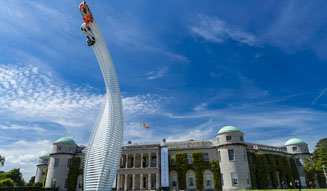
The "Goodwood Festival of Speed," a historic car event held in Sussex, UK, in late June.
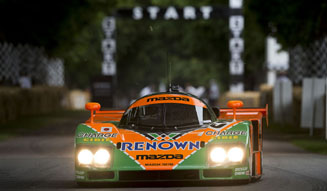
Mazda "787B" driving on the hill climb course
This year, Mazda was given that prestigious role. As a special privilege, giant sculptures of the Mazda "787B," seemingly racing towards the sky, and the "LM55 Vision Gran Turismo," a virtual sports car for the "Gran Turismo 6" driving simulation game, were displayed at the venue. As a Japanese person, I felt a sense of pride and found myself gazing at them repeatedly. The Mazda employees from Japan also looked up at them with pride.
It feels like Mazda is really on a roll, being the featured brand at FOS in the year their iconic "Roadster" gets a model change for the first time in a decade.
Even so, on the drive from London to Goodwood, I saw many previous generations of the Mazda Roadster. It's no wonder it holds a Guinness World Record for the most produced two-seater small open-top sports car. You can find Roadsters in every developed country.
Mazda Roadster
MT or AT: Which Should You Choose?
Test Drive the New Mazda Roadster (ND) (2)
Return to the Origin
Debuting in 1989, the Mazda Roadster (initially called the "Eunos Roadster" in Japan) saw its second generation in '98 and its third in 2005. Across all generations, the concept of an RWD open-top two-seater has been consistently maintained. It has become the standard for lightweight sports cars and a benchmark for affordable sports cars.
Over a quarter of a century, it has inspired many followers. Cars like the MG "MGF," Fiat "Barchetta," Mercedes-Benz "SLK," BMW "Z3," and Toyota "MR-S" likely wouldn't exist without the success of the first-generation Roadster.
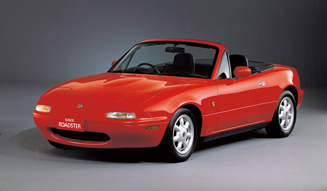
First-generation Mazda "Roadster (NA)" debuted in 1989
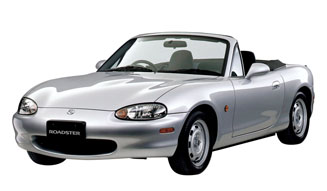
Second-generation Mazda "Roadster (NB)" debuted in 1998
However, while many rivals discontinued production or changed their concepts when sales declined, Mazda continued to sell the Roadster regardless of sales figures.
The latest fourth generation was released this summer. It remains an RWD open-top two-seater. However, for the first time in the Roadster's history, its body dimensions, engine displacement, and curb weight have all been reduced. As a result, it is more compact than the first generation, with a weight of 990-1,060kg, comparable to the original model.
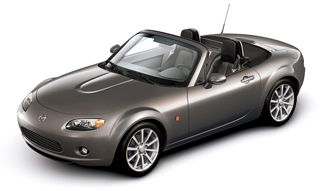
Third-generation Mazda "Roadster (NC)" debuted in 2005
While it's true that the Roadster has consistently been a lightweight sports car, demands for improved crash safety and comfort led to increased body dimensions and weight with each model change.
Consequently, engine displacement also grew, further increasing weight. Perhaps realizing that continuing this trend would mean losing the essence of the Roadster, they returned to the original concept with the fourth generation.
Mazda Roadster
MT or AT: Which Should You Choose?
Test Drive the New Mazda Roadster (ND) (3)
Transistor Glamour
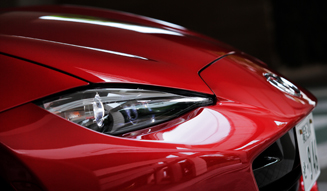
Perhaps due to the upward-angled headlamp units, the face gives a sharp impression. However, from a low angle, this face actually looks like it's smiling. The friendly, approachable "funny face" was a common characteristic of previous Roadsters, but in the new model, this trait is only present from certain angles.
Compared to the previous generation, the rear styling is more distinct. Previously, there were oval-shaped rear combination lamps with the license plate placed between them. In the new model, the rear combination lamps have a design combining circles and horizontally oriented U-shapes, with the license plate positioned lower, at bumper level. It's the simplest design in the series, with sharply tapered sides front and rear.
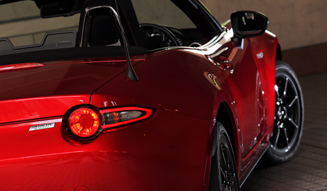
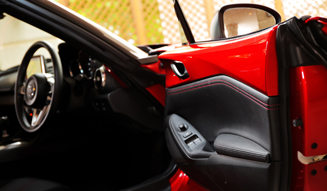
The side view sees the return of the more pronounced, undulating shoulder line seen in the first and second generations. Despite being the most compact size in the series, it's also the most glamorous. It's an outdated term, but I can't think of a better word: "transistor glamour." The A-pillars framing the windshield, the header (the part above the glass), and the door mirrors are black, regardless of body color. This also contributes to its sharp appearance.
The grade lineup is very simple. From least expensive to most: the base S (6MT only, ¥2,494,800), the S Special Package (6MT / ¥2,700,000, 6AT / ¥2,808,000), and the S Leather Package (6MT / ¥3,034,800, 6AT / ¥3,142,800).
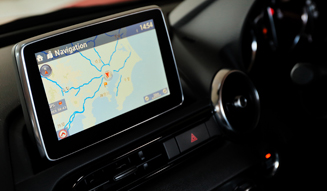
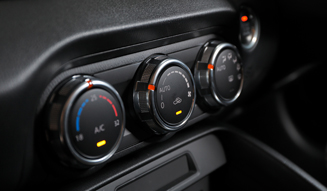
The S features a manual air conditioner, while the others have automatic. The S has 4 speakers, the S Special Package has 6, and the S Leather Package has 9. Equipment details vary. i-ELOOP, which uses regenerative braking energy for the electrical system, and the idling stop function are standard on AT models and optional on MT models (excluding the S).
Regarding differences that affect driving performance, the MT versions of the S Special Package and S Leather Package have an added brace bar under the transmission, along with a rear stabilizer and a Torsen LSD. The S and the AT versions of the S Special Package & S Leather Package, which lack these components, exhibit slightly milder handling characteristics, as detailed later.
Mazda Roadster
MT or AT: Which Should You Choose?
Test Drive the New Mazda Roadster (ND) (4)
The "Gram Strategy"
The new model is equipped with a 1.5-liter inline-4 engine. While it incorporates Mazda's signature SKYACTIV technology, its specifications are quite ordinary: a maximum output of 131 ps/7,000 rpm and peak torque of 15.3 kgm/4,800 rpm. Even when driven, it feels responsive but not particularly powerful. Well, all previous Roadsters had ordinary engines. In fact, the Roadster has consistently proven that it's possible to create an exceptionally fun sports car even with an ordinary engine.
What impressed me was the lightness. The new model's key feature, weight reduction, can be fully appreciated even without pushing it hard – just by accelerating, cornering, and braking normally in city driving. The car's response to inputs is incredibly quick and precise. A slight press of the accelerator results in an immediate, slight acceleration. A slight turn of the steering wheel results in an immediate, slight change in direction. The same applies to braking.
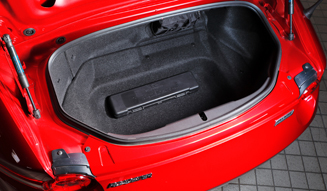
Engineers reportedly called their weight-reduction efforts the "gram strategy." They achieved significant weight savings by completely redesigning components, reducing the engine by about 14kg, the manual transmission by about 7kg, and the rear differential by about 10kg. Simultaneously, they meticulously shaved off tens to hundreds of grams by drilling holes in parts and making seat adjustment levers extremely thin.
As a result, they achieved a weight reduction of over 100kg compared to the previous generation. This isn't like a Range Rover losing 100kg; this is a car that weighed only 1.1 tons shedding over 100kg.
They also focused on weight distribution. The new model uses a higher proportion of aluminum parts and high-tensile steel than the previous generation, with these materials preferentially used in areas furthest from the vehicle's center of gravity.
In addition to parts like the hood and trunk lid, which were already aluminum in the previous generation, the new model also features aluminum for the soft top and the structural components of the front and rear bumpers. In essence, heavy components were concentrated in the lower central area.
Furthermore, the distance between occupants has been narrowed compared to the previous generation, and the seating position has been lowered. In other words, they aimed to position the weight of the occupants, who are significant masses, as close to the center as possible. I wonder if I, who have gained well over 10kg since my university days when I loved the first-generation Roadster, am qualified to review a car where such meticulous efforts have been made.—.
Mazda Roadster
MT or AT: Which Should You Choose?
Test Drive the New Mazda Roadster (ND) (5)
The Car Disappears
I picked up the pace on a winding road in Izu. The steering is quick, and the shift lever travel in the MT is extremely short. Both are characteristics inherited from the first generation. Despite moving the occupants towards the center, the layout of the steering wheel, shift lever, and pedals is ideal, providing an almost perfect driving environment. The floor of the driver's seat is raised, and while I felt a slight discomfort initially, I soon got used to it.
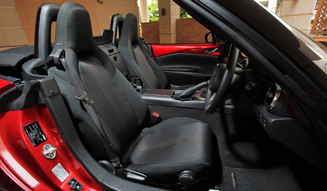
The seats are thin and small, but their shape is appropriate, and both the fabric and leather offer good grip, resulting in excellent hold. In the new seats, the metal springs typically used in the seat base and backrest have been replaced with elastic netting. This is for weight reduction, but it allows you to feel your weight being supported by a surface rather than points, improving comfort. I have a feeling this will be widely adopted in the future.
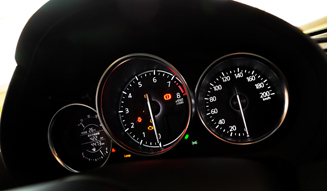
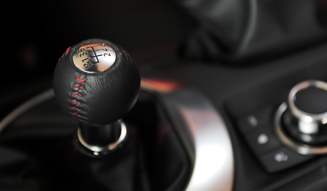
After paying at the toll booth, I shifted from 1st to 2nd to 3rd gear and accelerated. Approaching a corner, I downshifted from 3rd to 2nd as I braked. Leaning into the corner against the seat's side support, I navigated the turn. Past the apex, I slowly returned the steering wheel and accelerated again.
2nd to 3rd gear. I cleared the next corner in 3rd gear with slight deceleration. Accelerate. Brake, corner, accelerate, brake, corner—I repeated this process endlessly. There is no more exciting activity in this world.
Few cars allow you to drive with such a sense of unity. Interestingly, when you achieve such a direct feeling and can drive exactly as you intend, the car seems to lose its presence. It feels less real, almost like playing a well-made game.
When I conveyed this feeling to someone at Mazda, unsure if they would understand, they told me, "Isn't that the state that Chief Engineer Nobuhiro Yamamoto calls 'the car disappearing'?" I see. It truly did disappear.
Mazda Roadster
MT or AT: Which Should You Choose?
Test Drive the New Mazda Roadster (ND) (6)
The Best Roadster Ever
After testing the MT model, I also drove the AT version. I believe it's the best AT ever in a Roadster, but even for someone as lazy as me, I think you should choose the MT for a Roadster. Even if you're not confident with MT operation, you should buy one and practice. If you don't have an MT license, you should get one. In fact, 74% of customers choose the MT.
Aside from the enjoyment of driving, the Roadster is largely impractical. What's the point of choosing an AT to reduce one task when driving such a car? In my case, the car didn't "disappear" with the AT. While I said "Roadster only...", the Honda S660 is similar.
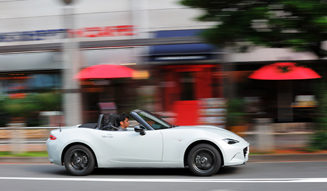
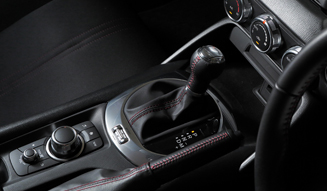
Among the MT models, comparing the S Special Package, which includes the brace bar under the transmission, rear stabilizer, and Torsen LSD, with the base S, which lacks these, I found myself more drawn to the base S. The S tends to allow for more body roll.
If you drove the first generation back in the day and are buying the new one with nostalgic memories of its handling, then the S is the clear choice. It offers the nimble, light-footed agility of the original. If, however, you prioritize direct response above all else, you should opt for the S Special Package or S Leather Package.
Well, despite writing all this, no matter which specification you choose, including the AT, it is undoubtedly the best Roadster ever. Ah, I've written too much.

Mazda Roadster S
Body Dimensions: Length 3,915 × Width 1,735 × Height 1,235 mm
Wheelbase: 2,310 mm
Tread Front/Rear: 1,495 / 1,505 mm
Weight: 990 kg
Engine: 1,496 cc Inline-4 DOHC 16-valve
Compression Ratio: 13.0
Max Output: 96 kW (131 ps) / 7,000 rpm
Max Torque: 150 Nm (15.3 kgm) / 4,800 rpm
Transmission: 6-speed MT
Drivetrain: FR
Suspension Front: Double Wishbone
Suspension Rear: Multi-link
Brakes Front: Ventilated Discs
Brakes Rear: Discs
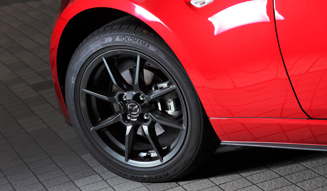
Tires Front/Rear: 195/50R16
Fuel Economy (JC08 mode): 17.2 km/ℓ
Price: ¥2,494,800
Mazda Roadster S Special Package
Mazda Roadster S Special Package
Body Dimensions: Length 3,915 × Width 1,735 × Height 1,235 mm
Wheelbase: 2,310 mm
Tread Front/Rear: 1,495 / 1,505 mm
Weight: 1,010 kg (MT) / 1,050 kg (AT)
Engine: 1,496 cc Inline-4 DOHC 16-valve
Compression Ratio: 13.0
Max Output: 96 kW (131 ps) / 7,000 rpm
Max Torque: 150 Nm (15.3 kgm) / 4,800 rpm
Transmission: 6-speed MT / 6-speed AT
Drivetrain: FR
Suspension Front: Double Wishbone
Suspension Rear: Multi-link
Brakes Front: Ventilated Discs
Brakes Rear: Discs
Tires Front/Rear: 195/50R16
Fuel Economy (JC08 mode): 17.2 km/ℓ (MT) / 18.6 km/ℓ (AT)
Price: ¥2,700,000 (MT) / ¥2,808,000 (AT)
Mazda Roadster S Leather Package
Mazda Roadster S Leather Package
Body Dimensions: Length 3,915 × Width 1,735 × Height 1,235 mm
Wheelbase: 2,310 mm
Tread Front/Rear: 1,495 / 1,505 mm
Weight: 1,020 kg (MT) / 1,060 kg (AT)
Engine: 1,496 cc Inline-4 DOHC 16-valve
Compression Ratio: 13.0
Max Output: 96 kW (131 ps) / 7,000 rpm
Max Torque: 150 Nm (15.3 kgm) / 4,800 rpm
Transmission: 6-speed MT / 6-speed AT
Drivetrain: FR
Suspension Front: Double Wishbone
Suspension Rear: Multi-link
Brakes Front: Ventilated Discs
Brakes Rear: Discs
Tires Front/Rear: 195/50R16
Fuel Economy (JC08 mode): 17.2 km/ℓ (MT) / 18.6 km/ℓ (AT)
Price: ¥3,034,800 (MT) / ¥3,142,800 (AT)
Mazda Call Center
0120-386-919