
Motor journalist Fumio Ogawa selects the 10 most noteworthy classic SUVs right now.
SUVs
Classic SUVs Selected by Motor Journalist Fumio Ogawa: Top 10
The SUV boom continues to captivate the world, but recently, classic SUV models, the very origins of these vehicles, have been gaining attention among car enthusiasts. Here, motor journalist Fumio Ogawa presents 10 nostalgic SUVs that retain their timeless appeal.
Text by OGAWA Fumio
The Concept of Pioneering a New Lifestyle Remains Appealing
Classic SUVs are currently drawing attention, particularly from car enthusiasts. While those only familiar with recent trends might consider them a new genre, fascinating models were already available in the 1960s.
Recently, we've seen car manufacturers themselves delving into their heritage when developing new SUVs. It's understandable. Even in an era before the term 'SUV' existed, the concept of pioneering a new lifestyle with a powerful design held an enduring appeal.

Range Rover
Where did the SUV originate? Some might say the 1970 Range Rover, while others point to the International Harvester Scout in the US. For true off-road 4WD vehicles, there are of course the Jeep (1943) and the Land Rover (1947), developed to be the British counterpart to the Jeep.

Jeep Willys (1949)
As mentioned earlier, the charm of classic SUVs lies in their simple body lines, emphasized by large-diameter tires. Furthermore, the use of functional elements like round headlamps and flat glass, designed for easy replacement with generic parts if damaged off-road, adds a unique aesthetic.
Their popularity means that various examples can still be found in the used car market. If you're looking for an American model, you might try browsing used car sites like Hemmings, which is backed by a prestigious magazine, and then contacting specialists. Of course, inspecting the vehicle in person before buying is the golden rule for selecting a good used car.https://www.hemmings.com/)
1) Land Rover
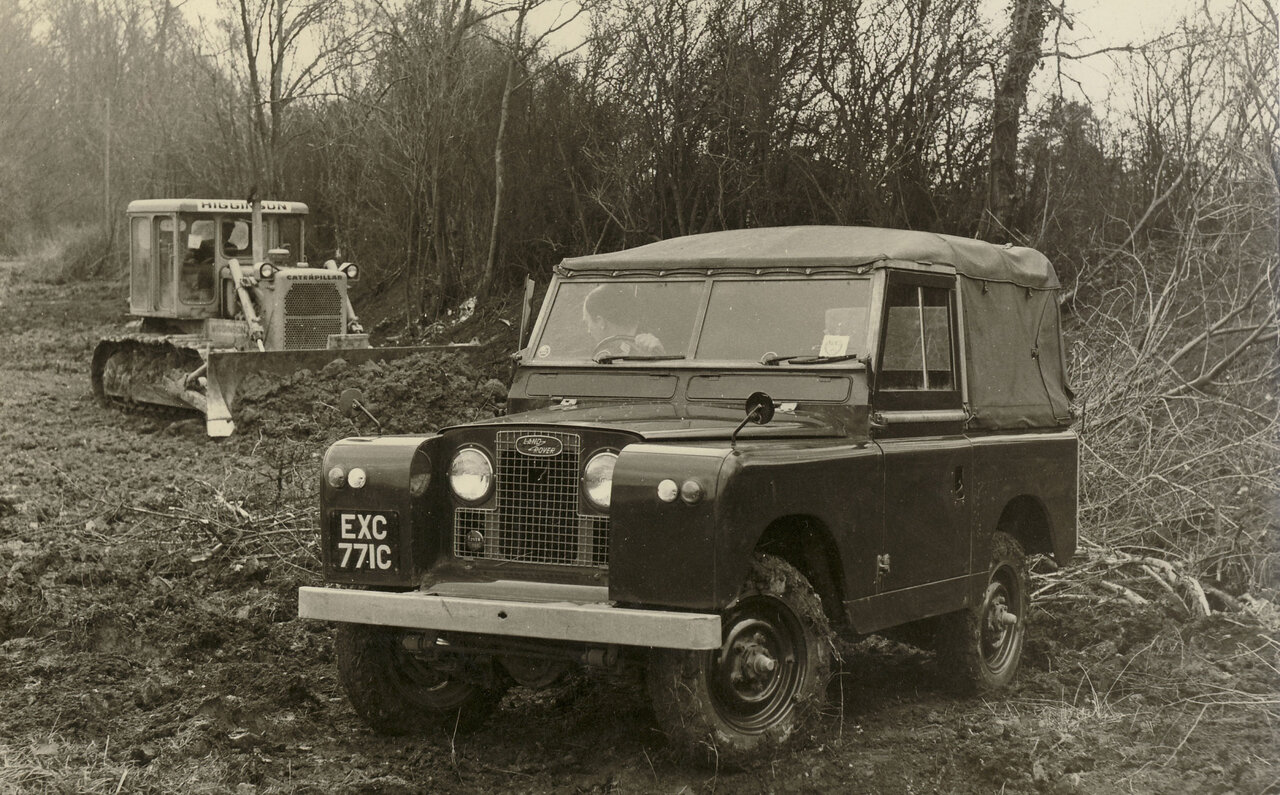
The Land Rover (Defender) is a perennial favorite. It boasts a long history and a wide variety of body styles.
The basic models are the short-wheelbase two-door (often called the 88 or 90) and the long-wheelbase four-door (also known as the 110), with pickup and utility versions also available.
The basic models are the short-wheelbase two-door (often called the 88 or 90) and the long-wheelbase four-door (also known as the 110), with pickup and utility versions also available.
The exposed rivets give it a fresh, almost steampunk feel, and it remains highly popular. However, as most engines are older diesels, it's advisable to check with your local vehicle registration office regarding regulations.
The photo shows a 1965 Series II (with recessed headlamps), commonly referred to by its 88-inch wheelbase. For me, the Series II possesses the most captivating styling.
2) Ford Bronco
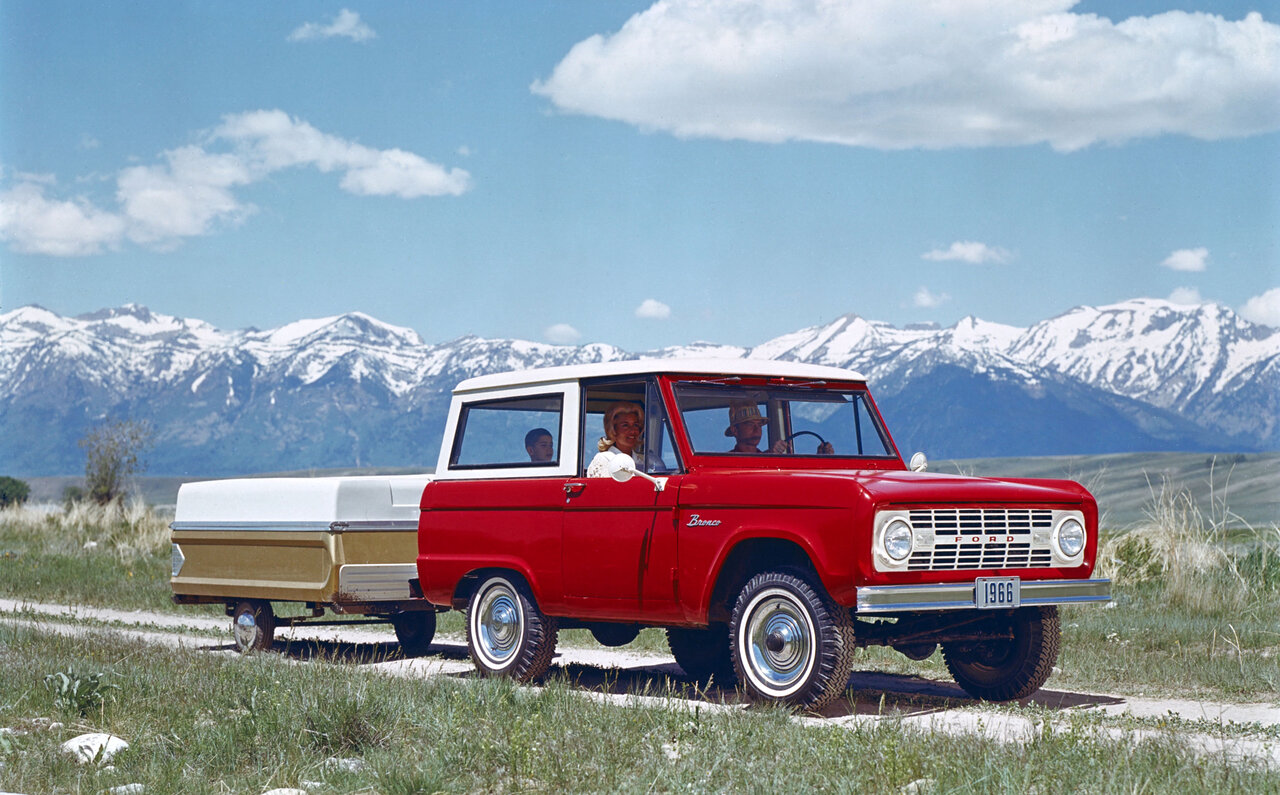
A model with a look that remains incredibly appealing even today. It was developed to compete in the market against the Jeep CJ-5 and Scout.
The first generation was unveiled in 1964, and the model pictured was released in 1965. All Broncos featured 4WD systems, with engines ranging from a 2.8-liter inline-six to a powerful 4.9-liter V8.
Early models included an open-top version. While its practical usability is hard to gauge, its appearance is undeniably attractive. Prices in the US used car market are quite high.
3) Jeep Cherokee
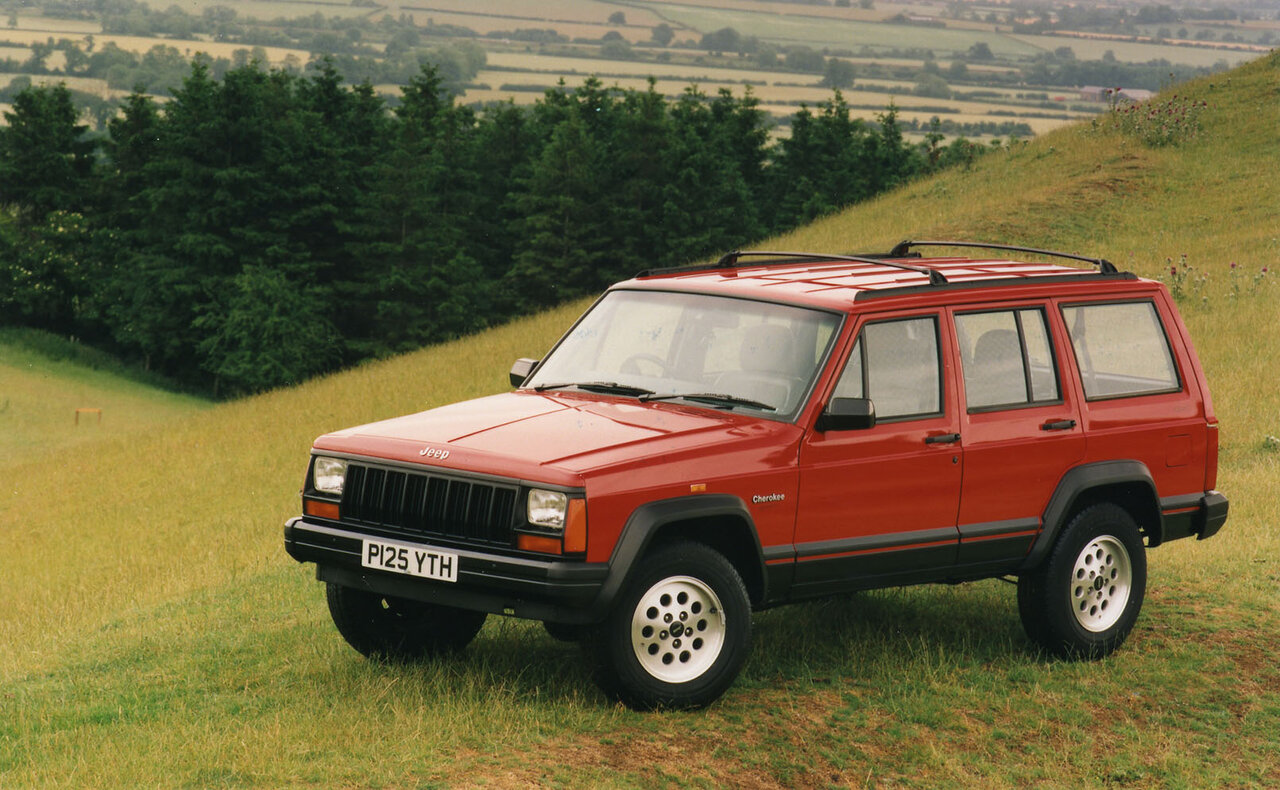
Its simple design, resembling two boxes joined together, leaves a strong impression. The straight-line motif extends to the front grille, window graphics, and character lines.
This second generation, iconic to the Cherokee, debuted in 1984, an era when aerodynamic design was becoming the trend. Yet, its robust form exuded a powerful presence that held its own.
While aerodynamic designs have faded into nostalgia, the Cherokee's appeal remains undiminished.
This generation, known as the XJ, was equipped with a 4-liter inline-six engine, offering ample torque and a comfortable ride.
Although competitors like the Chevrolet Blazer and Ford Explorer were more flashy at the time, the Cherokee's driving quality was on par.
Its price point under 3 million yen due to the strong yen in the 90s was notable, and it was even sold through Honda dealerships for a period due to US-Japan trade friction. It's a model that holds many memories.
4) Range Rover
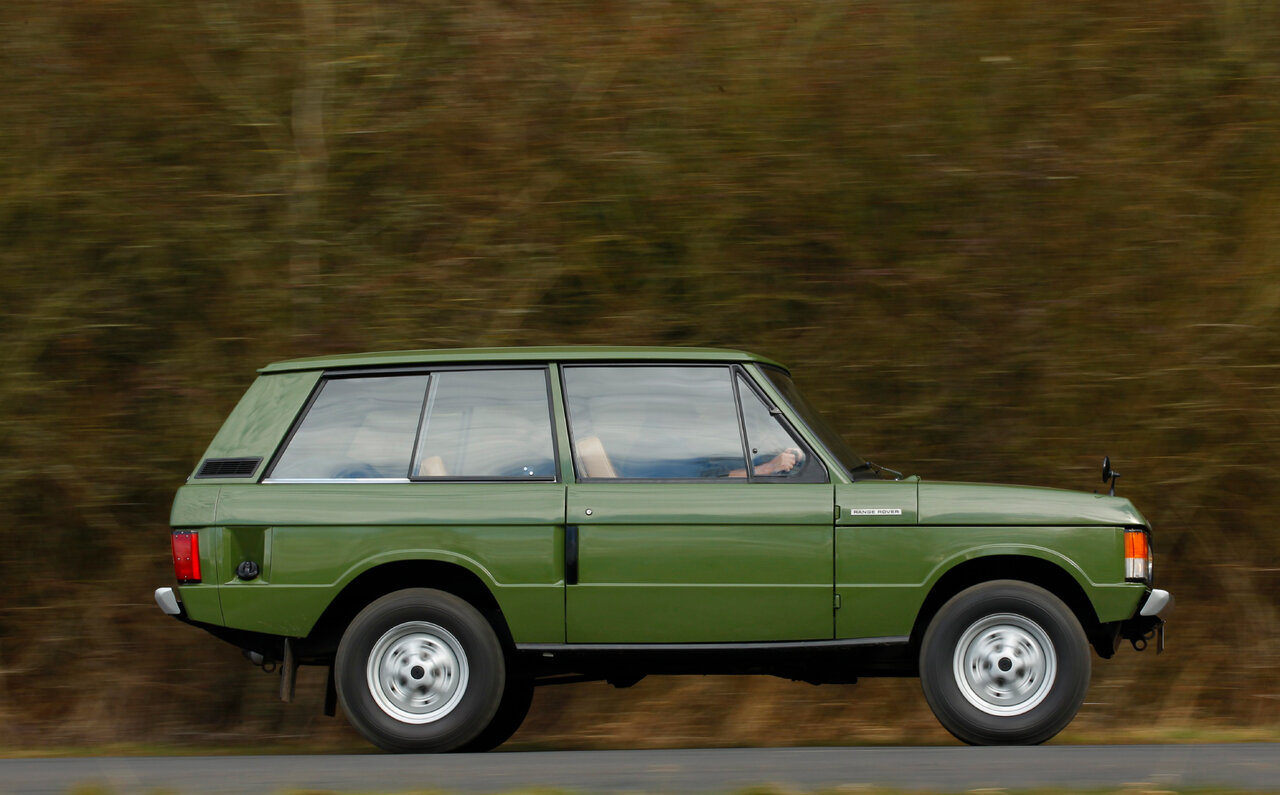
A groundbreaking vehicle that merged off-road capability with prestige. Although its presence seemed to wane at times through successive model changes, the first generation (1970-1996) is now experiencing a resurgence in popularity.
The reason likely lies in its harmonious exterior and interior design.
While perhaps not the most practical consideration, in the UK, affluent landowners in areas like Scotland used the image of being able to drive from London straight to off-road terrain to appeal to a sense of luxury. A similar image was projected across Europe.
For those serious about off-road driving, models up to 1989 are recommended. While the addition of stabilizer bars in 1990 significantly improved straight-line stability at high speeds, it made it more difficult to experience the remarkable ride quality where all four wheels independently absorb shocks from rough terrain.
5) Land Cruiser 60

A world-renowned cross-country 4WD. It's often said globally that while Land Rovers retain their (corrosion-resistant aluminum) bodies, Land Cruisers retain their engines.
Within its history, which spans from 1954 to the present, the '60 series,' produced from 1980 to 1990, remains highly popular as a classic.
Its 4.6-4.7 meter long, 4-door body features an understated styling. The combination of a seemingly spacious interior and cargo area with a robust body and prominent tires is likely the reason for its popularity.
Reflecting the RV boom of the 1980s, the adoption of a 4-liter gasoline engine prioritizing high-speed performance, and a passenger-car-like, plasticky interior are points of regret. Nevertheless, its rugged image continues to hold strong appeal.
Diesel engine models were also available, but many municipalities now prohibit their registration. This is due to vehicle regulations that require compliance with 'Nitrogen Oxide and Particulate Matter Emission Standards' set by the Automobile NOx and PM Act for vehicle inspections. The same applies to some gasoline engine models, so confirmation is advised.
6) Volkswagen The Thing (181)
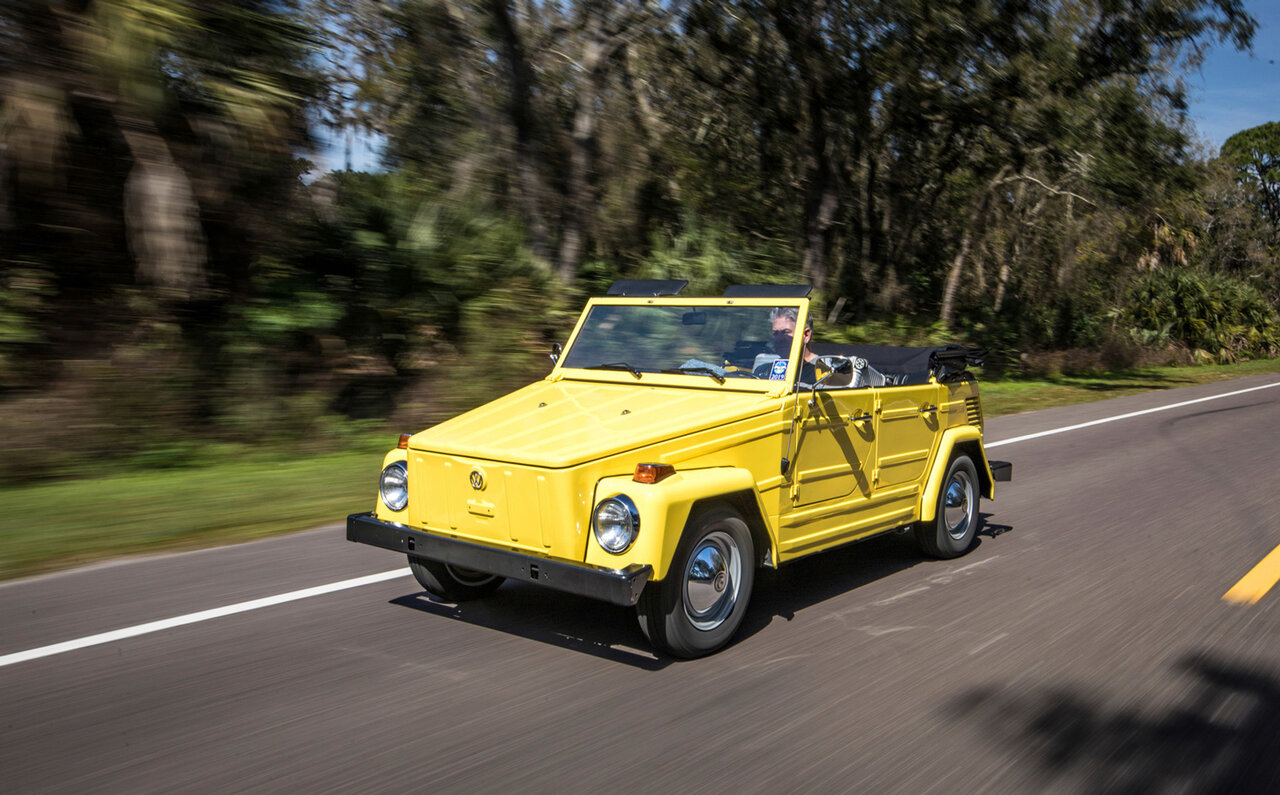
A truly sixties vehicle. While the Meyers Manx dune buggy is known as a custom modification of the Volkswagen Beetle popular on the US West Coast, 'The Thing' is an original from the manufacturer.
It was developed as a military courier vehicle and went on sale in 1969. It shares the chassis of the rear-engined, rear-wheel-drive Beetle.
The fully open body features a windshield that can be folded down. The side windows are not roll-up but rather insertable plastic panels. The exterior panels are flat, with corrugated ribs for reinforcement adding to its character.
The engine was initially 1.5 liters, later upgraded to 1.6 liters. The sense of openness is overwhelming. It's not particularly suited for off-road, but it's a charming vehicle nonetheless.
7) Volkswagen Golf Country
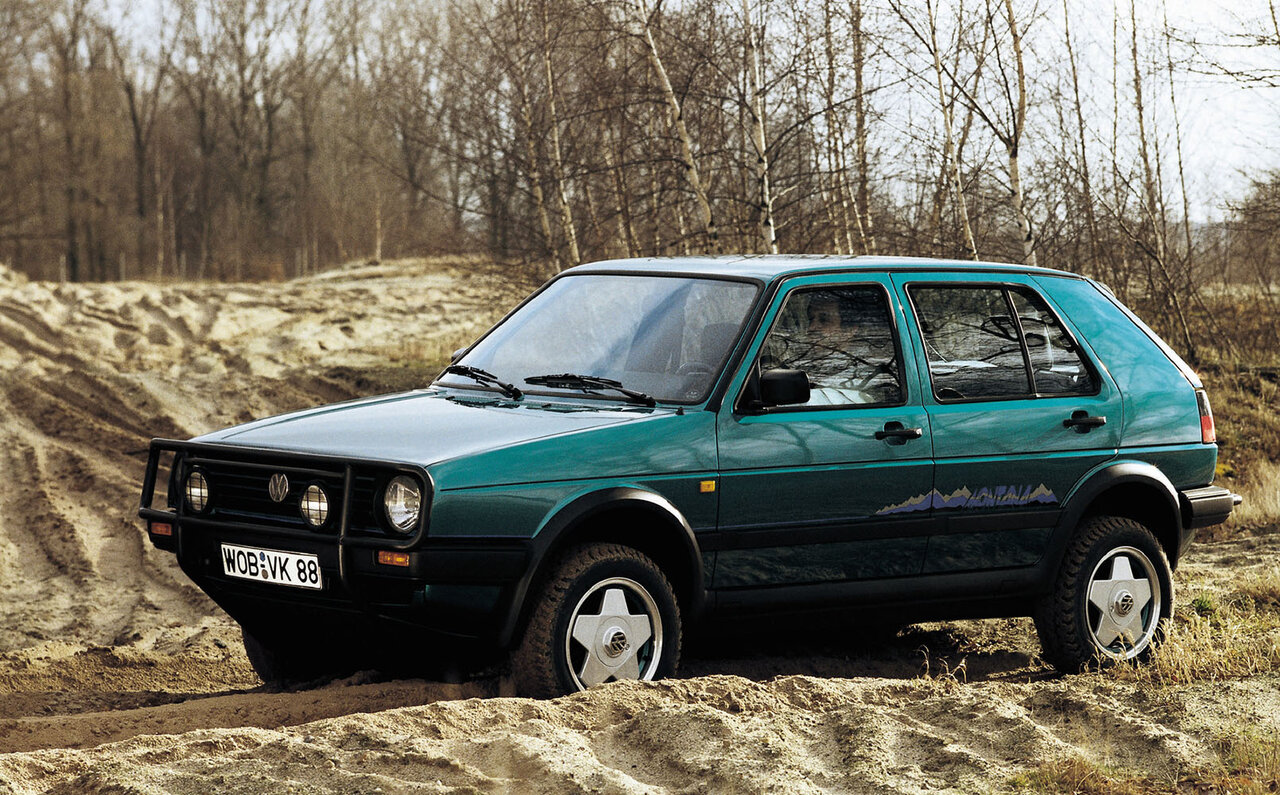
A unique crossover that particularly appeals to Golf enthusiasts. The Volkswagen Golf Country, introduced in 1990, pioneered the genre now known as crossovers.
Based on the Golf II's 'Golf Syncro,' this model was infused with a casual ambiance. My neighbor still cherishes theirs, indicating a dedicated fanbase.
'Syncro' is also the name of Volkswagen's full-time 4WD system. Volkswagen had been producing the military 4WD 'Iltis' since 1978, so experience gained from that likely contributed.
It's packed with appealing features: larger wheel arches for rough terrain, protective bars front and rear to shield the engine and lights from impacts with trees or rocks, additional large fog lights, and an underguard to protect the engine.
Although produced for only two years, the concept of a 4WD with styling enhancements was carried forward by subsequent Volkswagen models (like the 'Alltrack') and Audi (like the 'Allroad').
8) Mini Moke
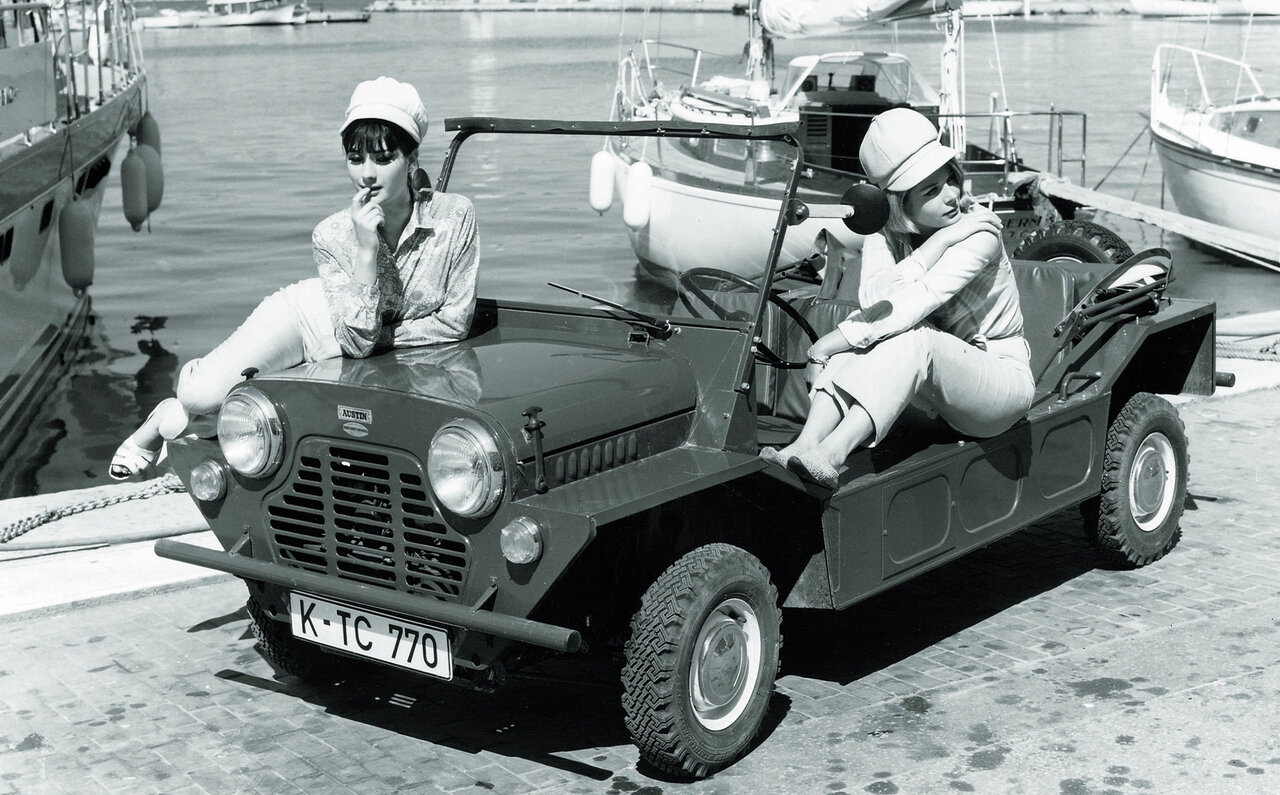
An exhilarating fully open-top model. Initially developed for the British Navy. Based on the Mini with the same wheelbase, it was designed by BMC (the company that produced the Mini at the time) to be lightweight, compact, and easily deployable for operations.
Uniquely, it features a box structure for rigidity. While a soft top could be fitted, it was primarily designed to be driven fully open.
I recall a frustrating experience where, after parking with the soft top securely closed during rain, puddles quickly formed inside the cabin.
Ultimately, due to its lack of power and limited off-road capability, the British government did not place an order. BMC shifted its focus and released it as a Mini variant in 1964.
Production also began in Commonwealth countries like Australia and South Africa. After production ceased in the UK in 1968, manufacturing bases moved to countries such as Australia and Portugal.
Cagiva, which owned motorcycle brands like Ducati and Husqvarna, acquired the manufacturing rights, and production continued until 1993. Cagiva models were also imported to Japan. Weighing just over 500kg, it was surprisingly nimble with its 1.3-liter engine. It offered an exhilarating experience, and with the soft top on during summer, it provided shade from direct sunlight.
9) Suzuki Jimny

The Jimny is arguably the most capable off-road Japanese car. The first generation was released in 1970, and the second generation, which we are discussing here, underwent a full model change in 1981.
This model was produced until 1998, making it remarkably long-lived. Key updates during its lifecycle include the adoption of a powerful DOHC turbo engine and coil springs for the suspension in 1995, and the ability to switch between 2WD and 4WD while driving starting in 1997.
The styling concept, handled by Target Design, where Hans Muth was involved, features a dynamic body with a strong emphasis on straight lines.
The front mask, with its round dual headlights and vertical grille slots, is quite simple yet leaves a strong impression.
The wide range of body variations is typical of Japanese cars from the 1980s. From the high-roof 'Panoramic Roof' specification to the soft-top version offering an almost fully open-air experience, there was a diverse array.
10) Citroën Méhari

A unique, fully open-top vehicle developed based on the Citroën 2CV. It falls into the 'beach car' category, designed for casual use on sandy shores.
The body is made of synthetic resin, colored with pigments during manufacturing rather than painting. While its design is practical, the disproportionate balance between the large engine cover with wide-set headlamps, reminiscent of a French bulldog, and the low body creates an endearingly quirky aesthetic.
With a 602cc engine, it's not fast, but its 500kg weight and 3.5-meter length mean it's perfectly adequate for daily use.
Upon its release in 1968, optional features like a foldable windshield were available, making it more of a 'fun car' than just a beach car.
Production continued until 1987, and companies like 'MCCA' (Toulouse, France) still sell fully restored Méharis in France today, attesting to its enduring popularity.