OPENERS Readers: 2014's Five Picks
OPENERS CAR Selection 2014: Toshifumi Watanabe Edition
As 2014 draws to a close and the next year comes into view, we take a moment for a considered look back with "OPENERS Selection 2014." Among the many cars launched last year, these are the models that caught the eye of Toshifumi Watanabe.
Text by WATANABE Toshifumi
Diversification Within
Looking at the cars released in 2014, there's a strong sense that each manufacturer's established and core models have undergone timely full model changes. Conversely, it's the internal aspects that truly made us feel the ongoing diversification.
In terms of powertrains, European manufacturers are increasingly compelled to adopt the downsizing turbo concept, even for high-performance models, to meet tightening CO2 emission regulations. Meanwhile, plug-in hybrids, likely to be treated as de facto EVs in many regions, are showing growing potential as a viable path forward. The fact that these trends manifested in models launched in Japan was a key characteristic of 2014. Furthermore, the implementation of Euro 6 standards, similar in scope to post-new long-term regulations, is smoothing the localization of diesel engines in Japan. Against this backdrop, 2015 is expected to see a surge in launches of EV-like models, including plug-ins, as well as diesel-powered vehicles.
Moreover, it is fascinating to consider how the "Mirai," launched in fiscal year 2014, will influence the future of automotive powertrains. While current limitations in infrastructure will likely restrict its use primarily to fleet applications, the fact that a pragmatic manufacturer like Toyota has introduced a fuel cell vehicle with mass production specifications and pricing will undoubtedly have far-reaching effects. In Japan, which must reconsider its energy management, the large-scale utilization of hydrogen, though unprecedented, is a worthy area for research and development, making this step profoundly significant.
However, labeling fuel cell vehicles as the ultimate eco-cars or the trump card for next-generation power sources is premature. It is certain that the period during which various technologies coexist and converge towards user-friendliness will be longer than we imagine. There is no single correct answer; we should adopt an approach of choosing based on suitability for our own lifestyles.
Toshifumi Watanabe's Top 5 Picks of 2014
Mazda Demio
For models in the B-segment, which cater to needs like entry-level or family cars, fuel efficiency and practicality are paramount.—This car boldly incorporates a concept usually reserved for premium vehicles, emphasizing a refined quality suitable for long-distance travel. It exemplifies Mazda's approach of no longer segmenting the market, but rather setting its sights squarely on European rivals in the same class and developing cars to a single global standard. While it stands completely apart from other domestic B-segment offerings, its influence is undeniable and is likely to spur greater activity in the Japanese B-segment in the future.
The combination of a lightweight body with the latest generation of downsizing engines is impressive. Even the most basic model, the "C 180" with its 1.6-liter direct-injection turbo, offers dynamic performance that is more than sufficient for everyday use. Furthermore, its advanced safety features significantly surpass those of its rivals in the same class. Not only is the range of equipment extensive, but its control systems are also highly refined, making it arguably the most comprehensively equipped passenger car in terms of safety factors within its realistic price range globally. While the ride occasionally reveals the firm character of its run-flat tires, its overall competence is exceptionally high.
Given the deep appreciation for the distinctiveness of French cars, Japanese customers, who hold high expectations, have often found recent globalized Peugeots divisive, particularly regarding ride quality. In fact, opinions leaning towards the negative seemed more prevalent, with sentiments like, "We don't expect the same crispness as German cars." The new "308" has been completely redesigned, recapturing the soft, light, and quintessentially French ride quality we envision. Personally, I would recommend it as a top contender in the C-segment, rivaling the benchmark "Golf."
The "Huracan," successor to the "Gallardo" after a decade, represents an evolution that is truly astonishing, far exceeding what one might expect given the time elapsed. Thanks to the numerous technologies introduced, including the DCT, it now offers a level of comfort that can satisfy those deliberating between it, Ferrari, McLaren, and even Porsche. At the same time, the Huracan retains the thrill of revving its naturally aspirated V10 engine past 7,000 rpm. Furthermore, its stability and sharp handling during such spirited driving leave nothing to be desired. It was unexpected that Lamborghini would produce such a flawlessly executed car.
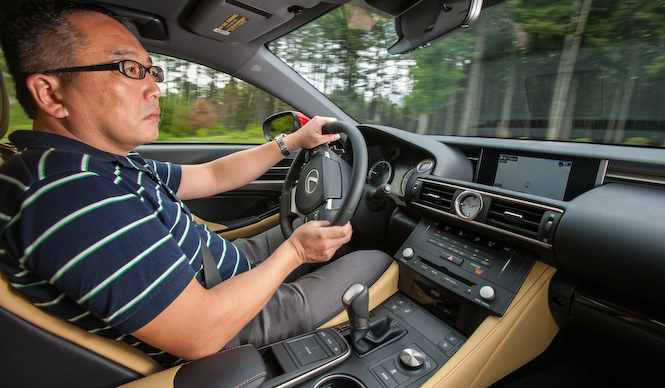
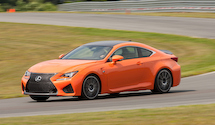
Similar to the "Huracan," the biggest draw for the "RC F" is its ability to retain the naturally aspirated 5-liter V8 engine, carried over from the "IS F." While rivals are downsizing to turbocharged, smaller displacement engines even for high-performance models to reduce CO2 emissions, Lexus, with its advantage of having pioneered hybrids, has ended up with the most sonorous engine, defining the RC F's character. The chassis setup also feels like a significant step forward. It's a masterpiece that discerning enthusiasts should definitely test drive.