An Interview with Giugiaro: The Art of Car Design | Volkswagen
Giorgetto GIUGIARO | Giorgetto Giugiaro
Il Maestro
An Interview with Giorgetto Giugiaro
The Art of Car Design
Il Maestro. Giorgetto Giugiaro is the automotive designer revered as a "master." He recently visited Japan to coincide with the launch of the new, seventh-generation Volkswagen Golf Japan launch eventHe shared anecdotes from the creation of his masterpieces, including the iconic first-generation Golf, his current activities within the Volkswagen Group, and his vision for the future of automotive design in an exclusive interview.
Text by OGAWA FumioPortraits by OKADA Kazuyuki
What Does a Designer Do?
──Do you have any favorite designers?
Giorgetto GiugiaroThere are many. Just one? That's a difficult question. I admire designers in Japan, Europe, and Italy. I appreciate anyone whose designs are uniquely theirs. For instance, Philippe Starck, Ettore Sottsass, and Mario Bellini immediately come to mind.
──Those individuals are not involved in automotive design. Do you define yourself as an automotive designer?
While I've also worked on projects like Nikon cameras and Okamura furniture, over 70 percent of my work is in automotive design.
The key difference between designing a car and, say, a bottle for San Bernardo mineral water is that the latter can be accomplished by a small team, whereas car design involves a vast number of staff.
Another significant difference is the scale of economic impact. However, the joy of designing is the same for both.
──This might be an abstract question, but what is design?
In Italian, we have terms like 'progettatore' or 'stilista' that are used instead of 'designer.' 'Designer' encompasses a broader scope of work related to products.
In the context of cars, a designer is someone who handles styling while also understanding mechanical layout, engineering, safety standards, and ergonomics.
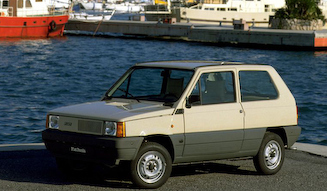
Fiat Panda | Fiat Panda
When I designed the Fiat Panda in 1980, Fiat approached me for a small car project. Upon opening the brief, I found that the engine layout and packaging were completely undefined.
So, I built it from the ground up.
Since the 1970s, understanding engineering has become a prerequisite for this role.
Giorgetto GIUGIARO | Giorgetto Giugiaro
Il Maestro
An Interview with Giorgetto Giugiaro
The Art of Car Design (Part 2)
The Pursuit of Beauty
Someone once said that while few cars are remembered for their top speed, many are remembered for their beauty. What constitutes automotive beauty?
I believe that's absolutely true. Beauty endures in memory, making it incredibly important.
Today, when designing a car, we first consider its category and then decide on the personality it should convey. It's not about freehand sketching; design is based on fulfilling a set of conditions, including dimensions, weight, and price. Even the most brilliant design will be rejected if it deviates from these parameters.
Automotive design is a form of industrial design, so this is naturally the scope of a designer's work.
Is the creation of beauty a challenging task?
As designers, we naturally seek to create beautiful objects that resonate with people. However, when considering a mass-market car, the competition is fierce, and we are constrained by the aforementioned conditions. Achieving a beautiful design that is both distinct from rivals and exceptional, while adhering to these constraints, is extremely difficult.
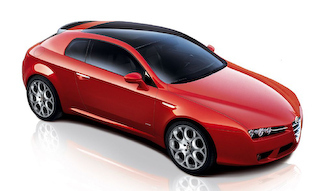
Alfa Romeo Brera | Alfa Romeo Brera
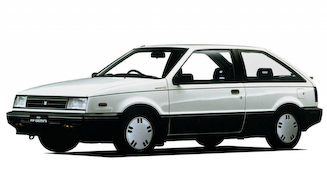
Isuzu Gemini | Isuzu Gemini
Sometimes, we might feel we've achieved beauty in subtle details, but the average consumer may not perceive the difference.
It's similar to Formula 1, where the difference between first and second place, though significant in terms of engineering, might be measured in mere thousandths of a second.
Designing a super sports car is relatively easier, but creating a mass-market car that everyone finds beautiful presents a significant challenge for a designer.
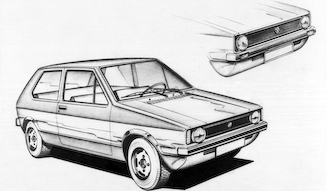
Did you face similar challenges when designing the first-generation Golf in 1974?
The most demanding aspect of that project was the sudden requirement to meet safety standards adopted in the United States during the design process.
For instance, we had to adjust the windshield angle to be more gradual and shorten the nose, making sudden changes to comply with new North American homologation requirements was quite challenging.
This is a prime example of how car design extends beyond mere aesthetics.
Giorgetto GIUGIARO | Giorgetto Giugiaro
Il Maestro
An Interview with Giorgetto Giugiaro
The Art of Car Design (Part 3)
The Untold Story of the Golf's Creation
The design of the first-generation Golf still looks remarkably modern today.
To share some behind-the-scenes details, when the competition for the Golf project was brought to me, I initially wondered why I was chosen. I thought, 'Why not Pininfarina?'
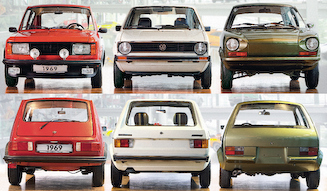
When I asked Volkswagen, they explained that they scouted potential designers at the annual Turin Motor Show. Out of the six designs they found appealing, four were mine, which led to my selection.
Could you tell us more about the design process for the first-generation Golf?

The first time I visited Wolfsburg, where Volkswagen is headquartered, I was shown into a small room filled with many Volkswagen engineers.
I was 32 at the time, and I suspect they thought, 'This young man can't possibly understand car manufacturing.' Their initial attitude seemed to reflect that skepticism.
So, I began asking them about welding methods and cost management. When the person in charge couldn't answer, they had to make phone calls within the company to find out.
So you already understood the importance of cost-conscious design?
Yes. When I founded Italdesign in '68 with my partner Aldo Mantovani, we anticipated that the automotive industry would increasingly demand proposals that encompassed not just styling but also engineering and cost control.
Therefore, I am confident that my proposal for the Golf submitted to Volkswagen was meticulously thought out, not only in terms of design but also engineering and cost.
However, I didn't know until yesterday's Golf launch event that there were three alternative proposals in that competition, including one from Porsche.
(Note: At the new Golf launch event held at the National Stadium on May 20, 2013, images of all the models submitted for the first-generation Golf competition were unveiled.)
Giorgetto GIUGIARO | Giorgetto Giugiaro
Il Maestro
An Interview with Giorgetto Giugiaro
The Art of Car Design (Part 4)
Italdesign Giugiaro and the Current State of Carrozzerie
Since 2000, you've been operating under the name Italdesign Giugiaro as part of the Volkswagen Group. What is your role within the group?
My primary role is proposing styling concepts. During the development of new models, we sometimes take charge of competing model development alongside the design centers of other Volkswagen brands.

When I was independent, engineering was the main focus. Now, styling has a greater emphasis. If styling represents 20, then engineering is about 3.
However, this doesn't mean the workload has decreased. Given the numerous brands within the Volkswagen Group, the pace remains as busy as ever.
Do you have any advice for aspiring automotive designers?
The number of freelance designers is currently declining. The emergence of a '30-something Giorgetto Giugiaro' is unlikely. Take Volkswagen, for example; they have design studios not only at their headquarters but also in California, Berlin, and Shanghai.
In a situation where manufacturers cover major markets themselves, it's incredibly difficult for emerging designers to assert their originality.
In the past, a company president might have said, 'I want that person to design it,' and a designer could be appointed with a single word. However, today, the failure of a single model can result in losses that threaten the company's survival. The investment in development is immense.
Consequently, companies tend to opt for safety by utilizing their in-house design studios, which have a deep understanding of the brand's assets. Therefore, if you graduate from design school and aspire to be an automotive designer, I recommend starting by joining a car manufacturer.
You've witnessed firsthand the globalization and expansion of the automotive industry, haven't you?
In the 1960s, when I began working with Japanese car manufacturers, some companies didn't yet have established design departments, so I was involved in various advisory roles.
But now, every manufacturer has its own design studio. Furthermore, as I mentioned earlier, the demands on design have become increasingly stringent, making it virtually impossible to design entirely externally.
There are also instances where crucial information isn't disclosed, which adds to the difficulty.
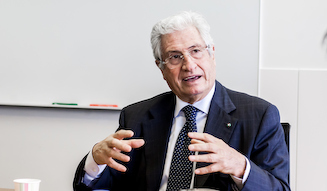
Carrozzerie like Pininfarina and Bertone once dominated the industry, but now it's the era of in-house design studios.
Giorgetto GIUGIARO
Born in Italy in 1938. After working at Carrozzeria Bertone and Carrozzeria Ghia, he founded Italdesign in 1967. His automotive design portfolio includes (but is not limited to) the following: BMW 3200CS (1961), ASA 1000 (same year), Alfa Romeo Giulia Sprint GT (1963), Alfa Romeo TZ Kanguro (1964), Fiat 850 Spider (1965), Isuzu 117 Coupe (1966), Maserati Ghibli (1966), Bizzarrini Manta (1968), Maserati Bora (1971), Alfa Romeo Alfasud (1971), Maserati Boomerang (1972), Volkswagen (VW) Passat (1973), Karmann Audi 80 Asso di Picche (same year), VW Scirocco (1974), VW Golf (same year), DeLorean DMC-12 (1975), Audi 80 (1978), BMW M1 (same year), Lancia Delta (1979), Isuzu Asso di Fiori (same year), Fiat Panda (1980), Isuzu Piazza (1981), Fiat Uno (1983), Saab 9000 (1984), Lancia Thema (same year), Fiat Punto (1993), Alfa Romeo Brera (2005), Alfa Romeo 159 (same year). In 2010, he joined the Volkswagen Group, leading to the establishment of Italdesign Giugiaro.