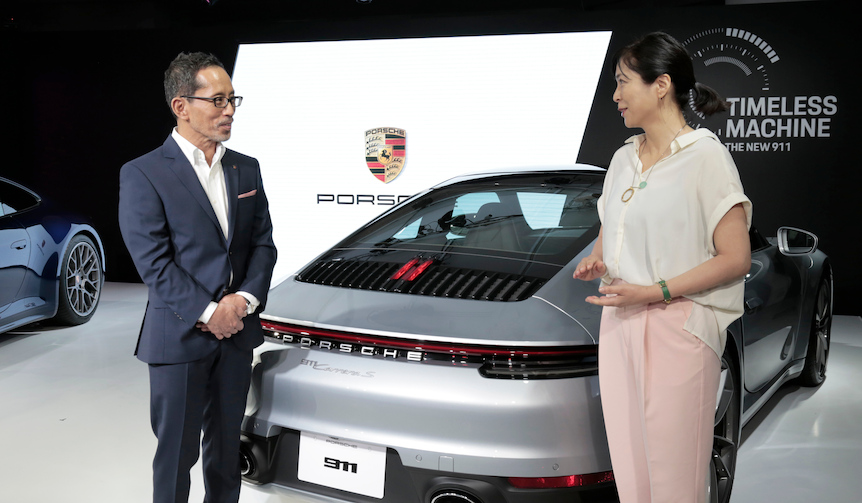
Interview with Shuichi Yamashita, Exterior Designer at Porsche AG | Porsche
Presented by PORSCHEPorsche 911 | The Porsche 911
Interview with Shuichi Yamashita, Exterior Designer at Porsche AG
The Miracle of the Porsche 911: An Enduring Timeless Appeal
What makes a masterpiece? For films and art, it's the power to move people. For practical goods, perhaps superior function and usability. While definitions vary by genre, many masterpieces share a singular uniqueness. Above all, they possess an enduring appeal that transcends time—they are, in essence, "Timeless."
Regardless of personal taste, certain creations are universally recognized as masterpieces. Think of Charles Chaplin's films, or the architecture of Le Corbusier. And when it comes to iconic cars, the Porsche "911" undoubtedly comes to mind. Since its debut in 1963, it has remained an icon of the sports car world for over half a century. Now, this car has evolved into its eighth generation. Film journalist Maki Makiguchi sits down with Shuichi Yamashita, Porsche's sole Japanese exterior designer, who returned to Japan for the latest model's premiere, to explore its timeless allure.
Photographs by Yuki Sato & Porsche JapanText by Maki Makiguchi
Working on the Iconic 911 is Like Competing in the Olympics
As a film journalist, I hold a special affection for Porsche. The "911," in particular, the brand's signature model, has graced the screens of countless films. From the masterpiece racing film "Le Mans," crafted by Steve McQueen, to "A Man and a Woman," featuring a car racer, and even romantic dramas like "Annie Hall" and "Flashdance." Even I, not particularly knowledgeable about cars, am captivated by its powerful yet elegant form.
Why is it featured in so many films? It must be because choosing a "Porsche" adds a depth to a character that dialogue and actions alone cannot convey. It allows us to instantly perceive the aesthetic sensibilities of the person who chose this beautiful car. Perhaps this is why it has been beloved by filmmakers.


Yamashita-san describes his involvement with the 911, a car that has evolved for over 50 years while retaining the DNA of its original design, as follows:
"I am truly proud. It might feel like competing in the Olympics. Having the opportunity to be involved in the presentation in Japan was also one of the happiest moments of my life."
Yamashita-san, who studied product design, decided to become a car designer and returned to his studies at the age of 28. After graduating, he worked for several car manufacturers before joining Porsche 13 years ago. Following his involvement in the7th generation (991), this marks Yamashita-san's second time participating in a 911 project. He explains that the latest model is an homage to its heritage.
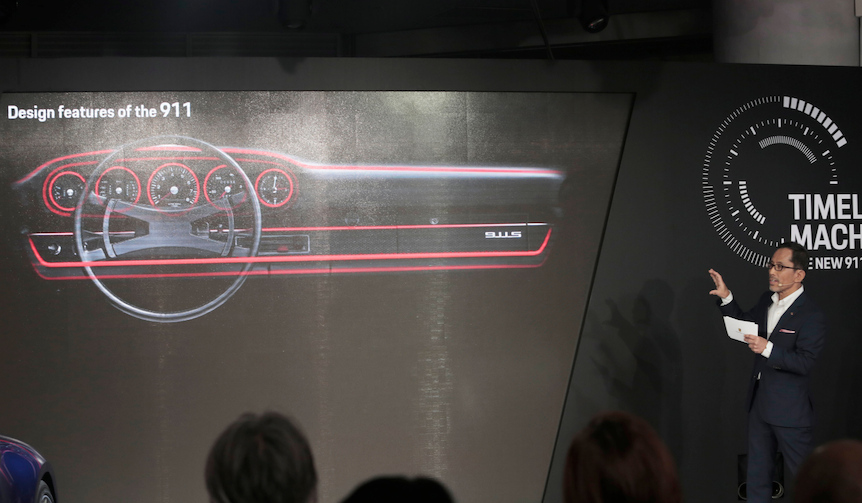
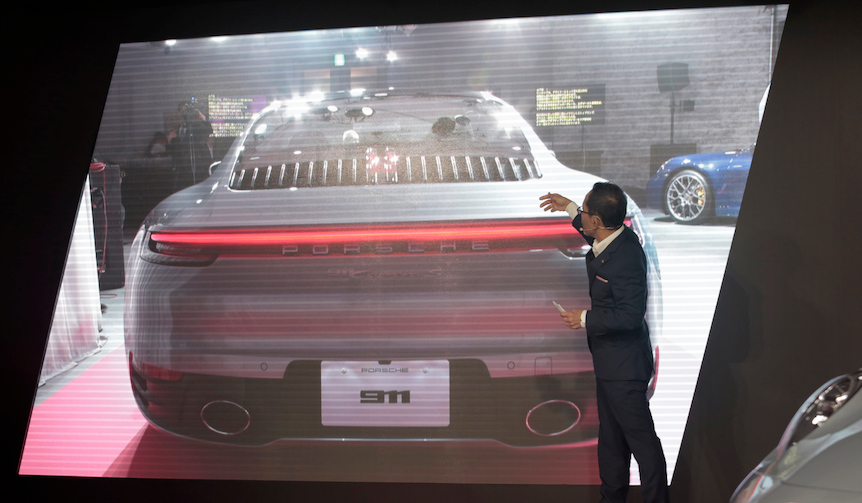
"When designing the 911, I research past models and reinterpret the tradition in my own way. I deepen my understanding of what the 911 is, and this time, I felt that with the latest technology, it's possible to recreate historical designs with a modern interpretation."
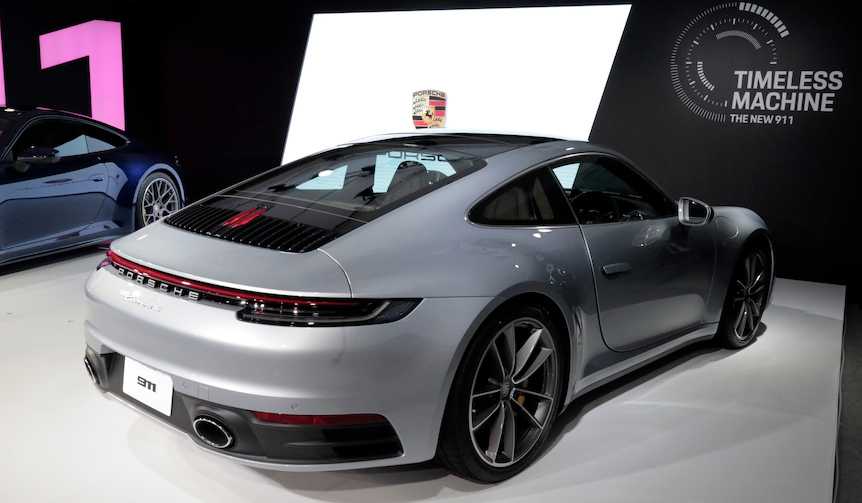
"My main focus was on theType 930 (1974-89)andType 964 (89-93)models' single-bar rear lamp. I really want you to see it at night. You'll recognize it instantly. It has a sharpness that almost sounds like a 'shing.' I call it the 'Japanese sword.'"
"Normally, due to manufacturing limitations, linear lamps have about two dividing lines. But the rear lamp on the latest 911 is a single unit, spanning 1.4 meters from left to right. The lamp's thickness is only 30 millimeters. All of this is made possible by LED technology."
"The interior display also revives the classic design, emphasizing the horizontal layout with two lines. The overall impression is clean and simple."
Page.2 How to Express "Timelessness" Amidst Evolution
Porsche 911 | The Porsche 911
Interview with Shuichi Yamashita, Exterior Designer at Porsche AG
The Miracle of the Porsche 911: An Enduring Timeless Appeal (2)
How to Express "Timelessness" Amidst Evolution
An homage to classic design, made possible by technological advancements. Yet, in today's world, driven by progress, upholding tradition presents a significant challenge. The reason this challenge is possible with the 911 is likely because many people share a common ideal of what a "Porsche" should be. This can also be described as the trust between the manufacturer and its users.
"That has been built up over many years."
The manufacturer's confidence and the user's love. Maintaining such mutual affection is difficult, and many products fade away by chasing trends.
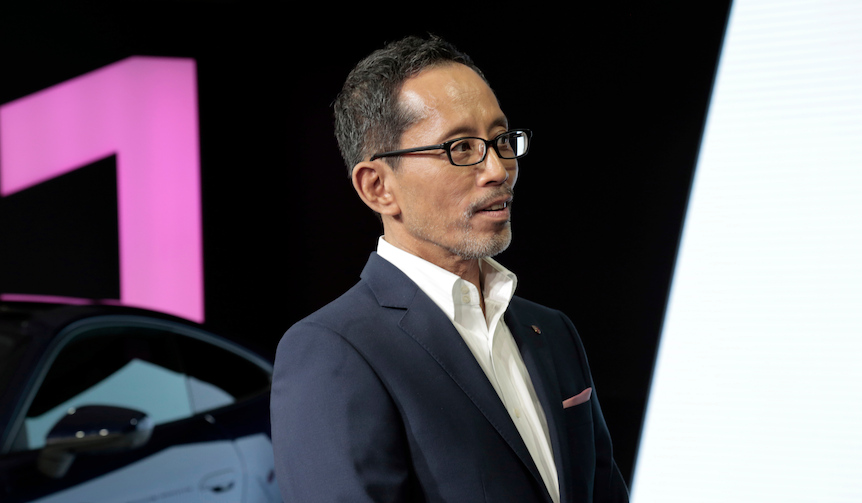
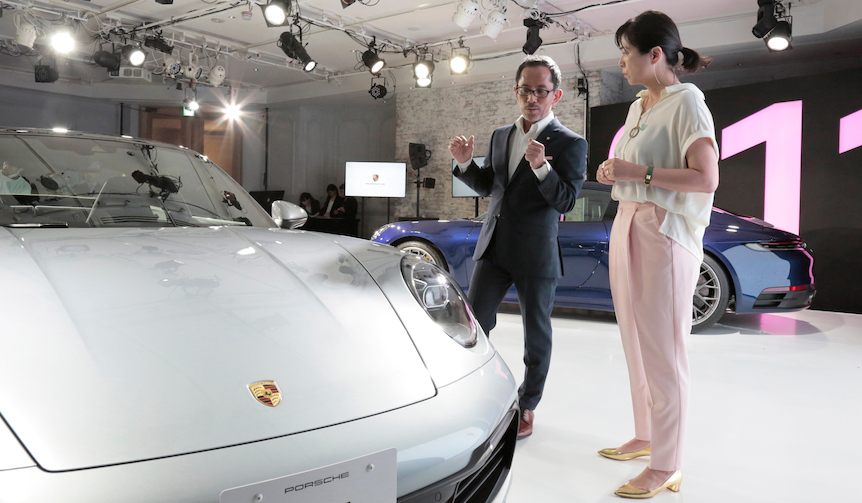
"Porsche actually considered discontinuing the 911 at one point. The introduction of the front-engined 928 in 1978 was based on the assumption that the rear-engined 911 would eventually be phased out. However, it wasn't commercially successful. The significance of the 911's existence was realized through the reactions of its fans. The rear-engined 911 is challenging to drive. So, the manufacturer thought about moving the engine to the front. But for the users, the unique handling of the 911 was its charm. What was considered a flaw turned out to be a crucial character trait for the car."
Owners who trust Porsche's approach to manufacturing, and a manufacturer that meets expectations by creating excellent products. It is said that approximately 70% of all Porsches ever produced are still on the road today. This kind of relationship might be the ideal form of manufacturing.
"The key to that relationship is how to continue expressing 'Timelessness' amidst evolution. It's about preserving Porsche's DNA. The core of that is the 911. The flowing flyline from the window to the roof when viewed from the side. The front window graphic, where the fender is slightly higher than the hood. The voluptuous rear fenders. These are absolutely unchangeable. Not changing things is difficult. But adding evolution to them is also a great challenge."
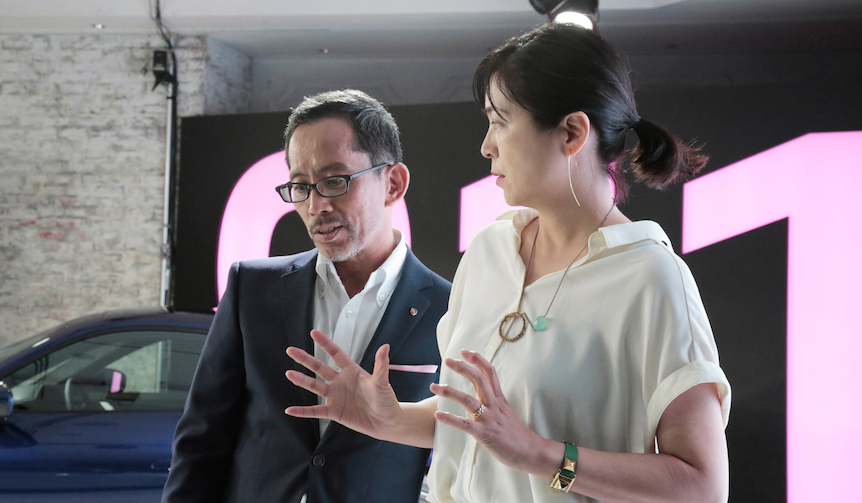
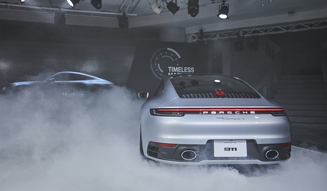
It's about creating new beauty using only the language of the 911. Creating beauty from constraints. Filmmaking is similar. For theatrical releases, there are limits on screen size, running time, and budget. Even if you spend lavishly and extend the duration indefinitely, a masterpiece isn't guaranteed. In fact, creativity can be stimulated by strict limitations. Films like "The Blair Witch Project," made with no star actors and on a low budget, became huge hits. More recently, "One Cut of the Dead" is a good example.
To harness "constraints," the only weapon humans have is imagination. The creativity born from it is the most powerful. Looking at the 911, one can be convinced of this. Yamashita-san also says he enjoys creating within limitations.
"There's a different kind of joy compared to proposing something entirely new. It's the joy of overcoming higher hurdles within the existing framework. I believe the latest 911 model, the 992, is the best product."
"But there will always be a next step. That's why, even though I believe this is the best, I have to think about what comes next. I must do my best now for the next evolution. The pressure of that is immense. My boss often says, think about how far ahead you're throwing the ball. Not too close, not too far, not too high. In other words, it's crucial to determine where to throw it, anticipating that the next generation of creators will receive it."
Inheriting tradition and creating the current best lays the groundwork for the next generation.
Page.3 The Manufacturing Spirit Porsche Has Preserved
Porsche 911 | The Porsche 911
Interview with Shuichi Yamashita, Exterior Designer at Porsche AG
The Miracle of the Porsche 911: An Enduring Timeless Appeal (3)
The Manufacturing Spirit Porsche Has Preserved
Still, where does the root of its beauty lie, the kind that makes you turn your head? Beyond mere functional beauty, how is an organic, sensual aesthetic that appeals to the senses created?
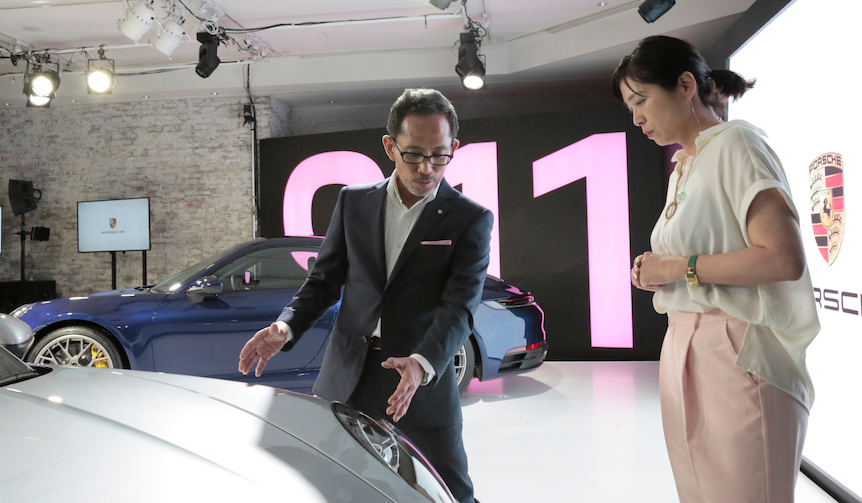
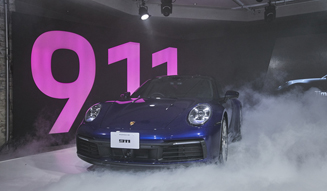
"I heard from a modeler who has worked with clay models since long ago that it took him half a year to shave off just a small part of the rear fender on theType 993 (1994-97)model. I keenly feel that such artisanal, nuanced details, crafted by skilled hands, are truly embedded in the DNA and are of great importance."
"Even if a design is perfect on a computer, when translated into a clay model, there can be a discrepancy from what was envisioned in my mind. That's why I run my hands over the clay model, making adjustments while thinking, 'This part is a bit too sharp.' Touching it is a crucial process that connects the mind's eye with the physical object. The modelers also work by shaving the clay with their hands. Human hands and senses are absolutely essential for giving form to ideas. Please try touching it next time. You'll truly appreciate how the 911's rear fender is made of incredibly complex surfaces."
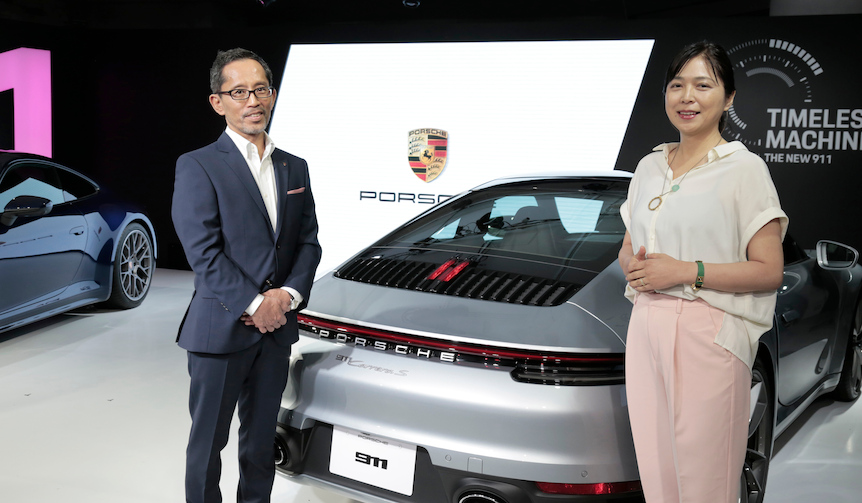
His joyful demeanor as he speaks about design conveys the deep pleasure he derives from working on the beautiful 911. What, then, inspires Yamashita-san's aesthetic sensibilities?
"I enjoy architecture and furniture. In architecture, Le Corbusier. In Stuttgart, where I live, there's also an experimental house he designed. It's logical yet has flavor and warmth. Le Corbusier's pursuit of liberation from gravity resonates with car design. For furniture, it's Hans J. Wegner. I have some at home. Recently, I visited the Vitra Design Museum near Basel. When I travel, I like to go places with interesting architecture."
Learning about Yamashita-san's passion and personality offers a glimpse into the manufacturing spirit that Porsche has so carefully preserved. Professionals from various fields, such as designers and engineers, dedicate their full efforts toward a common goal. This mirrors the process of filmmaking. Neither a film nor a car is created easily. Behind them lies the skill, pride, and affection of many individuals. When these elements converge harmoniously, the miracle that captivates us timelessly becomes a reality. Why not experience this timeless masterpiece by encountering the latest 911?
- To the report article on the new Porsche 911 Japan Premiere
- To the article where Editor Tomoki Yusuke discusses the new 911
- To the special website for the new Porsche 911 Japan
Inquiries
Porsche Customer Care Center
0120-846-911