CES 2016 Report: Part 2 - The Key to Autonomous Driving Success is "Emotion"
CES 2016 Report: Part 2
Autonomous Driving: The Key to Success is "Emotion"
The Consumer Electronics Show (CES) is held every January in Las Vegas. As the name suggests, it's primarily a show for home appliances, but it also serves as a venue for showcasing cutting-edge electronic technologies that capture global attention. Consequently, the increasingly digitized automotive industry has been actively exhibiting and asserting its presence in recent years. Akio Oya reports on the scene in two parts.
Text & Photographs by Akio Lorenzo OYA
Will Google Build Cars?
CES, one of the world's largest consumer electronics trade shows, is a professional event for industry insiders and journalists. During the event, nearly all passengers on flights to Las Vegas can be considered CES visitors.
This was true for the American Airlines flight I was on from New York. My seatmate was an Israeli product designer. He spoke about a wearable device he was working on, explaining that while many products on the market cost over $400, users are generally only willing to spend around $200. This, he noted, imposes significant design constraints.
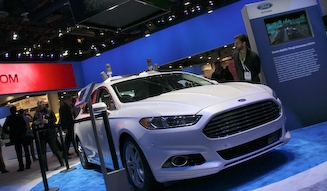
Eventually, his topic shifted to the star of recent CES events: the autonomous vehicle. "Google is reportedly close to entering the automotive industry with its autonomous electric vehicles, but I doubt they will establish their own production facilities," he remarked.
The structure of an EV is significantly simpler than that of an internal combustion engine, and the parts supply chain can be streamlined. However, it is indeed difficult to imagine them acquiring the vast expertise in vehicle dynamics and regulations accumulated by the automotive industry, let alone managing the massive, century-old production facilities.
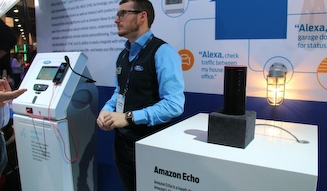
Incidentally, just before the show opened, media speculation buzzed about a potential partnership between Google and Ford for autonomous vehicles. However, Ford's actual CES announcement was a collaboration with Amazon, focusing on integrating vehicles with smart homes via Amazon's "Echo" voice recognition system.
CES 2016 Report: Part 2
Autonomous Driving: The Key to Success is "Emotion" (2)
A Game Changer for Smart Cities
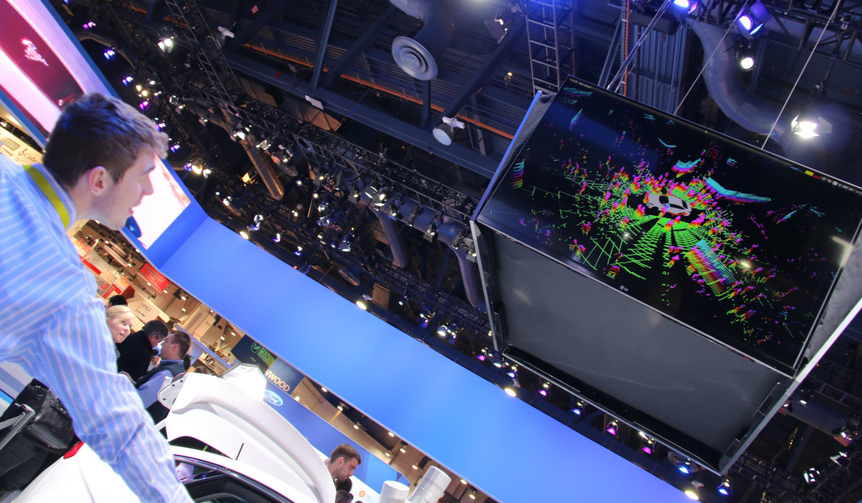
Autonomous vehicles were a major topic of discussion throughout the event. U.S. Secretary of Transportation Anthony Foxx, known for his role as a key advisor to President Obama and invited as a guest, revealed that regulatory frameworks are being developed to facilitate the market introduction of autonomous driving and fully automated parking, while prioritizing safety.
The discussion began with insights into the "Millennial generation," highlighting their shift away from the suburban homes and cars that were once aspirational for their parents, towards urban living. It was noted that 90% of the world's population now resides in urban areas.
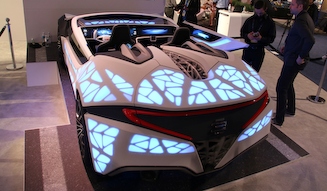
Bosch Dashboard concept
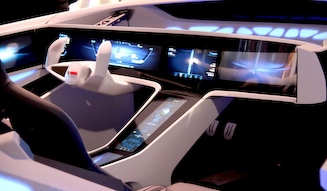
The conversation then explored how efficient mobility, including autonomous vehicles, would usher in a new era for urban environments. The participants reached a consensus that "next-generation automobiles will be game changers for future smart cities," while each offered their unique perspectives.
Bosch CEO V. Denner clearly articulated the current state of autonomous vehicle R&D. While stating that "fully autonomous driving in urban areas is unlikely within the next decade," he outlined technological goals: fully automated parking without a driver by 2018, and autonomous driving from highway on-ramp to off-ramp by 2020.
Meanwhile, Mobileye CEO and co-founder Amnon Shashua offered an intriguing perspective on the increasing collaboration between automakers and electronics manufacturers. He pointed out, "The consumer electronics world has a certain leniency, where software updates can compensate for imperfections. In contrast, automobiles must be perfect from the outset, or customers become immediately dissatisfied. Electronics manufacturers must learn from the automotive world."
CES 2016 Report: Part 2
Autonomous Driving: The Key to Success is "Emotion" (3)
The Key to Widespread Adoption of Autonomous Driving
Stepping away from the discussion for a moment, a visit to the stands of automakers and suppliers at CES 2016 made one thing clear: "Car components will continue to become more high-performance and sophisticated."
Audi plans to introduce OLED taillights in production vehicles within the year, followed by matrix LED headlights. Both offer significantly superior performance and design flexibility compared to conventional components. However, their sheer high-tech nature makes one, like myself, honestly apprehensive about potential damage from hit-and-run accidents.
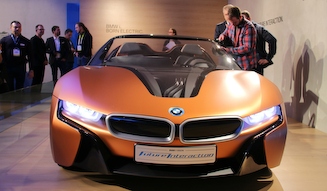
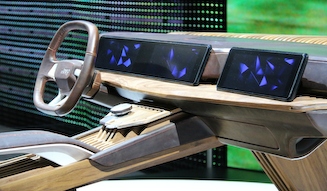
Perhaps to address such user concerns, BMW unveiled a feature of "BMW Connected" at CES. This system allows users to remotely monitor their parked car from a smartphone screen with 360-degree visuals and automatically notifies them if a hit-and-run is detected.
In any case, the era of ordering round, classically styled headlamps and repairing a Renault 4 oneself in the garage seems to be a distant memory.
This brought to mind my visit last summer to the Citroën 2CV World Meeting in Poland. At the event, which drew about 6,000 attendees, one participant enthusiastically told me about the charm of the 2CV: "Its structure is so simple that I can fix anything myself when it breaks. This car can take me anywhere." While they may not represent the majority, it's remarkable that a car discontinued a quarter-century ago continues to captivate people.
Shashua, prefacing his remarks with "I know this may draw criticism," stated, "If autonomous vehicles only drive slowly and cautiously, aiming for zero accidents, no one will be interested. It is more important to gradually reduce accident rates while exploring the ideal form of autonomous driving."
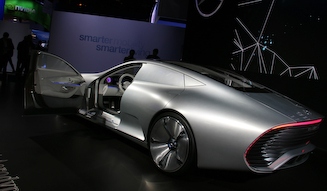
Shashua, prefacing his remarks with "I know this may draw criticism," stated, "If autonomous vehicles only drive slowly and cautiously, aiming for zero accidents, no one will be interested."
"It is more important to gradually reduce accident rates while exploring the ideal form of autonomous driving."
The success of autonomous vehicles and other next-generation technologies will likely hinge not only on their improved performance but also on how well they inherit the emotional appeal of traditional cars. And CES will undoubtedly continue to be the premier stage for observing the direction automakers are taking the future of automobiles.