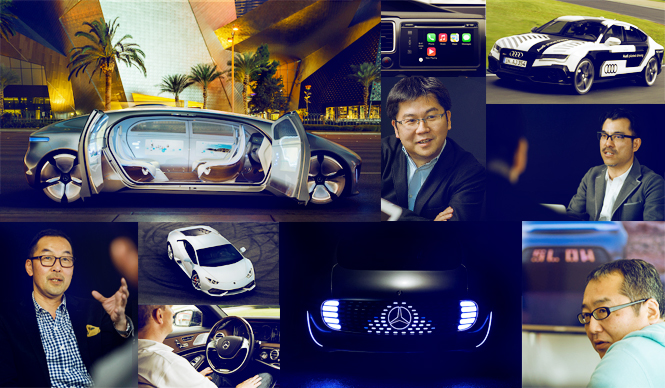
Talk Session | The Near Future of Cars: A Roundtable Discussion, Part 2
Talk Session: Part 2 of a Roundtable Discussion on the Near Future of Cars
Discussing the Uncertain Near Future of Cars in 201X
We held a roundtable discussion with four leading journalists from the IT and automotive industries. How will cars evolve from here? In the previous installment, we discussed the future of Japanese cars, focusing on kei cars. In this second part, we turn our attention to the automotive scene overseas.
Photographs by ABE MasayaText by SHIOMI Satoshi
Talk Session: Part 1 of a Roundtable Discussion on the Near Future of Cars →
Ever-Stricter CO2 Regulations
Fumio Ogawa (hereafter Ogawa)Recently, I really liked the Mazda Demio. The manual transmission, in particular, was fun to drive. But I did feel it was a bit too sporty. I felt the same with the facelifted CX-5. Why does Mazda make the suspension so stiff and create such an overly sporty feel?
Satoshi Shiomi (hereafter Shiomi)To put it very simply, isn't it a strategy to focus on customers who like that kind of thing? According to Mazda's developers, they want to maintain global sales of around 1.5 million units per year. They aren't aiming for 2 or 3 million. If they aimed higher, they might be forced to build cars they aren't good at, which could lead to problems. Perhaps this is a lesson learned from their major failure during the bubble era when they pursued an expansion strategy.
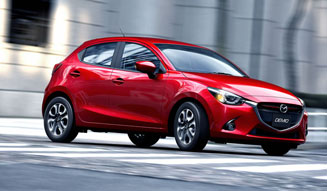
Mazda Demio
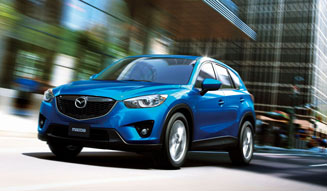
Mazda CX-5
OgawaI see. But the Porsche Macan was sporty yet incredibly supple, so I wondered why the CX-5 wasn't like that. The Demio's diesel and manual combination was excellent.MacanI see. But the Porsche Macan was sporty yet incredibly supple, so I wondered why the CX-5 wasn't like that. The Demio's diesel and manual combination was excellent.
WatanabeAmong Japanese manufacturers, their message is the clearest. They're content with capturing 2% of global sales. That's why they pay no attention to hybrids.
ShiomiAfter all, the Mazda Axela's hybrid system is supplied by Toyota.
OgawaBut will they be able to navigate the increasingly strict CO2 regulations with that approach?
WatanabeTheir strategy is to go as far as they can with internal combustion engines. Ultimately, they're probably aiming for the practical application of HCCI (Homogeneous Charge Compression Ignition), a technology that aims to reduce CO2 emissions and achieve clean exhaust by using gasoline auto-ignition.
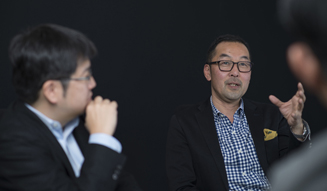
Fumio Ogawa (right)
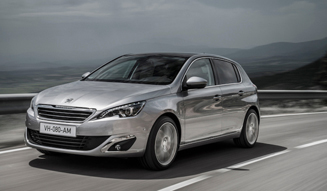
Peugeot 308 SW
OgawaWhat about Subaru? Personally, I find it almost as difficult to distinguish between their models as Aston Martins (laughs). Is their strategy also focused on sporty models centered around all-wheel drive? And what about Mitsubishi?
WatanabeMitsubishi has increasingly become a company that makes its money overseas. I don't think Mazda can afford to be complacent either. Their sales are strong thanks to their well-engineered diesel engines, but diesel fuel in Japan is kept at a low price for policy reasons. If that were to change for any reason, there's a risk because there are no other manufacturers who would join them in opposing such a change. Their sporty tuning also seems a bit excessive, or perhaps overthought at times. It seems there are some within the company who think they should dial it back a bit.
OgawaWhat models or brands have left an impression on you, Nabe-chan (Watanabe)?
WatanabeThere are many, but I really liked the Peugeot 308. It's a straightforward and honest car. PSA (Peugeot Citroën) is completely behind in autonomous driving technology, but that doesn't mean you can't compete if you're not at the top in such technologies. Only a portion of the market is debating whether autonomous driving is good or bad; there are still many markets where cars are yet to become widespread. Therefore, I believe they are almost exclusively focused on refining the technologies that fulfill the fundamental role of a car.
TALK SESSION: Part 2 of a Roundtable Discussion on the Near Future of Cars
Discussing the Uncertain Near Future of Cars in 201X (2)
The Coming Era of Fully Autonomous Driving
ShiomiSpeaking of autonomous driving, the classification of autonomous driving levels often uses the system established by NHTSA (National Highway Traffic Safety Administration).
'Level 0 / No Automation': The driver is always in control of the driving (steering, braking, acceleration).
'Level 1 / Driver Assistance': Provides assistance with steering, braking, or acceleration, but does not support all of steering, braking, and acceleration.
'Level 2 / Partial Automation': The driver is responsible for safe operation, but the system provides assistance with all of steering, braking, and acceleration.
'Level 3 / Conditional Automation': The driver takes over driving operations only when the system reaches its functional limits.
'Level 4 / High Automation': The system fully entrusts driving operations and surrounding monitoring to itself.
In this five-level system, the most advanced production cars have reached Level 2, with some approaching Level 3. It's conceivable that Level 3 will become widespread relatively soon, but will the era of Level 4 fully autonomous driving ever arrive, even if it's some way off?
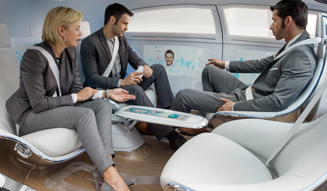
Mercedes-Benz F015 Luxury in Motion
Toshifumi Watanabe
OgawaThe F015 concept car that Mercedes-Benz unveiled at CES this year appears to enable Level 4 fully autonomous driving from a technical standpoint. Mercedes has stated that for production models, they need to consider a way for the car to signal to others, such as pedestrians, that 'I (the vehicle) recognize you.'F015The F015 concept car that Mercedes-Benz unveiled at CES this year appears to enable Level 4 fully autonomous driving from a technical standpoint. Mercedes has stated that for production models, they need to consider a way for the car to signal to others, such as pedestrians, that 'I (the vehicle) recognize you.'
WatanabeThat's like the need for 'eye contact,' which is different from simple vehicle-to-infrastructure communication, isn't it?
Tsutomu Ishikawa (hereafter Ishikawa)There are people exploring the possibility of using smartphones for that. Almost everyone has a smartphone these days, and most, if not all, smartphones contain chipsets made by Qualcomm. If that chip were also installed in cars and used to communicate with smartphones outside the vehicle, wouldn't it be possible for the car to recognize people who are hidden from view?
ShiomiCurrently, cars detect others using the driver's vision, as well as radar, lidar, and camera images. In addition to that, they are trying to detect the presence of smartphones carried by people in the vicinity.
TALK SESSION: Part 2 of a Roundtable Discussion on the Near Future of Cars
Discussing the Uncertain Near Future of Cars in 201X (3)
The Sense of Crisis Automakers Feel Towards Google
ShiomiHowever, after technically overcoming these challenges, legal frameworks will become necessary. In essence, who is at fault when an accident occurs? Is it the driver who wasn't driving, the manufacturer who built the car, or the road administrator?
WatanabeWhen I asked the head of Toyota's advanced safety technology division, he clearly stated their stance: self-responsibility, meaning the driver's responsibility.
ShiomiRealistically, that's the only way to handle it.
OgawaIf we were to assign responsibility to an autonomous vehicle, it would become a question of singularity – where the computer surpasses human control.
ShiomiThis is starting to sound a bit frightening.
WatanabeEven if the era preceding full autonomy continues, the companies most actively pursuing such technologies are likely Mercedes-Benz, the VW Group (especially Audi), Volvo, and Toyota. BMW, on the other hand, seems to believe that the steering wheel and pedals will forever belong to the driver.
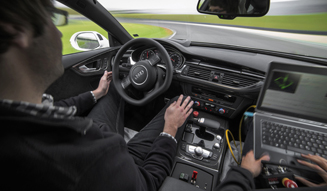
Audi RS 7 piloted driving concept

Satoshi Shiomi
ShiomiA while back, there was buzz about the Audi RS7 achieving fully autonomous driving and reaching 240 km/h at Hockenheim.RS7 fully autonomous drivingA while back, there was buzz about the Audi RS7 achieving fully autonomous driving and reaching 240 km/h at Hockenheim.
WatanabeI suspect that's part of it, but ultimately, what automakers want most for autonomous driving is ultra-accurate and detailed maps, they say.
OgawaMaps that show even subtle gradients, for example.
WatanabeWith that, they have the technology to trace the route. Currently, the entity that possesses the most such information is Google. In that regard, perhaps automakers feel a sense of crisis towards Google.
IshikawaThere are also rumors that Apple has started deploying vehicles similar to Google's Street View cars to gather information about road conditions.
TALK SESSION: Part 2 of a Roundtable Discussion on the Near Future of Cars
Discussing the Uncertain Near Future of Cars in 201X (4)
The Luxury Car Scene Overseas
ShiomiThe conversation has moved quite far into the future, but I'd like to bring it back for a moment (laughs). Are there any super sports or luxury cars that have left an impression on you?
WatanabeThe Lamborghini Huracán was very well executed. It was so mechanically superior that I thought, 'Is this really a Lamborghini?' If anything, this is how the Audi R8, which shares the platform, should be. It makes me worry about the future of the next-generation R8.HuracánThe Lamborghini Huracán was very well executed. It was so mechanically superior that I thought, 'Is this really a Lamborghini?' If anything, this is how the Audi R8, which shares the platform, should be. It makes me worry about the future of the next-generation R8.Next-gen R8It makes me worry about the future of the next-generation R8.
OgawaMercedes-Maybach S-ClassThe Mercedes-Maybach S-Class was excellent. As expected, of course. Compared to the previous model, they've lowered the price range slightly, making it a car in the 20 to 30 million yen bracket. It's in a price range that competes with the Bentley Flying Spur, meaning they've slightly shifted their competitive focus away from the Rolls-Royce Phantom, which is in the 50 million yen class. However, the six-door Pullman for heads of state was unveiled at the Geneva Motor Show.Flying SpurIt's in a price range that competes with the Bentley Flying Spur, meaning they've slightly shifted their competitive focus away from the Rolls-Royce Phantom, which is in the 50 million yen class. However, the six-door Pullman for heads of state was unveiled at the Geneva Motor Show.PhantomIt's in a price range that competes with the Bentley Flying Spur, meaning they've slightly shifted their competitive focus away from the Rolls-Royce Phantom, which is in the 50 million yen class. However, the six-door Pullman for heads of state was unveiled at the Geneva Motor Show.
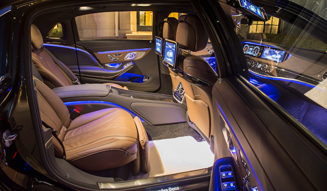
Mercedes-Maybach S Class
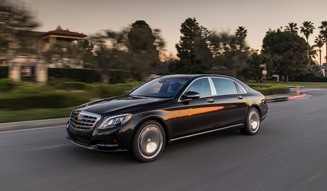
Mercedes-Maybach S Class
WatanabeGermany excels at luxury cars, but when it comes to ultra-luxury, Britain is more adept. I believe the production line for the Phantom takes about two and a half hours to complete one car. For comparison, a Toyota car takes about 55 seconds. Perhaps Britain is the place for that kind of craftsmanship.
ShiomiIt's hardly a 'line' anymore. Perhaps there are aspects of history and philosophy that transcend absolute performance and materials, where Germany simply cannot compete.
OgawaWell, Rolls-Royce is a German company, though.
ShiomiIndeed. Hearing about limousines reminds me, the Range Rover Long Wheelbase has been added. It's an unusual car; I think the standard wheelbase has a better visual balance, but the long version is strangely memorable. What about Porsche?Range Rover Long WheelbaseIt's an unusual car; I think the standard wheelbase has a better visual balance, but the long version is strangely memorable. What about Porsche?
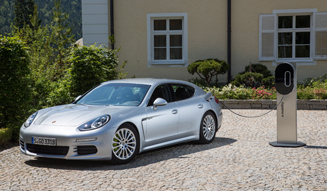
Porsche Panamera S E-Hybrid
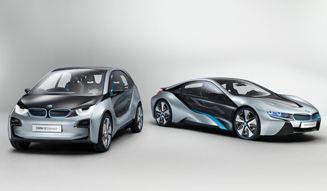
BMW i8 (right), i3 (left)
WatanabePorsche is actively pursuing plug-in hybrids. They offer them for both the Panamera and the Cayenne.Mercedes also added a PHEV to the S-ClassMercedes also added a PHEV to the S-Class. Apparently, the Tokyo metropolitan area, with its dense population of about 30 million people in a small area, has many people with the financial means to purchase expensive PHEVs. Therefore, for manufacturers, it's an ideal market to test how next-generation vehicles are used in congested urban environments.
ShiomiIn 2014, the BMW i3 and i8 were released. The i3 comes in both a pure EV version and a version with a range extender. In Europe, 80% are pure EVs and 20% have range extenders, while in Japan, the ratio is reversed.i3andi8In 2014, the BMW i3 and i8 were released. The i3 comes in both a pure EV version and a version with a range extender. In Europe, 80% are pure EVs and 20% have range extenders, while in Japan, the ratio is reversed.
WatanabeOverseas, they don't necessarily think of one EV as being sufficient for all needs; they see EVs as commuters and don't have very high demands for EV range.
ShiomiAlthough the average daily driving distance in Japan is likely short, there's a unique mindset of 'just in case.'
TALK SESSION: Part 2 of a Roundtable Discussion on the Near Future of Cars
Discussing the Uncertain Near Future of Cars in 201X (5)
The Emergence of Updatable Cars
ShiomiWe've covered a lot of ground, but I'd like to start wrapping things up.
WatanabeTesla has entered the market as a new car manufacturer, and Google may also be looking to enter the automotive industry more deeply. However, I believe automakers perceive these two as entirely different entities. Few automakers feel threatened by what Tesla is doing, but many might inwardly consider Google a troublesome player if they were to seriously enter the market.
If Google were to get involved in cars, wouldn't they likely do so by simultaneously developing infrastructure on a city-wide scale? They have maps, and people worldwide use smartphones with their OS. In that case, they wouldn't just develop cars; they would likely construct the entire car society. The question is whether automakers could compete with that...
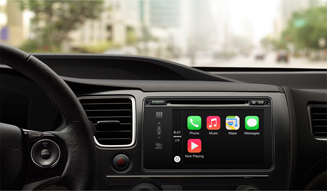
Apple CarPlay
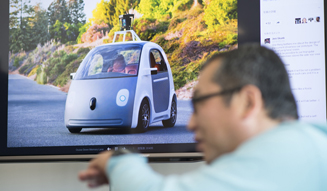
Google Self-Driving Car
IshikawaIndeed, Google possesses big data. For example, they can grasp traffic volume at specific locations and times. Therefore, they would likely approach it with a platform that includes city planning, not just the car itself. They would likely build the entire car society.
ShiomiConversely, Google occasionally develops and sells devices, but they don't sell as well as their services. They seem to be surprisingly poor at creating and selling products.
IshikawaIt's unclear how serious they are about products. They sometimes abandon them quickly. That might be why automakers are hesitant to fully commit to them. Another point regarding the relationship between automakers and IT companies is that while the automotive industry develops cars and technologies over several years, IT companies develop products and services in one to two years. Bridging that gap is a challenge that must be overcome for collaboration.
OgawaOn that note, I asked a developer at the Mercedes-Maybach test drive event, 'This car is equipped with various IT devices, but what happens if they become obsolete in three years?' They replied, 'They can be updated,' but I wonder if that's truly possible.

Tsutomu Ishikawa
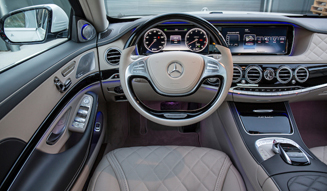
Mercedes-Maybach S Class
ShiomiFor example, saying you're using an iPhone 5 sounds old-fashioned now, but it was released just a year ago. It would be unbearable if a car bought last year were called outdated. I used to enjoy upgrading to the latest iPhone model, even paying penalties, but after doing it two or three times, I got tired of it.
OgawaA year is extreme, but cars are gradually becoming like that too. They're getting caught up in 'dog years.' To achieve a deeper and more effective integration between cars and IT, perhaps this is something that needs to be overcome.
ShiomiThey are already inextricably linked, but how this integration or fusion will proceed remains unknown. However, it is undoubtedly the most significant area of interest going forward. Thank you all for your time today.
EveryoneThank you very much.

Fumio Ogawa
After working for about 20 years at the editorial department of "NAVI," a magazine that fused cars and culture, he served as its editor-in-chief. He then served as editor-in-chief for "Motor Magazine" and the culinary journalism publication "Arigatto." Currently, he is a freelance journalist covering lifestyles. He contributes to numerous magazines and websites, including "GQ" (Condé Nast Japan), "UOMO" (Shueisha), "LEON" (Shufu to Seikatsu Sha), and "ENGINE" (Shincho Sha).

Toshifumi Watanabe
Born in Fukuoka Prefecture. After working in the editorial departments of motorcycle and car magazines at Kikaku Shitsu Neko (now Neko Publishing), he became a freelancer. His serialized feature "Car Nabe" in "Shukan Bunshun" gained popularity as a witty commentary on society and life through the lens of automobiles, and was later published in two volumes by CG BOOK after the series ended. He also writes for many general interest magazines such as "MEN'S EX" and "UOMO."

Tsutomu Ishikawa
Born in Tokyo. Worked as an editorial reporter for "Nikkei Trendy." He specialized in mobile phones, which were rapidly gaining popularity at the time, and later became a freelance mobile journalist. He also competed in the TV Tokyo program "TV Champion" mobile phone expert competition, where he placed second. He is currently active in a wide range of media, including various television programs and magazines.

Satoshi Shiomi
Born in Okayama City, Okayama Prefecture. After graduating from Kwansei Gakuin University, he joined Sanyo Shimbun. Although he became a local newspaper reporter, he couldn't give up his dream of becoming a car magazine editor and moved to Tokyo. After working in the editorial departments of "Best Car" and "NAVI," he became a freelance editor/writer in 2010.