BMW Concept Gran Coupe | A Dynamic and Elegant Four-Door Coupé
BMW Concept Gran Coupe | BMW Concept Gran Coupe
A Dynamic and Elegant Four-Door Coupe
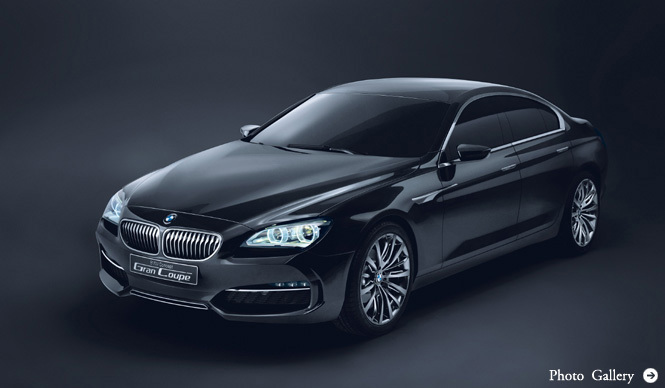
BMWUnveiled the "Concept Gran Coupe," a four-door coupe based on the 5 Series sedan, at the Beijing Motor Show.
Text by Giraffe
A Body 100mm Lower Than the 5 Series Sedan
The design theme of the BMW Concept Gran Coupe, unveiled this time, is "dynamic and elegant."
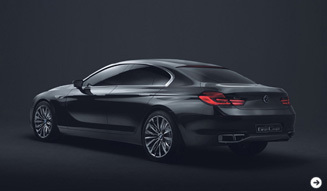
While its total length is approximately 5,000mm, 100mm longer than the 5 Series sedan, its height is under 1,400mm, making it 100mm lower. These figures might suggest a somewhat large size, but the sharp nose, inspired by a shark, the gently sloping roofline, and the flat silhouette prevent it from feeling bulky, resulting in a highly distinctive design.
The adoption of LEDs not only for the headlamps and taillamps but also for the third brake light integrated into the rear glass is another innovative touch unique to the Concept Gran Coupe.

A Finish That's Hard to Distinguish From a Production Model
Although the "Concept CS," a four-door coupe study model announced at the Shanghai Motor Show in April 2007, was shelved due to deteriorating business performance, this Concept Gran Coupe is finished to a degree that it's hard to distinguish from a production model.
Exciting rumors are circulating that it might be officially announced within the year as a derivative of the next "6 Series."
BRAND HISTORY
BMW is characterized by its distinctive front mask, featuring the "kidney grille" and quad round headlights, making it instantly recognizable. While it consistently enjoys high popularity in the Japanese imported car market, surprisingly few people can immediately answer what its name signifies.
Bayerische Motoren Werke. A direct translation would be "Bavarian Engine Works." Its predecessor, Rapp Motorenwerke, was an aircraft engine manufacturer founded in 1913 in Bavaria, Germany, by Karl Friedrich Rapp, who successfully led the business in partnership with fellow Bavarian aircraft manufacturer Otto.
BMW continued to enhance its presence through innovative technology, but the defeat in World War I forced it to cease aircraft engine production. BMW then channeled its expertise into motorcycles, gaining attention with the shaft-driven "BMW R32" in 1923. However, not content with this, it acquired Dixi, a company that licensed the production of the Austin Seven. This provided a foothold in the automotive business, and in 1929, BMW launched the "BMW 3/15 PS," marking the start of its history as an automobile manufacturer.
Incidentally, Otto-Werke, which had a deep relationship with BMW, was founded by Gustav Otto, the son of Nikolaus August Otto, who established the theory of the internal combustion engine. This historical connection might explain BMW's continued focus on internal combustion engines.