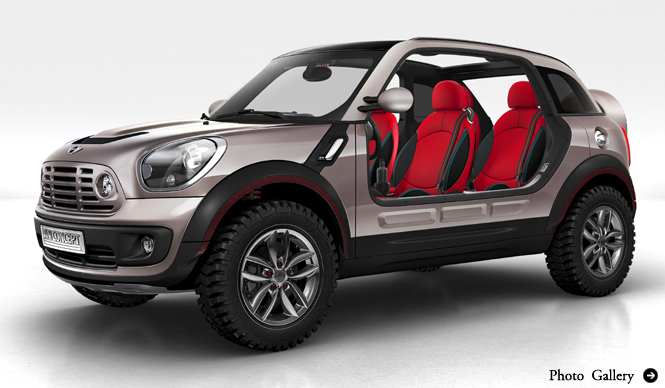
MINI Beachcomber Concept | The Mini Moke for the 21st Century
MINI Beachcomber Concept
The 21st Century Mini Moke
BMW Group's MINI has unveiled the "MINI Beachcomber Concept" concept car.
Text by Giraffe
Unveiled at the 2010 Detroit Auto Show
This model is a further refinement of the "MINI Crossover Concept" presented at the 2008 Paris Motor Show, bringing it closer to a production version. It is set to be unveiled at the Detroit Motor Show, opening on January 11, 2010.
The theme for this model is "The 21st Century Mini Moke."
The Mini Moke, released in 1964, was a model based on the Mini with a strong outdoor flavor. Remarkably, it lacked a roof and side windows, featuring a simple design stripped of all ornamentation, which made it popular primarily in America and Australia.
Production Version to Debut This Fall
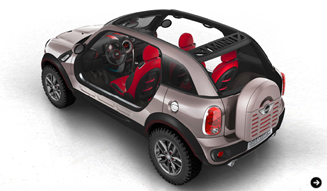
This "MINI Beachcomber Concept" is said to be a modern interpretation of that concept. Naturally, it is not equipped with side doors or a roof, but a soft top and simple doors can be attached if it rains. As a dedicated leisure vehicle, it's hard to imagine a more enjoyable car. However, safety has also been prioritized, with a robust frame and pillars ensuring a high level of security.
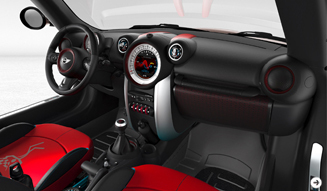
The interior features an independent four-seater layout. The seats are reportedly waterproof, showcasing MINI's characteristic playful spirit in creating a model specifically for leisure activities.
The production version of this new model is scheduled for an official debut in the fall of 2010. It will be approximately 4 meters long and feature a 4WD system. Rumor has it that the official name will be "MINI Crossoverman," rather than "Moke."
BRAND HISTORY
BMW is instantly recognizable by its "kidney grille" and four round headlights. While consistently popular in the Japanese import car market, surprisingly few people can immediately explain what the name signifies.
Bayerische Motoren Werke. A direct translation is "Bavarian Engine Works." Its predecessor, Rapp Motorenwerke, was an aircraft engine manufacturer founded in Bavaria, Germany, in 1913 by Karl Friedrich Rapp. Rapp partnered with fellow Bavarian aircraft manufacturer Otto-Flugzeugwerke to achieve business success. In 1916, it was renamed Bayerische Motoren Werke GmbH. Two years later, it reorganized into a stock corporation and registered its propeller logo, inspired by Bavaria's blue skies and white clouds.
BMW continued to enhance its presence through innovative technology, but the defeat in World War I forced it to cease aircraft engine production. BMW then channeled its expertise into motorcycles, gaining attention with the shaft-driven "BMW R32" in 1923. However, not content with this, it acquired Dixi, which was licensed to produce the Austin Seven. This provided a foothold in the automotive business, and in 1929, BMW launched the "BMW 3/15 PS," marking the start of its history as an automobile manufacturer.
Incidentally, Otto-Flugzeugwerke, which had a close relationship with BMW, was founded by Gustav Otto, the son of Nikolaus August Otto, who established the theory of the internal combustion engine. This history likely explains BMW's continued focus on internal combustion engines.