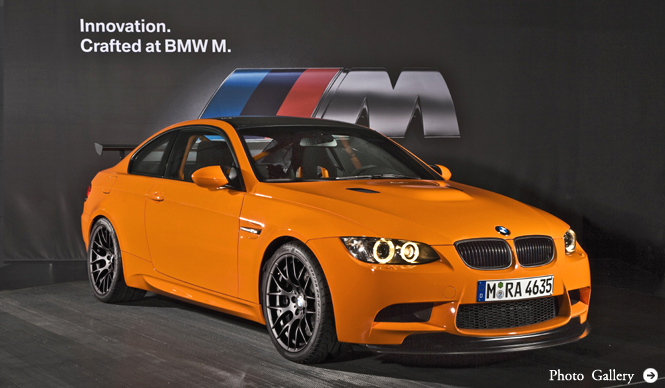
BMW M3 GTS | A Racing Car for the Road
BMW M3 GTS
A Racing Car for the Road
BMWhas announced the release of the M3 GTS, a special edition of the BMW M3, in Germany starting in spring 2010.
Text by Giraffe
4.4-liter V8 Producing 450 hp
The M3 GTS is a made-to-order model tuned by M, a subsidiary of BMW.
The engine's displacement has been increased from the standard 4.0 liters to 4.4 liters, producing a maximum output of 450 hp. GTS-specific parts, such as the pistons, are used, and the crankcase is made of a lightweight aluminum-silicon alloy with a bedplate structure.
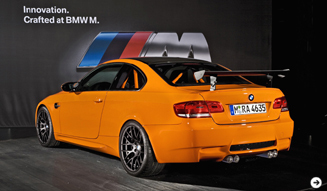
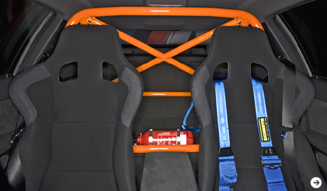
Weight reduction efforts are also evident throughout the vehicle, with measures including lighter center consoles and door panels, removal of the rear seats, simplification of the automatic climate control, elimination of soundproofing materials, and the adoption of a titanium silencer.
Know-how Gained from Touring Car Championships
This model was also developed with enthusiasts who enjoy circuit driving in mind, featuring independent throttle butterflies and a dry-sump oil supply system capable of handling high lateral G-forces during cornering. Furthermore, it is equipped with reinforced suspension and aerodynamic parts, benefiting from the extensive know-how cultivated in touring car championships, and boasts a high-performance braking system with 6-piston calipers at the front and 4-piston at the rear.
It is no exaggeration to say that this is a racing car that can be driven on public roads.
BRAND HISTORY
With its distinctive front fascia featuring the "kidney grille" and quad round headlights, BMW is instantly recognizable. While it enjoys consistently high popularity in the Japanese import car market, surprisingly few people can immediately answer what its name signifies.
Bayerische Motoren Werke. Literally translated, it means "Bavarian Engine Works." Its predecessor, Rapp Motorenwerke, was an aircraft engine manufacturer founded in 1913 in Bavaria, Germany, by Karl Friedrich Rapp. Rapp partnered with fellow Bavarian aircraft manufacturer Otto-Flugzeugwerke to achieve business success. In 1916, it was renamed Bayerische Motoren Werke GmbH. Two years later, it reorganized as a stock corporation and registered its propeller logo, symbolizing Bavaria's blue sky and white clouds.
BMW continued to enhance its presence through innovative technology, but following Germany's defeat in World War I, it was forced to cease aircraft engine production. BMW then channeled its expertise into motorcycles, gaining attention with the shaft-driven "BMW R32" in 1923. However, not content with this, the company acquired Dixi, which was licensed to produce the Austin Seven. This provided a foothold in the automotive business, and in 1929, BMW launched the "BMW 3/15 PS," marking the start of its history as an automobile manufacturer.
Incidentally, Otto-Flugzeugwerke, which had a close relationship with BMW, was founded by Gustav Otto, the son of Nikolaus August Otto, who established the theory of the internal combustion engine. This historical connection likely explains BMW's continued focus on internal combustion engines.