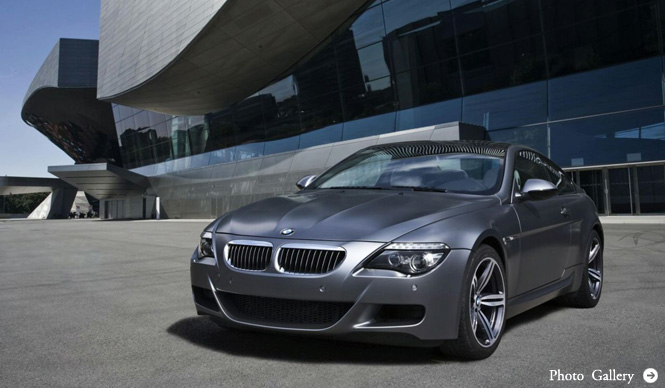
BMW M6 Competition Limited Edition | An M6 Pursuing Further Performance
BMW M6 Competition Limited Edition | BMW M6 Competition Limited Edition
The M6, Pursuing Even Greater Performance
BMWwill give the M6 a world premiere of its limited edition model, the Competition Limited Edition, at the Frankfurt Motor Show.
Text by Giraffe
Limited to 100 Units Worldwide
The base M6, which debuted in 2005, is a sports coupe with a 0-100 km/h acceleration of 4.7 seconds and a top speed of 250 km/h (with limiter). It is powered by a 5.0-liter V10 engine (507 ps, 53 kgm).
The Competition Limited Edition, unveiled on this occasion, is a model that further refines the M6's performance. In addition to changes in damper, spring, and stabilizer settings, the EDC (Electronic Damper Control) has also been specially tuned. Furthermore, by lowering the vehicle height by 12mm at the front and 10mm at the rear, it achieves a sportier, more aggressive atmosphere and superior handling.
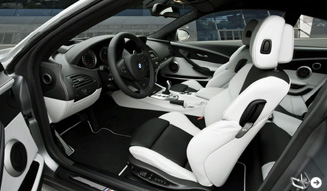
Both the exterior and interior were handled by BMW's customization division, "BMW Individual." The body color is a special shade called Frozen Gray, and two types of all-leather interiors are available: "Merino" and "Silverstone."
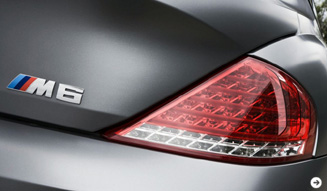
Additionally, a serial plate is installed on the roof lining, and the "M6 Competition" logo is featured on the side sills.
The M6 Competition Limited Edition will be released in a worldwide limited run of 100 units.
BRAND HISTORY
BMW is characterized by its distinctive front mask, with its "kidney grille" and four round headlights, making it instantly recognizable. It has always enjoyed high popularity in the Japanese imported car market, yet surprisingly few people can immediately answer what its name signifies.
Bayerische Motoren Werke. A direct translation would be "Bavarian Engine Works." Its predecessor, Rapp Motorenwerke, was an aircraft engine manufacturer founded in Bavaria, Germany, in 1913 by Karl Friedrich Rapp. He partnered with another Bavarian aircraft manufacturer, Otto Flugmaschinenfabrik, to achieve business success. In 1916, it was renamed Bayerische Motoren Werke GmbH. Two years later, it reorganized into a stock company and registered its propeller logo mark, symbolizing the blue sky and white clouds of Bavaria.
BMW continued to enhance its presence through innovative technology, but due to its defeat in World War I, it was forced to cease aircraft engine production. BMW then channeled its expertise into motorcycles, and in 1923, it garnered attention with the shaft-driven "BMW R32." However, not content with this, it acquired Dixi, which was licensed to produce the Austin Seven. This provided a foothold in the automotive business, and in 1929, BMW launched the "BMW 3/15 PS," marking the start of its history as an automobile manufacturer.
Incidentally, Otto Flugmaschinenfabrik, which had a close relationship with BMW, was founded by Gustav Otto, the son of Nikolaus August Otto, who established the theory of the internal combustion engine. The fact that BMW remains committed to internal combustion engines likely stems from this connection.