
MINI Coupe Concept | A MINI Dedicated to Driving
MINI Coupe Concept
A MINI Dedicated to Driving
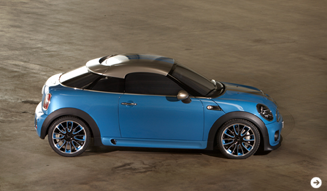
BMWBMW announced that it would exhibit the "MINI Coupe Concept," a concept model of MINI, at the Frankfurt Motor Show. The design was unveiled on August 26th, the 50th anniversary of MINI's birth.
Text by Giraffe
1.6-Liter Twin-Scroll Turbo Power Unit
This model inherits MINI's signature round headlights and hexagonal grille, while pursuing driving performance at a higher level.
The engine is a 1.6-liter twin-scroll turbo from the current top-spec "MINI John Cooper Works." This engine delivers a maximum output of 211 ps and a maximum torque of 260 Nm, and features an overboost function.
The most striking exterior feature is the low, sporty coupe body created by the sharply raked front and rear windows. Combined with large-diameter wheels and a high waistline, this design creates a more aggressive atmosphere while retaining the familiar MINI image. The use of aluminum for the roof, aimed at reducing weight and lowering the center of gravity, is another key characteristic of this model.
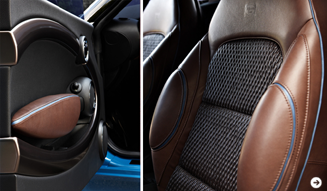
The interior also adopts a two-seater configuration to reduce weight. Playful touches include Chronoswiss watches and stopwatches placed to the left and right of the tachometer, a unique feature of this model.
This "MINI Coupe Concept," purely in pursuit of driving pleasure, is sure to have many fans eagerly awaiting its production.
BRAND HISTORY
BMW is instantly recognizable by its "kidney grille" and four round headlights. While consistently popular in Japan's imported car market, surprisingly few people can immediately explain what the name means.
Bayerische Motoren Werke. Literally translated, it means "Bavarian Engine Works." Its predecessor, Rapp Motorenwerke, was an aircraft engine manufacturer founded in 1913 in Bavaria, Germany, by Karl Friedrich Rapp. Rapp partnered with fellow Bavarian aircraft manufacturer Otto-Flugzeugwerke to achieve business success. In 1916, it was renamed Bayerische Motoren Werke GmbH. Two years later, it was reorganized into a stock company, and the propeller logo, inspired by Bavaria's blue skies and white clouds, was registered.
BMW continued to enhance its presence with innovative technology, but the defeat in World War I forced the cessation of aircraft engine production. BMW then channeled its expertise into motorcycles, gaining attention with the shaft-driven "BMW R32" in 1923. Not content with that, they acquired Dixi, which was licensed to produce the Austin Seven. This provided a foothold in the automotive business, and in 1929, they launched the "BMW 3/15 PS," marking the start of their history as an automobile manufacturer.
Incidentally, Otto-Flugzeugwerke, which had a deep relationship with BMW, was founded by Gustav Otto, the son of Nikolaus August Otto, who established the theory of the internal combustion engine. This connection likely explains BMW's continued focus on internal combustion engines.