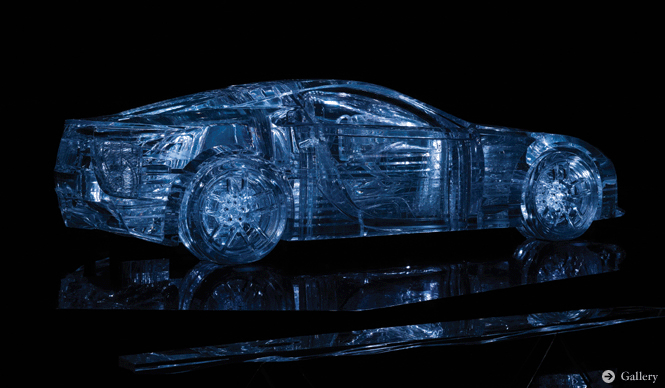
LEXUS: L-finesse - Crystallised Wind.
Refined dynamism born from the duality of nature and artifice.
Lexus's Art Exhibition: "Lexus L-finesse - crystallised wind -"
LexusLexus presented an art exhibition, "Lexus L-finesse - crystallised wind -," themed around the brand's design philosophy, "L-finesse: Advanced - Subtle - Perfection," at "Milan Design Week (Salone del Mobile)," the world's largest design exhibition.
A Collaboration with Architect Sou Fujimoto
Lexus has been holding art exhibitions at Milan Design Week since 2005, based on the idea that the creative process of shaping a single message through collaboration with artists expands the new possibilities inherent in "L-finesse." This marked their fifth participation.
For this exhibition, Lexus collaborated with emerging architect Sou Fujimoto. Within the "Museo della Permanente," a museum in Milan, Italy, the concept of "crystallised wind" was used to express Lexus's refined dynamism as art, based on the "L-finesse" concept of duality.
Spaces Expressing the World of "L-finesse": "Yo," "Jun," "Myō"
At the venue, a dynamic installation integrating space, sound, and lighting was created, inspired by a transparent, 1:1 scale object of the Lexus supersports car concept "LF-A." This installation formed a space that expressed the world of "L-finesse," specifically composed of three elements: "Yo," "Jun," and "Myō."
【Yo】 Expressing the premonition of the LF-A's birth, emerging from "flow."
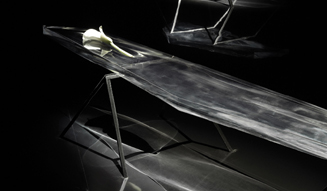
A space where sounds, artificial yet evoking nature, crafted from CFRP (carbon) material, resonate within the stillness. At the center of the room sits the transparent "crystallised chair for LEXUS," created for this exhibition, which visitors can actually sit on.
【Jun】 Expressing the unity of flow creating the car, and the car creating flow.
The transparent "crystallised chair for LEXUS," an image of crystallised flow, and the Lexus LF-A object unite to create a single, grand flow throughout the space.
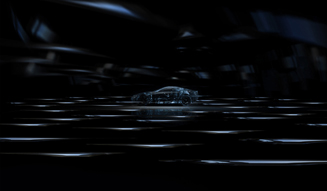
【Myō】 A world where stillness and motion, darkness and light, nature and artifice intersect.
By expressing "wind," a natural element, through artificial techniques and art, this space allows visitors to experience the "refined dynamism" born from the duality of nature and artifice.
It became an experiential art space where the natural element of "wind" was given form through artificial and precise methods, allowing the coexistence of opposing elements: nature and artifice.
BRAND HISTORY
Toyota launched its luxury car brand LEXUS in the American market in 1989. The aim was to offer a new value proposition distinct from American and German luxury cars, leveraging Toyota's advanced technological prowess, superior quality, and exceptional customer service.
Upon the launch of the "LS400" (domestic name: Celsior) and "ES250" (domestic name: Camry) in the American market in September of that year, the LS400 quickly garnered the "Best Import Car" award by February 1990. Lexus's reputation continued to grow, solidifying its position as a luxury car brand with an expanding lineup.
Following its success in America, Lexus expanded into Europe in 2004 and announced its entry into the Japanese market in May of the same year. In August 2005, the brand commenced its luxury car business in its home country. Initially, the lineup lacked a flagship model, featuring the "GS" (successor to the Toyota Aristo), "SC" (successor to the Toyota Soarer), and "IS" (successor to the Toyota Altezza). However, the long-awaited new "LS" in September 2006, followed by its hybrid variant, the "LS600h/LS600hL," in May 2007, met the expectations of the luxury sedan market.
Meanwhile, Lexus has focused on building its sports image, announcing the sports model "IS F" in October 2007 and entering the developing "LF-A" sports coupe in the Nürburgring 24 Hours race in May 2008. Further expansion of its popularity is anticipated.