March 19, 2015
Mercedes-Benz C-Class Wagon | Part 19 (First Half) | "Same Inside, The Difference Is..."
19th Installment: Mercedes-Benz C-Class Station Wagon (Part 1)
“The Inside is the Same, the Difference Is…”
Dynamic Landscape Design
When one thinks of Mercedes wagons, the upper-middle E-Class has traditionally been the star. However, the smaller C-Class Wagon has recently been making a name for itself. After a full model change for the first time in seven years, we took the new C-Class Station Wagon, released in April, for a drive to contemplate the true form of a wagon.
By Yasushi ShimonoPhoto by Mercedes Benz
Elegance or Avantgarde?
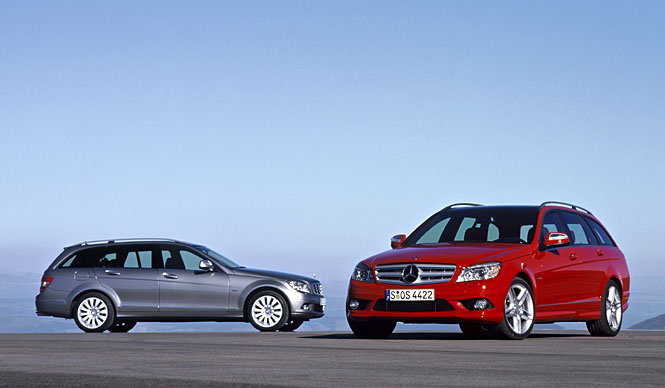
The new Mercedes-Benz C-Class introduces a novel approach by offering two distinct body styles: the understated "Elegance" and the sporty "Avantgarde." The most apparent difference at first glance is the front fascia. While the Elegance exudes the composure of a sedan, the Avantgarde's face aligns with Mercedes' sports car and coupe lineage.
One could say you choose the Avantgarde if you prefer the larger three-pointed star embedded in the front grille, and the Elegance if you favor the three-dimensional emblem standing proudly at the tip of the hood.
However, the mechanicals remain unchanged. Both variants are equipped with the same power unit, and apart from a difference in tire size, the suspension is fundamentally the same.
This leads to the question: isn't this just Toyota's old "badge engineering," where only the badges (model names and emblems) are changed!? We can't give a 100 percent "no" to that.
While it feels like Mercedes has resorted to superficial changes, the saving grace (perhaps?) is that this isn't about differentiation for multiple sales channels, unlike Toyota's approach to badge engineering.
For a car sold at the same dealership with essentially the same core components, they've essentially provided two different packaging options. According to a salesperson at an authorized dealership, this strategy is actually very well-received on the sales floor.
As the most compact and accessible Mercedes sedan, the C-Class appeals to a remarkably broad customer base. For instance, the Elegance is ideal for mature couples seeking both physical and social security, while the Avantgarde is a perfect fit for younger buyers who aspire to own a "Benz someday" and are stretching their budget to reach for the C-Class.
Given Mercedes' immense influence, this "one car, two colors" strategy might become quite popular going forward.
More Individual and Appealing Than the Sedan
The station wagon joined the C-Class lineup shortly after the sedan.
For a long time, the E-Class wagon was synonymous with Mercedes wagons. However, since the debut of the first-generation C-Class wagon model in 1996, this variant has also rapidly gained prominence. The previous generation, in particular, with its bulbous tailgate that evoked a coupe-like atmosphere, possessed an even stronger presence than the E-Class wagon.
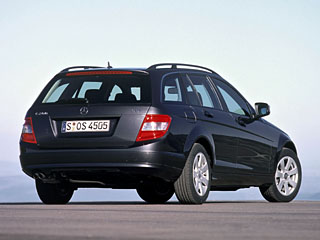
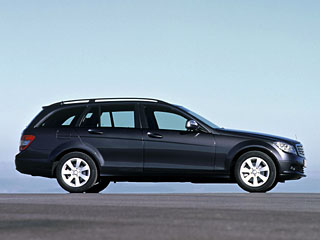
Conversely, the new C-Class Wagon features a more conventional tailgate design, making it appear closer to the E-Class when viewed from the side or rear. Yet, it remains more individual and appealing than the sedan.
The boom for Japanese station wagons has cooled considerably. Or rather, it feels as though they have been completely driven out by minivans. However, I suspect the C-Class wagon will continue to gain market share even with this third generation.