Top 3 Latest Kei Cars | Part 5 (First Half) | "Kei cars are so affordable, they practically skirt the line of tax evasion."
The 5th Installment: Top 3 Latest Kei Cars (Part 1)
Kei Cars: So Cheap, It's Almost Tax Evasion
While domestic car sales are sluggish, the kei car segment is thriving. In 2006, annual new car sales reached 2,023,619 units (a 5.2% increase from the previous year), marking the third consecutive year of growth and a record high.
Is this a symbol of disparity in the automotive world? Yasushi Shitano discusses the latest kei cars.
By Yasushi ShitanoPhotos by Mitsubishi Motors / Daihatsu Motor Co., Ltd.

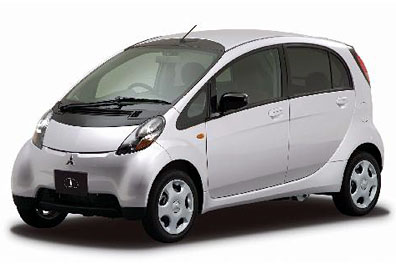
Released in January 2006, Mitsubishi's masterpiece, the "i (Ai)". It features an elaborate "rear mid-ship layout" platform clad in a novel design that extensively uses curves.
Cars for People Who Don't Spend on Cars
It is said that many people in America who win the lottery end up going bankrupt. This is often due to investment schemes introduced by acquaintances, and also because they invariably buy mansions and luxury cars.
Mansions and "luxury cars" are expensive to buy but depreciate rapidly, fetching low prices when sold. Perhaps this indicates that "impressive-looking tangible goods" do not actually hold the value their appearance suggests.
Kei cars are for people who don't spend on cars. They are the antithesis of luxury vehicles. Not only is the initial cost low, but the running costs are even lower. In particular, the expenses incurred simply by owning one are significantly more economical compared to cars with white license plates.
How much more economical? Compared to the next cheapest category, 1000cc cars, if you buy a new car and drive it for three years, the total of automobile tax, weight tax, and compulsory insurance premiums for a liter car amounts to 169,100 yen, while for a kei car, it's only 69,060 yen. For a 1.5-liter class car, it would be 203,000 yen.
The difference is substantial, even considering only the public costs incurred regardless of whether the car is driven at all.

The Daihatsu Copen, a two-seater compact open-top car, debuted in June 2002. Although targeted at a niche market, it grew into a quiet hit.
My Top 3 Aren't Cheap
The "Smart ForTwo" I drive weighs 790kg. With an engine displacement of 698cc, it cannot be fitted with the yellow license plate for kei cars, but its weight is comparable to, or even less than, a kei car.
As it is under 1 ton, the lowest rank for cars with white license plates, the weight tax for three years at the time of new purchase is 37,800 yen.
However, kei passenger cars pay only 13,200 yen for this tax. Even a one-box 4WD turbo model, which now easily exceeds 1 ton, is cheaper than my Smart. This is because the weight tax for kei passenger cars is a flat rate, regardless of vehicle weight.
When the kei car category was first established, it was natural for them to be light. In the half-century since, the character of kei cars has completely changed, yet the "special treatment" from that era still persists.
Conversely, this means kei cars are highly favored. They are so economical, it's almost like tax evasion. In this era where the feeling of economic recovery is hard to come by, it's understandable that the popularity of kei cars continues to grow.
Therefore, this time I would like to present my top 3 kei cars: the "Mitsubishi i," the "Daihatsu Copen," and the "Daihatsu Sonica."
What these three cars have in common is that they are not cheap. The top-grade models of each cost around 1.6 million yen. For kei cars, many of which can be purchased for under 1 million yen, this is astonishingly expensive.
However, the manufacturers are deliberately doing this. Even though they are kei cars, their main target audience is customers moving down from higher classes. There is no need to entice them solely on price.
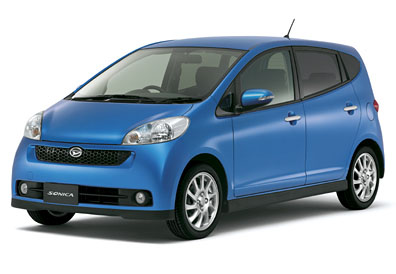
Released in June 2006, the "Daihatsu Sonica." It was introduced not so much as a daily commuter car, but as a tourer capable of longer journeys.