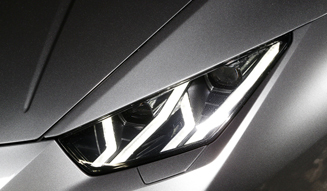
First Drive in Japan: The Lamborghini Huracán | Lamborghini
Lamborghini Huracan LP610-4
Lamborghini's New Direction for the Next 50 Years
First Drive of the Lamborghini Huracan in Japan
This March,Geneva Motor Showthe "Huracan" made its debut, and it has now arrived in Japan.HuracanThe successor to the "Gallardo," which recorded the highest sales in Lamborghini's history, this new model, appearing for the first time in 10 years, was test-driven by Jun Nishikawa. For Nishikawa, who has been covering the company's activities for many years, how did the new generation baby Lambo measure up? He offers his insights on the Huracan from the perspective of a Lamborghini owner.GallardoThe successor to the "Gallardo," which recorded the highest sales in Lamborghini's history, this new model, appearing for the first time in 10 years, was test-driven by Jun Nishikawa. For Nishikawa, who has been covering the company's activities for many years, how did the new generation baby Lambo measure up? He offers his insights on the Huracan from the perspective of a Lamborghini owner.
Text by NISHIKAWA JunPhotographs by NAITO Takahito
More Compact Than the Gallardo
Lamborghini's new flagship model, the "Huracan," has finally landed and is now driving with Japanese license plates.HuracanLamborghini's new flagship model, the "Huracan," has finally landed and is now driving with Japanese license plates.
Even though I had already driven it over 400 kilometers in Europe, the opportunity to test a new Lamborghini model in Japan always excites me. Driving it on "familiar roads" should reveal new discoveries...
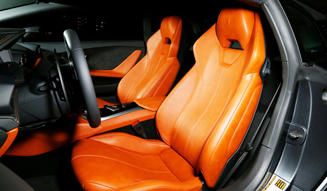
The test car was in a subdued Grigio Lynx metallic gray, with a brown and black bi-color interior. Personally, I think a more subdued color scheme suits modern supercars.
Perhaps due to its rounded shape and color, it doesn't seem particularly large on Japanese roads. Despite being slightly longer and wider than the Gallardo with its distinct straight lines, it appears more compact. The height is the same, but it gives an even flatter impression.
When unlocked, the door handle pops out. Gripping it to open the door might surprise first-time observers. It's a fittingly supercar-like flourish.
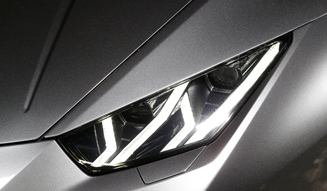
Lamborghini Huracan LP610-4
Lamborghini's New Direction for the Next 50 Years
First Drive of the Lamborghini Huracan in Japan (2)
Larger Shift Paddles
Once inside, the space feels completely different from the Gallardo, and even from the latest flagship, the "Aventador."AventadorEverything is concentrated towards the center, which feels a bit cluttered, but the perceived quality is very high, reaching the level of a luxury car.
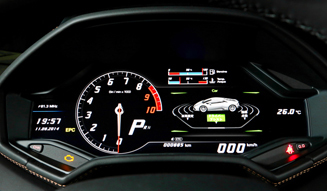
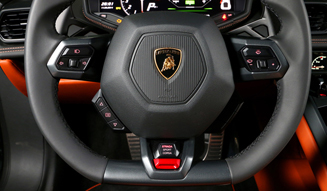
It's far more modern than the Gallardo. The instrument panel, utilizing full LCD technology, is small but easy to read. Personally, I'm delighted with the larger shift paddles. The Gallardo's paddles were incredibly difficult to use.
However, the adoption of these larger paddles meant the turn signal and wiper stalks had to be relocated to the steering wheel spokes. As someone who believes "nothing should be on the steering wheel except the horn button," I complained to the development manager, who retorted, "Even F1 cars have plenty of buttons, and weren't you the one complaining about the Gallardo's paddles being hard to use?" Hmm.
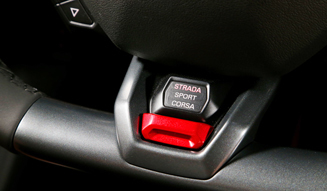
There's another important switch on the steering wheel, located at the six o'clock position.
It's the ANIMA (Soul in Italian) drive mode selector. By integrating electronic control of all driving-related systems—engine, transmission, AWD, brakes, chassis, suspension, and power steering—it achieves three distinct ride characters: Strada (street), Sport, and Corsa (circuit).
A key feature of the Huracan is that the optional magnetorheological dampers are also integrated into this control system.
Lamborghini Huracan LP610-4
Lamborghini's New Direction for the Next 50 Years
First Drive of the Lamborghini Huracan in Japan (3)
Newly Adopted Dual-Clutch Transmission
Press the engine start button. A powerful awakening sound echoes on a cold start. It might be a bit much for a residential neighborhood garage. Once warmed up, the volume subsides. I started off with ANIMA set to Strada (incidentally, this ANIMA button is also difficult to use!).
I operated the turn signal with my left thumb. It's tricky to get right, especially for turns to the right, if you're not used to it. It might be effective in making drivers more deliberate about signaling before turning.
The moment I started driving, I was impressed by how comfortable the ride was. I felt the same way when I drove it in Europe; the impression is that all four wheels are moving beautifully. Even at low speeds, it masterfully handles bumps and undulations, delivering a firm yet flat ride feel.
The sense of security from being enveloped in a remarkably rigid body, the front axle that precisely conveys the road surface and moves as intended, and the rear axle that firmly grips and makes the rear feel integrated with the driver's hips all contribute to a ride feel with a "solid response." In short, it offers a human-equine (or human-bull?) unity, allowing you to enter narrow roads and alleys without hesitation.
The newly adopted dual-clutch transmission (7-speed) also contributes to the smooth ride in city driving. Previously (and still with the Aventador), the single-clutch two-pedal system caused many drivers to complain about the forward lurch during upshifts. Simply resolving that issue should make it feel "easier to drive" for many.
In Strada mode with automatic selected, combined with the light steering feel, it was almost indistinguishable from a torque converter automatic, allowing for a relaxed drive where you could almost forget you were in a Lamborghini.
Lamborghini Huracan LP610-4
Lamborghini's New Direction for the Next 50 Years
First Drive of the Lamborghini Huracan in Japan (4)
Powerful Even at Low RPMs, Delivering Exhilarating Acceleration
The ride comfort remains excellent on the highway. In fact, it improves as the speed increases. The body's rigidity plays a role here, allowing the suspension to work effectively even over continuous road joints, handling them with a pleasant rhythm. It's comfortable.
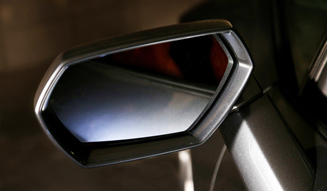
The only drawback I noticed was the limited rear visibility (which doesn't change much even with the glass hood option). Speed limits are important.
In Strada mode for normal driving, the ride feel is almost indistinguishable from a well-executed sports sedan. It's the most livable Lamborghini ever.
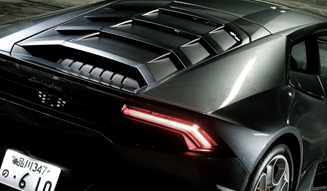
Of course, its true potential is unleashed from here. On winding roads, country lanes, or circuits, the Huracan transforms from a "practical supercar" into a superb handling machine.
The mode is Sport. The engine's roar intensifies, and the exhaust note changes dramatically. The steering feel and suspension tighten, increasing the sense of unity with the car and heightening the tension. I downshifted to first gear with the right paddle and floored the accelerator. I pulled the right paddle to shift into first gear. I floored the accelerator with my right foot.
Despite being naturally aspirated, it's incredibly powerful even at low RPMs, delivering exhilarating acceleration. The new dual injection system and the 7-speed dual-clutch system work exceptionally well together. Furthermore, thanks to the revamped electronic all-wheel-drive system, power is efficiently transmitted to all four wheels and the road. In no time, it shifts to second, then third...
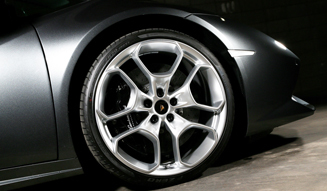
The sound as the revs climb is truly that of a V10, a reminder of its direct lineage from the Gallardo. I enjoyed the abundant torque around 4,000 rpm by modulating the accelerator. The car reacts instantly to the engine's power due to its strong chassis, moving as if controlled by a single foot.
It feels like you're controlling it with just your right foot, which is fun. That's how superb the engine response is. Additionally, the Huracan's body structure is a hybrid of aluminum and CFRP, providing a reassuring rigidity, especially around the waist.
Lamborghini Huracan LP610-4
Lamborghini's New Direction for the Next 50 Years
First Drive of the Lamborghini Huracan in Japan (5)
Everyday Usability Further Refined
As soon as I lift off the accelerator, a loud, crackling sound, like a backfire, erupts. It's a flourish that driving enthusiasts will appreciate. Onlookers might mistake it for an explosion.
The Sport mode, with its moderate body roll that effectively communicates grip to the driver, is essentially the "fun-to-drive" mode. The electronically controlled chassis allows for a moderate amount of oversteer, creating a memorable experience of fully enjoying a mid-engined sports car.
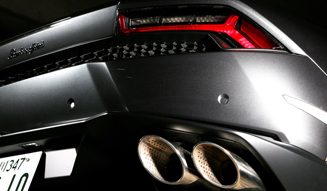
In contrast, testing the Corsa mode on public roads, the direct and sharp shifts, similar to the previous single-clutch system, evoke a sense of awe – "This is a Lamborghini shift!" However, the chassis primarily maintains neutral steering, and the brake programming prioritizes stopping power over feel. It's fast, but not necessarily fun. It seems best suited for setting lap times on a circuit.
The Huracan is a highly refined new model. By not only enhancing its sporting performance but also elevating its everyday usability, it offers the joy of driving to a wider range of sports car enthusiasts, making it perhaps the first "Lamborghini for everyone."
And this, indeed, is Lamborghini's new direction for the next 50 years.

Lamborghini Huracan LP 610-4
Body | Length 4,459 x Width 1,924 x Height 1,165 mm
Wheelbase | 2,620 mm
Tread Front/Rear | 1,668 / 1,620 mm
Vehicle Weight | 1,422 kg
Engine | 5,204cc V10
Bore x Stroke | 84.5 x 92.8 mm
Max. Power | 449 kW (610 ps) / 8,250 rpm
Max. Torque | 560 Nm / 6,500 rpm
Transmission | 7-speed LDF (Lamborghini Doppia Frizione)
Drivetrain | 4WD
Suspension Front/Rear | Double Wishbone
Tires Front | 245/30R20 (Pirelli P Zero)
Tires Rear | 305/30R20 (Pirelli P Zero)
Brakes Front | Ventilated Carbon Ceramic Discs φ380 x 38 mm
Brakes Rear | Ventilated Carbon Ceramic Discs φ356 x 32 mm
Max. Speed | 325 km/h
0-100 km/h Acceleration | 3.2 seconds
0-200 km/h Acceleration | 9.9 seconds
Fuel Consumption | 12.5 L/100 km (approx. 8.0 km/L)
CO2 Emissions | 290 g/km
Price (incl. tax) | 29.7 million yen
Lamborghini Customer Center
 0120-988-889