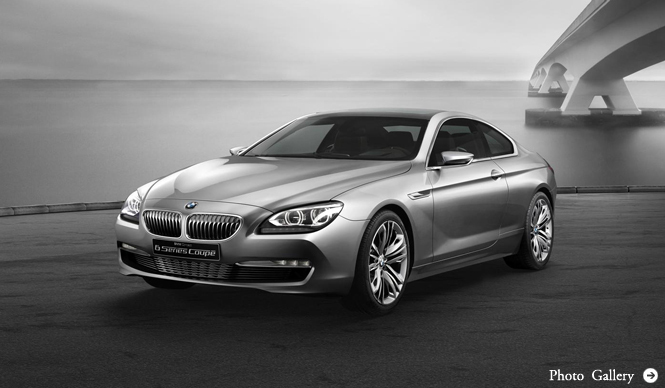
BMW Announces 2-Door Model of the 6 Series
BMW 6 Series
The New 6 Series' True Contender: The 2-Door Coupe Arrives
BMWunveiled the "Concept 6 Series Coupe" at the Paris Motor Show, which opened on the 30th.
By Giraffe
Distinctive Styling Evokes a Shark's Face
The model unveiled in Paris this time is a concept hinting at the next-generation 6 Series 2-door coupe. While the 4-door coupe study model, the "Concept Gran Coupe," revealed at the Beijing Motor Show in April, featured a distinctive styling with a sharp nose reminiscent of a shark and an aggressive design, this 2-door model also presents a similarly individualistic expression.
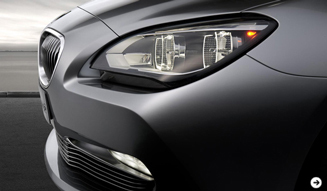
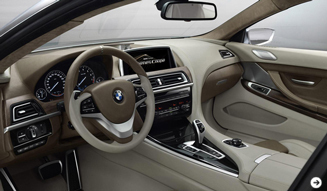
BMW also announced the adoption of optional equipment, including all-LED headlamps with daytime running light function—a first for BMW—a "iDrive" control display with a 10.2-inch monitor, a head-up display, and a high-end surround audio system from "Bang & Olufsen," a long-established Danish audio brand with whom they have recently formed a partnership.
The next-generation 6 Series is scheduled to debut with the 2-door coupe and convertible announced this time in 2011, and the 4-door coupe in 2012. Given the high degree of design completion, it is safe to assume that this concept car is essentially the production vehicle itself.
BRAND HISTORY
BMW's signature front-end, instantly recognizable by its "kidney grille" and four round headlights, is a hallmark of the brand. While enjoying considerable popularity in Japan's imported car market, surprisingly few people can immediately explain what the name "BMW" actually signifies.
Bayerische Motoren Werke. Literally translated, it means "Bavarian Engine Works." Its predecessor, Rapp Motorenwerke, was an aircraft engine manufacturer founded in 1913 in Bavaria, Germany, by Karl Friedrich Rapp. Rapp partnered with fellow Bavarian aircraft manufacturer Otto Flugmaschinenfabrik to achieve business success. In 1916, the company was renamed Bayerische Motoren Werke GmbH. Two years later, it reorganized as a stock corporation and registered its propeller logo mark, inspired by the blue skies and white clouds of Bavaria.
BMW continued to enhance its presence through innovative technology, but following Germany's defeat in World War I, it was forced to cease aircraft engine production. BMW then channeled its expertise into motorcycles, gaining attention in 1923 with the shaft-driven "BMW R32." However, not content with this, the company acquired Dixi, which held a license to produce the Austin Seven. This acquisition provided a foothold in the automotive business, and in 1929, BMW launched the "BMW 3/15 PS," marking the start of its history as an automobile manufacturer.
Incidentally, Otto Flugmaschinenfabrik, a company with deep ties to BMW, was founded by Gustav Otto, the son of Nikolaus August Otto, who established the theory of the internal combustion engine. This historical connection may explain BMW's continued focus on internal combustion engines.