March 18, 2015
BMW Z4 Roadster | BMW Unveils the New Z4 Roadster Worldwide | Gallery
BMW Unveils All-New Z4 Roadster Globally
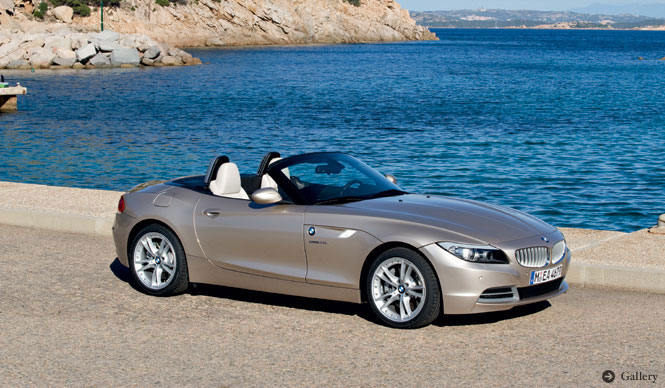
BMW announced that it will globally unveil the all-new Z4 Roadster, its first full model change in approximately seven years, at the Detroit Auto Show opening on January 11, 2009.
Text by Giraffe
Power Retractable Hardtop Opens and Closes in 20 Seconds
A notable evolution is the shift from the first generation's soft top to an all-weather retractable hardtop. This power hardtop is constructed from lightweight aluminum and splits into two sections, storing neatly in the trunk when open. The opening and closing of this top is completed in approximately 20 seconds thanks to a hydraulic system.
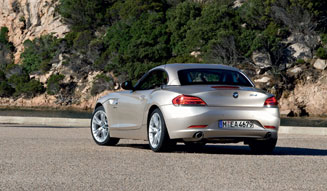
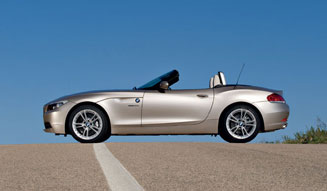
The change from a soft top to a hardtop gives it a truly coupe-like appearance. The ability to enjoy both open-air driving and coupe styling with the touch of a button is a significant appeal.
The body dimensions are 4239mm in length, 1790mm in width, and 1291mm in height. It is 139mm longer, 10mm wider, and 6mm taller than its predecessor. The wheelbase is 2496mm, just 1mm longer.
The exterior retains the classic sports car silhouette with a long hood, similar to the previous model. This design allows for the inline-six engine to be mounted closer to the center of the vehicle, achieving an ideal front-to-rear weight distribution of 49:51. The enlarged rear fenders further emphasize its rear-wheel-drive nature. The front kidney grille is wider, and the headlight area presents a cleaner design.
Three Engine Options: 2.5L, 3.0L, and 3.0L Turbo
Inside, the dashboard has changed from the previous model's signature single, flat unit spanning left to right, to a left-and-right independent design. The arrangement of four dials in the center of the instrument panel also evokes a classical image.
The powertrain has also been completely revamped. Newly installed are three gasoline engines: a 2.5-liter inline-six DOHC producing 204ps at 6400rpm and 25.5kgm of torque at 2750rpm; a 3.0-liter inline-six DOHC with Valvetronic, delivering 258ps at 6600rpm and 31.6kgm of torque at 2600rpm; and a 3.0-liter inline-six DOHC twin-turbo, generating 306ps at 5800rpm and 40.8kgm of torque between 1300 and 5000rpm.
The lineup includes the European sDrive23i (204ps), along with two other variants: the sDrive30i (258ps) and the sDrive35i (306ps), totaling three distinct models. The sDrive30i is available with a 6-speed manual or 6-speed automatic transmission, while the sDrive35i offers a 6-speed manual and a newly designed 7-speed dual-clutch sports automatic. Acceleration from 0-100km/h is 5.8 seconds for the sDrive30i and 5.2 seconds for the sDrive35i. Both models boast a top speed of 250km/h.
Official Debut at the Detroit Motor Show
Additionally, the new Z4 Roadster comes standard with the latest DSC (Dynamic Stability Control) and DDC (Dynamic Drive Control), which allows for switching between three modes: Normal, Sport, and Sport+. The vehicle will be officially unveiled at the Detroit Motor Show in January 2009, with sales scheduled to begin in Europe and North America in May 2009.
Pricing has been announced as follows: the Z4 sDrive23i at 35,900 Euros (approximately 4.4 million yen), the Z4 sDrive30i at 42,900 Euros (approximately 5.25 million yen), and the Z4 sDrive35i at 47,450 Euros (approximately 5.8 million yen).
BRAND HISTORY
BMW is instantly recognizable by its front fascia, characterized by the "kidney grille" and four round headlights. While consistently popular in the Japanese import car market, surprisingly few people might know the meaning behind its name.
Bayerische Motoren Werke. Literally translated, it means "Bavarian Engine Works." Its predecessor, Rapp Motorenwerke, was an aircraft engine manufacturer founded in Bavaria, Germany, in 1913 by Karl Friedrich Rapp. Rapp partnered with another Bavarian aircraft manufacturer, Otto-Flugmotorenbau, to achieve business success. In 1916, the company was renamed Bayerische Motoren Werke GmbH. Two years later, it reorganized as a stock corporation and registered its propeller-inspired logo, symbolizing the blue skies and white clouds of Bavaria.
BMW continued to enhance its presence through innovative technology. However, following Germany's defeat in World War I, the company was forced to cease aircraft engine production. BMW then channeled its expertise into motorcycles, gaining attention in 1923 with the shaft-driven "BMW R32." Not content with this, the company acquired Dixi, which held a license to produce the Austin Seven. This acquisition provided a foothold in the automotive business, and in 1929, BMW launched the "BMW 3/15 PS," marking the beginning of its history as an automobile manufacturer.
Incidentally, Otto-Flugmotorenbau, a company with deep ties to BMW, was founded by Gustav Otto, the son of Nikolaus August Otto, who established the theory of the gasoline engine. This historical connection may explain BMW's continued focus on internal combustion engines.