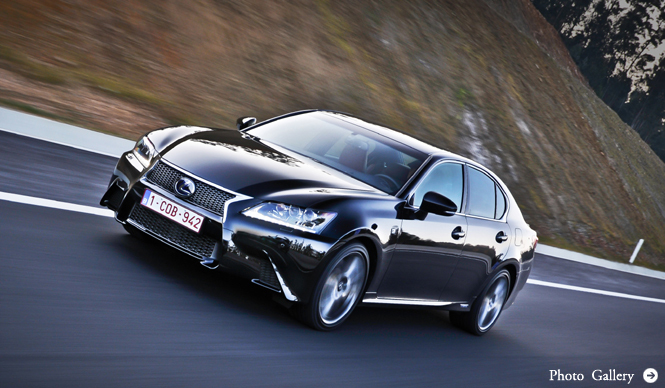
Lexus GS: Conquering the Autobahn | Lexus
Lexus GS250 & GS450h
Lexus GS on the Autobahn
Yasuhisa Shimashita, a familiar face at OPENERS, flew to Europe. The reason? To drive Lexus's new "GS" series alongside European journalists. The new Lexus "GS," touted for its refined driving dynamics, what is its true capability at speeds exceeding 200 km/h, a world unknown on Japanese roads? And how does it hold its own against the titans of German premium brands? An unconventional impression of the GS450h and GS250 from Europe has arrived!
Text by Yasuhisa Shimashita
Photographs by LEXUS & Yasuhisa Shimashita
I Participated in a European Test Drive Event!
Unveiled to the world last August at Pebble Beachunveiled at Pebble Beachand released in Japan in January, the new "Lexus GS" has had a remarkably strong start, with initial orders reaching 6,000 units, ten times the target for the first month. While various factors can be imagined, it boils down to its innovative styling and driving performance that overturns previous preconceptions. Some models are still experiencing delivery delays.
The Lexus GS is finally being introduced to Europe this summer, and a test drive event for local press was held in conjunction with this launch. Although this was originally an event for European journalists, the author, impressed by its driving prowess after several test drives, flew to Europe independently to "experience its driving performance in Europe" and hastily joined the local test drive event. Here, I will report on the impressions gained at that time.
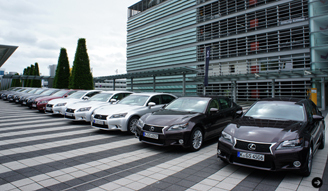
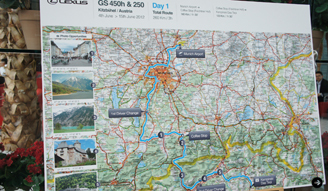
The assembly point and starting location was Munich Airport in Germany. Stepping out of the plane and outside, a variety of new GS models in different specifications and body colors were lined up in the plaza in front of the airport. After completing registration and receiving the route book, the course was set from Munich to Kitzbühel, a mecca for winter sports in the Austrian state of Tyrol. The first day's drive was approximately 260 km, and the second day was about 180 km. This was a rather long route, even for an international test drive event. We were told this was due to the earnest request of the development team, who wanted participants to "drive and evaluate thoroughly."
Lexus GS250 & GS450h
Lexus GS on the Autobahn (2)
Onto the Autobahn in the GS450h F SPORT
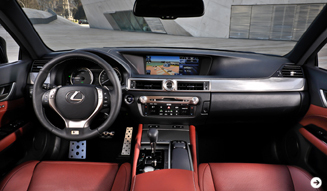
First, I received the key to the "GS450h F SPORT." Opening the left door and sliding into the driver's seat, the acclaimed interior greeted me, mirrored from what I was accustomed to. What was pleasing was the driving position. Thanks to the meticulous attention paid to the seating position and steering wheel angle, I could immediately achieve a comfortable driving posture that fit my body perfectly, just as I had experienced with the right-hand drive. This alone is sure to resonate with European users.
Under a lightly overcast sky, we drove out of the airport and soon merged onto Autobahn 92. Traffic was not light around the airport, but the sharp acceleration unique to the GS450h's hybrid powertrain was greatly appreciated in such conditions. With just a light press of the accelerator pedal, the car immediately began to accelerate, allowing me to weave through traffic smoothly.
We bypassed the city of Munich and headed south on the 95, driving straight ahead.
As the traffic thinned and I could properly focus on the car, what left a strong impression was, surprisingly, the ride comfort. During the test drive in Japan, I had found the suspension to be a bit stiff. Especially in the GS450h, with its heavier rear, I had thought it could be a little more supple when going over road joints. However, on this day, I was hardly aware of that, and in fact, found it to be just right.
This might be due to the speed. At the significantly higher cruising speeds than on Japanese expressways, everything felt more settled. While this could be a result of the five years and one million miles of global testing, it also indicates the limitations of public road testing opportunities in Japan.
The true forte of the GS450h is its exhilarating acceleration. When I floored the accelerator in an open stretch, I was met with a powerful surge of propulsion, as if being pushed from behind. Moreover, because the GS450h's hybrid system uses a continuously variable transmission, unlike geared gearboxes, the acceleration is seamless without any steps or interruptions. This creates a sense of exhilaration as if the momentum continues endlessly, drawing you in.
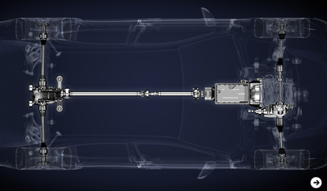
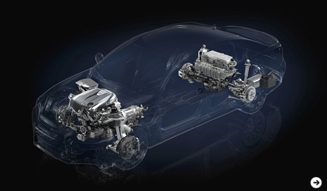
Frankly, in Japan, such a thrill can only be experienced momentarily or by breaking the law. But this is the Autobahn. The 95 soon entered a section with no speed limit, allowing me to unleash its full potential. The acceleration was relentless up to the speed limiter of 250 km/h, with an overwhelming surge that felt like liftoff. This is the true capability and appeal of Lexus hybrid technology, not just its fuel efficiency. Taking advantage of the light traffic, I thoroughly enjoyed it.
Lexus GS250 & GS450h
Lexus GS on the Autobahn (3)
A Direct Competitor to German Premium Brands
This unique power performance could be enjoyed without hesitation, backed by excellent chassis performance. Interestingly, while the stability was satisfactory up to around 100 km/h, but not particularly noteworthy, it transformed into an ironclad stability that elicited a "wow" as the speed increased further.
This is likely due to the aerodynamics. It not only presses the car into the road but also seems to enhance straight-line stability by gripping it from both sides. This effect can be clearly felt. The sense of security in this speed range is, without exaggeration, enough to make German premium brands turn pale.
Speaking of making them pale, I felt the new GS made quite an impression in terms of presence as well.
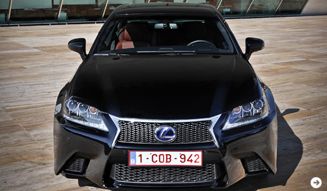
As I accelerated in the passing lane, the cars ahead smoothly moved aside. While Germany is generally like that, they moved into the adjacent lane with plenty of distance to spare. Some cars, perhaps intrigued by this unusual presence, moved over and observed me. In any case, the new front-end design seems to have a significant impact.
Into the Winding Roads
After a pleasant drive to Kilnberg, we exited the Autobahn and entered local roads. From around the town of Bad Tölz, where a coffee stop was arranged, the enjoyable winding roads began.
Here, I turned the drive mode select dial two clicks to the right, to "SPORT S+" mode. This adjusts the steering effort, throttle response, suspension damping, and the "LDH" four-wheel active steering system to a more dynamic setting.
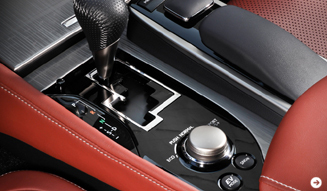
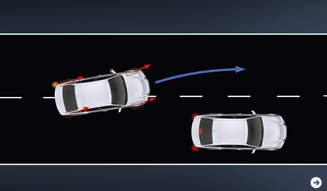
The steering weight and effort felt just right for me personally. The throttle response became even sharper, delivering the precise amount of torque needed, when needed. On the winding roads between Germany and Austria, with their ups and downs, this characteristic was incredibly reassuring. While I could use the paddle shifters, there was no need for them during acceleration. On the other hand, on downhill sections where engine braking was desirable, the paddle shifters proved very useful.
The handling was exceptionally agile. The steering response was lively, making turn-ins into corners a joy. What was particularly novel was the sensation that the entire car was turning around me, not just the nose reacting. This is surely the effect of the LDH rear-wheel steering.
Furthermore, I was impressed that the lack of integrated feel and awkwardness that were unavoidable with previous four-wheel steering systems were virtually absent, with only a 1% discrepancy. The car's response to driver input was consistently predictable, with no unexpected behavior. It's gratifying that the technology is integrated seamlessly, prioritizing a natural driving feel. The ability to maintain a high pace without anxiety, even in occasional heavy rain, was a direct benefit of this system.
In the end, I completed the approximately 260 km to our destination, Kitzbühel, in one go, with hardly any breaks.
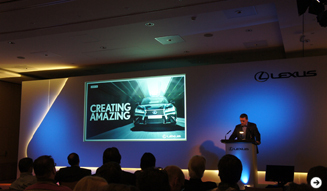
I felt no fatigue. The day's drive concluded with checking into the Kempinski Hotel Das Tirol and attending a product presentation.
Lexus GS250 & GS450h
Lexus GS on the Autobahn (4)
On the Return Trip, the GS250
Unfortunately, it was raining again the next day, but the rain had lessened considerably. For the second day's drive, I chose the "GS250." In Europe, the GS450h hybrid is the main model, with the GS250 available in some regions. Both were prepared for this test drive event.
The route was essentially the return journey, leading us directly into the mountain roads. Compared to the GS450h F SPORT I drove the previous day, I was surprisingly not aware of any significant difference in handling. While it lacked LDH and had a milder tire and suspension setup, its lighter weight made for sharper movements, and the steering felt more direct due to the absence of additional mechanisms. Whether driving straight or cornering, a sense of security was firmly transmitted to my palms. This handling was also excellent.
Compared to the GS450h from the previous day, there was less absolute power, but the GS250 still possessed enough power to comfortably cruise at 200 km/h on the Autobahn. It's true that its acceleration lacked punch, especially when compared to rivals that have adopted modern turbocharged four-cylinder engines. However, driving the V6, naturally aspirated engine, rather than a four-cylinder, and pushing it a bit, I felt, "This, in its own way, is one of the fundamental pleasures of driving a car." It might be an older technology, but it perhaps offers a richer experience for the driver.
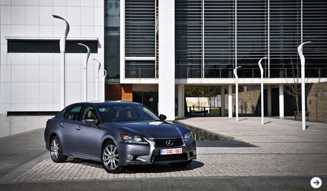
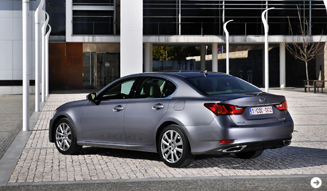
On the return Autobahn, there was construction everywhere, forcing us to use the normally two-lane road as three lanes with yellow lines. This created the usual nerve-wracking situations on the Autobahn. Even in such scenarios, the car's manageable size, excellent visibility, and the taut steering feel around the center made it not overly difficult. The sense of security when passing through narrow gaps, barely wide enough for one car, between large trucks and the barrier was reassuring. Perhaps the true quality of its driving is evident not just at high speeds, but also in these everyday situations.
Indeed, the most significant improvement I felt was in the driving dynamics. Being able to drive over 200 km/h without anxiety is merely a minimum requirement there. Beyond that, the crucial factors are the sense of security it provides, its unique character, and the joy it brings. The new GS is beginning to possess all of these. I was particularly moved by the GS450h F SPORT's performance at over 200 km/h.
While enjoying myself, I arrived back at Munich Airport, our starting point from yesterday.
Along with the other vehicles that had returned, I took another close look at its form. As mentioned earlier, the new GS's size increase was kept to a minimum, but thanks to its dimensions with the wheels pushed to the corners and its more imposing front end, it exuded a powerful presence that didn't get lost in the European cityscapes or on the Autobahn. In fact, the journalists from Austria and other European countries who were in my group shared the same sentiment.
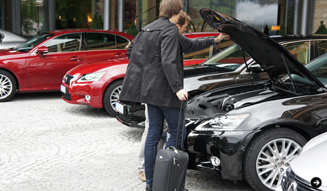
Of course, it's not easy to shine amidst the dominance of Germany's big three premium brands. At the very least, in terms of hardware, it needs to quickly adopt features like downsizing engines, ATs with wider gear ratios, and idle stop systems found in its rivals. Attractive AWD models are also desired. Beyond that, I hope to see developments that set it apart, such as offering hybrid models with smaller displacement engines.
However, I am convinced that the high level of refinement in the new GS will be a significant catalyst in gradually and positively changing the perception of the GS and the Lexus brand. Even just for that, it was well worth the trip to Europe to drive a car I already knew.

LEXUS GS450h
Body Dimensions | Overall Length 4,850 x Overall Width 1,840 x Overall Height 1,455mm
Wheelbase | 2,850mm
Tread Width Front/Rear | 1,575/1,590mm
Minimum Ground Clearance | 130mm
Minimum Turning Radius | 5.3m (5.1m with LDH)
Vehicle Weight | 1,860kg (1,820kg for I package)
Transmission | Electronically Controlled Continuously Variable
Engine | 3,456cc V6 DOHC
Bore x Stroke | 94 x 83mm
Compression Ratio | 13.0
Maximum Engine Output | 217kW (295ps) / 6,000rpm
Maximum Engine Torque | 356Nm / 4,500rpm
Fuel System | Direct Port Injection (D-4S)
Maximum Motor Output | 147kW (200ps)
Maximum Motor Torque | 275Nm
Drive Battery | Nickel-metal Hydride
Drivetrain | Rear-Wheel Drive
Fuel Economy | 18.2km/ℓ (JC08 mode) 20.5km/ℓ (10-15 mode)
Price | ¥7,000,000 (version L: ¥7,900,000, F SPORT: ¥8,000,000, I package: ¥7,400,000)
LEXUS GS250
Body Dimensions | Overall Length 4,850 x Overall Width 1,840 x Overall Height 1,455mm
Wheelbase | 2,850mm
Tread Width Front/Rear | 1,575/1,590mm
Minimum Ground Clearance | 130mm
Minimum Turning Radius | 5.3m
Vehicle Weight | 1,640kg (1,670kg for F SPORT and version L)
Transmission | 6-speed Automatic
Engine | 2,499cc V6 DOHC
Bore x Stroke | 83 x 77mm
Compression Ratio | 12.0
Maximum Output | 158kW (215ps) / 6,400rpm
Maximum Torque | 260Nm / 3,800rpm
Fuel System | Direct Injection (D-4)
Drivetrain | Rear-Wheel Drive
Fuel Economy | 10.8km/ℓ (JC08 mode) 11.6km/ℓ (10-15 mode)
Price | ¥5,100,000 (version L: ¥6,000,000, F SPORT: ¥5,900,000, I package: ¥5,500,000)