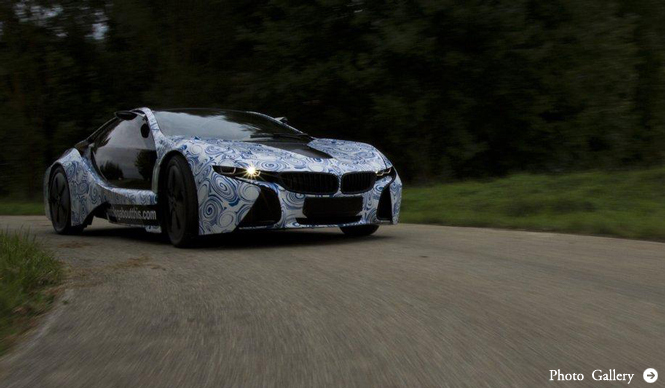
BMW Vision EfficientDynamics
BMW Vision Efficient Dynamics
BMW Vision Efficient Dynamics
A Sports Hybrid from BMW with High Environmental Performance
BMWhas announced the sale of the "Vision Efficient Dynamics," a concept model of a high-performance plug-in hybrid.
Text by Giraffe
A Powertrain Boasting 356ps Total Output
The Vision Efficient Dynamics is a plug-in hybrid concept model first unveiled at the 2009 Frankfurt Motor Show. Its powertrain combines a 1.5-liter inline three-cylinder turbo diesel engine producing 163ps and 29.6kgm of torque with a front motor (80ps, 22.4kgm) and a rear motor (51ps, 29.6kgm).
With a total output of 356ps and 81.6kgm of torque, the combined power of the engine and motors reaches the realm of a true supercar, despite its small displacement. It achieves high performance figures of 0-100km/h in 4.8 seconds and a top speed of 250km/h (electronically limited).
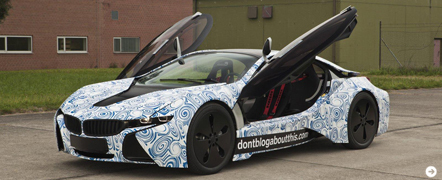
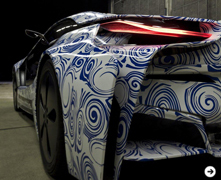
The secondary battery is a 10.8kWh lithium-ion unit, rechargeable from a domestic power source. Its environmental performance is impressive, with a European combined fuel economy of 26.6km/ℓ and CO2 emissions of 99g/km.
The Vision Efficient Dynamics is scheduled to go on sale in 2013, with its name expected to be "i100" or "i1." Along with the "Megacity Vehicle (tentative name)," a small EV car also slated for production in 2013, this model is sure to be a catalyst for adding "environment" to the image of BMW.
BRAND HISTORY
BMW is instantly recognizable by its front fascia, characterized by the "kidney grille" and four round headlights. It consistently ranks high in Japan's imported car market, yet surprisingly few people can immediately explain what its name signifies.
Bayerische Motoren Werke. Literally translated, it means "Bavarian Engine Works." Its predecessor, Rapp Motorenwerke, was an aircraft engine manufacturer founded in Bavaria, Germany, in 1913 by Karl Friedrich Rapp. Rapp partnered with fellow Bavarian aircraft manufacturer Otto-Flugzeugwerke to achieve business success. In 1916, it was renamed Bayerische Motoren Werke GmbH. Two years later, it reorganized as a stock corporation and registered its propeller logo, inspired by the blue skies and white clouds of Bavaria.
BMW continued to enhance its presence through innovative technology, but the defeat in World War I forced the cessation of aircraft engine production. BMW then channeled its expertise into motorcycles, gaining attention in 1923 with the shaft-driven "BMW R32." Not content with this, the company acquired Dixi, which held a license to produce the Austin Seven. This provided a foothold in the automotive business, and in 1929, BMW launched the "BMW 3/15 PS," marking the start of its history as an automobile manufacturer.
Incidentally, Otto-Flugzeugwerke, which had a close relationship with BMW, was founded by Gustav Otto, the son of Nikolaus August Otto, who established the theory of the internal combustion engine. This connection likely explains BMW's continued focus on internal combustion engines.