CHANEL | An Inspirational Journey Centered Around the Timeless Fragrance, N°5
CHANEL
Exhibition "N°5 CULTURE CHANEL"
A Journey Through Inspiration for the Timeless Fragrance "Chanel N°5" (1)
The exhibition "N°5 CULTURE CHANEL" delves into the profound relationship between Chanel and art through the iconic and timeless fragrance "N°5." Held until early June at the Palais de Tokyo, a museum in Paris, France, the exhibition, which concluded to great acclaim, traces scattered inspirations to explore the wellspring of Gabrielle Chanel's imagination.
Text by FUJITA Mayu (OPENERS)
Tracing Scattered Images to Decipher the Enigma of "N°5"
Launched in 1921, Chanel's "N°5" is a universal fragrance loved across generations. Marilyn Monroe's famous quote, "I only wear Chanel N°5 to bed," perfectly illustrates the overwhelming presence of a scent that is as much a part of a woman as her clothing. It is another dress created by Gabrielle Chanel to elevate a woman's beauty.──The 1920s, when "N°5" was born, were a period of vibrant artistic movements, a time when the art scene was at its most dynamic. How did this absolute fragrance come into being?
This exhibition showcases countless "clues" to decipher the enigma of "N°5." Most of the artworks, photographs, archives, and objects on display are by artists who lived and were closely associated with Chanel during the same era. They "suggest" the inspirations that formed the foundation of Gabrielle Chanel's imagination, and the exhibition's aim is for visitors to find their own answers by piecing together these scattered hints.
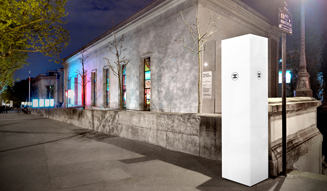
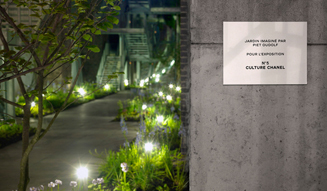
© CHANEL
On the way to the exhibition rooms, a garden designed by Dutch landscape artist Piet Oudolf unfolds. This garden, serving as an introduction to the exhibition, expresses the "experience of scent" with the theme of "a promise for the future." The ever-changing garden, mirroring the passage of seasons, evokes the image of a fragrance that transforms over time.
© CHANEL
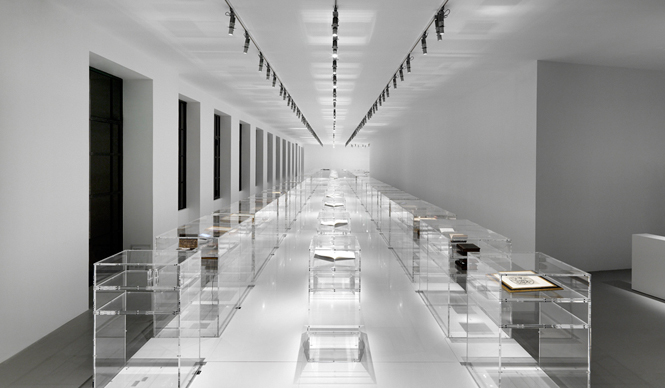
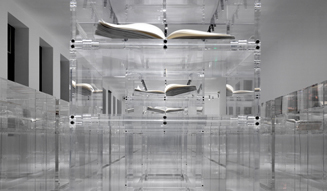
Stepping into the building through a secluded garden reveals a refined, minimalist space characteristic of Chanel, constructed in white and transparent materials. Three rows of acrylic cases, about chest-high, extend to the back of the room. In the central case lies a pristine white book, open for viewing. This specially bound volume, compiled with images related to "N°5" and words from Gabrielle Chanel and artists of her time, is a work by graphic designer Irma Boom, based in Amsterdam.
The "keys" to imagination are inscribed on the pure white pages. Artworks, letters, poems, and various other pieces that tell the story are displayed in the adjacent cases. Visitors progress through the venue, alternating their gaze between the three rows of acrylic cases. The intimate proximity, almost close enough to bump one's head, naturally sparks conversations about one's own deductions in deciphering the enigma of "N°5."
CHANEL
Exhibition "N°5 CULTURE CHANEL"
A Journey Through Inspiration for the Timeless Fragrance "Chanel N°5" (2)
"The three most representative figures of the 20th century are Picasso, Chanel, and de Gaulle."
In 1907, Picasso's "Les Demoiselles d'Avignon" ushered in the revolution of Cubism, and in 1908, Futurism emerged in Italy. From then on, avant-garde movements gained momentum, and modernity began to rise with the dawn of the 1920s. It was an era that demanded "abstraction" not only in painting but in all genres of art, including poetry, literature, and music.
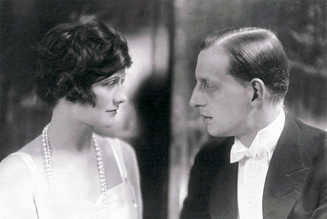
Gabrielle Chanel and the Grand-Duc Dmitri Pavlovitch 1920
Colection Chanel © All Rights Reserved Terms of
Meanwhile, Chanel, after leaving the orphanage at eighteen, worked as a seamstress while aspiring to be a singer, but her lack of success led her to abandon that dream. Out of boredom, she began making hats, and her designs were recognized, leading her to open a hat atelier in 1906. In 1910, with the financial backing of her beloved lover, Boy Capel, she opened a millinery shop on Rue Cambon in Paris. Then, in 1915, she opened her first couture house in Biarritz. Her revolutionary dresses and suits, made from jersey—a fabric previously used for underwear—effortlessly overturned existing fashion concepts, and Chanel quickly rose to prominence.
A free and innovative spirit unbound by convention, an independent woman forging her own path.──Chanel, who embodied the new woman of a new era not only through fashion but also in her own life, began to deepen her friendships with the avant-garde artists of the time, including painters Picasso and Salvador Dalí, playwright Jean Cocteau, poet Guillaume Apollinaire, and musicians Igor Stravinsky and Sergei Diaghilev, immersing herself in the era of modernity.
N°5 CULTURE CHANEL - The Artistic Influences
Jean-Louis Froment, the curator of this exhibition, had this to say about the display:
"N°5 is a page designed by Jean Cocteau, a three-line poem by Reverdy, a musical score by Stravinsky, and a painting by Picasso. Malraux once said, 'The three most representative figures of the 20th century are Picasso, Chanel, and de Gaulle.' Therefore, it is necessary to display Picasso's paintings alongside each exhibit dedicated to Gabrielle Chanel's history."
Was "5" the Number Chosen by the Era?
Here, we introduce a selection from the 108 works exhibited. For example, there is a drawing of a woman by Picasso and Proust. The stylishly tilted, wide-brimmed hat is a signature Chanel style that one has surely seen before, even without a deep knowledge of fashion history. The fact that both artists depicted a similar female figure around the same time indicates that this was the fashionable style of the era.
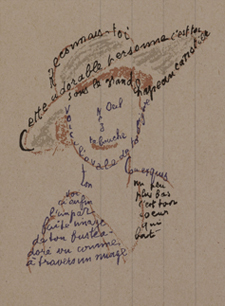
GUILLAUME APOLLINAIRE
"Reconnais‐toi", poem addressed to Louise de Coligny‐Chatillon 9th February 1915
Bibliothèque historique de la Ville de Paris, Paris (France) © BHVP/Roger Viollet
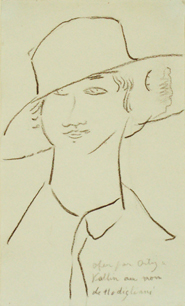
Portrait de femme au grand chapeau
(signed & dedicated to the painter Manuel Ortiz de Zarate, friend of Modigliani) 1916
© Vered gallery East Hompton, New York
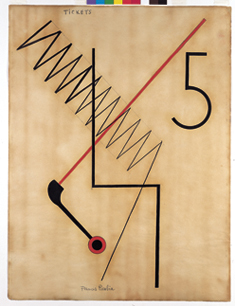
FRANCIS PICABIA
Tickets 1922
The Vera and Arturo Schwarz Collection of Dada and Surrealist Art in the Israel Museum © ADAGP Paris, 2013/courtesy Comité Picabia © Photo Avshalom Avital/ The Israel Museum Jerusalem
The name "N°5," given without explanation, supposedly derived from a sample number, also reveals a link to the avant-garde art of the time. The number "5" appears in works by Francis Picabia, a painter and poet known for Dadaism, and Max Ernst, a painter and sculptor influenced by Dadaism. Artistic movements like Cubism, Futurism, Dada, and Surrealism were closely tied to typographic reforms (it is even suggested that the font of the "CHANEL" brand logo was influenced by Dadaism), making the deliberate choice of the number "5" in works symbolizing the era particularly intriguing.
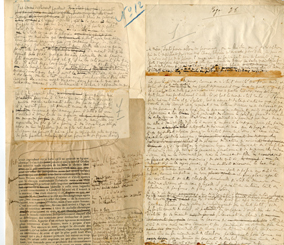
MARCEL PROUST
"In the shadow of young girls in flower", hand corrected proof circa 1914,
Private Collection/Musée des Lettres et Manuscrits, Paris (France) © Private Collection/Musée des lettres et manuscrits-Paris
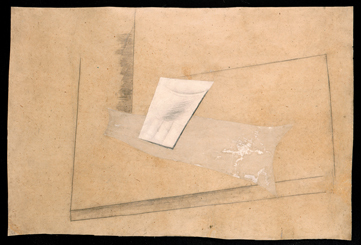
PABLO PICASSO
Collage 1914
© Marina Picasso Collection/Courtesy of Galerie Krugier & Cie, Geneva (Switzerland) © Succession Picasso 2013
Works by Man Ray, a painter, sculptor, and photographer known for Dadaism and Surrealism, and sculptor Constantin Brancusi, featuring women's "heads" as motifs. The "collage" technique, common in Picasso's "Collage" and the manuscript of Marcel Proust's poem "In the shadow of young girls in flower," is also a style emblematic of the era, and it is likely no coincidence that the packaging of "N°5" at the time was also a collage.
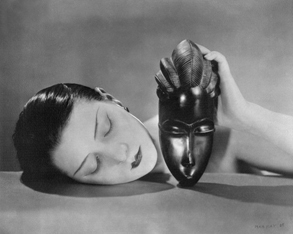
MAN RAY
Noire et Blanche 1924-77
FRAC Bourgogne, Dijon (France) © Man Ray Trust/ADAGP, Paris 2013
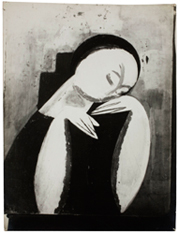
CONSTANTIN BRANCUSI
Study for Mlle Pogany Circa.1913
Musée National d'Art Moderne - Centre Georges Pompidou, bequest of Constantin Brancusi in 1957, Paris (France) © Centre Pompidou, MNAM-CCI, Dist. RMN-Grand Palais / Georges Meguerditchian
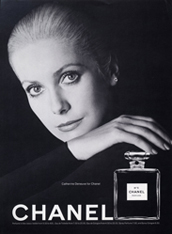
Catherine Deneuve photographed by Richard Avedon for a CHANEL N°5 campaign in 1973 that was shown exclusively in the United States.
Chanel Collection, Paris (France) ©1972, The Richard Avedon Foundation
Items related to the ballet "Parade," produced and scripted by Jean Cocteau, with music by Erik Satie and art by Picasso; letters exchanged between Cocteau and Satie; photographs of their gatherings. The fact that these revolutionary artists inspired and elevated each other.──While excited by the behind-the-scenes history, I felt I was touching upon the source of Gabrielle Chanel's creations. "Felt" is vague, but the message conveyed by piecing together the scattered hints is abstract and sensory, like a scent. It communicates directly, bypassing words.
CHANEL
Exhibition "N°5 CULTURE CHANEL"
A Journey Through Inspiration for the Timeless Fragrance "N°5" (3)
"N°5" is a Manifesto of the Creative Spirit
"N°5" was also a huge hit across the Atlantic in America. In 1945, GIs flocked to the boutique on Rue Cambon in Paris; in 1952, Marilyn Monroe famously replied "Just a few drops of N°5" when asked what she wore to bed; and in 1964, Andy Warhol depicted the "N°5" bottle as one of the icons of the 20th century.
The distinctive name "N°5," said to be named after a sample number, the labeling reminiscent of laboratory samples, the bottle with its square edges and clear lines, and the white grosgrain box with black trim all echo fashion creations. The visual elements of "N°5," embodying extreme minimalism, are truly avant-garde. As the artists of the time proclaimed and supported, "N°5" is nothing less than a manifesto of the creative spirit. In achieving absolute modernity, "N°5" can be considered a work that realized Cubism, Dadaism, and Surrealism in the world of fragrance.
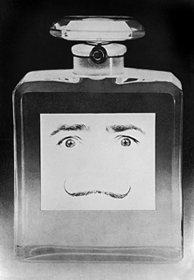
PHILIPPE HALSMAN,
The Essence of Dali,1954,
Private Collection © Philippe Halsman/Magnum Photos © Droits d’Image de Salvador Dalí réservés. Fundació Gala-Salvador Dalí, Figueres, 2013
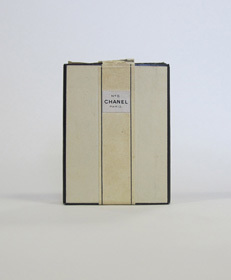
N°5 PERFUME PACKAGING, CARDBOARD AND PAPER CASE, 1921
CHANEL Collection, Paris
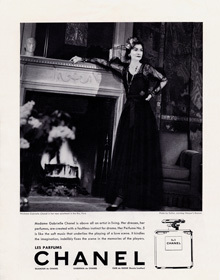
HARPER'S BAZAAR
1er November 1937
Photo François Kollar © Ministère de la Culture, Médiathèque du Patrimoine, Dist. RMN, France
Marilyn et N°5 - Inside CHANEL
The "Absence" of a Beloved──
"N°5 is a page designed by Jean Cocteau, a three-line poem by Reverdy, a musical score by Stravinsky, and a painting by Picasso," says curator Jean-Louis Froment, equating "N°5" with the art of the era. He also states, "A drop of N°5 is not just a drop of perfume. It is a story, the story of one woman, the story of all women, and a sad love story."
In 1921, Mademoiselle Chanel first presented her perfume, "N°5." She entrusted this task to perfumer Ernest Beaux. Beaux, who had worked for the Russian court until 1917, met Mademoiselle in Grasse, Southern France, in 1920, the year before "N°5" was born. This was the year after her beloved lover, Arthur Capel, died in an unfortunate accident.
Arthur Capel, known by the nickname Boy, was Chanel's first true love and not only left her with countless unforgettable memories but also had a profound artistic influence on her. It was he who taught her the beauty of stories and poetry. The portraits displayed at the beginning of this exhibition, showing Capel engrossed in a book and Chanel gazing at a book, tell this story.
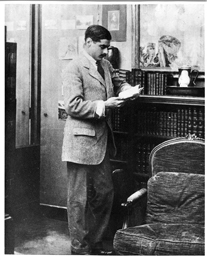
Boy Capel reading in his appartment circa 1911
Collection Edmonde Charles Roux © Droits réservés
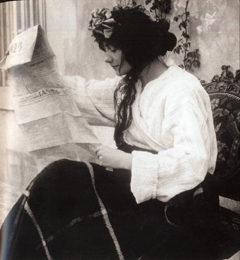
Gabrielle Chanel reading a newspaper at Royallieu circa 1910
COLLECTION Edmonde Charles-Roux Collection © All rights reserved
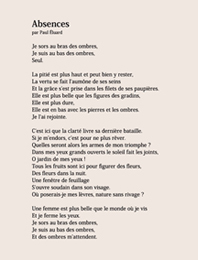
PAUL ÉLUARD,"Absences", in Capitale de la Douleur,Paris, Éditions Gallimard, 1926,
COLLECTION Chanel Collection, Paris (France) © Éditions Gallimard
The bottle containing Ernest Beaux's fifth proposal──Chanel's vision of a scent "that smells of woman herself" was the first "abstract" fragrance ever created. At the time, perfumes mimicking a "single" flower, such as rose, jasmine, or lilac, were the norm. "N°5," composed of 80 ingredients and lacking a dominant note, was a revolutionary existence that overturned the conventional concept of perfume.
She sought in its complex and captivating scent the memory of a precious love that had been abruptly cut short.──Could "N°5" be what Proust calls "involuntary memory"? Jean-Louis Froment ponders this. Perhaps the scent, which evokes memories and transcends the concept of time, was the only way to fill the "absence" of her beloved. It is now hailed as an "eternal fragrance," 90 years after its creation.
The journey to explore Chanel's imagination, guided by the rows of pristine white books at the back of the exhibition hall, concludes with a depiction of Chanel in her later years, engrossed in a book left by Capel in her atelier. Portraits connecting the beginning and the end, centered around books. She is seen tracing memories of love within the repeatedly read pages of a story. This absolute creation, imbued with such a sad yet pure love story—the wellspring of the imagination of the great designer, Gabrielle Chanel. Like much great art, its eternal journey across time continues, resonating with diverse cultures that span across eras.
CHANEL Customer Care Center
0120-525-519 / CHANEL (Fragrance & Cosmetics)