Milan Expo 2015: Nendo Designs Gallery Space and 16 Products for the Japan Pavilion - Web Magazine OPENERS

OPENERS

Today
OPENERS
  • Fashion
  • Beauty
  • Car
  • Watch & Jewelry
  • Design
  • Lounge
  • News Board
  • About
  • Log in
  • 日本語
  • English

today
Milan Expo 2015: Nendo Designs Gallery Space and 16 Products for the Japan Pavilion
Gallery
June 25, 2015

Milan Expo 2015: Nendo Designs Gallery Space and 16 Products for the Japan Pavilion
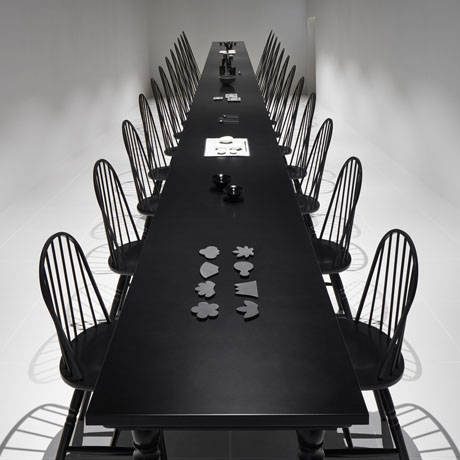
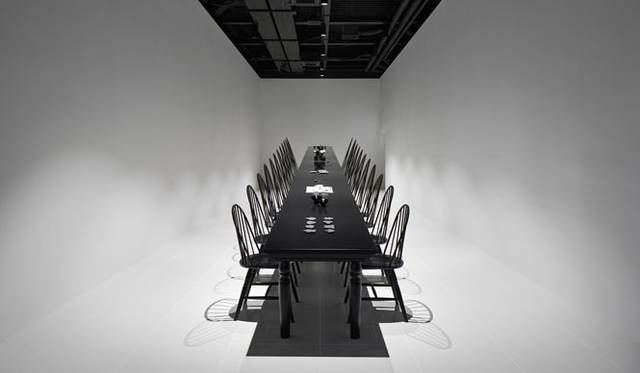
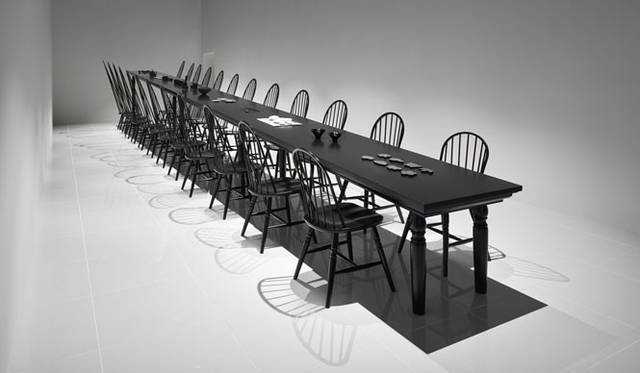
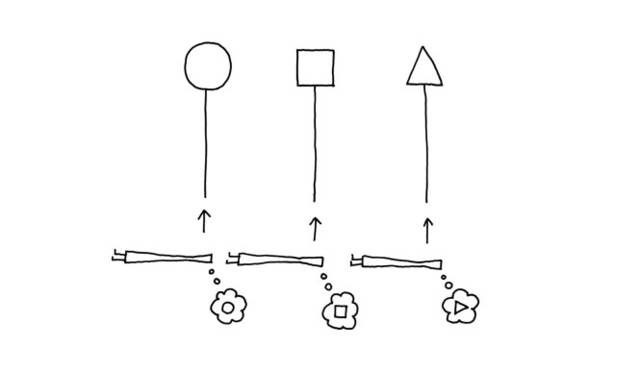
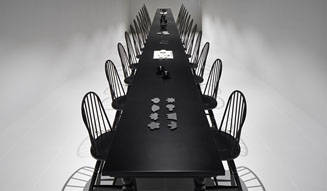
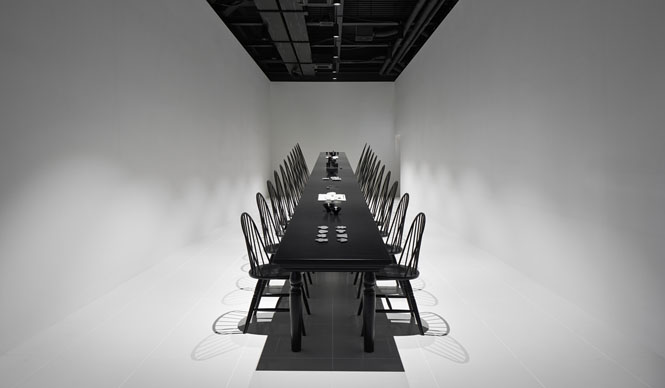
<strong>nendo</strong><br />Milan Expo (2015 Milan Universal Exposition) Japan Pavilion Gallery. Photographs by Daici Ano
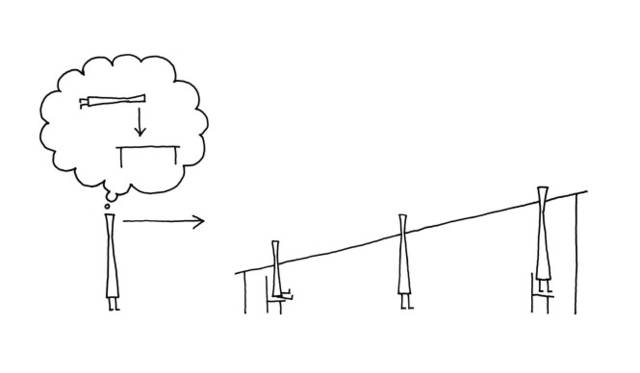
<strong>nendo</strong><br />Milan Expo (2015 Milan Universal Exposition) Japan Pavilion Gallery. Image sketch
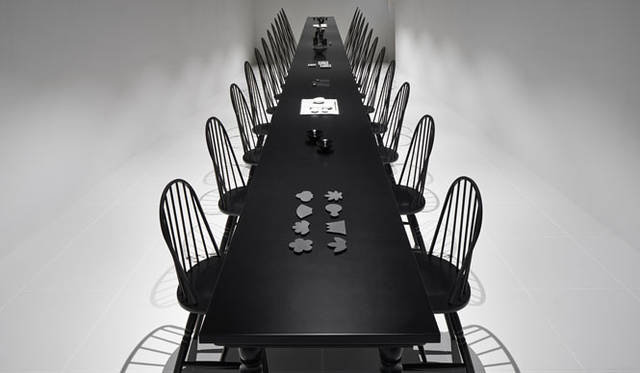
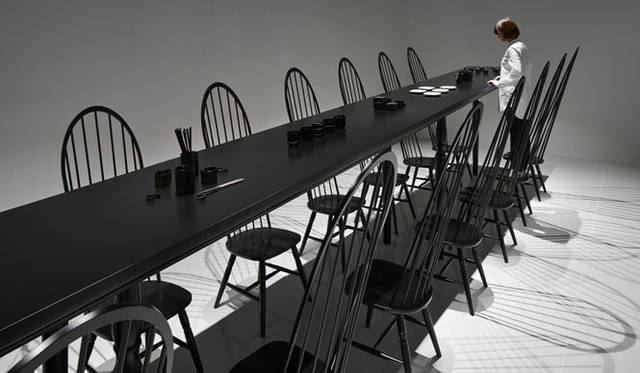
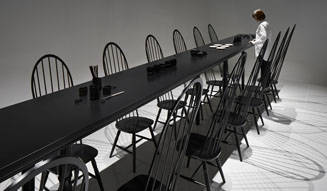
<strong>nendo</strong><br />Milan Expo (2015 Milan Universal Exposition) Japan Pavilion Gallery. Photographs by Daici Ano
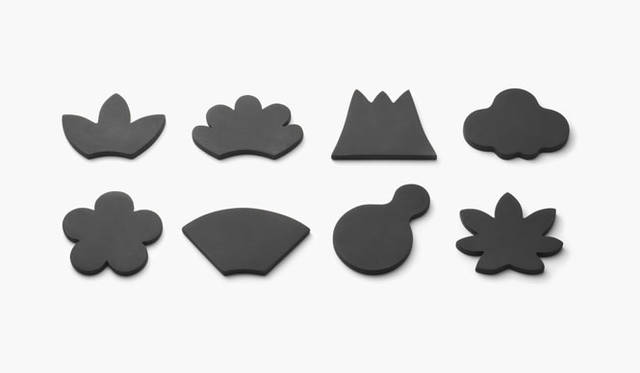
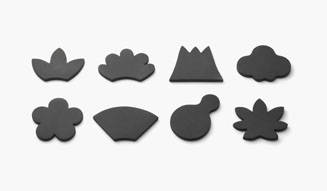
<strong>nendo</strong><br />"cs001 (Tokoname Ware)" Tokoname ware is pottery produced in the Chita Peninsula, centered around Tokoname City in Aichi Prefecture, and is known as one of Japan's Six Ancient Kilns. While reddish-brown pottery that utilizes the color of the clay body is common, this ware is blackened by smoking with rice husks during firing. The porous body's water absorbency is utilized to design coasters. The texture resembles the Japanese confection Rakugan, and the manufacturing process, which involves molding with a frame, is also similar. Therefore, the motifs for the coasters are shapes commonly found in Rakugan. Photographs by IWASAKI Hiroshi
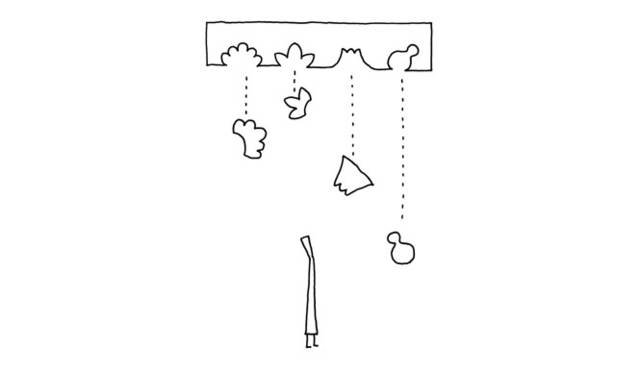
<strong>nendo</strong><br />"cs001 (Tokoname Ware)" Image sketch
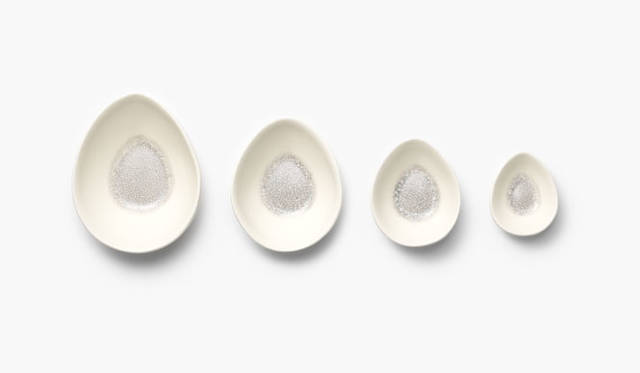
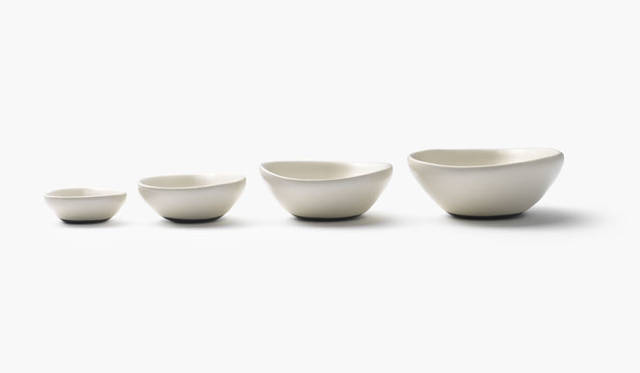
<strong>nendo</strong><br />"cs003 (Satsuma Ware)" Satsuma ware, originating from Kagoshima Prefecture during the era of Toyotomi Hideyoshi, is broadly divided into white Satsuma, characterized by luxurious paintings on a white base, and black Satsuma, which is simple and robust for daily use. This set of four vessels is white Satsuma, with a white base glazed to resemble the color and shape of an egg. The entire surface of the vessels features "kannyu," intentional cracks created by the difference in shrinkage between the clay body and glaze during firing. Pigment is applied to the kannyu at the bottom interior of the vessels, and by varying its concentration and spreading it, a black gradation is created from the white base. When stacked, the rims of the four vessels fit together seamlessly. Photographs by IWASAKI Hiroshi
<strong>nendo</strong><br />"cs003 (Satsuma Ware)"
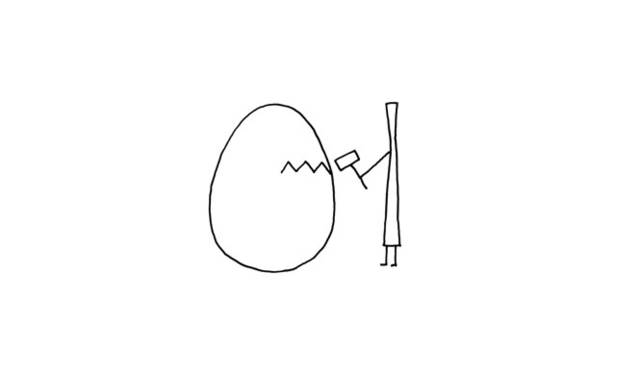
<strong>nendo</strong><br />"cs003 (Satsuma Ware)" Image sketch
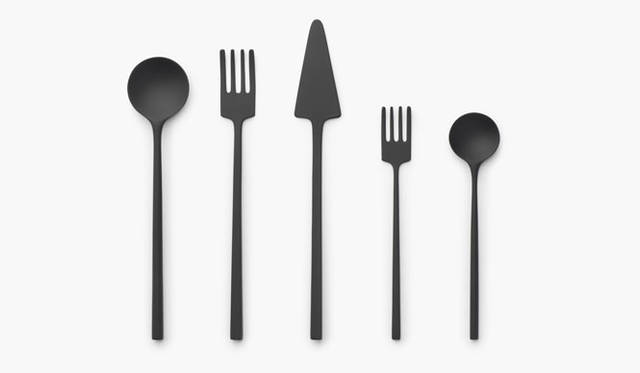
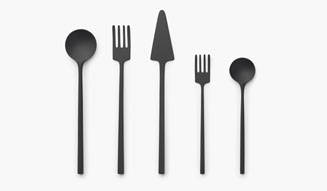
<strong>nendo</strong><br />"cs006 (Takaoka Copperware)" Takaoka City in Toyama Prefecture is a city of crafts with a history of about 400 years, and Takaoka copperware is one of its representative traditional crafts. The materials range widely from alloys such as iron, copper, tin, and bronze, to aluminum, and the processing techniques offer diverse expressions, enabling the creation of all kinds of cast products. These cutlery pieces are finished with urethane baked coating on aluminum, with abstract shapes of circles, squares, and triangles to emphasize texture, and the cross-sections of their handles are also circular, square, and triangular respectively. This allows them to be identified even when placed in a cutlery stand. Photographs by IWASAKI Hiroshi
<strong>nendo</strong><br />"cs006 (Takaoka Copperware)" Image sketch
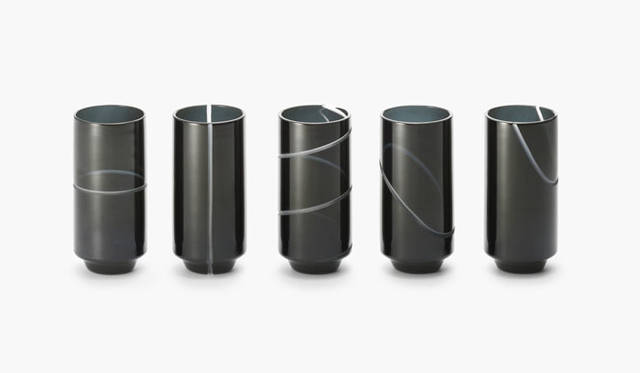
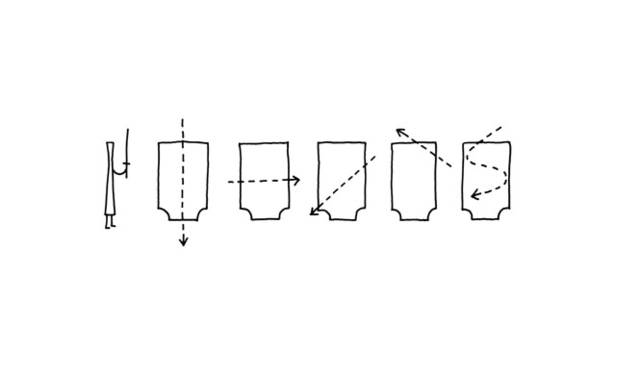
<strong>nendo</strong><br />"cs012 (Edo Kiriko)" Edo Kiriko, famous as a Tokyo specialty, originated in 1834. While Edo Kiriko is typically characterized by intricate cutting covering the surface of red or blue glasses, the beauty of a single cut is also notable. Simple cylindrical glasses made of transparent and black glass are given a single-stroke cut, creating variations such as single vertical or horizontal lines, or diagonal cuts forming spirals or parabolic curves. Looking into the glass reveals that the light entering through the cut sections of the black glass reflects internally, creating beautiful patterns. Photographs by IWASAKI Hiroshi
<strong>nendo</strong><br />"cs012 (Edo Kiriko)"
<strong>nendo</strong><br />"cs012 (Edo Kiriko)" Image sketch
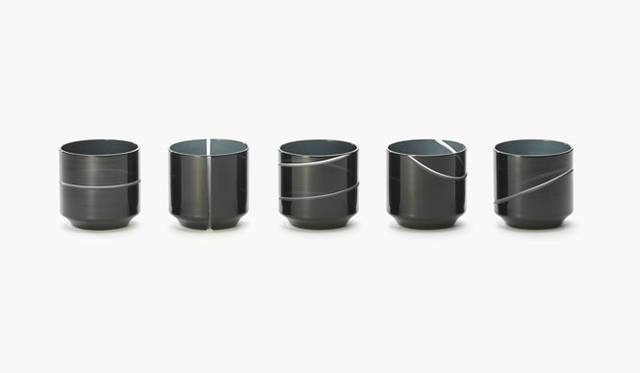
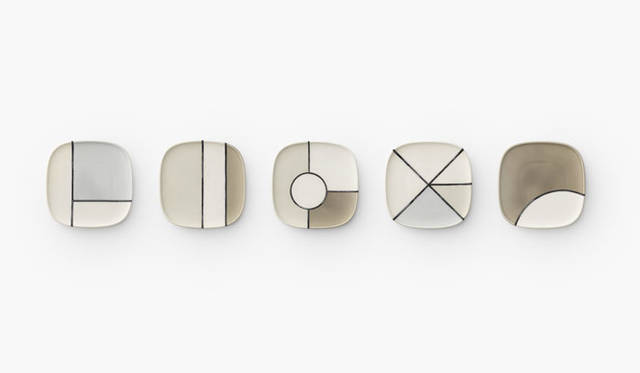
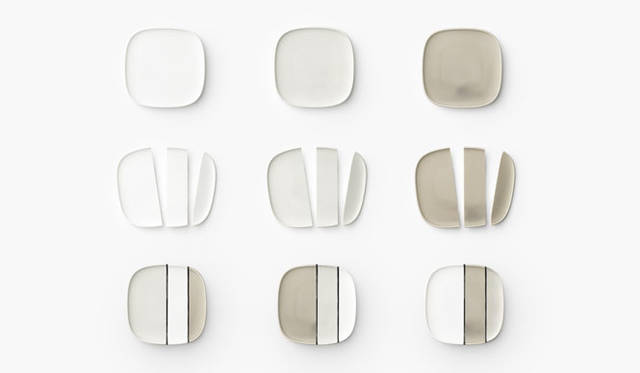
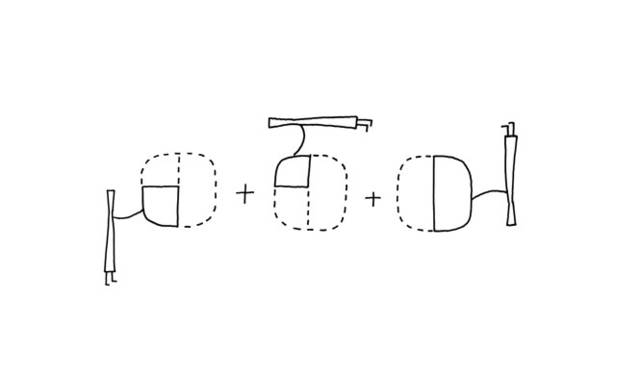
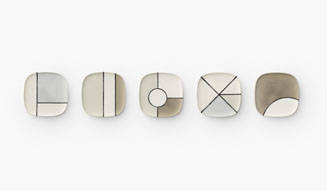
<strong>nendo</strong><br />"cs014 (Mino Ware)" Mino ware, with a history of over 1300 years, is primarily produced in the Tono region of Gifu Prefecture. By fusing the traditional technique of "kintsugi," which uses糊漆 (noritsuke-urushi, a type of lacquer) to repair broken pottery, with the skills of "contemporary masters" who supported Japan's high economic growth period after the war, three vessels of the exact same shape and color were cut and joined to be reborn as three plates with different patterns. After firing, the vessels are cut with a water jet at precise positions, sandblasted for joining, and finally repaired with lacquer. While traditional "kintsugi" involves applying gold powder over lacquer, this finish uses only black lacquer, creating a distinct aesthetic different from simply dividing the glaze colors. Photographs by IWASAKI Hiroshi
<strong>nendo</strong><br />"cs014 (Mino Ware)" Image sketch
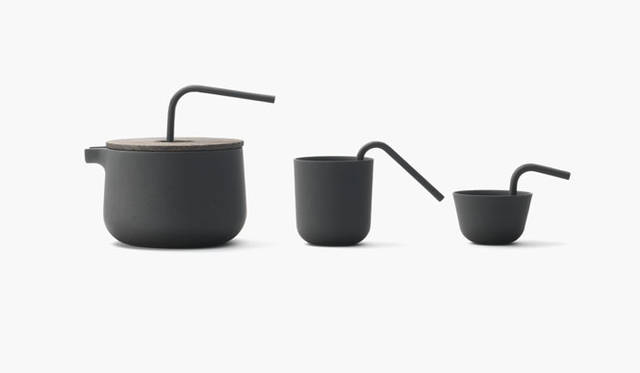
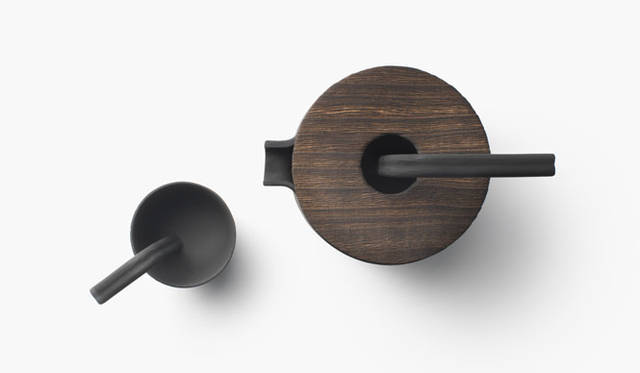
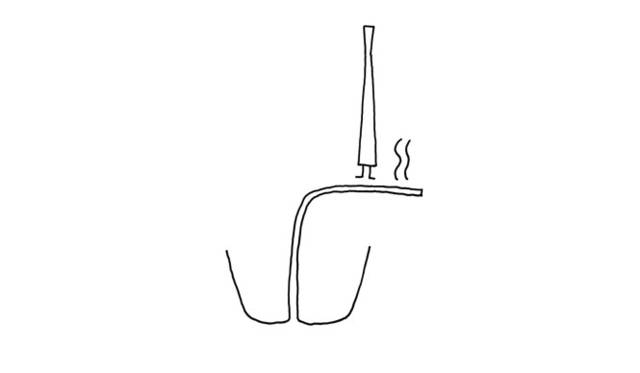
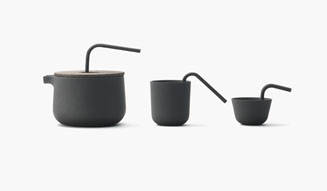
<strong>nendo</strong><br />"cs015 (Yamagata Cast Iron)" Yamagata cast iron, with roots tracing back to the mid-Heian period, was known nationwide since the Edo period for its delicate craftsmanship. Good thermal conductivity is a characteristic of metal. For this set of a teapot and cups made from this cast iron, tableware was designed where the handles extend from within the vessels, allowing the warmth of the drink to be felt by hand. While typically measures are taken to prevent heat from reaching the hand, such as combining with wood, this design reinterprets this characteristic as a positive attribute. Photographs by IWASAKI Hiroshi
<strong>nendo</strong><br />"cs015 (Yamagata Cast Iron)"
<strong>nendo</strong><br />"cs015 (Yamagata Cast Iron)" Image sketch
/

nendo Designs Gallery Space and 16 Products for the Japan Pavilion at the Milan Universal Exposition
Back to Article
  • Share
  • Tweet
TAG
  • DESIGN NEWS
BRAND
  • HOME
  • Gallery
  • Milan Expo 2015: Nendo Designs Gallery Space and 16 Products for the Japan Pavilion
TOP BRAND INDEX
Follow us
Get the latest information from OPENERS official account

Related Articles

Related Articles
New Home Collection from iittala × ISSEY MIYAKE | iittala × ISSEY MIYAKE Gallery

New Home Collection from iittala × ISSEY MIYAKE | iittala × ISSEY MIYAKE Gallery

 
Designs that consider the interrelationship between people and objects. New leather goods series | Craft Design Technology Gallery

Designs that consider the interrelationship between people and objects. New leather goods series | Craft Design Technology Gallery

 
New collection "Raami" by Jasper Morrison | littala Gallery

New collection "Raami" by Jasper Morrison | littala Gallery

 
Designer Akira Minagawa's Interpretation of the Masterpiece Lamp "TALIESIN®2" | YAMAGIWA Gallery

Designer Akira Minagawa's Interpretation of the Masterpiece Lamp "TALIESIN®2" | YAMAGIWA Gallery

 
PAGE TOP
Web Magazine OPENERS
  • Fashion
    • MEN
    • WOMEN
    • NEWS
    • COLLECTION
    • FEATURES
    • CELEBRITY SNAP
    • BRAND INDEX
  • Beauty
    • NEWS
    • MEN
    • FEATURES
    • THE EXPERTS
    • BRAND INDEX
  • Car
    • NEWS
    • FEATURES
    • MOTOR SHOW
    • LONG TERM REPORT
    • IMPRESSION
    • BRAND INDEX
  • Watch & Jewelry
    • WATCH NEWS
    • JEWELRY NEWS
    • FEATURES
    • SIHH&BASEL
    • BRAND INDEX
  • Design
    • FEATURES
    • INTERIOR
    • PRODUCT
    • ARCHITECTURE
    • DIGITAL
    • BRAND INDEX
  • Lounge
    • TRAVEL
    • EAT
    • MOVIE
    • ART
    • MUSIC
    • BOOK
    • FEATURES
  • News Board
  • Login
  • Company Profile
  • Site Policy
  • Privacy Policy
  • Advertising Inquiries
  • Feedback
  • Careers
  • 日本語
  • English
Unauthorized reproduction of articles and photographs published in web magazine "OPENERS" is prohibited. copyright 2006-2026 ContrappuntoNippon Inc.