Grand Seiko Mechanical High-Beat 36000 | Where Seiko's Mechanical Watches Are Born
Grand Seiko Mechanical High-Beat 36000|The Birthplace of Seiko's Mechanical Watches
The Birthplace of Seiko's Mechanical Watches
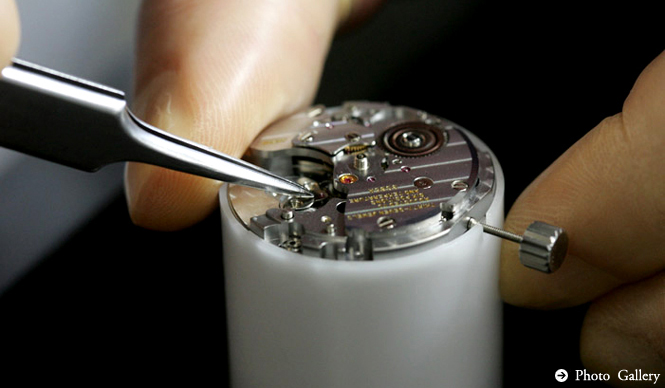
The 10-beat-per-second movement powering the Grand Seiko Mechanical High-Beat 36000. This Caliber 9S85 is born from Seiko's technology and craftsmanship at the Shizukuishi Watch Studio in Iwate Prefecture.
By Aki NagamiPhotos by Setsuko Nishikawa
Where the 10-Beat-Per-Second Movement is Born
The Grand Seiko Mechanical High-Beat 36000 was unveiled this year. Its 10-beat-per-second movement is crafted at Morioka Seiko Instruments Inc. (Morioka Seiko), located in the nature-rich Shizukuishi region, with views of Mount Iwate. Within this facility also lies the Shizukuishi Watch Studio, where mechanical movements are assembled by hand. This is, in essence, Japan's own manufacture.
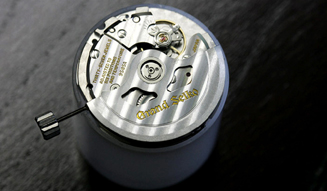
Caliber 9S85 complete movement. Grand Seiko standards require 17 days of measurement, during which work must proceed without interruption. Mr. Ohira commutes to the studio even during the harsh Iwate winters.
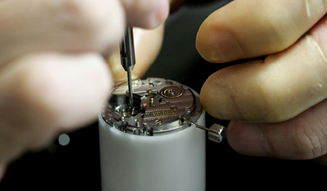
Assembly of the 10-beat model, Caliber 9S85.
Morioka Seiko handles everything from the primary processing, such as parts cutting on automatic lathes, blanking of the main plates, and CNC machining of the bridges, to secondary processing like cutting screw threads, polishing pivots, and cutting. This includes the mainspring and escape wheel used in the 10-beat-per-second Caliber 9S85. Morioka Seiko also serves as the foundation for Seiko's technological innovation, continuously improving its production lines.
The Shizukuishi Watch Studio: A Testament to Craftsmanship
If Morioka Seiko is responsible for "technology"—manufacturing parts and base movements—then the Shizukuishi Watch Studio within the same facility embodies "craftsmanship." Here, the assembly and casing of Grand Seiko and Credor movements are performed by hand. This is the domain of master watchmakers, the "Takumi" of Japan, such as Mr. Akira Ohira, a skilled technician who has dedicated many years to Seiko's mechanical watches.
Mr. Ohira joined the predecessor of Seiko Instruments Inc. (SII), Daini Seikosha, 39 years ago. When mechanical watches were revived and Seiko began exporting overseas in 1982, he contributed to Seiko's global expansion through an overseas assignment in Brazil. Today, he oversees the assembly of Seiko's flagship mechanical movements, including Grand Seiko, in Japan. He was also involved in the development of this new model.

Morioka Seiko Instruments Inc.
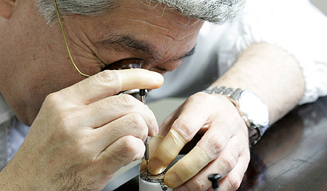
Mr. Akira Ohira performing assembly. He describes his state of mind during assembly not as concentration, but as a state of near- 무아 (muga) - self-forgetfulness.
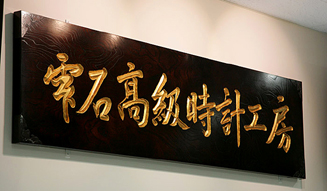
The entrance to the Shizukuishi Watch Studio.
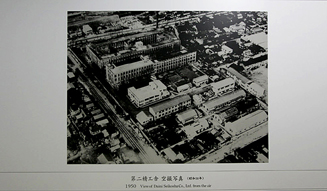
Daini Seikosha in the 1950s. It was located in Kameido, Tokyo at the time.
"This 10-beat model incorporates a new intermediate escape wheel, which proved the most challenging to assemble. With a 55-hour power reserve, it naturally takes more time. When the mainspring barrel changes, adjustments for isochronism and positional errors are necessary, making precision tuning difficult. Assembling just one 10-beat movement takes approximately 1.6 to 1.7 hours." Mr. Ohira speaks of the difficulties with a smile, emphasizing his desire for the finished product to be as exceptional as its components.
Mechanical Watches Born from Cross-Disciplinary Creation
Training the next generation is also one of Mr. Ohira's responsibilities. The Shizukuishi Watch Studio has about a dozen skilled technicians dedicated to assembly and adjustment, including many in their 40s and even their 20s. Mr. Ohira finds great significance in passing on his skills to the next generation.
"I teach with the mindset that anyone should be able to produce the same watch. The watch should not change simply because a different person assembled it. I want to nurture their strengths after they have mastered both assembly and adjustment."
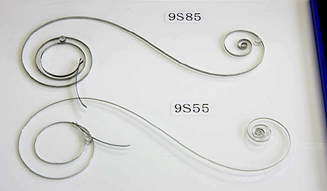
The mainspring of the 10-beat Caliber 9S85 (top). With a 55-hour power reserve, it is wider than that of the 8-beat Caliber 9S55 (bottom).
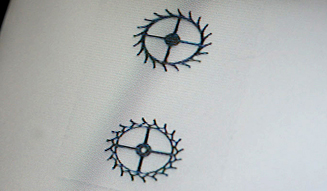
The conventional escape wheel (top). The escape wheel with a honeycomb structure created using MEMS (Micro Electro Mechanical Systems) technology (bottom). Its teeth have a stepped shape to retain lubrication.
Mr. Ohira is involved not only in the assembly of movements but also in the development of mechanical watches from the initial stages. He was involved in the design of the 9S series, born in 1998, and similarly for the Caliber 9S85. This deep involvement naturally leads to a strong sense of attachment, and he is particularly pleased with the positive reception of the 10-beat model. This cross-disciplinary approach is quintessentially Seiko, and the high-beat model seems to have deepened bonds among people. From technology to craftsmanship, and from high aspirations transcending generations—this small mechanical watch teaches us that manufacturing is never a solitary endeavor.
Seiko Watch
http://www.seiko-watch.co.jp