Part 2: The Bold Vision and Its Background, as Imbued by the Architect in the Hayek Center
The Second Installment: The Architect's Bold Vision for the Hayek Center, and What Lies Beneath
Bold Concepts and Their Underlying Stories
The "Nicolas G. Hayek Center" in Ginza, a new landmark, is a treasure trove of original ideas, from the "avenue" connecting the front and back streets to the "transporter" elevators that guide visitors from showrooms to boutiques. This time, we delve into its bold concepts and the stories behind them.
By Masaharu NabataPhotos by Swatch Group Japan
The Innovative Ideas of Shigeru Ban
The "Nicolas G. Hayek Center," Swatch Group's new base in Japan, has opened in Ginza, Tokyo.
Shigeru Ban, the acclaimed architect responsible for its design, explains his original ideas: an "avenue" connecting the front and back streets, and the "transporter"—seven showroom elevators that lead directly to boutiques.
Treating Seven Boutiques Equally
"Swatch Group wanted to house seven boutiques in this building. However, if each brand's boutique were on a separate floor, the prime location of the first floor would inevitably favor one brand."
"But I wanted all brands to be treated and presented equally. Logically, though, if all boutiques were concentrated on the first floor, it would become quite cramped, wouldn't it?"
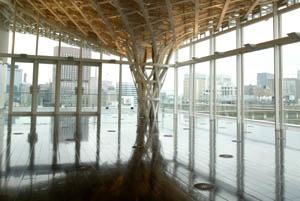
On the 14th floor is the multipurpose event space "Cité du Temps Ginza." "Cité du Temps" means "City of Time" in French. Swatch Group has a facility with the same name in Geneva.
"So, I decided to make the first floor a public 'street' connecting the front and back. Each brand's showroom would be located along this street. People can stroll along this street, enjoying the views of each brand's showroom."
"The key is that the showrooms themselves are hydraulic elevators. And if you want to see more of a particular brand's watches, you can simply press a button to go to the boutique."
A Small Park Built into the Wall
Another distinctive feature of this building is that one entire wall is covered in greenery.
"I wanted this space to be like a small park. There are no green, relaxing areas around this building."
"However, since there's no space for a garden on the ground floor, I decided to suspend the garden from the wall instead. Some parts will change with the seasons, such as planting red poinsettias for Christmas."
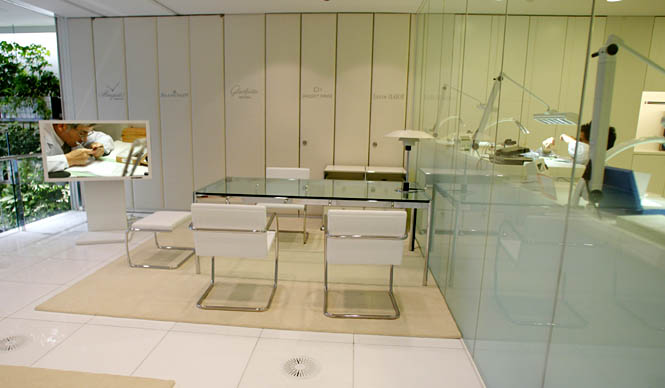
Floors 5 through 7 house the Swatch Group's customer service center for watch repairs and maintenance. Customers can also bring their watches here directly.
The "Nicolas G. Hayek Center," brought to life by Mr. Ban's surprising ideas, is now complete. But what about the mindset of the staff working there?
We spoke with Ryutaro Mizutani of Swatch Group Japan's Corporate Business Development.
"This building transforms the experience of strolling through Ginza. It's a spatial artwork that offers a surprising experience – that's what I believe the Nicolas G. Hayek Center is."
"It's a place that appeals to our senses and stirs our emotions. Japanese people are no longer surprised by new shopping malls, but this place should offer the 'surprise' that our hearts have lost."
"Therefore, I see this building itself as Chairman Hayek. When you think of it that way, it makes perfect sense. After all, he created a new street in Ginza, the showrooms move, and parking spaces emerge from the floor. It's truly astonishing! It really feels like Chairman Hayek."
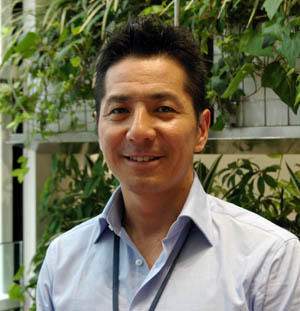
Ryutaro Mizutani of Swatch Group Japan's Corporate Business Development. "This place is not only technically fascinating with its mechanisms, but it also stirs people's emotions."
Website Access Triples!
According to Mr. Mizutani, after the opening of the Hayek Center, access to the Swatch Group's website tripled.
This is likely proof of how much the public is surprised and hopeful about the emergence of this new building.
Naturally, the seven boutiques located within are also receiving rave reviews. So, what kind of watches await us there?
Next time, we will focus on each individual boutique and explore their unique worlds.
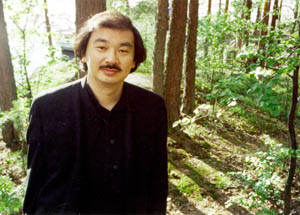
Shigeru Ban, the architect responsible for the design.
Born in Tokyo in 1957. Studied at the Southern California Institute of Architecture and worked in Arata Isozaki's studio. He became independent in 1985. He has received high acclaim both domestically and internationally for his innovative works, such as the Japan Pavilion at Expo 2000 Hanover.
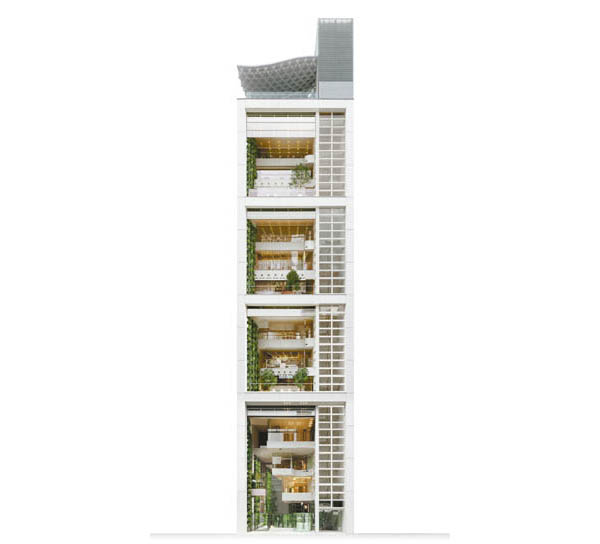
The "Nicolas G. Hayek Center," with its two basement levels and fourteen floors above ground. On the customer service floors, a semi-open terrace allows a refreshing breeze to pass through, a stark contrast to the bustling Ginza.