Hiroshi Fujiwara's latest album 'slumbers 2' release interview | MUSIC
MUSIC | Hiroshi Fujiwara's 'slumbers 2'
It's incredibly interesting when the melody and the words I want to say click together.
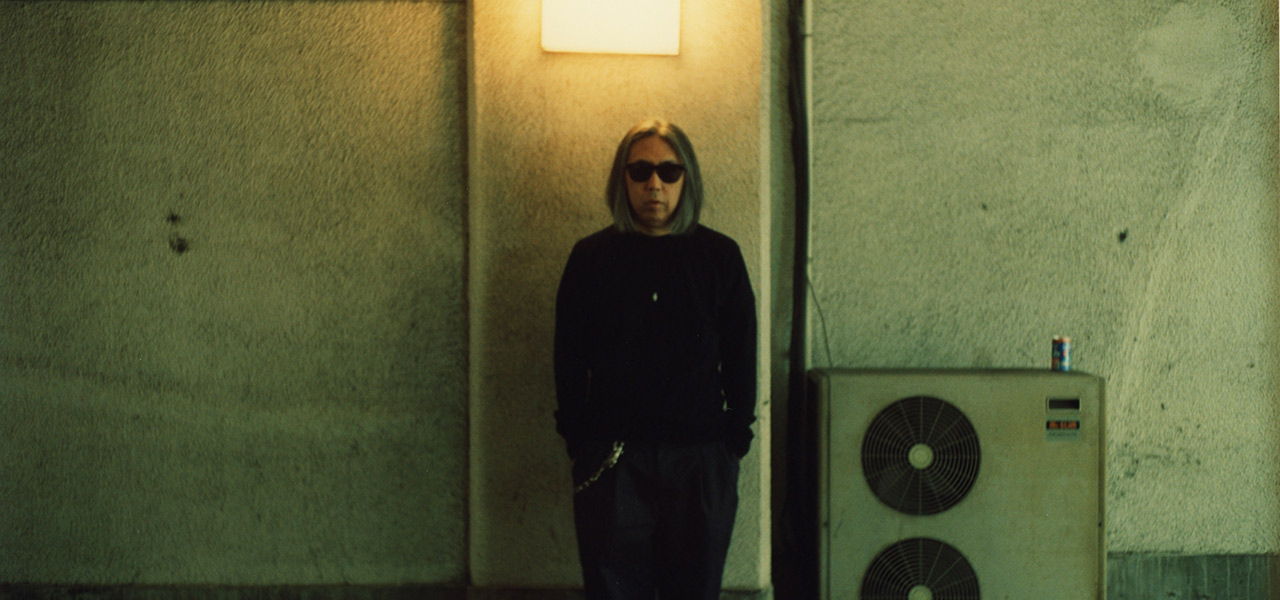
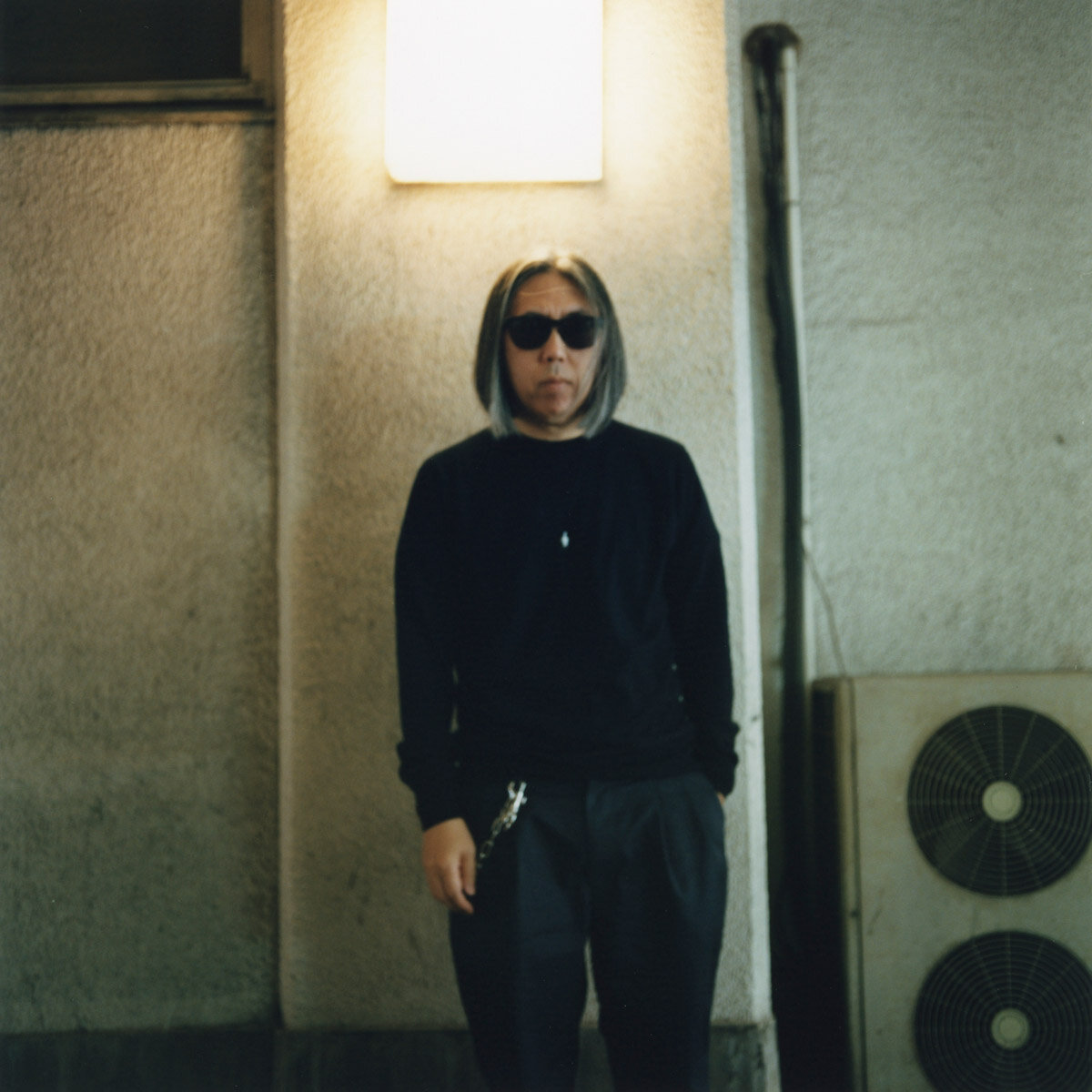
On his previous album, 'slumbers,' released by NF Records, the label run by Sakanaction, Hiroshi Fujiwara created good music with a pop, floating feel, while retaining his signature urban, mellow, and dubby elements. Three years later, 'slumbers 2' is complete, incorporating new disco and house approaches. We sat down with him in a bright, naturally lit hotel cafe lounge in Tokyo to discuss his new album, as well as what inspired him to make music and his thoughts on the creative process.
Text & Edit by TOMIYAMA Eizaburo | Photo by YAMASHITA Naoki
The title '2' came about naturally once it was finished.
—This is your first album in three years since 'slumbers.' Was the title 'slumbers 2,' a sequel, decided from the beginning?
FujiwaraAfter finishing 'slumbers,' I continued working on the songs I had started, and when it was finally done, the title '2' just felt right. It was a natural progression.
—When it comes to making music, do you work on it when you feel inspired and in the mood?
FujiwaraI approach it naturally, but I'm not doing it entirely alone. Producer Shunsuke Watanabe is involved in many parts, so I also have to consider his schedule.
—Shunsuke Watanabe has been collaborating with you since the previous album, and it seems your strengths complement each other. The way you land on refined tracks while incorporating pop elements was impressive.
FujiwaraHe brings my ideas to life perfectly and adds his own unique touch. He's constantly listening to current music and understands jazz, fusion, and classical music. There's a subtle chord progression, a signature of his style, that's beautifully reflected in the music.
—So, it's a collaborative process in music creation as well?
FujiwaraMany of the songs are like that. We often worked together in the studio to create them.
Mellow disco and city pop share a natural affinity.
—While the direction of 'slumber,' meaning 'to doze,' remains the same, the musical taste has evolved.
FujiwaraEarly in the album's creation, I made 'TERRITORY,' which became a disco-like lead track. So, I added some cool, somewhat detached house tracks like 'BERLIN,' which is about the Berlin Wall. It's a bit more disco-oriented than the previous album.
—The bassline in 'TERRITORY' is fantastic. Is that Hama Okamoto playing?
FujiwaraHama has been playing with my band for several years now. We've known each other for quite a while. He's also participated in other recordings, and he's truly remarkable. You can see him constantly growing.
—It was interesting how it developed into a city pop-like structure towards the chorus.
FujiwaraThe chorus melody was created, and I had a bassline I wanted to use. Based on that, Shunsuke built the track. But, city pop and mellow disco have always had a similar feel, haven't they?
—That's true. When it comes to music production, do you consider current trends?
FujiwaraWhile I don't follow them strictly, I do consider them important. However, my taste might be a bit niche. I like the recent city pop that's popular in places like Thailand, but I don't feel the urge to play that kind of music with live instruments myself. I've always naturally gravitated towards those kinds of chord progressions and mellow sounds.
—Were there periods when you listened to city pop, like the works of Tatsuro Yamashita?
FujiwaraI listened to Yuming, but I didn't listen to Tatsuro much. I only know a few songs now. I still don't listen to him much. The definition of city pop is vague; it was created back then influenced by American and international music. However, I do like the unique Japanese B-melodies, the distinctive melodies before the chorus, often called bridges. I think I've naturally incorporated that kind of structure in my work before.
Gota Yashiki taught me the joy of music production.
—Do you usually compose songs on the piano or guitar?
FujiwaraMelodies usually come to me as hums. In the past, I used to play melodies on the keyboard.
—When did you start playing instruments?
FujiwaraI could play guitar somewhat from around junior high school. For keyboards, I was forced to take Electone lessons as a child, so I knew basic chords. But I never took lessons after that and became able to play. I still can't read sheet music; I just play what I imagine or hear.
—In that case, who would you consider your mentor in music production?
FujiwaraWhen it comes to music production, it would be Gota Yashiki. When I produced Kyoko Koizumi's album 'No.17' (1990), I rented a room in London where Gota lived and stayed there for two months. Before that, I had never even considered 'making my own songs,' but he taught me how to do it, or rather, I learned from him. That's when I discovered the joy of it.
—Do you have anyone you consider a mentor for lyric writing?
FujiwaraI really started writing lyrics seriously when I began working with YO-KING (AOEQ). I feel like YO-KING taught me how to write lyrics. Since then, if I come up with a phrase I find interesting, I jot it down immediately. I construct them like a puzzle. It's incredibly fun and rewarding when the melody and the words I want to say fit together perfectly. Sometimes, that makes the rest of the process flow smoothly.
—The lyrics for 'PASTORAL ANARCHY' are quite political and message-driven.
FujiwaraIt means 'pastoral anarchy.' It's not my message, but rather about a specific place. It's in Monte Verità, in Ascona, Switzerland. When the Industrial Revolution gained momentum in Germany in 1890, anarchists, philosophers, psychologists, vegetarians, and artists created a commune there, rejecting modernization and seeking a more human way of life.
Today, it houses a museum and the original Bauhaus architecture where you can stay. Places like that, utopian in nature, are fascinating and somewhat aspirational. Despite being anarchist, the community within this utopia is incredibly peaceful. Although they are theoretically in conflict, they don't actually engage in disputes. It felt like the lyrics perfectly captured that atmosphere. I had always intended to write about that town someday.
I want people to appreciate the album as a cohesive work.
—Individually, the songs on 'slumbers 2' are quite diverse, but listening to the album as a whole changes the impression. The track order is excellent.
FujiwaraI think albums are often expected to have a unified sound. I also have the desire to create something like all mellow songs or all house tracks. But in the end, a variety of songs emerged... and I settled on a track order that emphasizes the flow. It wasn't a conscious decision to make it diverse. This has always been my approach, so I guess I like this style and will continue with it. Also, it was initially planned as a mini-album, but it expanded, and eventually became a full album.
—Does the fact that you perform live frequently influence the way songs are created?
FujiwaraThat might not be the main reason. However, I did want to be recognized for 'making serious music,' rather than just doing special projects. So, I'm glad it turned out to be a full album.
—An album as a complete work, that's the feeling, right?
FujiwaraThat would be the ideal outcome.
—But now, we live in an era of single tracks.
FujiwaraYes, so I can't really afford to think that way. There's no longer a need to release CD albums. But that's a new trend, and it's interesting how younger generations are embracing it. As an alternative, we created music videos for all the songs, which I think is a way younger artists approach things.
—Many of them are about one minute long, so creating a music video for every song was part of that strategy?
FujiwaraNowadays, the approach is to create a song, make a music video, and release it on YouTube. So, I'm glad we could convey that nuance. Personally, while I'm happy for people to listen to individual songs, I also want them to appreciate the album as an interesting body of work.
—ODDJOB produced all the music videos, and they all turned out great.
FujiwaraMost of the ideas were theirs. I didn't really have much input on the visuals, maybe just a suggestion like 'this one might be better.' But I was happy with all of them; they were all interesting. I'm truly grateful to SHINGO (ODDJOB representative).
Talking with Ichiro Yamaguchi (Sakanaction) always puts me in a more serious frame of mind.
—How do you usually listen to music?
FujiwaraI don't listen to much music at home, but I use Apple's HomePod. I still buy quite a few new CDs. If there are one or two songs I like, I'll try to listen to the whole album. Buying CDs is also about being able to use them on radio shows or mention them in magazine columns, and it's a way of 'paying for music,' a 'respect for the artist.' I feel at least I should pay for what I like. So, instead of streaming, I also download from the iTunes Store.
—So, it also has a donation aspect. You're currently with Sakanaction's label, 'NF Records,' and it's interesting that you're the only artist besides Sakanaction itself.
FujiwaraA big rookie. Always a rookie (laughs). I met Yamaguchi about four or five years ago through a friend for dinner. Since then, we occasionally go out for meals.
—Do you feel influenced or inspired by him?
FujiwaraVery much so, especially regarding lyrics. Yamaguchi's lyrics are incredibly well-crafted and profound; even though our styles are different, I can't imitate them. Also, his approach to music is almost too serious, so talking with him always makes me more focused. We don't collaborate on production, but when a song is finished, I want Yamaguchi to hear it. He also sends me demos, and we exchange opinions. He gives me advice too.
—This album includes a cover of 'Shin Takarajima.'
FujiwaraWe do a show together (FUJI-YAMA MID-NIGHT-FISHING), where I arrange Sakanaction songs and we jam. I had been doing a bossa nova-like arrangement of 'Shin Takarajima,' making it more mellow, but I felt embarrassed to include a Sakanaction bossa nova cover on the CD.
FujiwaraI was performing it, feeling embarrassed that it sounded like cafe music, but eventually, Shunsuke completely changed the backing track. Then, the two of us made it heavier and more dub-like, and it turned out really well in the end.
Music is where my true self is most revealed, and that's what makes it interesting.
—Now that 'slumbers 2' is released, do you hope a wide range of people will listen to it?
FujiwaraI don't have that strong a desire. Leading up to the release date, figuring out the packaging and when to release it to the media was very exciting. But once it's released, it belongs to everyone, so I don't particularly feel the need for everyone to listen to it.
—Is your stance more about creating music that you yourself want to listen to?
FujiwaraThat's a big part of it. I hope it turns out like music I would listen to. Personally, I hope that after months or years, when I look back and listen to it, I'll feel, 'It was good that I made this back then.' So, rather than 'I want everyone to listen,' I might have more of a desire for 'people who know my previous work to listen.' To see, 'Ah, this is what he's up to now,' or 'This is what he's doing.' Perhaps they might even think, 'He's grown.'
—Is that because, among your various endeavors, music is the most personal?
FujiwaraPerhaps so. Music might be the area where my true self is most revealed. And that's precisely why it's so interesting.
—And that's why you've continued to do it for so long.
FujiwaraI want to continue as much as possible. However, monetizing music is incredibly difficult these days. I'm fortunate that I'm doing well in other areas, so I can enjoy making music without worrying about the financial aspect. I'm grateful for that.
Hiroshi Fujiwara
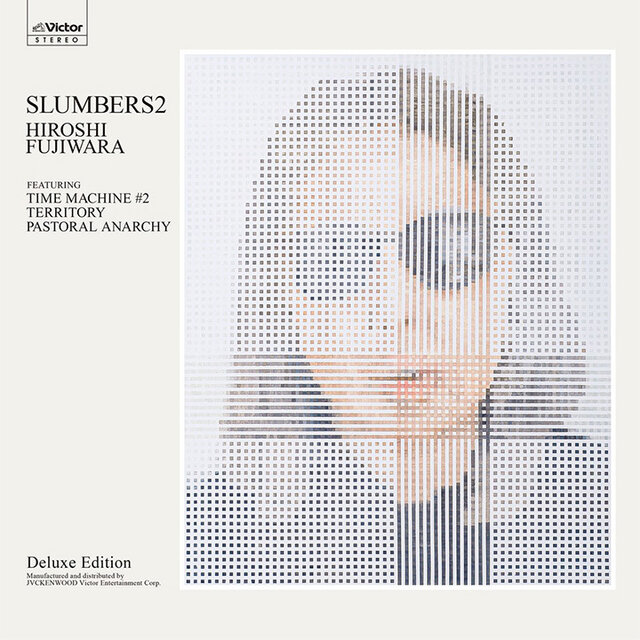
'slumbers 2'
This album features 10 tracks of world-class urban music, blending grooves that resonate with the thriving global alternative city pop, vaporwave, and neo-soul scenes with gentle, mellow tracks. It includes the先行配信 single 'TIME MACHINE,' created to commemorate the launch of '7 MONCLER FRAGMENT HIROSHI FUJIWARA,' which was featured in short films shown in cities worldwide, and the current worldwide single 'TERRITORY' from the same brand. Both are included for the first time here.
The limited deluxe edition includes a special album set featuring alternate and DUB versions of all the tracks. It also includes 'HARMONY,' created as the soundtrack for the short film 'HARMONY,' directed by Rinko Kawauchi for 'NOMA t.d.'s' 2019 Autumn/Winter collection. This is a special package with original art forms, limited to 2,500 sets.
Deluxe Edition¥9,000
(2CD-THE ORIGINAL ART FORM / Limited to 2,500 sets)
Simple Edition¥2,200
(1CD)