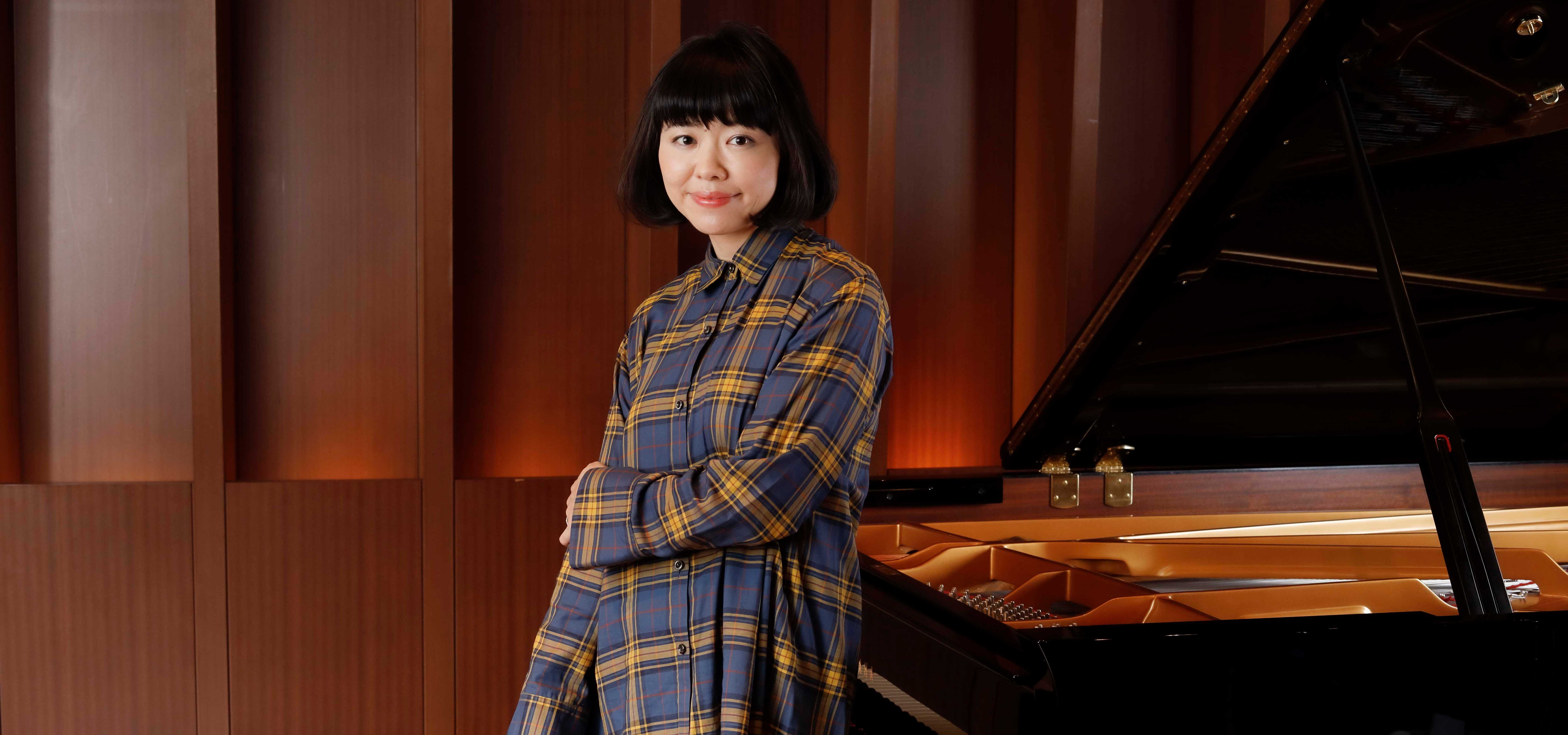
Pianist Hiromi Uehara Releases First Solo Album in 10 Years, "Spectrum" | MUSIC
MUSIC | Hiromi Uehara
Improvisation is 'Adventure.' Pianist Hiromi Uehara Invites You to a Colorful World of Tone (1)
I believe she is a wonderfully free spirit. When I listen to Hiromi Uehara's music, I can't help but feel that way. Her piano playing sounds so joyful. Despite the pressures and stresses that everyone in modern society carries, her music is played with such apparent delight. Therefore, her new album 'Spectrum' is a prescription for modern people starved of 'freedom.' It's a potent, auditory remedy.
Photographs by OHTAKI Kaku | Text by TSUCHIDA Takashi
Why do truly authentic people become so? Perhaps it's because they are recognized by other authentic individuals. Music is music. Design is design. Photography is photography. While 'birds of a feather flock together' sounds superficial, there's an intuitive connection between them. It was in this way that she resonated with the great Chick Corea.
This wasn't due to luck. Even if Chick Corea hadn't taken notice, she would have been discovered by other great artists sooner or later. Hiromi Uehara's music is simply too remarkable to overlook. Why?
This wasn't due to luck. Even if Chick Corea hadn't taken notice, she would have been discovered by other great artists sooner or later. Hiromi Uehara's music is simply too remarkable to overlook. Why?
***
—In 2016, your album reached number one on the US charts, and you've garnered global attention. How do you perceive this?
UeharaCompared to when I first debuted, the audience coming to my shows has grown significantly. In that sense, it feels almost unbelievable, yet it's a reality.
—This is your first solo album in 10 years. What led to this decade-long interval?
UeharaI had wanted to release a solo piano album at least once every ten years as a pristine record of my piano playing. Before I knew it, ten years had passed, and it ended up being exactly one album per decade (laughs).
—What do you mean by a 'pristine record'?
UeharaAn album where every nuance of the piano sound can be heard from beginning to end. I feel that a solo performance offers the ultimate setting for a pianist. It's about leaving a record of myself.
—The title of this album, 'Spectrum,' is interesting because it's a color term for music. You're using a visual metaphor for something that relies on hearing.
UeharaI've felt a close connection between 'sound' and 'color' since I was very young. My piano teacher back then would color the sheet music with colored pencils. Intense passages were colored red, and sad parts were colored blue.
I've been playing the piano for 34 years, and the more I play, the more I feel my range of tones expanding. It's like adding more gradations to my palette. For example, a blue might become a deep blue or a dark blue.
—As I'm taking notes, I just realized that the Japanese word for 'tone' (音色, onshoku) literally includes the character for 'color' (色, iro). I'm struck by this realization about the Japanese language.
UeharaThat's right. It's written as 'onshoku,' meaning tone color.
UeharaCompared to when I first debuted, the audience coming to my shows has grown significantly. In that sense, it feels almost unbelievable, yet it's a reality.
—This is your first solo album in 10 years. What led to this decade-long interval?
UeharaI had wanted to release a solo piano album at least once every ten years as a pristine record of my piano playing. Before I knew it, ten years had passed, and it ended up being exactly one album per decade (laughs).
—What do you mean by a 'pristine record'?
UeharaAn album where every nuance of the piano sound can be heard from beginning to end. I feel that a solo performance offers the ultimate setting for a pianist. It's about leaving a record of myself.
—The title of this album, 'Spectrum,' is interesting because it's a color term for music. You're using a visual metaphor for something that relies on hearing.
UeharaI've felt a close connection between 'sound' and 'color' since I was very young. My piano teacher back then would color the sheet music with colored pencils. Intense passages were colored red, and sad parts were colored blue.
I've been playing the piano for 34 years, and the more I play, the more I feel my range of tones expanding. It's like adding more gradations to my palette. For example, a blue might become a deep blue or a dark blue.
—As I'm taking notes, I just realized that the Japanese word for 'tone' (音色, onshoku) literally includes the character for 'color' (色, iro). I'm struck by this realization about the Japanese language.
UeharaThat's right. It's written as 'onshoku,' meaning tone color.
—What do you find enjoyable about music, and specifically about jazz?
UeharaI simply love the piano as an instrument. Every time I play, I discover something new. And I love improvisation. It's incredibly thrilling to translate what I feel in the moment into sound.
—Thrilling? Is it thrilling because you make discoveries during improvisation?
UeharaYes. Because I don't know where the music will go until I start playing, it feels like an adventure.
—I heard that your encounter with jazz began when you saw records at your piano teacher's house. How did you become so immersed in jazz after that?
UeharaI never decided to become a jazz pianist, and I don't particularly feel that way now. However, when I was eight years old, I heard Erroll Garner and Oscar Peterson, and I felt that it was 'incredibly free music and incredibly fun.' From then on, I started listening to various jazz records.
Even then, I listened to all kinds of music, not just jazz. But what truly captured my heart was the improvisational aspect, I believe.
UeharaI simply love the piano as an instrument. Every time I play, I discover something new. And I love improvisation. It's incredibly thrilling to translate what I feel in the moment into sound.
—Thrilling? Is it thrilling because you make discoveries during improvisation?
UeharaYes. Because I don't know where the music will go until I start playing, it feels like an adventure.
—I heard that your encounter with jazz began when you saw records at your piano teacher's house. How did you become so immersed in jazz after that?
UeharaI never decided to become a jazz pianist, and I don't particularly feel that way now. However, when I was eight years old, I heard Erroll Garner and Oscar Peterson, and I felt that it was 'incredibly free music and incredibly fun.' From then on, I started listening to various jazz records.
Even then, I listened to all kinds of music, not just jazz. But what truly captured my heart was the improvisational aspect, I believe.
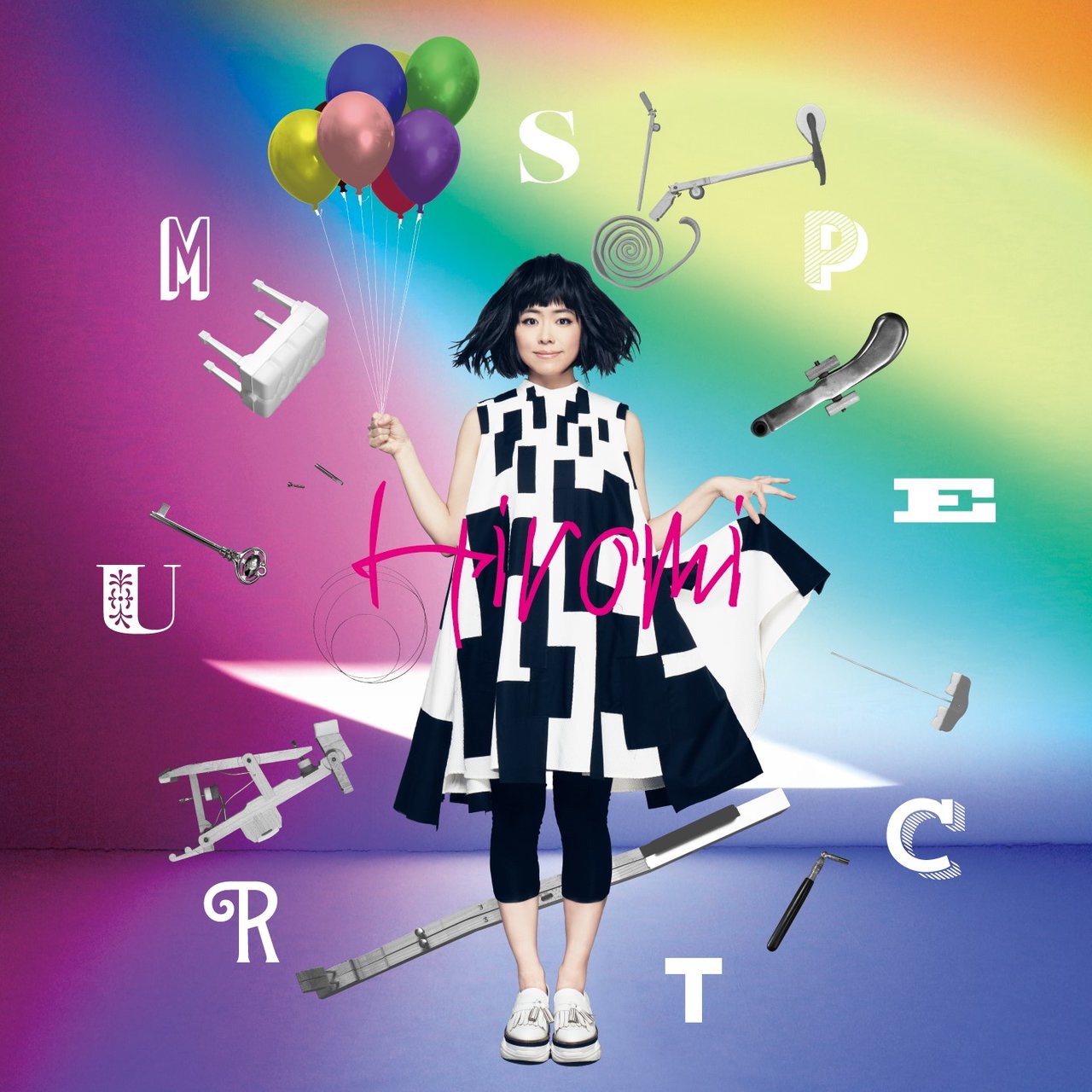
1. Kaleidoscope | 2. Whiteout | 3. Yellow Wurlitzer Blues | 4. Spectrum | 5. Blackbird | 6. Mr. C.C. | 7. Once in a Blue Moon | 8. Rhapsody in Various Shades of Blue | 9. Sepia Effect
MUSIC | Hiromi Uehara
Improvisation is 'Adventure.' Pianist Hiromi Uehara Invites You to a Colorful World of Tone (2)
—OPENERS is not solely a music publication, so some readers might find jazz a bit intimidating. Could you offer some advice on how to approach it?
UeharaMany people might think improvisation is difficult, but 'improvisation' is something we all do in our daily lives. Everything we do in life, whom we meet, what we talk about – it's all improvisation. I believe that.
Thinking, 'What shall we talk about today?' or 'What will this person share?' and then doing that through music – coming to hear that conversation is what a concert is. So, you can come with the mindset of, 'I wonder what kind of conversation they'll have today?' It's just that in jazz, this improvisation happens through sound instead of words.
—I see. And how does that translate when you apply it to the 'solo' performance style?
UeharaIt becomes a dialogue with myself. It's like weaving my own words.
—Your music conveys a sense of freedom and expansion within interplay. I feel a similar sense of expansion in this solo album. What do you hope listeners take away from this album?
UeharaI would be happy if it conveys the charm and potential of the piano. I was delighted when someone told me after my last solo album, 10 years ago, that it made them want to play the piano again. So, I hope this album can also be an inspiration for people to connect with the piano.
UeharaMany people might think improvisation is difficult, but 'improvisation' is something we all do in our daily lives. Everything we do in life, whom we meet, what we talk about – it's all improvisation. I believe that.
Thinking, 'What shall we talk about today?' or 'What will this person share?' and then doing that through music – coming to hear that conversation is what a concert is. So, you can come with the mindset of, 'I wonder what kind of conversation they'll have today?' It's just that in jazz, this improvisation happens through sound instead of words.
—I see. And how does that translate when you apply it to the 'solo' performance style?
UeharaIt becomes a dialogue with myself. It's like weaving my own words.
—Your music conveys a sense of freedom and expansion within interplay. I feel a similar sense of expansion in this solo album. What do you hope listeners take away from this album?
UeharaI would be happy if it conveys the charm and potential of the piano. I was delighted when someone told me after my last solo album, 10 years ago, that it made them want to play the piano again. So, I hope this album can also be an inspiration for people to connect with the piano.
—Why do you love the piano so much?
UeharaThere's no more enjoyable instrument. The more I play, the more I discover things I can't yet do (laughs), which is a strange thing, but it makes me want to play even more.
—What are your aspirations for the upcoming tour?
UeharaTo live fully in each moment, in each place. Playing in that space is synonymous with living.
It's about capturing that instant. Nothing is ever the same from one day to the next, so I cherish each moment. I'm also looking forward to seeing what emerges from the accumulation of these experiences.
—Is it a sense of embarking on an auditory adventure with the audience, sharing a space together? Yet, you've been playing the piano almost daily for years; is there still room for adventure? Haven't you explored it all?
UeharaNo, the more I play, the more opportunities arise, and there's an adventure for every live performance. That's what makes it enjoyable.
—What goes through your mind during improvisation?
UeharaI focus on the sound. I think about what kind of sound I want to hear next, what I want to play. It's about discovering what sound needs to exist in that moment.
—That certainly sounds thrilling. But aren't you afraid of moments when nothing comes?
UeharaI don't feel fear, but it's lonely when nothing emerges (laughs).
—Perhaps the unpredictability is part of the appeal. By the way, what's the difference between recording and performing live?
UeharaFundamentally, there's no difference. Even during recording, I feel like I'm performing live for the people present in the studio.
However, live performances have no 'take two.' The moment a note is played, it becomes the past, constantly updated. Once the concert ends, it all becomes history, possessing a highly ephemeral quality. An album, on the other hand, is something that endures. So, I feel I'm creating a lasting work by delivering my best performance at that moment.
UeharaThere's no more enjoyable instrument. The more I play, the more I discover things I can't yet do (laughs), which is a strange thing, but it makes me want to play even more.
—What are your aspirations for the upcoming tour?
UeharaTo live fully in each moment, in each place. Playing in that space is synonymous with living.
It's about capturing that instant. Nothing is ever the same from one day to the next, so I cherish each moment. I'm also looking forward to seeing what emerges from the accumulation of these experiences.
—Is it a sense of embarking on an auditory adventure with the audience, sharing a space together? Yet, you've been playing the piano almost daily for years; is there still room for adventure? Haven't you explored it all?
UeharaNo, the more I play, the more opportunities arise, and there's an adventure for every live performance. That's what makes it enjoyable.
—What goes through your mind during improvisation?
UeharaI focus on the sound. I think about what kind of sound I want to hear next, what I want to play. It's about discovering what sound needs to exist in that moment.
—That certainly sounds thrilling. But aren't you afraid of moments when nothing comes?
UeharaI don't feel fear, but it's lonely when nothing emerges (laughs).
—Perhaps the unpredictability is part of the appeal. By the way, what's the difference between recording and performing live?
UeharaFundamentally, there's no difference. Even during recording, I feel like I'm performing live for the people present in the studio.
However, live performances have no 'take two.' The moment a note is played, it becomes the past, constantly updated. Once the concert ends, it all becomes history, possessing a highly ephemeral quality. An album, on the other hand, is something that endures. So, I feel I'm creating a lasting work by delivering my best performance at that moment.
***
Hiromi Uehara is a truly sincere person. She is honest in her self-reflection, enjoying music without pretense or affectation. She is essential. She possesses her own convictions, unswayed by others' opinions. I believe that is the answer. Freedom is attained by being true to oneself, by having values independent of others. Freedom is something you earn, not something given by others.
In 2016, Hiromi Uehara's "SPARK" with The Trio Project topped the US jazz charts. In 2017, she released "Live in Montreal," a recording of an electrifying performance with harpist Edmar Castañeda at the Montreal International Jazz Festival, and her performance at the BBC Proms received rave reviews. Hiromi Uehara continues her global activities. While she herself states her music isn't limited to jazz, I believe the coolness of a jazz musician lies in their way of life. And that way of life is reflected in their sound. To me, Hiromi Uehara's tones sound like a 'symbol of freedom.'
Her new album 'Spectrum' is highly recommended as a remedy for modern individuals who are somewhat starved of 'freedom.' Furthermore, Hiromi Uehara is currently on an international tour. Upon its completion, the JAPAN TOUR 2019 will commence. For details, please visit here (http://www.hiromiuehara.com/s/y01/page/live?ima=0928).
In 2016, Hiromi Uehara's "SPARK" with The Trio Project topped the US jazz charts. In 2017, she released "Live in Montreal," a recording of an electrifying performance with harpist Edmar Castañeda at the Montreal International Jazz Festival, and her performance at the BBC Proms received rave reviews. Hiromi Uehara continues her global activities. While she herself states her music isn't limited to jazz, I believe the coolness of a jazz musician lies in their way of life. And that way of life is reflected in their sound. To me, Hiromi Uehara's tones sound like a 'symbol of freedom.'
Her new album 'Spectrum' is highly recommended as a remedy for modern individuals who are somewhat starved of 'freedom.' Furthermore, Hiromi Uehara is currently on an international tour. Upon its completion, the JAPAN TOUR 2019 will commence. For details, please visit here (http://www.hiromiuehara.com/s/y01/page/live?ima=0928).
Contact
Universal Classics & Jazz
Tel. 03-4586-2341
https://www.universal-music.co.jp/jazz/