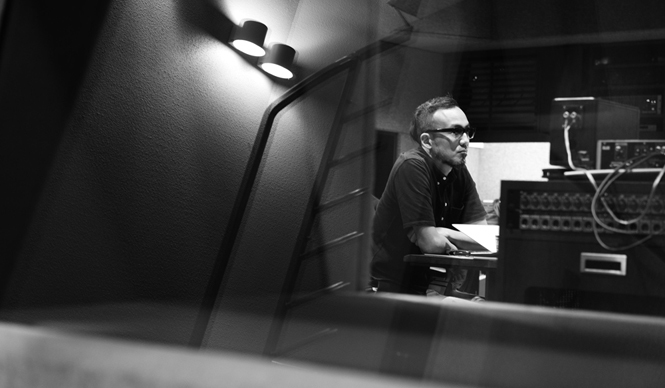
INTERVIEW|Toshio Matsuura Presents HEX|World-Class Minimal Jazz (Part 1)
INTERVIEW|From Tokyo to the World
What is the project “HEX” from the venerable label Blue Note?
Minimal Jazz on a Global Standard (Part 1)
In 2014, jazz label Blue Note, celebrating its 75th anniversary, launched a project“Toshio Matsuura presents HEX”at its core. The project features Toshio Matsuura, who has achieved global success as part of U.F.O. and as a DJ.Toshio MatsuuraJoining him are the prodigious keyboardist Kan Sawano, adept at both electronic music and live performance; Midorin, drummer for SOIL&"PIMP"SESSIONS; jazz pianist Yoshihiro Ito; and craftsman bassist Katsutoshi Koizumi. With zAk on engineering, this stellar lineup presents a new sound from Blue Note, aimed at the world from Tokyo. Matsuura spoke to us about the project and its sound.
Interview & Text by NAGIRA Mitsutaka
Photographs by Mari Amita
—The Birth of HEX
Searching for Sound Beyond the Present (Part 1)
—The Four Members Weaving HEX
Searching for Sound Beyond the Present (Part 2)
Searching for Sound Beyond the Present (Part 1)
—The Four Members Weaving HEX
Searching for Sound Beyond the Present (Part 2)
“Sound That Still Feels Like Jazz After Stripping Everything Away”
—The album features covers of two Blue Note tracks, “The Tokyo Blues” (※1) and “Hello To The Wind” (※2), along with “Succotash” (※3), which served as the motif for “Sweet for the Visionary.” However, the overall sound seems quite distant from Blue Note’s past recordings. Could you tell us about your intention in selecting these three songs?
Toshio Matsuura (hereinafter Matsuura)First and foremost, I didn’t want to do something that sounded the same as Blue Note’s past work. Also, I felt that sampling and reconstructing, like US3 did in the past, was a method from the 1990s. While I’ve been greatly influenced by Blue Note, I approached this project by first forgetting the Blue Note image and focusing on what I could do on the Blue Note stage. That was my primary goal.
—Could you tell us about your intention in selecting these three songs?
MatsuuraI had always intended to do “Tokyo Blues,” but the other two songs were decided after listening to them again for this project. When I revisited Blue Note’s discography, I started with songs I used to play or listen to often, but I began to feel that perhaps they belonged to that era. They didn’t seem to fit the current times. So, I stopped listening chronologically and started listening more intuitively, and these two songs caught my attention. Just as I chose songs that fit the mood of the 90s back then, these two songs felt like they captured the current atmosphere. Whether it’s the atmosphere of the world or my own internal atmosphere, I’m not sure, but these were the songs that fit.
—Indeed, these two songs have a contemporary feel. For instance, the minimalism in “Succotash” conveys that.
MatsuuraFor the past decade, I felt that melody and the abundance of notes have been emphasized. I wanted to do the opposite.
My belief was that the key to this work would be whether it could still be perceived as “jazz” even after stripping away elements. I repeatedly told the musicians that I wanted to reduce the number of notes. I asked them to aim for 3 or 5 where they might normally express 10. I believe the HEX sound is a result of each musician interpreting that request in their own way.
—Did you decide on the concept of stripping down the sound before selecting the members?
MatsuuraI knew that if I were to do it, it would involve stripping down the sound. I also had an image that by making it minimal, the sound perceived by the listener would become universally understood.
When choosing the members, rather than thinking about this specific project, it’s easiest to say that I gathered people I had long envisioned working with on various endeavors. The selection was also made with the expectation that they could deliver minimal expressions.
—For example, it seems unusual for Yoshihiro Ito to play in a minimal style. Did you discover a new side of him through this project?
MatsuuraOn his album “Visionnaire,” released this year, I caught a glimpse of his emotional side, and hearing that made me think he could also fit into a minimal expression.
In fact, on set, I repeatedly asked him to “strip it down further,” and we managed to reduce it considerably. He expresses himself through playing, so I kept telling him to turn 10 into 3, and I think we ended up around 5.
—Personally, I get the impression of jazz responding to minimal sounds, similar to Portico Quartet or Moritz von Oswald Trio.
MatsuuraI’m glad it turned out that way, allowing for such an impression. Perhaps that’s what captivated Gilles Peterson. While there have been minimal jazz sounds before, I don’t think jazz musicians have often explored minimal expression themselves.
※1Included on Horace Silver's “Tokyo Blues”
※2Included on Bobby Hutcherson's “Now”
※3Included on Herbie Hancock's “Inventions & Dimensions”
INTERVIEW|From Tokyo to the World
What is the project “HEX” from the venerable label Blue Note?
Minimal Jazz on a Global Standard (Part 1-2)
“A Chance to Make Music Beyond Sampling”
—Member Introduction on OPENERSMidorin was the first name mentioned, wasn’t he?
MatsuuraI was captivated by SOIL&"PIMP"SESSIONS' (hereinafter SOIL) beatdown-style playing at the John Coltrane tribute live event two years ago. I even told them, 'You could make an album out of this!' At that time, I found a freshness in Midorin's drumming outside of SOIL's usual fast, upright beats, and I felt he was driving the groove. So, I thought there might be something we could do featuring him.
—When Midorin plays 4-beat, funk beats, and breakbeats, he understands not only the structure but also the musical meaning and context. That’s why I believe he’s a drummer who can connect them.
MatsuuraHe listens to a wide variety of music, not just as a player but also as a listener. His strength lies in his ability to output music with an understanding of its musical meaning and context, including his own knowledge.
In any case, I felt I had exhausted the possibilities of making music through sampling during my 12 years with U.F.O., and that there was nothing more I could do in that realm. That’s why there was such a long gap. I felt I had two options: either create music through programming myself or collaborate with musicians.
It was at this time that I was offered this project, so I saw it as a perfect opportunity. It was a chance to celebrate the 75th anniversary and also to bring my long-held ideas to fruition. My first meeting was with Midorin.
I played him a few existing tracks, DJ-style, and suggested combining them, thinking it might be interesting. He immediately responded with, 'I see. It’s kind of like ~,' so I felt I didn’t need to explain further. Even though nothing had started yet, it was the moment I was convinced that something good would come of it.
—Listening to you, it seems Midorin could be described as existing between a DJ and a musician.
MatsuuraMidorin was more than that; he became the bridge between me and the other members as a musician. Kan Sawano, who handled the programming, also acted as an interpreter. So, those two were instrumental in bringing everything together internally.
—You mentioned playing him the prepared tracks and conveying your intentions. Could you give us an idea of what kind of music those were?
MatsuuraI played a wide range of music, including various types of jazz, as well as minimal techno, dub, and ambient genres. Ultimately, I felt that if I played jazz to jazz musicians, it would only result in jazz. So, I focused on having them listen to completely different genres and then conveying my intention, like, 'I feel a jazz sensibility here.'
—So, it was a process of expanding their inspiration from things that weren't jazz?
MatsuuraYes. I deliberately had them listen to many things that I thought they might not be familiar with. It was about making sounds that would connect what was there to something else, to the next sound.
—Something that comes out by chance can be interesting.
To Minimal Jazz on a Global Standard (Part 2)
To Minimal Jazz on a Global Standard (Part 2)
Toshio Matsuura presents HEX
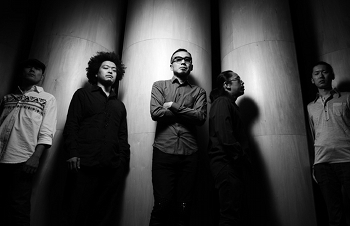
A project from the venerable jazz label Blue Note, celebrating its 75th anniversary in 2014. Leading the charge is Toshio Matsuura, who has been at the forefront of Japan's club scene since the early 1990s, championing jazz as danceable music worldwide. The lineup includes next-generation keyboardist Kan Sawano, SOIL&"PIMP"SESSIONS drummer Midorin, pianist Yoshihiro Ito—known for his work from jazz to film scores—and bassist Katsutoshi Koizumi, who commands immense trust from fellow musicians. With zAk on engineering, HEX, named after the hexagon, aims to transmit “present-day jazz” from Tokyo to the world.
“HEX”
¥2,835 (TYCJ-60019)
Blue Note / Universal
Now on Sale
http://www.hex-music.com/
http://www.universal-music.co.jp/hex/
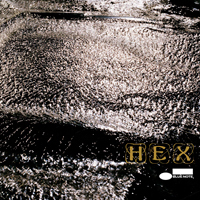
01. Jazzstep
02. Sweet for the Visionary
03. Uncensored Love Transmission
04. Hello to the Wind feat. Gray Reverend
05. Osaka Blues feat. Yoshie Nakano (EGO-WRAPPIN')
06. Dahshur Waltz
07. Tropicalia 14
08. Tokyo Blues feat. Ed Motta