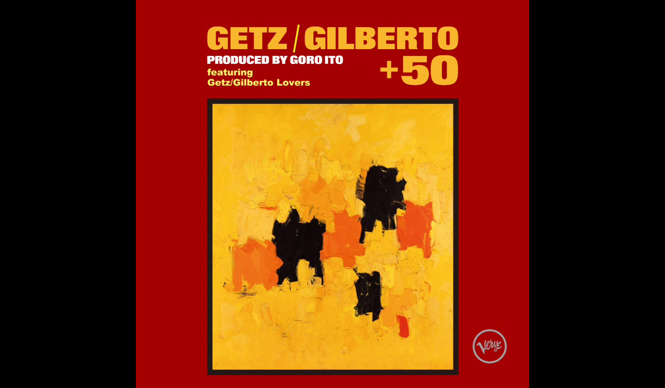
MUSIC | Nels Cline's 'Getz/Gilberto +50' Explained
MUSIC | A Timeless Bossa Nova Masterpiece Reimagined by Esteemed Musicians
Naruyoshi Kikuchi's Commentary on 'Getz/Gilberto +50' - Part 1
In 1963, jazz saxophonist Stan Getz met Brazil's João Gilberto and Antônio Carlos Jobim, resulting in the recording of the album 'Getz/Gilberto.' Fifty years have passed since the creation of this enduring bossa nova masterpiece. Now, centered around Goro Ito, a guitarist directly descended from João Gilberto's lineage, a stellar ensemble of 19 musicians—including Ryuichi Sakamoto, Haruomi Hosono, Asako Toki, Kahimi Karie, TOKU, Jaques Morelenbaum, Masato Suzuki, and Tsutomu Kurihara—have lovingly covered the album as 'Getz/Gilberto +50,' released on Wednesday, June 19th.
We present a commentary on this work, featuring tenor saxophonist Naruyoshi Kikuchi.
Text by KIKUCHI Naruyoshi
More Than Just an Anniversary Project
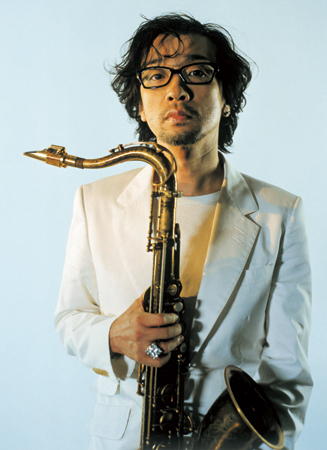
Naruyoshi Kikuchi
While I am well aware that commentary is unnecessary for a work that not only feels truly wonderful but also seems to bring a close to the nearly 60-year history of "J-Bossa history," or perhaps even "all of bossa nova history," I will proceed to scatter some rambling thoughts.
At first glance, "Xth Anniversary" projects might seem easily conceived (and if a "60th Anniversary of Bossa Nova's Birth = 60th Anniversary of 'Chega de Saudade' Release" project were organized in five years, it's highly probable it wouldn't surpass this work), but this album is a masterpiece that will likely leave its mark even on "Xth Anniversary histories." I can only marvel at how this incredibly auspicious project, with all the pieces perfectly in place, has come to fruition. The very first thing I must state is that I am truly honored and delighted to have been able to participate.
Goro Ito took the lead in this endeavor. This year also marks, perhaps a bit contrivedly, "50 years since The Beatles began to move the world" (their UK debut was in '62, they hit number one in the US and gained global fame in '64, making the intervening years a time when "the timing was ripe" and "gas was accumulating"). This achievement can be attributed to Ito, whose rare persona as a serious dual-threat in both British rock and bossa nova makes him uniquely capable.
A project like "Getz/Gilberto 50th Anniversary" might have been managed by someone who was solely a bossa nova expert or a jazz expert. However, I believe that without Ito, it would not have been a complete success.
The Most Contentious and Class-Struggle-Ridden Album in Bossa Nova History
To frame it as "bossa nova history" or "Brazilian music history" might be too grand, so let's focus solely on 'Getz/Gilberto.' As bossa nova fans surely know, this album is truly thrilling and stands as the most contentious and class-struggle-ridden work in world bossa nova history.
Simply put, it resembles a scenario where North America sought to exploit South America, and South America resisted. However, this "class struggle" extends beyond the inner workings of the 'Getz/Gilberto' album itself—(the team of the genius and sensitive eccentric João, the genius and money-grubber, not to mention racist Getz, the genius and fragile Jobim, and the ill-tempered Astrud could hardly have created a familial and relaxed atmosphere)—to broader themes like "Bossa vs. Jazz" and "America vs. Brazil (and other countries)."
Therefore, when bossa nova music is produced, a choice is automatically made: does it possess this class struggle element or not? In other words, unless one is completely unaware of the existence of 'Getz/Gilberto,' all bossa nova production is implicitly forced into a choice: to ignore 'Getz/Gilberto' or not.
Needless to say, in 99% of bossa nova, quasi-bossa nova, and bossa nova imitations, this perspective is either entirely absent or very minor. This can be seen as a common, peaceful sensibility that tends to normalize things, treating this troublesome outlier as a dark chapter and collectively pretending it never happened, thus allowing it to become the majority.
On the other hand, Ryuichi Sakamoto's 'CASA' (※), a work by a true fighter,※is a combative masterpiece that, under the grand theme of ecology, posits that "Jobim was not jazz but chamber music—classical. Historically, this is true, and the original, 'Casa,' literally acknowledged this." Furthermore, its live album, 'A Day in New York,' was performed in New York by Japanese residents of the city. Sakamoto received a national order of merit from Brazil, and the album seems to have addressed the myriad issues surrounding "American exploitation (in 1961, the "American Jazz Festival" hosted by the Pentagon in Brazil led Charlie Mariano to begin incorporating jazz; the following year, a bossa nova concert was held at Carnegie Hall, leading to a breakthrough in the US. 'Getz/Gilberto' became its de facto test run, with the先行 single "The Girl from Ipanema" reaching number 5 on the Billboard Top 100. The following year, 'Getz/Gilberto' won a Grammy. This represents a history of fierce, all-encompassing exploitation that unfolded over years)." It is, in essence, one of the few masterpieces that stands against 'Getz/Gilberto.'
MUSIC | A Timeless Bossa Nova Masterpiece Reimagined by Esteemed Musicians
Naruyoshi Kikuchi's Commentary on 'Getz/Gilberto +50' - Part 2
Text by KIKUCHI Naruyoshi
Skillful Production by Goro Ito, the "Absolute Perfectionist of Musical Purity"
Furthermore, 'Calendula,' which Naomi & Goro and I created together, was themed around the idea that "we are now in an era beyond the concerns of 'Getz/Gilberto.'" 'Getz/Gilberto' is not a troublesome child or a dark chapter, but simply a unique masterpiece. The current reality in Brazil, where players performing bossa nova are called "jazz musicians," and the sense of distance and hindsight, coupled with the temporal backdrop of "starting production simultaneously with the earthquake," (the latter being, of course, coincidental) seems to have bypassed issues of class struggle and ecology, whether intended or not.
Therefore, when Ito asked me to participate in his "Getz/Gilberto 50th Anniversary Tribute," I was quite excited. As I mentioned first, Ito is the most suitable person to oversee this project, despite being someone who lacks any sense of politics or social commentary. He is the ideal candidate.
However, this task required me to confront the political aspect of class struggle in 'Getz/Gilberto' once again, something we had bypassed in 'Calendula.' And as mentioned, Ito is the type who embodies musical purity devoid of politics or social commentary (this is not to say that those with strong political or social views are impure in their music). Thus, I was convinced that Ito already possessed the means to artistically sublimate real political elements and would execute it with ease, achieving great success.
One such method was to avoid fixing the basic session players and instead employ multiple musicians for each part, thereby incorporating the (abstracted) struggle between musicians within the work itself. Having both Sakamoto and Yamashita on piano, along with Masayasu Tsuboguchi, and then Shimizu and myself on tenor saxophones—this casting, which makes sense only in the context of a "Getz/Gilberto 50th Anniversary Tribute" or similar "festive" occasion, goes beyond mere "splendor" or "celebration." While the multiple employment of vocalists is common in club music, allowing each to showcase their unique talents, the instrumentalists were all imbued with an abstracted, very healthy sense of political struggle—a sense of combativeness—from before entering the studio. I believe this is something only Ito, who is like a film director focused on introspection (where the actors have no idea of the final outcome), could achieve.
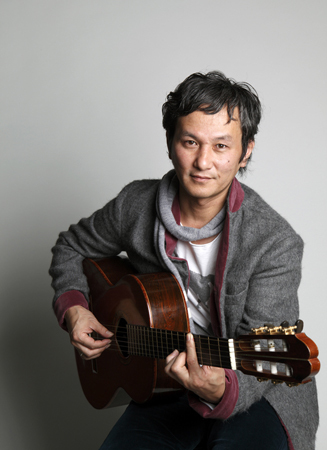
Goro Ito, who served as producer
Another aspect is the meticulous direction and editing, where Ito truly shines. I learned during the recording of 'Calendula' that Ito's perfectionism is not of the "governing the studio to achieve a good session" type, but rather of the "meticulously assembling through editing and retakes" type. He is akin to a film director, and at times, recordings can be done in two-beat increments.
Some might think, "Wait, isn't that different from the bossa nova feel?" However, 'Getz/Gilberto' was groundbreaking within the history of jazz albums that incorporate editing (the history is becoming a bit dense with all these "histories," isn't it? (laughs)). Famous examples include the "removal of João's vocals on 'The Girl from Ipanema'" and, primarily for the purpose of "being pop" (though perhaps also due to a less-than-ideal session atmosphere), numerous edits were made. These were not minute edits but block edits. This demonstrated that in the 1960s, "editing" was one of the possibilities for "jazz becoming pop."
Needless to say, this concept was taken to an even more expansive and extreme level by the Miles Davis and Teo Macero duo. Their greatest failure is considered to be 'Quiet Nights,' an attempt at bossa nova that aimed to make "Corcovado" a killer tune but ended in disaster (there are also circumstances, such as it being recorded shortly after Miles's father passed away). Coincidentally, this album was also released in '63. Thus, this year is also the "50th Anniversary of 'Quiet Nights,'" and since Ryuichi Sakamoto lists this album among his favorite Miles Davis works... 'Getz/Gilberto' is, in this way, a perpetually multi-layered and contentious work.
Considering these perspectives, and more importantly, even if one were to listen to this album in a cafe without knowing anything about it, the quality, the lack of pretension, the absence of careless shortcuts, and the overall freshness and relaxed feeling it evokes are superb. It is a monstrous masterpiece that rivals the unconventionality of 'Getz/Gilberto,' directly answers the issues that 'Getz/Gilberto' posed to the 20th century but which are now beginning to fade, and yet remains purely musical.
produced by Goro Ito
Released Wednesday, June 19th
3,059 yen (UCCJ-2110)
1. The Girl from Ipanema
Asako Toki (vo), Naruyoshi Kikuchi (ts), Yosuke Yamashita (p), Masato Suzuki (b), Tsutomu Kurihara (ds), Goro Ito (g)
2. Doralice
Naomi Fuse (vo), Naruyoshi Kikuchi (ts), Masayasu Tsuboguchi (p), Goldman Akita (b), Midori (ds), Goro Ito (g)
3. Pra Machucar Meu Coração
Haruomi Hosono (vo), Yasuaki Shimizu (ts), Ryuichi Sakamoto (p), Goro Ito (g)
4. Desafinado
Miu Sakamoto (vo), Yasuaki Shimizu (ts), Yosuke Yamashita (p), Masato Suzuki (b), Tsutomu Kurihara (ds), Goro Ito (g)
5. Corcovado
Kahimi Karie (vo), Yasuaki Shimizu (ts), Masayasu Tsuboguchi (p), Masato Suzuki (b), Tsutomu Kurihara (ds), Goro Ito (g)
6. Só Danço Samba
TOKU (vo), Naruyoshi Kikuchi (ts), Masayasu Tsuboguchi (p), Goldman Akita (b), Midori (ds), Goro Ito (g)
7. O Grande Amor
Jaques Morelenbaum (cello), Ryuichi Sakamoto (p), Masato Suzuki (b), Goro Ito (g)
8. Vivo Sonhando
Tomoyo Harada (vo), Masayasu Tsuboguchi (p), Goldman Akita (b), Midori (ds), Goro Ito (g)
9. The Girl from Ipanema (Japanese Version) *Bonus Track
Juria Oki (vo)
Universal Classics & Jazz
Tel. 03-6406-3034
www.universal-music.co.jp/jazz