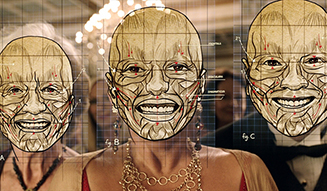
INTERVIEW | The Director of 'Amélie' Ventures into New Territory with a "3D Emotional Masterpiece"
INTERVIEW | Director of 'Amélie' Tackles a New Frontier: '3D x Emotional Story'
In Commemoration of the Release of 'The Young and Prodigious T.S. Spivet'
Exclusive Interview with Director Jean-Pierre Jeunet (Part 1)
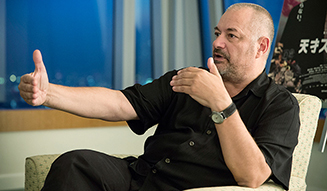
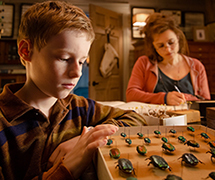
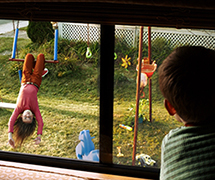
Jean-Pierre Jeunet, a French filmmaker lauded as a visionary for his distinctive creativity. With each new release, he surprises audiences with his rich imagination. His latest work is 'The Young and Prodigious T.S. Spivet,' a story about the growth of a 10-year-old boy. Based on Reif Larsen's novel 'The Selected Works of T.S. Spivet,' the film unfolds in 3D, creating a world that feels like a pop-up book come to life. We spoke with director Jeunet during his visit to Japan about his latest film, hailed by some as his masterpiece and a new artistic direction.
Text by MAKIGUCHI JunePhotographs (portrait) by KIMURA Yasuyuki
I Wanted to Delve Deeper into Human Emotion
—What were your thoughts when you first encountered the novel?
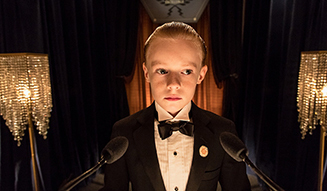
I was immediately captivated. I felt it was my story. I wasn't intending to make an autobiographical film, but I was searching for a narrative that could express something of my inner self. I fell in love with the novel within ten lines, and when I read the scene where T.S. gives his speech, I thought, 'I have to make this into a film.' Larsen's worldview is very similar to the world I create in my films. When I first met him, I felt like I had met a son with whom I was spiritually connected. It was a feeling akin to what I experienced with 'Amélie.'
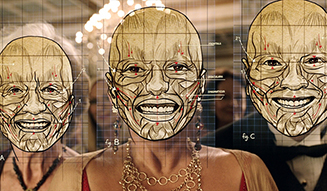
—The original book features many side stories and details (maps, sketches, character drawings, and notes) that add depth to the narrative, a structure that seems to resonate with your own work.
Exactly. I thought it would be wonderful if I could freely weave the details from the book into the film. Some of the details were very similar to those I used in 'Amélie.' This story isn't about just one theme. It's a boy's road movie, a story about childhood guilt, a family saga, and it also touches on issues of media. It's not a story that lends itself easily to film. But I wanted to challenge myself with a work that incorporated various elements.
—One of the reasons this film is considered a new artistic direction for you is its deeply emotional narrative.
My previous films were amusing and a bit quirky, but not exactly emotional. Perhaps 'A Very Long Engagement' touched on emotions to some extent, but most of my works maintained a certain distance from 'emotion.' I hadn't made films designed to make people cry, unlike Hollywood productions. So, this time, I wanted to delve a little deeper into human emotions. The difficulty lies in the fact that everyone experiences emotions differently. If someone feels the emotional expression is insufficient, another might find it excessive, saying, 'It's too much, it's so obvious they're trying to make us cry.' Therefore, to decide how much to portray, I had to be honest with my own feelings and rely on them. This was a new challenge for me.
—When the story isn't your own original creation, do you feel any limitations in the filmmaking process?
If it's a wonderful story, I welcome it regardless of who created it. Because the quality of the story is already assured. There's nothing more daunting than facing a blank page. That's how I felt when I started writing the script for 'Amélie.' No matter how much I thought I could make this absurd story interesting, I couldn't be sure of the outcome.
But when you encounter a great book, all you have to do is start working. If there's a difference between an original story and an adaptation, it might be like the difference between one's own child and an adopted child. The effort of raising them is the same, but the circumstances of their arrival differ. However, as you raise them, they become one and the same. An adapted story ultimately becomes your own.
—You compare films to children, but is filmmaking perhaps less stressful for you than raising children? (Laughs)
Perhaps so (laughs). I don't have children myself, but when I see fathers and daughters together in the street, I sometimes wonder if there's something I've left undone in my life. But then, five minutes later, when I see a child crying inconsolably, I feel a sense of relief. However, Kyle Catlett, who plays T.S. in this film, is a very special boy. He never once showed signs of crying, complaining, or fatigue. Finding him was incredibly lucky.
Initially, his agent lied to me, hiding the fact that he had just signed a contract for a TV series the day before. It was a nightmare when I found out. But I was so determined to cast him that we had to adjust the shooting schedule to align with the end of the series' filming. It was a frustrating situation. However, casting is crucial, so I couldn't compromise. In the end, I'm delighted that I was able to work with him.

INTERVIEW | Director of 'Amélie' Tackles a New Frontier: '3D x Emotional Story'
In Commemoration of the Release of 'The Young and Prodigious T.S. Spivet'
Exclusive Interview with Director Jean-Pierre Jeunet (Part 2)
The Driving Force Behind Filmmaking is Joy
—This is your first time attempting 3D filming, and the fusion of art and technology can be challenging. Many directors have made 3D films not because it's the best way to tell a story, but simply because they wanted to use the latest technology, and it hasn't always worked out. I feel your film is one of the rare instances where the necessity of 3D is evident.
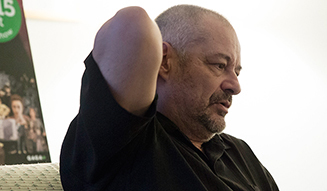
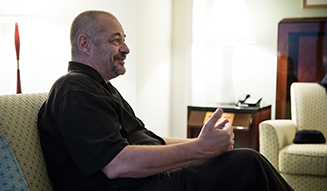
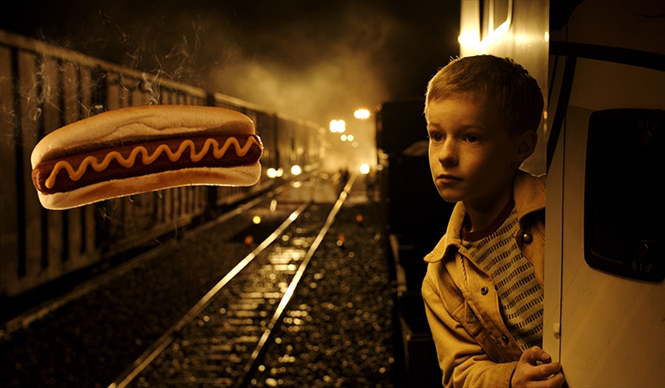
That's probably because I've loved 3D films since I was a child. I've always been fascinated by that world. In fact, I decided to use 3D when I first read the novel, and it was the fundamental concept for writing the script. Making T.S.'s ideas and details float in the air was planned from the scriptwriting stage. In other words, it wasn't technology-driven; 3D was purely an artistic concept.
During filming, an American artistic director said to me, 'I pity you, having to make a film in 3D.' I replied, 'No! I decided this myself. I'm happy!' (laughs). In America, commercial perspectives often take precedence over artistic ones. I think 3D films like Martin Scorsese's 'Hugo' are rare. He used 3D with an artistic vision. I thought 'Life of Pi' was also good. 'Avatar' is special as it was the first digital 3D film.
—It's said that 3D productions come with particular difficulties.
That's why I studied so much. I learned what would be effective and what would be counterproductive. Fast-moving objects aren't suited for 3D, and it won't look beautiful unless it's perfectly in focus. It took a month to meticulously align the details of the footage shot with multiple cameras and complete it in 3D. When shooting with multiple cameras, if there's any noise (dust or reflections) in the footage from one camera, it can result in a very unpleasant viewing experience.
We normally use our two eyes, focusing on two slightly different images. If only one eye picks up noise, the brain can't process that information when viewed with both eyes. This is the cause of headaches that many people who dislike 3D films complain about. Therefore, we took our time and carefully processed all the visual noise. As a result, the technical execution is nearly perfect. From an artistic standpoint, I believe it turned out to be a very interesting film. When using technology, it should be based on artistic reasons to enhance expression.
—As in your other works, this film features your distinctive humor throughout. What are your thoughts on the importance of humor?
I can't tell a story without humor. For example, even though 'Alien Resurrection' wasn't meant to be funny, I couldn't resist adding elements of humor. I believe humor holds great significance in life. Without it, we would surely fall into despair listening to the constant stream of tragic news every day. This film incorporates not only humor but also emotional elements. The spirit of Pixar, which I love, is 'ONE LAUGH, ONE TEAR.' I resonate with that. I hope this film also contains that element.
—Finally, what is the driving force behind your passion for filmmaking?
Joy. Jean Renoir said, 'I make films for joy. I don't care about anything else.' I feel the same way. If someone doesn't like my work, that's fine. When I'm working, I feel like a chef. I cook, I taste. If I like it, I want to share that joy with someone.
My first cinematic revelation was watching 'The Western' at age 17. It was a revolution in my life. I was speechless for three days after watching it. But I had been making films myself even before that. Long before I started watching movies. I still love making films, and I spend most of my time preparing for shoots. The art direction, costumes, actors, performances, music... I love everything about filmmaking. For me, cinema is a grand toy. Inside my head lives a child who plays with this toy called cinema.

Jean-Pierre Jeunet
Born in France in 1953. In 1991, his feature debut 'Delicatessen' became the third highest-grossing film in France that year. It won four awards at the César Awards, including Best First Feature Film and Best Original Screenplay, instantly making him a "person of the moment" as a remarkable new talent. In 2001, after a four-year hiatus since his last film, 'Amélie' became a massive hit, sparking a global phenomenon and earning him the BAFTA Award for Best Original Screenplay. His subsequent film, 'A Very Long Engagement' (2004), won five César Awards. Celebrated as a unique filmmaker for his meticulously crafted worlds, he now breaks new ground with 'The Young and Prodigious T.S. Spivet,' venturing into the realm of emotional storytelling.
'The Young and Prodigious T.S. Spivet'
Opening Saturday, November 15th, at Cine Switch Ginza, Human Trust Cinema Shibuya, and other theaters nationwide (3D/2D).
Director | Jean-Pierre Jeunet
Screenplay | Jean-Pierre Jeunet, Guillaume Laurant
Based on | 'The Selected Works of T.S. Spivet' by Reif Larsen (Hayakawa Publishing)
Starring | Kyle Catlett, Helena Bonham Carter, Judy Davis, Callum Keith Rennie, Niamh Wilson, Dominique Pinon
Distribution | Gaga Corporation
2013 / France, Canada / 105 minutes / Original Title: 'The Young and Prodigious T.S. Spivet'
http://spivet.gaga.ne.jp
© ÉPITHÈTE FILMS – TAPIOCA FILMS – FILMARTO - GAUMONT - FRANCE 2 CINÉMA