MOVIE | The "Paradise Trilogy," Which Conquered the Three Major Film Festivals, Arrives in Japan
MOVIE | Ulrich Seidl's Films Explore Women Driven by Desire
The "Paradise Trilogy," Which Traversed the Three Major Film Festivals, Arrives in Japan (1)
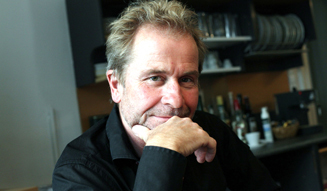
Ulrich Seidl, a critically acclaimed Austrian director whose work is little known in Japan. His much-talked-about trilogy will be screened all at once starting February 22 (Saturday) at Eurospace and other venues.
Text by OPENERS
A Passionate Trilogy Created Over Four Years
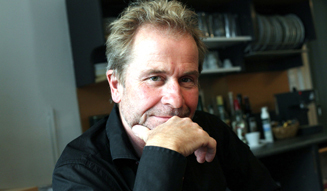
Ulrich Seidl, the Austrian film director often called the successor to Michael Haneke. Each of his releases has stirred controversy due to their scandalous content, yet he is a master craftsman whose films have graced international film festivals. His style, which coolly depicts the true nature of humanity within perfectly composed frames reminiscent of classical paintings, also conveys an inexhaustible interest and affection for his subjects. This has captivated many filmmakers, with luminaries like Werner Herzog and John Waters showering praise upon his talent.
The "Paradise Trilogy," which was screened in competition at the Cannes Film Festival and Venice Film Festival in 2012, and the Berlin International Film Festival in 2013, is finally being released in Japan.
These are three stories, told with offbeat humor, about three women who cross dangerous lines in their pursuit of a "paradise" filled with ideal love unattainable in reality.
What Are the "Desires" of Each of the Three Women?
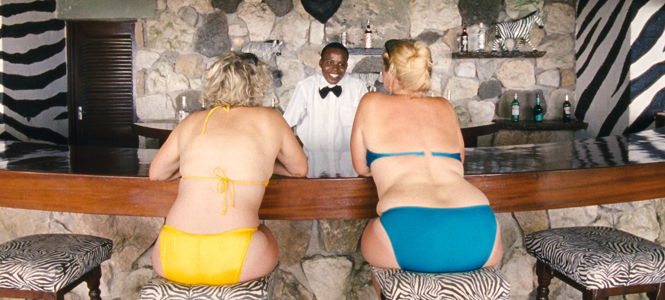
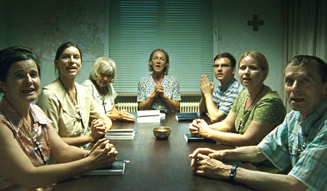
The first installment, "Paradise: Love," features Teresa, a middle-aged woman who becomes engrossed in a romance with a young local man at a beautiful resort in Kenya. The second, "Paradise: Faith," centers on Teresa's sister, Anna Maria, who seeks solace excessively in Jesus Christ. And in "Paradise: Hope," the protagonist is Melanie, Teresa's daughter, who falls in love with a man decades her senior at a weight-loss retreat.
During a summer break, they escape their mundane lives, surrender to their desires, and charge towards paradise in their own unique ways. The women's raw humanity, hidden within us all, leads them not necessarily to happiness. However, the gaze of this trilogy, which confronts fundamental human desires, is imbued with a subtle compassion, casting a questioning eye on the unspoken societal pressures that drive them toward paradise.
Director Ulrich Seidl, known for his perfectionism, applies his documentary filmmaking techniques to fiction, pursuing an uncompromising reality. For this film, he cast both professional actors and amateurs with no prior acting experience, allowing them to improvise within meticulously crafted settings. Astonishingly, the script reportedly contained no dialogue.
Experience this shocking trilogy that stimulates and profoundly moves its viewers.
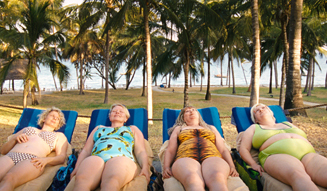
Paradise: Love
Starring | Margarethe Tiesel, Peter Kazungu, Inge Maux
Austria-Germany-France / 2012 / 120 min / R-15
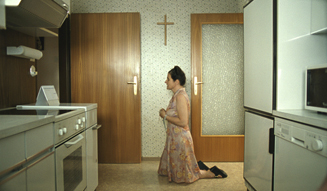
Paradise: Faith
Starring | Maria Hofstätter, Nabil Saleh
Austria-Germany-France / 2012 / 113 min / R-15
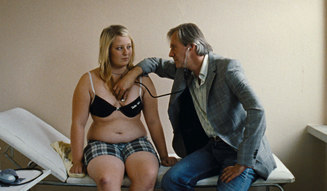
Paradise: Hope
Starring | Melanie Lenz, Joseph Lorenz
Austria-Germany-France / 2012 / 91 min / R-15
Paradise Trilogy
Now Showing at Eurospace and other theaters nationwide starting February 22 (Saturday)
Director | Ulrich Seidl
Distribution | Eurospace
http://www.paradise3.jp
MOVIE | Ulrich Seidl's Films Explore Women Driven by Desire
The "Paradise Trilogy," Which Traversed the Three Major Film Festivals, Arrives in Japan (2)
Here, we present an interview with director Ulrich Seidl. What were his thoughts behind this monumental trilogy?
Filmmaking Without "Beautification"
──Why did you title the trilogy "Paradise"?
In the biblical sense, paradise promises eternal happiness. However, in the tourism industry, it is often misused as a word that evokes desires for sun, sea, freedom, love, and sex. Therefore, this title symbolizes all three works, which depict three women who are trying to become aware of their unfulfilled dreams and desires.
──Why women?
Because I am a filmmaker who makes films about women. This film originated from several different starting points. For one, I have long been interested in films centered on women in their 50s. My wife, Veronika Franz, and I once wrote a script with six episodes, all of which dealt with a certain type of vacation for Western tourists in so-called "Third World" regions. Within that, we repeatedly addressed the theme of "sex tourism."
This time, we developed it into a story about two sisters and their daughter. The three women are seeking men whose "market value" is low, to borrow from Michel Houellebecq or Elfriede Jelinek – men whose ideals of beauty differ from the norm. In other words, they are seeking sexual satisfaction, and even love. In "Love," this means Black African men.
──I heard that it was originally conceived as a single film.
This time, I did not write a conventional script. I described scenes in detail, but the plot of each story was independent, like a short story, and they did not overlap. Their relationship only emerged on the editing table.
This is my methodology: basically, I incorporate what happens during the preparation and shooting phases, rather than just executing a finished script. I then shoot as chronologically as possible, proceeding while ensuring openness to new directions and ideas. I always strive to set new challenges for myself with every film. With the "Paradise Trilogy," I intended to film in a way that allowed the actors to appear in the story as themselves, when necessary.
We shot 80 hours of footage and spent a year and a half in the editing room with extensive rough cuts, trying to connect the three stories. It worked partially. Nevertheless, not a single version functioned as a five-and-a-half-hour film. Instead of reinforcing each other, the stories weakened each other. Ultimately, we concluded that making them three independent films was the best approach. That, in itself, was not an easy decision.
──Sex tourism in Kenya, extreme religious activities in Vienna, and a youth diet retreat. Why these settings?
The three women fall in love, experience love, and are disappointed in the process. For the girl spending her summer vacation at a diet retreat for overweight teenagers, it is her first love and absolute. For her mother, who travels to Kenya seeking love (or sex), it is a conscious choice after years of disappointment.
And the mother's sister loves nothing else but Jesus, making it a spiritual and entirely intellectual form of love, but it goes a bit too far. She seeks in "heaven," the promised paradise, what she cannot find on earth.
──The films are reminiscent of Lucian Freud's paintings, for example, the fatal fragility of his nudes.
The depiction of the body is indispensable in my filmmaking. I want to capture the skin from close range and show the body as it is. For me, this is "not beautifying," yet people find "something like beauty" in it. It is problematic when it is distorted by social pressure. Why do women, and men, try to conform their bodies to socially defined standards?
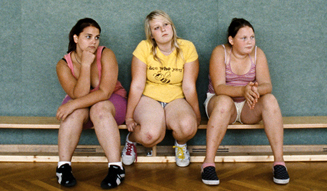
Paradise: Hope
──You've repeatedly stated that you want the three films to be seen as a single work. Why is that?
Each film in the trilogy is independent. You don't need to see the first film to watch the second or third. However, if you are fortunate enough to see the trilogy in sequence, a deeper and richer universe will unfold in your mind than if you watch them separately. The three films are intensely emotional and made to be related. Yet, the way the three protagonists approach love, sexuality, and their bodies should be different.
──How did you decide on the order of the trilogy?
When I was in the editing room, for a long time I thought "Hope," which depicts the daughter, should be the second film, following the mother. And "Faith," the most powerful and complex, should be last. But one day, I tried putting "Hope" at the end, and there was a sense of release. There was salvation. Suddenly, it began to function as a trilogy.
Ulrich Seidl
Born in 1952, Ulrich Seidl resides in Vienna, Austria. Werner Herzog named Seidl among his ten favorite filmmakers, stating, "I do not stare into the abyss as much as Seidl does" regarding "Animal Love" (1995). His first feature film, "Dog Days" (2001), won the Special Jury Prize at the Venice Film Festival. His subsequent film, "Import/Export" (2007), was selected for competition at the Cannes Film Festival. The "Paradise Trilogy," created over four years, was successively selected for competition at the three major film festivals – Cannes, Venice, and Berlin. "Paradise: Faith" earned its second Special Jury Prize at Venice.
© Vienna2012 | Ulrich Seidl Film Produktion | Tatfilm | Parisienne de Production | ARTE France Cinema