
INTERVIEW | Giuseppe Tornatore, Director of 'The Best Offer,' Interview
INTERVIEW | A Dazzling Trap Set by the Italian Master
The Best Offer
Giuseppe Tornatore Interview (1)
When one hears the name Giuseppe Tornatore, "Cinema Paradiso" immediately comes to mind. His latest film is a superb mystery set in the world of art auctions, starring Geoffrey Rush from "The King's Speech." However, it's best to forget such preconceptions. Everything you might imagine from that information will be perfectly overturned. The strange fate of a genius auction appraiser and a client who never shows her face. You'll find yourself exclaiming with delight at its unexpected conclusion. Is this his new frontier? What changes have occurred in the human affection he has always depicted? We directly questioned Director Tornatore about this unprecedented story of mystery and the message it conveys.
Photographs (portrait) by KAMIYAMA Yosuke
Text by FUKASAWA Keita
A Shocking Conclusion: Tornatore's New Frontier?
Giuseppe Tornatore. The renowned Italian master who, with his "Cinema Paradiso" and composer Ennio Morricone, has depicted the moving tapestry of life.
Facing this film, everyone's heart will surely beat with anticipation. But do not be misled. Because you will be utterly defeated. Completely and utterly. A shocking conclusion and countless meticulously laid clues. It's so masterful, it leaves you feeling refreshed. And you'll find yourself looking up at the sky, murmuring, "Ah, I've been had."
First, there's the unshakeable preconception of "Cinema Paradiso." That's the first mistake. Then, the Japanese title "Kanteishi to Kao no Nai Irai-nin" (The Appraiser and the Faceless Client), which evokes a sense of mystery. The premise of a mystery set in the art world. The impression of the protagonist, played by the acclaimed actor Geoffrey Rush from "The King's Speech," as difficult and unapproachable. Furthermore, Tornatore's first foray into digital cinematography... It's no exaggeration to say that all this prior information is a dazzling trap set by Tornatore himself.
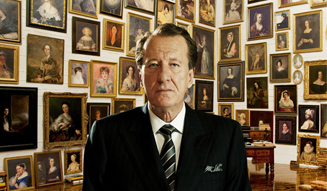
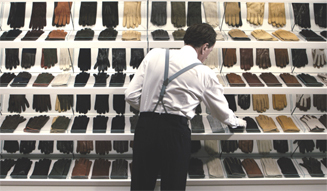
So, what is the "correct way" to approach this film? As expected, Director Tornatore dispelled all suspicions with a smile that radiated his approachable personality.
"No, no, the plot of the film is simple, and the narrative itself is very straightforward. The protagonist is both an art appraiser and an auctioneer who manages the auction floor. However, he himself has a rather complex personality."
If I had to describe the film in one sentence, it's a love story told through thriller techniques. In other words, it's a thriller, but not a thriller. There's no murder, and no police or investigators appear.
"It begins when a young woman calls him, wanting to sell the furniture and paintings in her large mansion. Their relationship starts from there and gradually begins to trace a complex path. During this process, his personality, which had been closed off until then, and his views on life and people completely change."
INTERVIEW | A Dazzling Trap Set by the Italian Master
The Best Offer
Giuseppe Tornatore Interview (2)
Human Drama Intertwined on the Auction Stage
A thriller, but not a thriller. A mystery, but not a mystery... Yet, we are bewildered by the protagonist's demeanor and profession from the very beginning, as he reveals nothing of himself.
With an appraisal eye akin to that of a god, he accurately identifies centuries-old masterpieces and instantly detects even the most intricate forgeries by the slightest brushstroke difference. Traveling to art auctions worldwide, he dictates the value of historical artworks like paintings and sculptures in mere seconds before bidders moving billions of yen.
An aloof master who calmly presides over the bidding wars, unfazed by the tension. His overwhelming presence serves as a crucial thread, weaving a profound atmosphere into this narrative.
"The reason I decided to depict the world of art auctions was my fascination with the profession of an auctioneer. After all, a single decision by the auctioneer determines the value of an artwork and who it will go to!"
"So, I visited several auctioneers, and among them was someone with the rare talent of being both an art appraiser. The evaluation of historical artworks is determined by the combination of these two professions. I was completely captivated by that process."

"In this story, it was precisely because the protagonist possessed that talent that he was able to meet the mysterious woman who holds the key to the plot."
Yes, that woman is none other than Claire, the "faceless client" who graces the film's title.
A mysterious appraiser meets an even more mysterious client. The encounter between these two individuals, both having closed off their hearts, brings about a dramatic thaw in their lives, leading them into an irreversible torrent of fate that rushes towards a shocking finale.
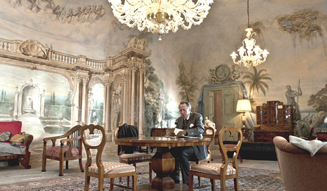
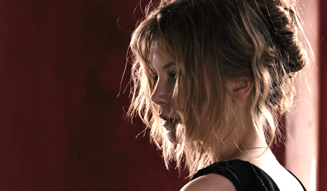
She is a truly unconventional heroine, a figure who governs the protagonist's fate yet remains unseen for much of the drama. The model for her was an episode the director once heard about a woman suffering from agoraphobia, who had been confined to her home for many years.
After nearly 20 years, that concept has finally blossomed into this film.
MOVIE | A Dazzling Trap Set by the Italian Master
The Best Offer
Giuseppe Tornatore Interview (3)
A New Love Story Unfolding with the "Gears of Fate"
A skilled art appraiser, a faceless client... And one more thing, a crucial thread that weaves this film together: automata, or Western-style mechanical dolls.
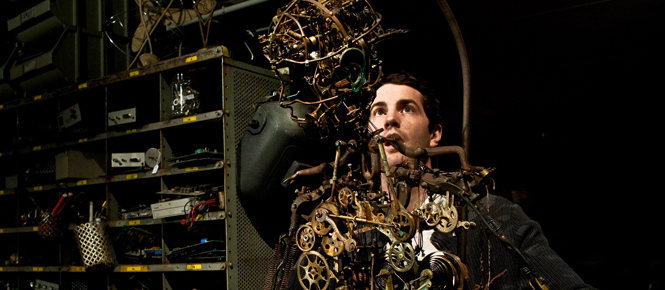
Director Tornatore became engrossed in the charm of these mechanical dolls, primarily created between the 18th and 19th centuries. Several years ago, he conceived the idea of using one of their gear components as a mechanism within the film's structure.
Thus, all the "gears of fate" surrounding this work meshed perfectly, completing the stage setting for an unprecedented story that dazzlingly deceives all who watch.
"Certainly, this film might seem to have a complex structure, with all its elements intricately intertwined with meticulous care, fitting together perfectly at the end. But in reality, the shooting proceeded extremely smoothly. Having nurtured the story's concept for years, the process of bringing it to life was a thoroughly enjoyable experience, like meticulously preparing everything in advance to weave a single, grand tapestry. Just like assembling the gears of a mechanical doll, one by one."
Tornatore's words leave one stunned. Immediately after watching the film, one can only be dumbfounded by its dazzling artistry. Then, regaining composure, one attempts to ponder the countless clues scattered throughout. But the mystery only deepens. You'll inevitably think, "I've been had!" upon realizing you have no choice but to watch it again.
But here lies another mystery. Did Tornatore seek a new realm of mystery films with this work, different from his previous ones?
The answer is no. At the stage greeting for the 26th Tokyo International Film Festival, held prior to its release, he stated the following:
"I myself believe the ending of this film is extremely positive. It is a victory for those who believe in love, but it may seem like a dark ending for those who do not."
In other words, his conviction in filmmaking and his approach to depicting humanity had become even more unwavering. And it is this very aspect that makes our hearts, braced for an unprecedented puzzle, tremble with the human conflicts and sorrows that wash over us after the viewing.

"Precisely. What I wanted to convey with this film is love itself. If you don't understand its meaning, I hope you will watch it again and again."
And one more important phrase: "There is truth even within falsehood."—A meaningful line repeated throughout the film.
Initially bewildered by the protagonist's reclusive nature, we too find ourselves projecting our own feelings onto his circumstances. And we re-experience the world of abundant love that unfolds from the thawing of hearts. A profound story that shakes the soul beyond the fiction of cinema. What else can we call this joy and sorrow but life itself?
Giuseppe Tornatore's dazzling and fertile new territory. We offer our heartfelt applause for this unparalleled cinematic experience.
Giuseppe Tornatore
Born in Sicily, Italy, in 1956. Debuted as a director in 1976 with the short documentary "The Mule." Gained attention with "Minority of Sicily" (1982), winning the Best Documentary award at the Salerno Film Festival. Directed his first feature film, "The Professor" (1986), for which he received the Italian Golden Globe Award for Best New Director. Furthermore, "Cinema Paradiso" (1989), which he wrote and directed, won the Special Jury Prize at the Cannes Film Festival, the Academy Award for Best Foreign Language Film, and numerous other prestigious awards, becoming a worldwide hit. He quickly established himself as a rising talent from Italy. His other notable works include "Everybody's Fine" (1990), nominated for the Palme d'Or at Cannes, "The Legend of 1900" (1999), and "Malèna" (2000), nominated for the Golden Globe Award for Best Foreign Language Film.
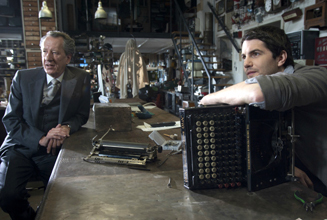
The Best Offer
Opening Friday, December 13th, at TOHO Cinemas Chanter, Shinjuku Musashinokan, and other theaters nationwide.
Directed and Screenplay by Giuseppe Tornatore
Music by Ennio Morricone
Starring Geoffrey Rush, Jim Sturgess, Sylvia Hoeks, Donald Sutherland
Distribution: Gaga Corporation
2013 / Italy / 131 minutes / PG12 / Original Title: "La migliore offerta (The Best Offer)"
http://kanteishi.gaga.ne.jp/
© 2012 Paco Cinematografica srl.